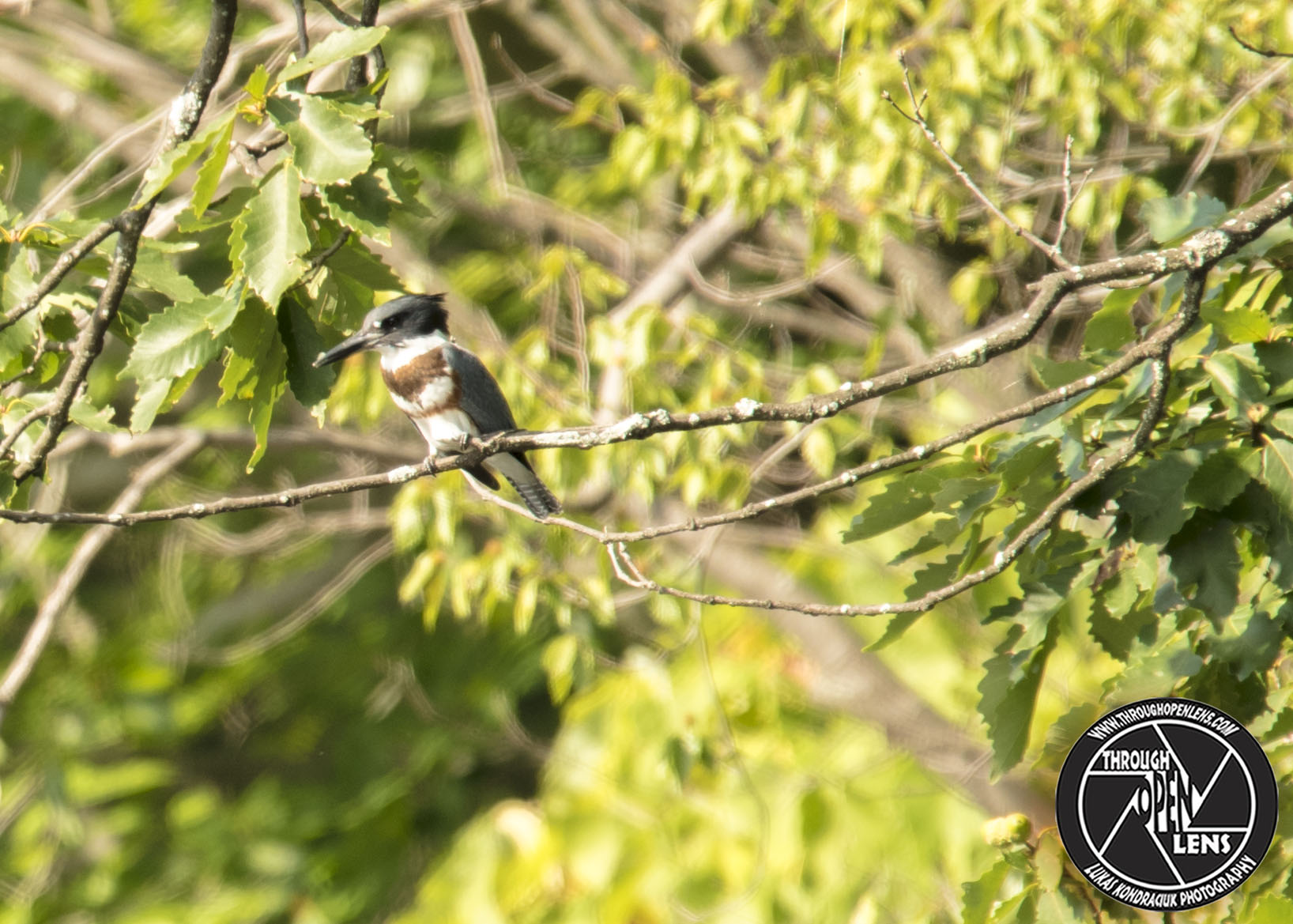
They Don’t Call Me King For Nothing

F/7.1, 1/200, ISO 200.

Belted Kingfisher

What is a baby’s motto?

If at first you don’t succeed cry cry again!

Interesting Fact: The breeding distribution of the Belted Kingfisher is limited in some areas by the availability of suitable nesting sites. Human activity, such as road building and digging gravel pits, has created banks where kingfishers can nest and allowed the expansion of the breeding range. ( https://www.allaboutbirds.org/guide/Belted_Kingfisher/lifehistory )

The Grass Is Greener Where You Water It!

F/6.3, 1/100, ISO 400.

White-throated Sparrow

What did the tie say to the hat?

You go on ahead and I’ll hang around!

Interesting Fact: White-throated Sparrows hop when they’re on the ground rather than walking or running. They forage in the leaf litter, often using both feet at once to scratch backwards, then pounce forward at anything they’ve uncovered. They also toss leaves aside with flicks of the head.  ( https://www.allaboutbirds.org/guide/White-throated_Sparrow/lifehistory )

Goose On The Loose!

F/7.1, 1/200, ISO 400.

Domestic Goose in Wild

What did the tooth brush want to become when he grew older?

A broom.

Interesting Fact: The domestication, as Charles Darwin remarks (The Variation of Animals and Plants under Domestication i. 287), is of very ancient date, with archaeological evidence for domesticated geese in Egypt more than 4,000 years ago.[2] They are much larger, and they have been selected for that larger size, with domesticated breeds weighing up to 10 kilograms (22 lb),[2] compared to the maximum of 3.5 kilograms (7.7 lb) for the wild swan goose and 4.1 kilograms (9.0 lb) for the wild greylag goose.[3] This affects their body structure; whereas wild geese have a horizontal posture and slim rear end, domesticated geese lay down large fat deposits toward the tail end, giving a fat rear and forcing the bird into a more upright posture. Although their heavy weight affects their ability to fly, most breeds of domestic geese are capable of flight. ( https://en.m.wikipedia.org/wiki/Domestic_goose )

It Is Hard To Fly When Something Is Weighing You Down


F/9.0, 1/320, ISO 200.

Great Egret 

What did the banana say to the doctor?

I’m not peeling well.

Interesting Fact: The Great Egret walks with its neck extended and its wings held close to its body. In flight, it is graceful and buoyant, with its neck tucked back against its shoulders and its legs trailing behind. ( https://www.allaboutbirds.org/guide/Great_Egret/lifehistory )

Pleeeease!

F/6.3, 1/160, ISO 320.

Chipmunk

Why don’t chipmunks wear skinny jeans?

Because their nuts won’t fit.

Interesting Fact: Chipmunks generally gather food on the ground in areas with underbrush, rocks, and logs, where they can hide from predators like hawks, foxes, coyotes, weasels, and snakes. They feed on insects, nuts, berries, seeds, fruit, and grain which they stuff into their generous cheek pouches and carry to their burrow or nest to store. ( http://www.nationalgeographic.com/animals/mammals/group/chipmunks/ )

Life Is More Fun When You Open Your Mouth!

F/7.1, 1/200, ISO 250.

Green Heron

Why can’t you hear a pterodactyl in the bathroom?

Because it has a silent pee.

Interesting Fact: The male selects a secluded site within his territory, usually in a large fork of a tree or bush, with overhanging branches to conceal the nest. Green Herons use many plant species as nest sites pines, oaks, willows, box elder, cedar, honey locust, hickory, sassafrass, and mangroves. The nest is usually on or over the water, but may be up to a half-mile away. It may be anywhere from ground level to 30 feet off the ground (occasionally higher). ( https://www.allaboutbirds.org/guide/Green_Heron/lifehistory )

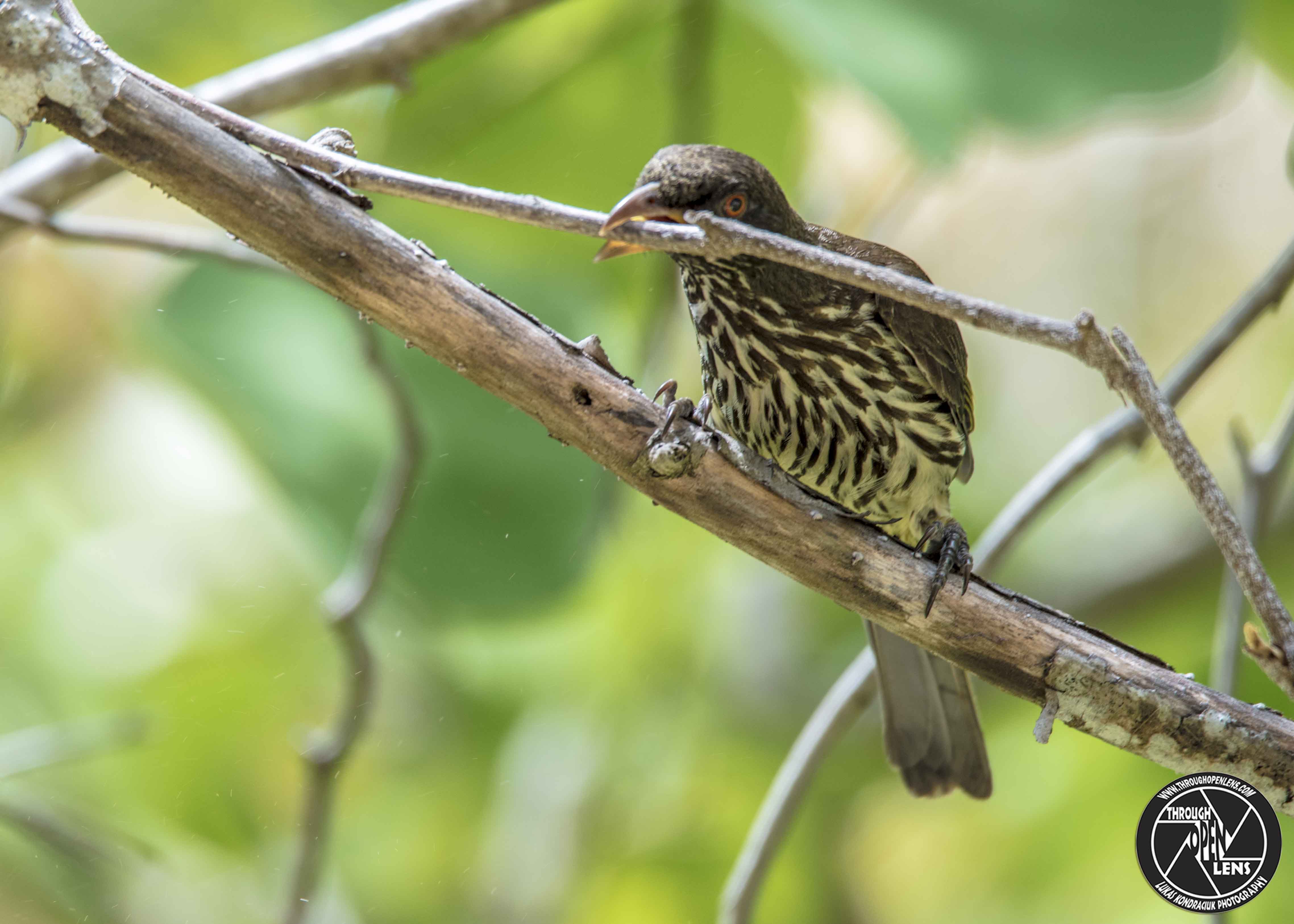
Careful I Bite!

F/7.1, 1/200, ISO 160.

Palmchat

What did the Zen Buddhist say to the hotdog vendor?

Make me one with everything.

Interesting Fact: Palmchats are about 20 cm (8 in) in length. They are olive-brown above, and cream-buff, heavily streaked with brown, below. Their rumps and the edges of their primary feathers are dark yellow-green. They have strong yellow bills and russet eyes. They lack the soft silky plumage of the waxwings or silky-flycatchers. Adults are alike in appearance; immature birds have dark throats. ( https://en.wikipedia.org/wiki/Palmchat )

Don’t Drink And Fly!

F/7.1, 1/200, ISO 320.

Bumblebee

Why Did The Bee Go To The Doctor?

It Had Hives!

Interesting Fact:  Only queen and worker bees have stingers. Besides lack of stingers, drones can be identified by size – they are the smallest type of bumblebees in the colony. ( http://www.softschools.com/facts/animals/bumblebee_facts/582/ )

So High!

F/11.0, 1/500, ISO 320.

Hispaniolan Amazon Parrot

What did the cat say after eating two robins lying in the sun?

I just love baskin’ robins.

Interesting Fact: As with other amazons, it prefers forested areas where food is plentiful. This parrot lives in the wood forests in Haiti and the Dominican Republic. However over the recent years they have been captured out of their natural habitat illegally for pet trades or just to keep them as pets which are very popular in the Dominican Republic. Right now[when?] the population ranges from 10,000 to 19,000 in the wild and decreasing. ( https://en.wikipedia.org/wiki/Hispaniolan_amazon )

Sometime You Have To Flip Out And Go Crazy To Make A Point!

F/9.0, 1/320, ISO 320.

Greater Antillean grackle

Where does a bee keep his stinger?

In his honey!

Interesting Fact: The Greater antillean Grackle will eat anything that can fit in its mouth.They eat fruits,bread, plant matter,and small Vertebrates and invertebrates. ( https://en.wikipedia.org/wiki/Greater_Antillean_grackle )