We Need A Better Hiding Spot!

F/8.0, 1/250, ISO 320.

Snowy Egrets

How do leaves get from place to place?

With autumn-mobiles.

Interesting Fact: Snowy Egrets feed while standing, walking, running, or hopping, and they may vibrate their bills, sway their heads, or flick their wings as part of prey gathering. They even forage while hovering. ( https://www.allaboutbirds.org/guide/Snowy_Egret/lifehistory )

Life Is So Much Easier When You Just Chill Out.

F/8.0, 1/250, ISO 500.

Greater Yellowlegs

Why are trees very forgiving?

Because in the Fall they “Let It Go” and in the Spring they “turn over a new leaf”.

Interesting Fact: The Greater Yellowlegs nest is a simple depression in the moss or peat, sometimes lined with leaves and lichen. The finished nest is about 6 inches across and the inner cup is about an inch deep. ( https://www.allaboutbirds.org/guide/Greater_Yellowlegs/lifehistory )

Don’t Juge Me I Have An Itch!

F/7.1, 1/200, ISO 320.

Yellow-Rumped Warbler

Did you hear about the tree that had to take time off of work in autumn?

It was on paid leaf.

Interesting Fact: In winter, Yellow-rumped Warblers join flocks and switch to eating berries from fruiting shrubs. Sometimes the flocks are enormous groups consisting entirely of Yellow-rumped Warblers. If another bird gets too close, Yellow-rumped Warblers indicate the infraction by holding the body horizontally, fanning the tail, and raising it to form a right angle with its body. ( https://www.allaboutbirds.org/guide/Yellow-rumped_Warbler/lifehistory )


This Is My Formal Attire!

F/8.0, 1/250, ISO 250.

American Crow

What did one autumn leaf say to another?

I’m falling for you.

Interesting Fact: Young American Crows do not breed until they are at least two years old, and most do not breed until they are four or more. In most populations the young help their parents raise young for a few years. Families may include up to 15 individuals and contain young from five different years. ( https://www.allaboutbirds.org/guide/American_Crow )

Have You Seen My Nuts?

F/6.3, 1/50, ISO 320.

Eastern Chipmunk

What is the difference between a poorly dressed man on a bicycle and a handsomely dressed man on a unicycle?

Attire

Interesting Fact: It is mainly active during the day, spending most of its day foraging. It prefers bulbs, seeds, fruits, nuts, green plants, mushrooms, insects, worms, and bird eggs. Like other chipmunks, it transports food in pouches in its cheeks. ( https://en.wikipedia.org/wiki/Eastern_chipmunk )


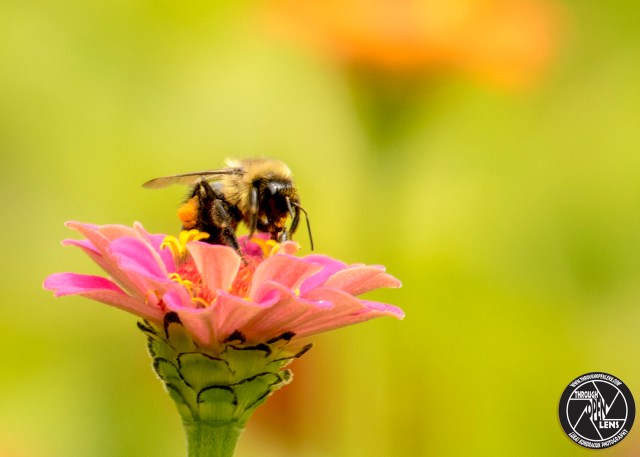
Don’t Worry BEE Happy!

F/8.0, 1/250, ISO 320.

Bumblebee

Why don’t elephants use cellular phones?

So the rest of the world won’t know their plans.

Interesting Fact: The bumblebee tongue (the proboscis) is a long, hairy structure that extends from a sheath-like modified maxilla. The primary action of the tongue is lapping, that is, repeated dipping of the tongue into liquid.[29] The tip of the tongue probably acts as a suction cup and during lapping, nectar may be drawn up the proboscis by capillary action. When at rest or flying, the proboscis is kept folded under the head. The longer the tongue, the deeper the bumblebee can probe into a flower and bees probably learn by experience which flower source is best-suited to their tongue length.[30] Bees with shorter proboscides, like Bombus bifarius, have a more difficult time foraging nectar relative to other bumblebees with longer proboscides; to overcome this disadvantage, B. bifarius workers were observed to lick the back of spurs on the nectar duct, which resulted in a small reward. ( https://en.wikipedia.org/wiki/Bumblebee )


Come Swim With Me!

F/5.6, 1/500, ISO 250.

Horned Grebe

What is a witch’s favorite subject in school?

Spelling.

Interesting Fact:  Like most grebes, the small chicks of the Horned Grebe frequently ride on the backs of their swimming parents. The young ride between the wings on the parent’s back, and may even go underwater with them during dives. ( https://www.allaboutbirds.org/guide/Horned_Grebe/lifehistory )

What Doesn’t Kill You Makes You Stronger. Except For Bears, Bears Will Kill You!

F/6.3, 1/25, ISO 160.

American Black Bear

Why do bears have fur coats?

Because they would look silly in ski jackets.

Interesting Fact: Female black bears give birth to two or three blind, helpless cubs in mid-winter and nurse them in the den until spring, when all emerge in search of food. The cubs will stay with their very protective mother for about two years. ( https://www.nationalgeographic.com/animals/mammals/a/american-black-bear/ )

Sometimes You Have To Stand Alone To Prove That You Can Still Stand!

F/6.3, 1/50, ISO 320.

Groundhog (Woodchuck )

Why did the worker get fired from the calendar factory?

He took a day off.

Interesting Fact: The groundhog—also known as a woodchuck—spends much of its days alone, foraging for plants and grasses and digging burrows up to 66 feet (20 meters) long. ( https://kids.nationalgeographic.com/animals/mammals/groundhog/ )


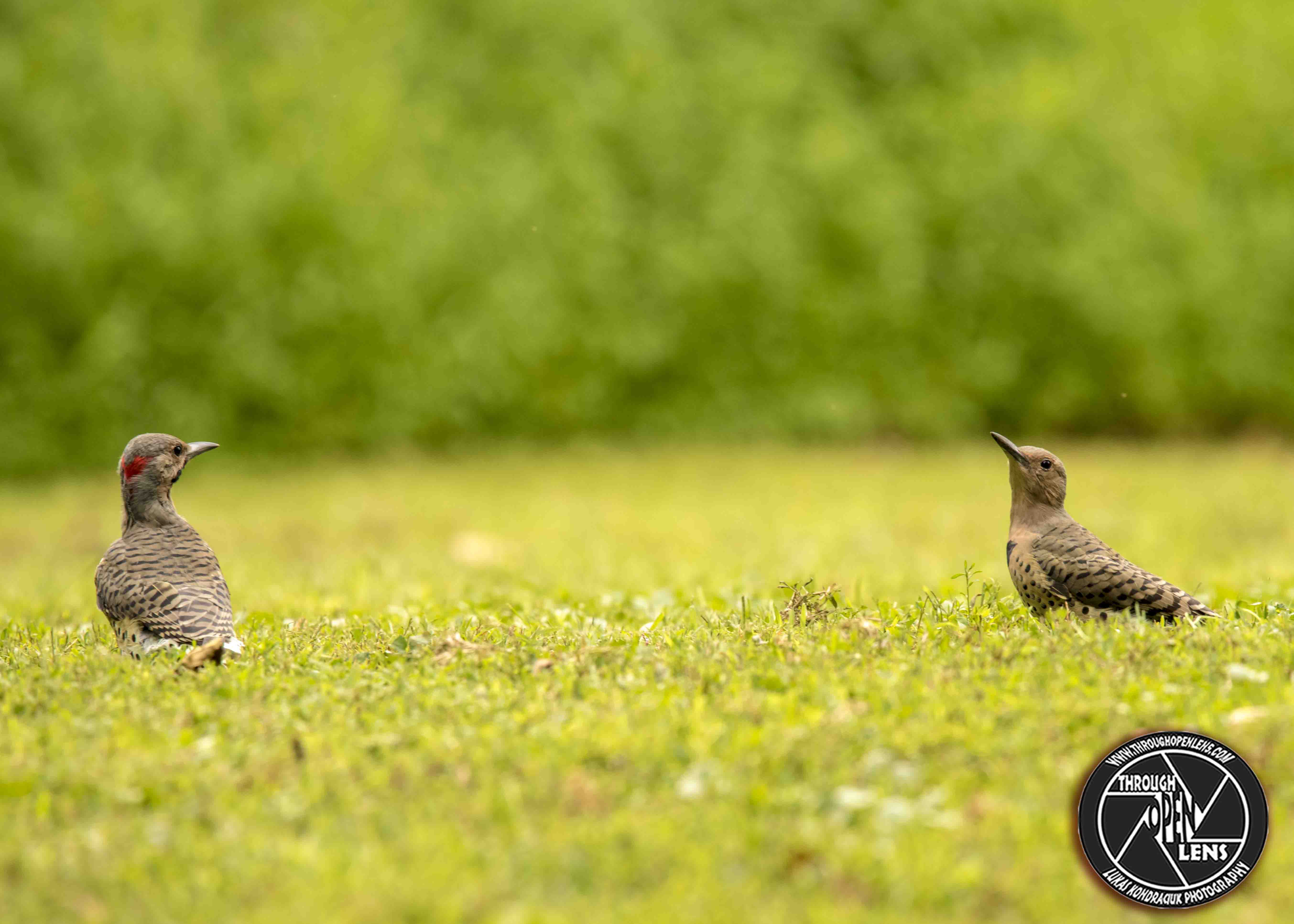
Hey Bro What’s Up!

F/8.0, 1/225, ISO 400.

Northern Flicker

Why is Superman’s costume so tight?

Because he wears a size “S”.

Interesting Fact: Like most woodpeckers, Northern Flickers drum on objects as a form of communication and territory defense. In such cases, the object is to make as loud a noise as possible, and that’s why woodpeckers sometimes drum on metal objects. One Northern Flicker in Wyoming could be heard drumming on an abandoned tractor from a half-mile away. ( https://www.allaboutbirds.org/guide/Northern_Flicker/lifehistory )