Basic Maneuvers!

F/11.0, 1/500, ISO  320.

Laughing Gull

Why is a river rich?

It has banks on both sides.

Interesting Fact:  The adult Laughing Gull removes the eggshells from the nest after the eggs hatch. If the shells are not removed, a piece can become lodged on top of the slightly smaller unhatched third egg and prevent it from hatching. ( https://www.allaboutbirds.org/guide/Laughing_Gull/lifehistory )

I Wonder If Chickens Do The “People Dance ” At Their Wedding

F/10.0, 1/400, ISO 400.

Chickens

What did the chicken say when it got to the library?

Book book book book book book book…

Interesting Fact: People have been raising chickens for more than 7,000 years. Chickens were first domesticated in Indian and China. You might think of chickens as farm animals, but even people in cities can raise a few chickens in the backyard. Chicken coops don’t take up much room. ( http://easyscienceforkids.com/all-about-chickens/ )

Waiting Here For You

F/13.0, 1/640, ISO 320.

Great Black-backed Gull

Four high school boys afflicted with spring fever skipped morning classes. After lunch they reported to the teacher that they had a flat tire.

Much to their relief she smiled and said, “Well, you missed a test today so take seats apart from one another and take out a piece of paper.”

Still smiling, she waited for them to sit down. Then she said: “First Question: Which tire was flat?”

Interesting Fact: The Great Black-backed Gull is one of many bird species whose feathers were used for fashionable clothing in the 1800s. After the demise of the feather trade in the early 1900s, Great Black-backed Gull populations increased and spread farther south. Garbage dumps and other sources of human refuse have contributed to their range expansion. ( https://www.allaboutbirds.org/guide/Great_Black-backed_Gull/lifehistory )

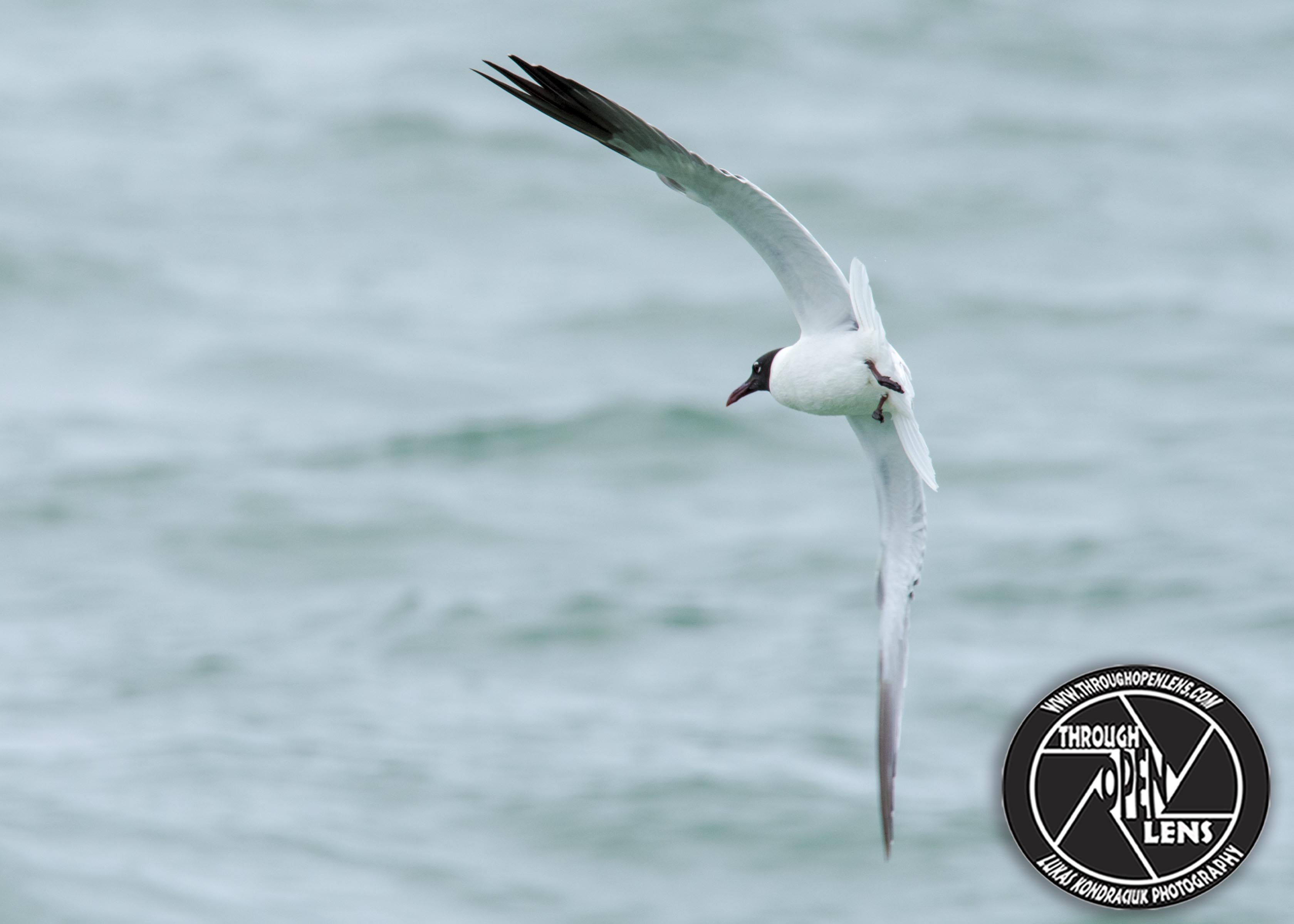
Life Is Better When You’re Laughing

F/11.0, 1/500, ISO 320.

Laughing Gull  

Why do hamburgers go to the gym?

To get better buns

Interesting Fact: The Laughing Gull is normally diurnal, or active during the day. During the breeding season it forages at night as well. It usually looks for food along the beach at night, but will also hover to catch insects around lights. ( https://www.allaboutbirds.org/guide/Laughing_Gull/lifehistory )


May All Your Troubles Soon Be Gone. Oh, Christmas Lights Keep Shining On.

F/22.0, 87.0, ISO 125.

Jersey City Downtown

What did the stamp say to the Christmas card?

Stick with me and we’ll go places!

Interesting Fact: The first known electrically illuminated Christmas tree was the creation of Edward H. Johnson, an associate of inventor Thomas Edison. While he was vice president of the Edison Electric Light Company, a predecessor of today’s Con Edison electric utility, he had Christmas tree light bulbs especially made for him. He proudly displayed his Christmas tree, which was hand-wired with 80 red, white and blue electric incandescent light bulbs the size of walnuts, on December 22, 1882 at his home on Fifth Avenue in New York City. Local newspapers ignored the story, seeing it as a publicity stunt. However, it was published by a Detroit newspaper reporter, and Johnson has become widely regarded as the Father of Electric Christmas Tree Lights. By 1900, businesses started stringing up Christmas lights behind their windows.[14] Christmas lights were too expensive for the average person; as such, electric Christmas lights did not become the majority replacement for candles until 1930. ( https://en.wikipedia.org/wiki/Christmas_lights#History )


Why Fit In When You Were Born To Stand Out.

F/4.5, 1/30, ISO 640.

PDN PhotoPlus International Conference + Expo (“PhotoPlus“)

What do you call a bee trying to make up its mind?

A maybe

Interesting Fact: PDN PhotoPlus International Conference + Expo (“PhotoPlus”) is an annual event held at the Jacob K. Javits Convention Center in New York. Designed for professional and advanced amateur photographers, Photoplus displays recent advances in photography through a variety of exhibitions as well as photography and digital design seminars. ( https://en.wikipedia.org/wiki/Photoplus )

Why You All Up In My Business!

osprey

F/5.6, 1/500, ISO200.

Osprey

What does the man in the moon do when his hair gets too long?

Eclipse it!

Interesting Fact: Ospreys hunt by diving to the water’s surface from some 30 to 100 feet (9 to 30 meters) up. They have gripping pads on their feet to help them pluck fish from the water with their curved claws and carry them for great distances. In flight, ospreys will orient the fish headfirst to ease wind resistance. ( https://www.nationalgeographic.com/animals/birds/o/osprey/ )

We Will Never Forget 9/11

F/13.0, 6.0, ISO 100.

All Bridges Can Be Crossed, So Don’t Give Up!

F/10.0, 1/640, ISO 160.

Verrazano-Narrows Bridge

Why was the big cat disqualified from the race?

Because it was a cheetah.

Interesting Fact: A bridge across the Narrows had been proposed as early as 1927, when structural engineer David B. Steinman brought up the possibility of such a crossing.[3] At the time, Staten Island was isolated from the rest of New York City, and its only direct connection to the other four boroughs was via the Staten Island Ferry to South Ferry in Manhattan, or 39th and 69th Streets in Brooklyn.[4] In 1928, when the chambers of commerce in Brooklyn, Queens, Long Island, and Staten Island announced that the Interboro Bridge Company had proposed the future construction of the “Liberty Bridge” to United States Department of War. The bridge’s towers would be 800 feet (240 m) high and it would cost $60 million in 1928 dollars.[5] In November 1929, engineers released plans for the 4,500-foot (1,400 m) Liberty Bridge spanning the Narrows,[6] with 800-foot-tall towers.[7] It was hoped that the new construction would spur development on Staten Island, along with the Outerbridge Crossing and the Bayonne Bridge, which were under construction at the time. ( https://en.wikipedia.org/wiki/Verrazano-Narrows_Bridge#History

He Tried To Imagine The Sound Of The Color Red

F/8.0, 1/250, ISO 800.

Scarlet Tanager

What happened when the two antennas got married?

Well, the ceremony was kinda boring, but the reception was great!

Interesting Fact: The female Scarlet Tanager sings a song similar to the male’s, but softer, shorter, and less harsh. She sings in answer to the male’s song and while she is gathering nesting material. ( https://www.allaboutbirds.org/guide/Scarlet_Tanager/overview )