Keep Looking Up Thats The Secret Of Life!

F/8.0, 1/250, ISO 400.

Red-Bellied Woodpecker

Dentist: This will hurt a little.

Patient: OK.

Dentist: I’ve been having an affair with your wife for a while now.

Interesting Fact:  These birds often stick to main branches and trunks of trees, where they hitch in classic woodpecker fashion, leaning away from the trunk and onto their stiff tail feathers as they search for food hiding in bark crevices. ( https://www.allaboutbirds.org/guide/Red-bellied_Woodpecker/lifehistory )

I Belong In The Air

F/9.0, 1/320, ISO 1250

Bald Eagle

Did you hear the joke about the roof?

Never mind, it’s over your head!

Interesting Fact: The Bald Eagle has been the national emblem of the United States since 1782 and a spiritual symbol for native people for far longer than that. These regal birds aren’t really bald, but their white-feathered heads gleam in contrast to their chocolate-brown body and wings. ( https://www.allaboutbirds.org/guide/Bald_Eagle )

Today I Will Be Happier Than A Bird With A French Fry!

F/8.0, 1/250, ISO 250.

Carolina Wren

What did one plate say to the other?

Dinners on me.

Interesting Fact: Carolina Wrens nest in open cavities 3–6 feet off the ground, in trees, overhangs and stumps. The first nest is sometimes built on vegetation-shaded ground. Near homes, they’re versatile nesters, making use of discarded flowerpots, mailboxes, propane-tank covers, and a variety of other items. Their nests have even been found in old coat pockets and boots. Males often build multiple nests before the pair makes a final selection. ( https://www.allaboutbirds.org/guide/Carolina_Wren/lifehistory )

You Make Me Blush!

F/10.0, 1/400, ISO 250.

House Finch

Why are some fish at the bottom of the ocean?

Because they dropped out of school!

Interesting Fact:  House Finches were introduced to Oahu from San Francisco sometime before 1870. They had become abundant on all the major Hawaiian Islands by 1901 ( https://www.allaboutbirds.org/guide/House_Finch )

Freeze!

dark-eyed-junco

F/10.0, 1/160, ISO 400.

Dark-eyed Junco

How do you know if there’s a snowman in your bed?

You wake up wet!

Interesting Fact: Male juncos are very territorial in summer, chasing off intruders in rapid flights accompanied by excited call notes. When males court females, they fan or flick open their wings and tail, hop up and down, and pick up pieces of nest material or moss; females seem to prefer males that show more white in the tail. During winter, Dark-eyed Juncos form fairly large flocks, and where wintering ranges overlap you may find several subspecies in a single flock. Juncos also forage with other sparrows and bluebirds. Junco flocks typically have a hierarchy or pecking order, and earlier arrivals tend to rank higher in the group than later arrivals. ( https://www.allaboutbirds.org/guide/Dark-eyed_Junco/lifehistory )

What Are You Looking At?!

F/6.3, 1/640, ISO 800.

Merlin

Why did the man fall down the well?

He couldn’t see that well.

Interesting Fact: Medieval European noblewomen—including Catherine the Great and Mary Queen of Scots—used Merlins for sport to hunt Skylarks. European and North American falconers continue to work with Merlins, hunting quarry that ranges from sparrow-sized to dove-sized. ( Merlin Overview, All About Birds, Cornell Lab of Ornithology )


I’m Higher Than I Expected!

F/13.0, 1/500, ISO 320.

Mount San Jacinto State Park ( Desert View Trail ) 

What kind of undies do clouds wear?

Thunderwear.

Interesting Fact: The San Jacinto Mountains, like the neighboring San Bernardino Mountains, are a humid island above the surrounding desert and semi-desert. Annual precipitation ranges from about 15 inches at the western base (and only 6 inches on the eastern, desert base) to as much as 32 inches above 5,500 feet (the mountain town of Idyllwild averages 27 inches per year). The coastal (western) side of the range receives more precipitation than the eastern (desert) side. Most of the precipitation falls between November and March, with a secondary maximum associated with thunderstorms during the summer monsoon season between July and September. The precipitation totals are highly variable from year to year. Snow usually falls above 4,000 feet elevation in winter. Above 8,000 feet, snow sometimes persists until June. Near the crest, there are often a few patches of snow that may persist all year in shady spots. ( San Jacinto Mountains – Wikipedia )

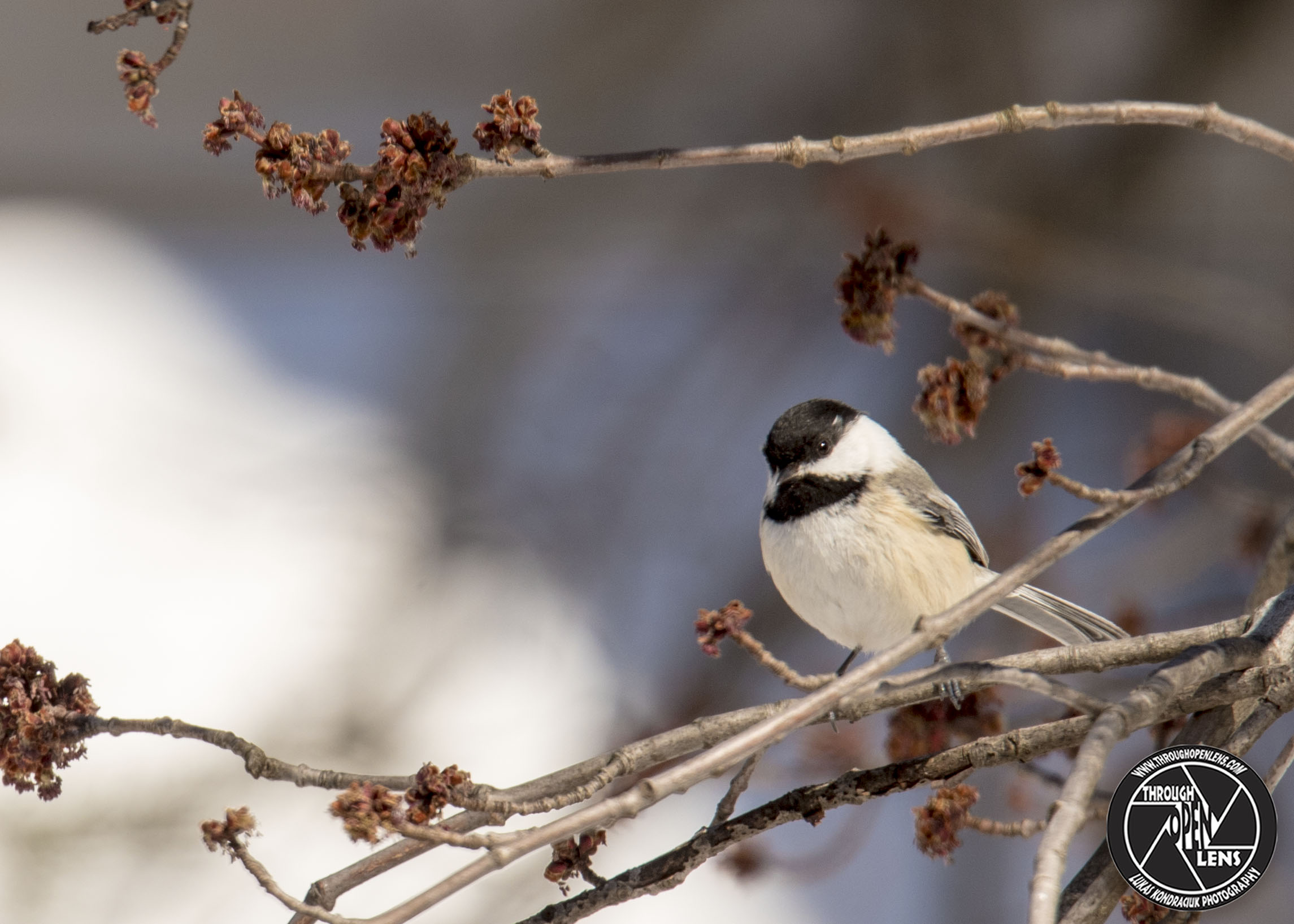
No Matter How Long The Winter, Spring Is Sure To Follow!

F/10.0, 1/400, ISO 160.

Black-capped Chickadee

What did the tree say to spring?

What a re-leaf.

Interesting Fact: Chickadee calls are complex and language-like, communicating information on identity and recognition of other flocks as well as predator alarms and contact calls. The more dee notes in a chickadee-dee-dee call, the higher the threat level. ( https://www.allaboutbirds.org/guide/Black-capped_Chickadee/lifehistory )

Believe You Can And You’re Halfway There.

F/10.0, 1/400, ISO 400.

Dark-eyed Junco

Why did the golfer wear two pairs of pants?

In case he got a hole in one.

Interesting Fact: The female chooses the nest site, typically in a depression or niche on sloping ground, rock face, or amid the tangled roots of an upturned tree. Around people, juncos may nest in or underneath buildings. Occasionally, juncos nest above the ground on horizontal branches (rarely as high as 45 feet), window ledges, and in hanging flower pots or light fixtures. ( https://www.allaboutbirds.org/guide/Dark-eyed_Junco/lifehistory )

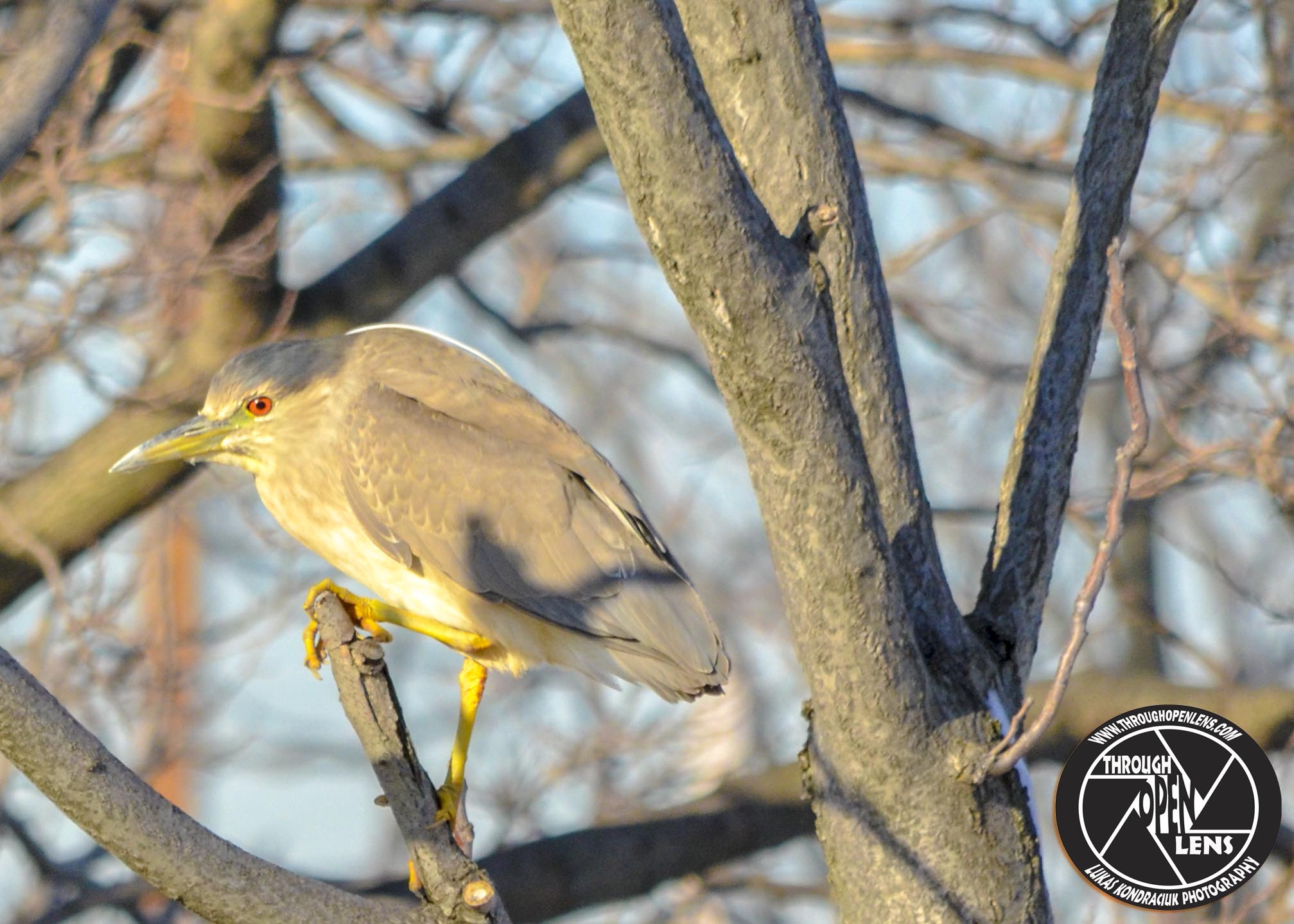
I Solemnly Swear I Am Up To No Good!

F/9.0, 1/125, ISO 320.

Black-crowned Night-Heron

Guest at a restaurant: “I refuse to eat this roast beef. Please call the manager! “

Waiter: “That’s no use. He won’t eat it either.”

Interesting Fact: Black-crowned Night Heron nest in groups that often include other species, including herons, egrets, and ibises. ( https://www.allaboutbirds.org/guide/Black-crowned_Night-Heron )