Come Swim With Me!

F/5.6, 1/500, ISO 250.

Horned Grebe

What is a witch’s favorite subject in school?

Spelling.

Interesting Fact:  Like most grebes, the small chicks of the Horned Grebe frequently ride on the backs of their swimming parents. The young ride between the wings on the parent’s back, and may even go underwater with them during dives. ( https://www.allaboutbirds.org/guide/Horned_Grebe/lifehistory )

What Doesn’t Kill You Makes You Stronger. Except For Bears, Bears Will Kill You!

F/6.3, 1/25, ISO 160.

American Black Bear

Why do bears have fur coats?

Because they would look silly in ski jackets.

Interesting Fact: Female black bears give birth to two or three blind, helpless cubs in mid-winter and nurse them in the den until spring, when all emerge in search of food. The cubs will stay with their very protective mother for about two years. ( https://www.nationalgeographic.com/animals/mammals/a/american-black-bear/ )

Sometimes You Have To Stand Alone To Prove That You Can Still Stand!

F/6.3, 1/50, ISO 320.

Groundhog (Woodchuck )

Why did the worker get fired from the calendar factory?

He took a day off.

Interesting Fact: The groundhog—also known as a woodchuck—spends much of its days alone, foraging for plants and grasses and digging burrows up to 66 feet (20 meters) long. ( https://kids.nationalgeographic.com/animals/mammals/groundhog/ )


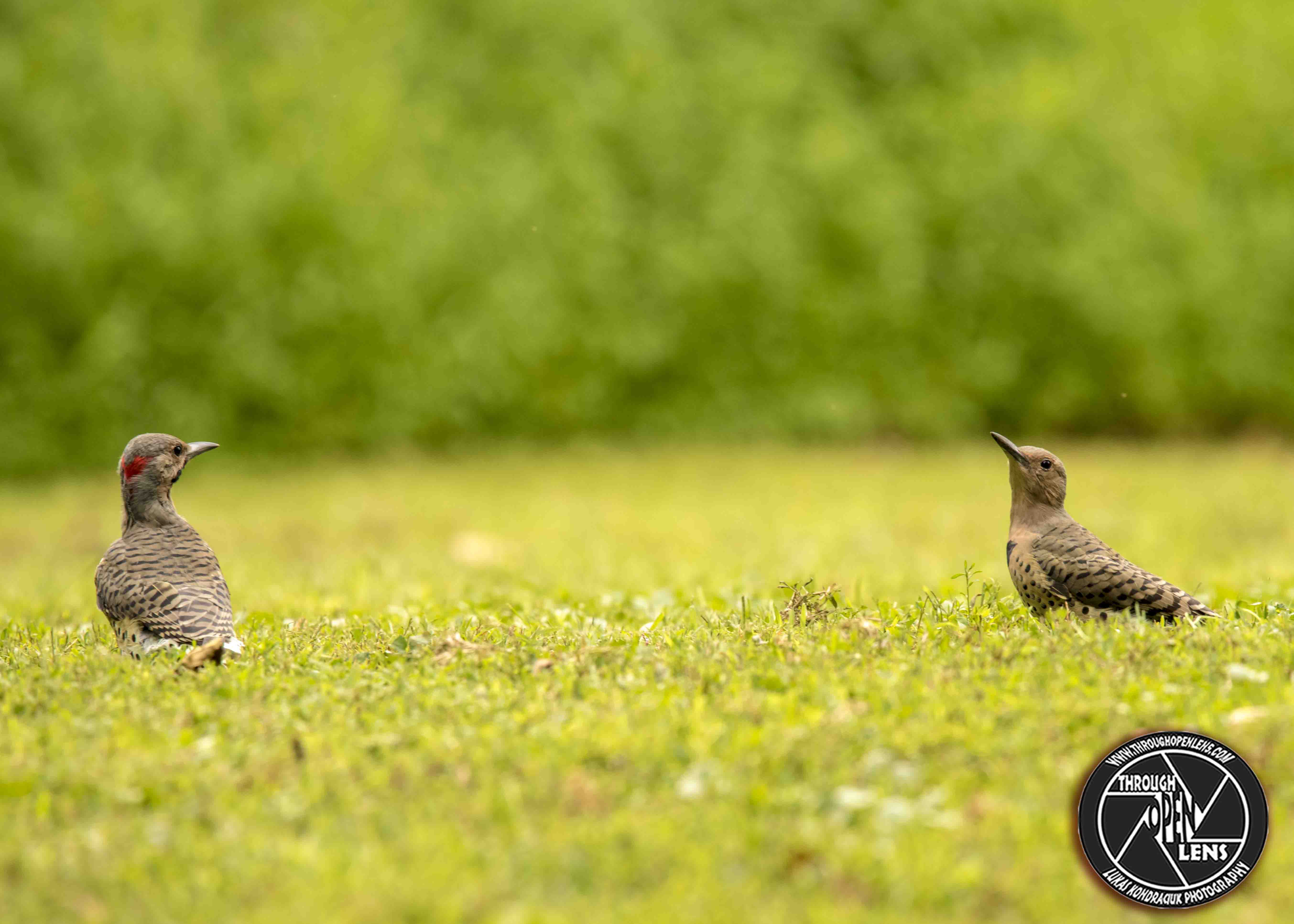
Hey Bro What’s Up!

F/8.0, 1/225, ISO 400.

Northern Flicker

Why is Superman’s costume so tight?

Because he wears a size “S”.

Interesting Fact: Like most woodpeckers, Northern Flickers drum on objects as a form of communication and territory defense. In such cases, the object is to make as loud a noise as possible, and that’s why woodpeckers sometimes drum on metal objects. One Northern Flicker in Wyoming could be heard drumming on an abandoned tractor from a half-mile away. ( https://www.allaboutbirds.org/guide/Northern_Flicker/lifehistory )

Without Change There Would Be No Butterflies

Autumn Begins! 🍁🍂

F/9.0, 1/320, ISO 320.

Butterfly

What kind of music do Mummies listen to?

Wrap.

Interesting Fact: Butterflies in their adult stage can live from a week to nearly a year depending on the species. Many species have long larval life stages while others can remain dormant in their pupal or egg stages and thereby survive winters.[29] The Melissa Arctic (Oeneis melissa) overwinters twice as a caterpillar.[30] Butterflies may have one or more broods per year. The number of generations per year varies from temperate to tropical regions with tropical regions showing a trend towards multivoltinism. ( https://en.wikipedia.org/wiki/Butterfly

You had a bad day, You’re taking one down, You sing a sad song just to turn it around

F/10.0, 1/400, ISO 250.

American Goldfinch

A police officer in a small town stopped a motorist who was speeding down Main Street. “But officer,” the man began, “I can explain.” “Just be quiet,” snapped the officer. “I’m going to let you cool your heels in jail until the chief gets back.” “But, officer, I just wanted to say,…” “And I said to keep quiet! You’re going to jail!” A few hours later the officer looked in on his prisoner and said, “Lucky for you that the chief’s at his daughter’s wedding. He’ll be in a good mood when he gets back.” “Don’t count on it,” answered the fellow in the cell. “I’m the groom.”

Interesting Fact: Goldfinches are among the strictest vegetarians in the bird world, selecting an entirely vegetable diet and only inadvertently swallowing an occasional insect. ( https://www.allaboutbirds.org/guide/American_Goldfinch/lifehistory )

Hi Honey!

F/5.0, 1/60, ISO 250.

Spider and Yellow Jacket Bee

What do you call an under cover spider?

A spy-der

Interesting Fact:  Anatomically, spiders differ from other arthropods in that the usual body segments are fused into two tagmata, the cephalothorax and abdomen, and joined by a small, cylindrical pedicel. Unlike insects, spiders do not have antennae. In all except the most primitive group, the Mesothelae, spiders have the most centralized nervous systems of all arthropods, as all their ganglia are fused into one mass in the cephalothorax. Unlike most arthropods, spiders have no extensor muscles in their limbs and instead extend them by hydraulic pressure. ( https://en.wikipedia.org/wiki/Spider )

I Meant To Behave But There Were Too Many Other Options

F/6.3, 1/160, ISO 320.

Nelson’s Sparrow

Did you hear abut the hungry clock?

It went back four seconds.

Interesting Fact: The Nelson’s Sharp-tailed Sparrow formerly was considered the same species as the Saltmarsh Sharp-tailed Sparrow, collectively known as the Sharp-tailed Sparrow. The two forms have separate breeding ranges that barely overlap in Maine. They differ in genetics, songs, and subtle plumage characters. ( https://www.allaboutbirds.org/guide/Nelsons_Sparrow/lifehistory )

Follow The Bunny He Has The Chocolate!

F/9.0, 1/320, ISO 250.

Desert Cottontail Rabbit

How do you make a bandstand?

Take away their chairs!

Interesting Fact: Habitat loss due to land clearing and cattle grazing may severely affect the population of the desert cottontail.[12] Human-induced fires are also a potential threat for desert cottontail populations.[12] Another factor is its competition with the black-tailed jackrabbit (Lepus californicus), because both have the same diet, and share the same habitat.[24] When a season has been particularly dry, there is less plant life to go around. The cottontail does not fear the jackrabbit, in fact the jackrabbit is very skittish and will retreat from a confrontation in most instances. However, the black-tailed jackrabbit is much bigger, and consumes much more food at eating times. ( https://en.wikipedia.org/wiki/Desert_cottontail

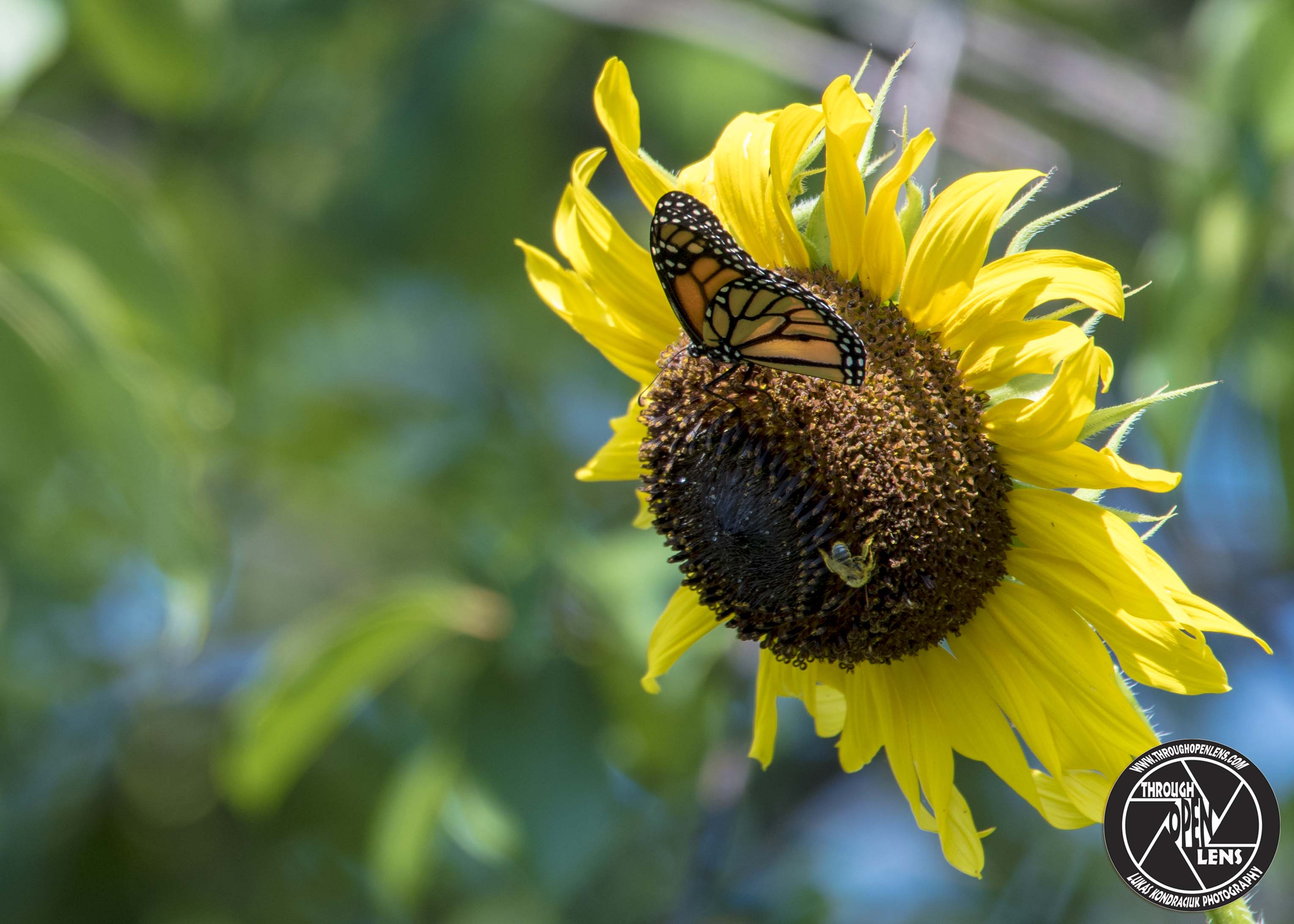
Live Life Sunny Side Up!

F/8.0, 1/125, ISO 160.

Butterfly

Why did the skeleton burp?

Because it didn’t have the guts to fart.

Interesting Fact: Butterflies can eat anything that can dissolve in water. They mostly feed on nectar from flowers but also eat tree sap, dung, pollen, or rotting fruit. They are attracted to sodium found in salt and sweat. This is why they sometimes even land on people in Butterfly Parks. Sodium as well as many other minerals is vital for the butterflies reproduction. ( http://www.whatdobutterflieseat.info/ )