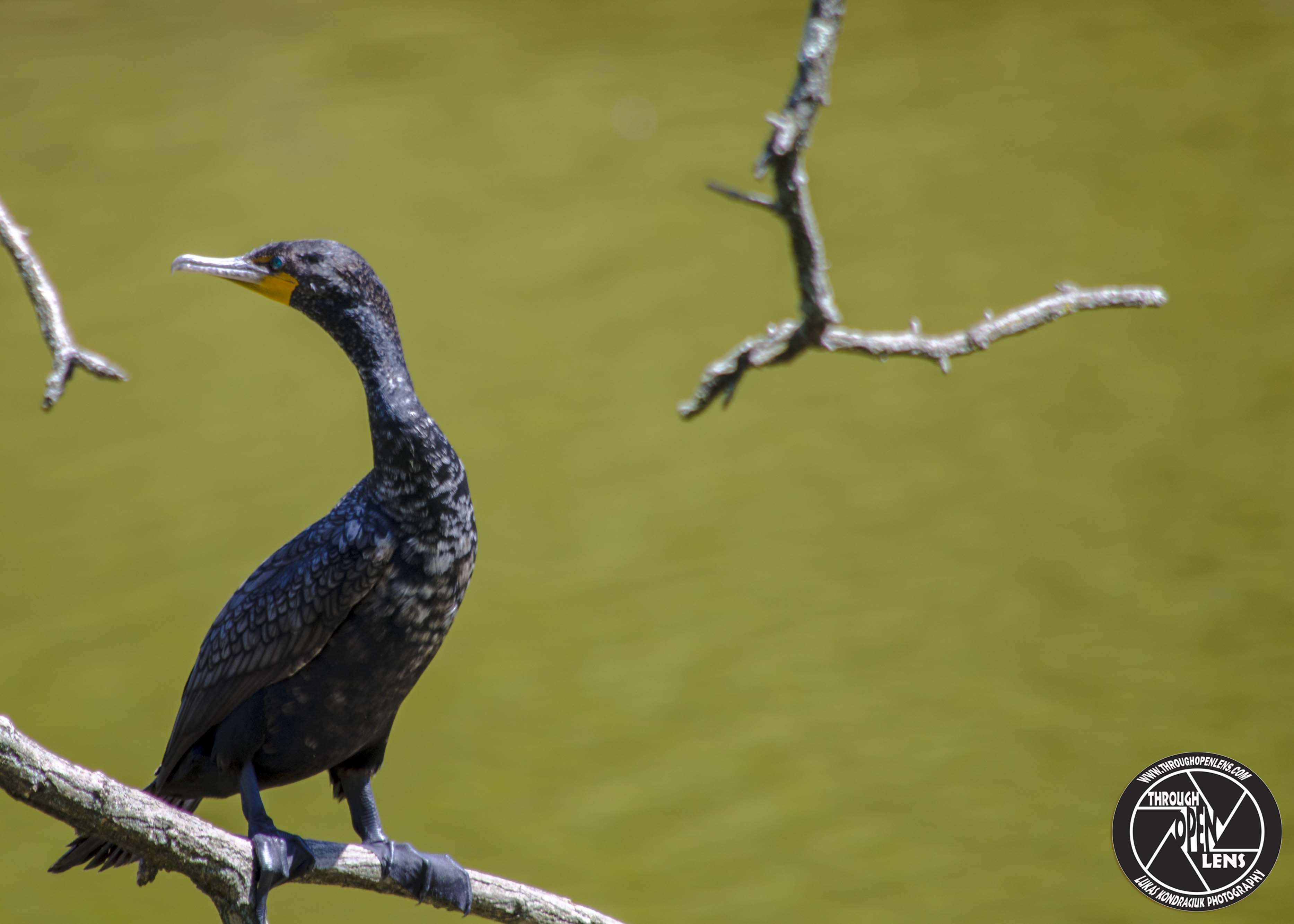
What Was That?!

F/5.6,1/160, ISO 100.

Double-crested Cormorant

What is the difference between the government and the Mafia?

One of them is organized.

Interesting Fact: Double-crested cormorants are gregarious birds that are almost always near water. Their main two activities are fishing and resting, with more than half their day spent on the latter. When at rest, a cormorant will choose an exposed spot on a bare branch or a windblown rock, and often spread its wings out, which is thought to be a means of drying their feathers after fishing. ( https://www.allaboutbirds.org/guide/Double-crested_Cormorant/lifehistory )


Eat Pasta Swim Fasta!

F/7.1, 1/200, ISO 200.

Black Scoter Duck

Want to hear a construction joke?

Oh never mind, I’m still working on that one.

Interesting Fact: The lined nest is built on the ground close to the sea, lakes or rivers, in woodland or tundra. 5–7 eggs are laid. Each eggs weighs from 60–74 g (2.1–2.6 oz), or 8% of the females body weight. The incubation period may range from 27 to 31 days. Females brood their young extensively for about 3 weeks, after which the still flightless young must fend for themselves. ( https://en.wikipedia.org/wiki/Black_scoter )

Not Fair You Are Peeking!

F/8.0, 1/250, ISO 200.

White-Tailed Deer 

How does NASA organize a birthday party?

They planet!

Interesting Fact: Males compete for the opportunity of breeding females. Sparring among males determines a dominance hierarchy.[63] Bucks attempt to copulate with as many females as possible, losing physical condition, since they rarely eat or rest during the rut. The general geographical trend is for the rut to be shorter in duration at increased latitude. Many factors determine how intense the “rutting season” will be; air temperature is a major one. Any time the temperature rises above 40 °F (4 °C), the males do much less traveling looking for females, else they will be subject to overheating or dehydrating. Another factor for the strength in rutting activity is competition. If numerous males are in a particular area, then they compete more for the females. If fewer males or more females are present, then the selection process will not need to be as competitive. ( https://en.wikipedia.org/wiki/White-tailed_deer )


Flying High, High, I’m The Bird In The Sky!

F/13.0, 1/640, ISO 250.

Osprey

What did the fish say when he swam into the wall?

Dam!

Interesting Fact: Ospreys are unusual among hawks in possessing a reversible outer toe that allows them to grasp with two toes in front and two behind. Barbed pads on the soles of the birds’ feet help them grip slippery fish. When flying with prey, an Osprey lines up its catch head first for less wind resistance.  ( https://www.allaboutbirds.org/guide/Osprey/lifehistory )

Catching Some Rays DUDE!

F/9.0, 1/320, ISO 160.

Red-Eared Slider Turtles 

What do turtles use to communicate?

A shellphone!

Interesting Fact: During brumation, T. s. elegans can survive anaerobically for weeks, producing ATP from glycolysis. The turtle’s metabolic rate drops dramatically, with heart rate and cardiac output dropping by 80% to minimise energy requirements.[25][26] The lactic acid produced is buffered by minerals in the shell, preventing acidosis.[27] Red-eared sliders kept captive indoors should not brumate. ( https://en.wikipedia.org/wiki/Red-eared_slider )