I Enjoy Long Romantic Walks To The Fridge.

F/6.3, 1/100, ISO 250.

Wild Turkey

What did the lawyer name his daughter?

Sue.

Interesting Fact: The English name of the bird may be a holdover from early shipping routes that passed through the country of Turkey on their way to delivering the birds to European markets. ( https://www.allaboutbirds.org/guide/Wild_Turkey/lifehistory )

Be Cool Honey Bunny!

F/6.3, 1/160, ISO 250.

Eastern Cottontail Rabbit

What did the salad say when the cabbage interrupted their meal?

Lettuce alone!

Interesting Fact: The cottontail prefers an area where it can hide quickly but be out in the open. Forests, swamps, thickets, bushes, or open areas where shelter is close by are optimal habitation sites for this species.  ( https://en.wikipedia.org/wiki/Eastern_cottontail )

So Do You Think That Worm Will Come Out Soon?

F/7.1, 1/200, ISO 400.

Wild Turkeys

What’s the opposite of Dominoes?

Domi doesnt know.

Interesting Fact: They usually roost in flocks, but sometimes individually. Courting males gobble to attract females and warn competing males. They display for females by strutting with their tails fanned, wings lowered, while making nonvocal hums and chump sounds.  ( https://www.allaboutbirds.org/guide/Wild_Turkey/lifehistory )


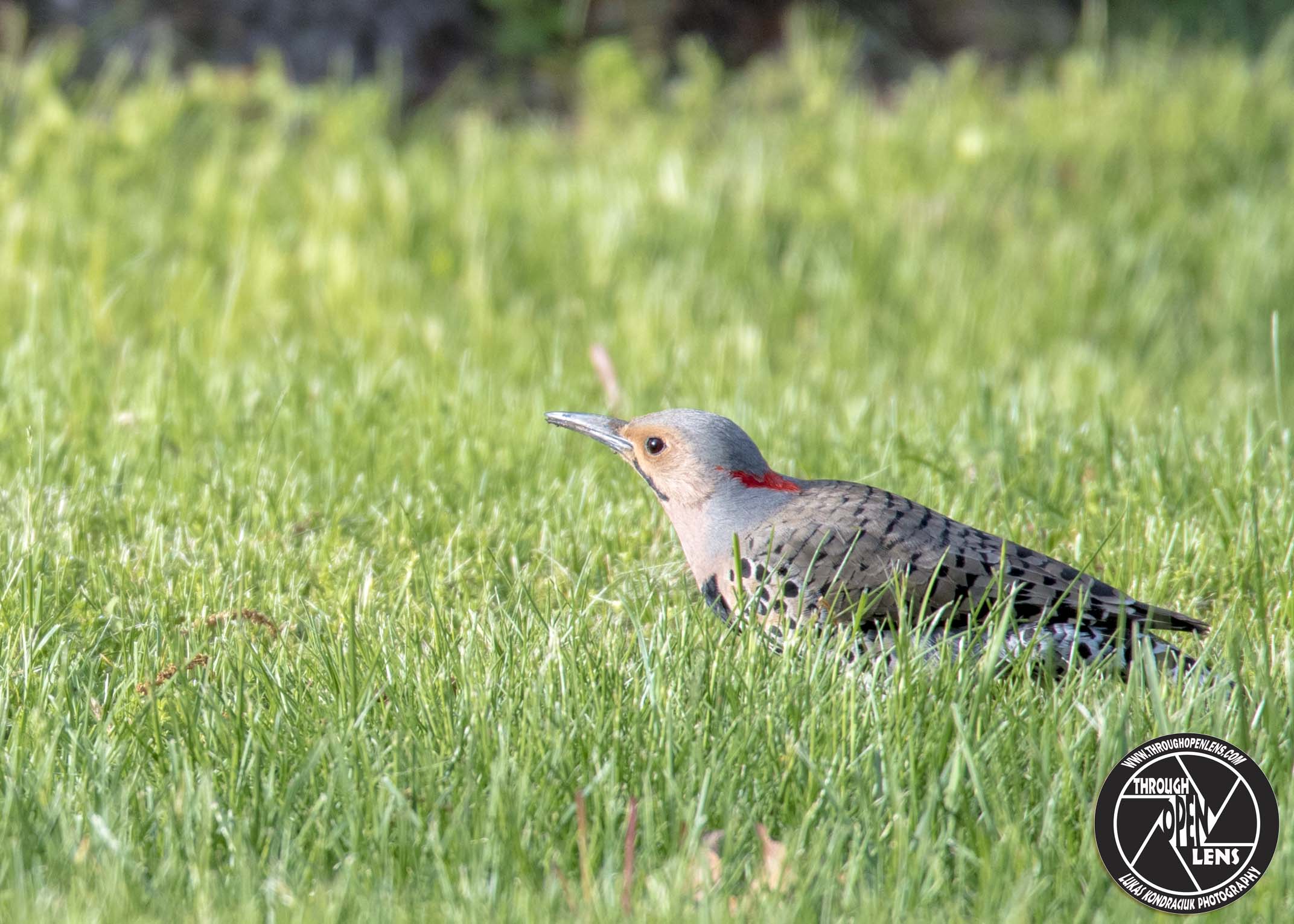
Shh… I’m Hiding From Negative People.

F/8.0, 1/250, ISO 320.

Northern Flicker 

What did the math text book say to the Shakespeare text book?

I’ve already got a lot of problems, and I don’t need any of your drama.

Interesting Fact: Although it can climb up the trunks of trees and hammer on wood like other woodpeckers, the Northern Flicker prefers to find food on the ground. Ants are its main food, and the flicker digs in the dirt to find them. It uses its long barbed tongue to lap up the ants. ( https://www.allaboutbirds.org/guide/Northern_Flicker/ )


Ehh, What’s Up Doc?

F/6.3, 1/160, ISO 640.

Eastern Cottontail Rabbit

What did the rabbit give his girlfriend?

A 14 carrot ring!

Interesting Fact: There are several species of cottontail rabbit, but the eastern cottontail is the most common. This ubiquitous animal can be found from Canada to South America and, in the United States, from the East Coast to the Great Plains. Cottontails range from reddish brown to gray, but all feature the distinctive “cotton ball” tail for which they are named. ( http://www.nationalgeographic.com/animals/mammals/e/eastern-cottontail-rabbit/ )

It’s The Little Things That Makes Life Big

F/5.0, 1/60, ISO 320.

White-Tailed Deer Fawn

How do you save a deer during hunting season?

You hang on for deer life.

Interesting Fact: White-tailed deer hide their fawns on the forest floor or in tall grass to keep them safe. ( http://www.nationalgeographic.com/animals/mammals/w/white-tailed-deer/ )

Ask Us About Our Hole?

F/6.3, 1/125, ISO 320.

Eastern chipmunks

What do you call a rooster who wakes you up at the same time every morning?

An alarm cluck!

Interesting Fact: The eastern chipmunk defends its burrow and lives a solitary life, except during mating season. Females usually produce one or two litters of three to five young.[5] The two breeding seasons are from February to April and from June to August. During the winter, the chipmunk may enter long periods of torpor, but does not truly hibernate. ( https://en.wikipedia.org/wiki/Eastern_chipmunk )


Don’t Be Such A Turkey!

F/7.1, 1/200, ISO 500.

Wild Turkeys

Why did the toilet paper roll down the hill?

Because it wanted to get to the bottom.

Interesting Fact: Wild Turkeys nest on the ground in dead leaves at the bases of trees, under brush piles or thick shrubbery, or occasionally in open hayfields. ( https://www.allaboutbirds.org/guide/Wild_Turkey/lifehistory )


What The Fox!

F/6.3, 1/30, ISO 500.

Red Fox 

What do you call a drunk shark?

Hammered Head

Interesting Fact: Red foxes are usually together in pairs or small groups consisting of families, such as a mated pair and their young, or a male with several females having kinship ties. The young of the mated pair remain with their parents to assist in caring for new kits.[8] The species primarily feeds on small rodents, though it may also target rabbitsgame birdsreptilesinvertebrates[6] and young ungulates.[6] Fruit and vegetable matter is also eaten sometimes.[9] Although the red fox tends to kill smaller predators, including other fox species, it is vulnerable to attack from larger predators, such as wolvescoyotesgolden jackals and medium- and large-sized felines. ( https://en.wikipedia.org/wiki/Red_fox )


Roses Are Red And I Am Blue

F/6.3, 1/60, ISO 250.

Blue Jay

Why did the girl bring lipstick and eye shadow to school?

She had a make-up exam!

Interesting Fact: The pigment in Blue Jay feathers is melanin, which is brown. The blue color is caused by scattering light through modified cells on the surface of the feather barbs. ( https://www.allaboutbirds.org/guide/Blue_Jay/lifehistory )