I’m Feeling A Bit Puffy Today!

F/7.1, 1/200, ISO 250.

Blue Jay

Why did the girl bring lipstick and eye shadow to school?

She had a make-up exam!

Interesting Fact: The Blue Jay frequently mimics the calls of hawks, especially the Red-shouldered Hawk. These calls may provide information to other jays that a hawk is around, or may be used to deceive other species into believing a hawk is present. (  https://www.allaboutbirds.org/guide/Blue_Jay/lifehistory )

What Was That?

F/13.0, 1/500, ISO 800.

Northern Cardinal ( Female )

Why couldn’t the leopard play hide and seek?

Because he was always spotted.

Interesting Fact: A week or two before the female starts building, she starts to visit possible nest sites with the male following along. The pair call back and forth and hold nesting material in their bills as they assess each site. Nests tend to be wedged into a fork of small branches in a sapling, shrub, or vine tangle, 1-15 feet high and hidden in dense foliage. They use many kinds of trees and shrubs, including dogwood, honeysuckle, hawthorn, grape, redcedar, spruce, pines, hemlock, rose bushes, blackberry brambles, elms, sugar maples, and box elders. ( https://www.allaboutbirds.org/guide/Northern_Cardinal/lifehistory )

Adventure Is Just Outside Your Window

F/5.6, 1/125, ISO250.

What did the oak tree say when autumn came around?

Leaf me alone.

Interesting Fact: The word autumn comes from the ancient Etruscan root autu- and has within it connotations of the passing of the year.[11] It was borrowed by the neighbouring Romans, and became the Latin word autumnus.[12] After the Roman era, the word continued to be used as the Old French word autompne (automne in modern French) or autumpne in Middle English,[13] and was later normalised to the original Latin. In the Medieval period, there are rare examples of its use as early as the 12th century, but by the 16th century, it was in common use. ( https://en.wikipedia.org/wiki/Autumn

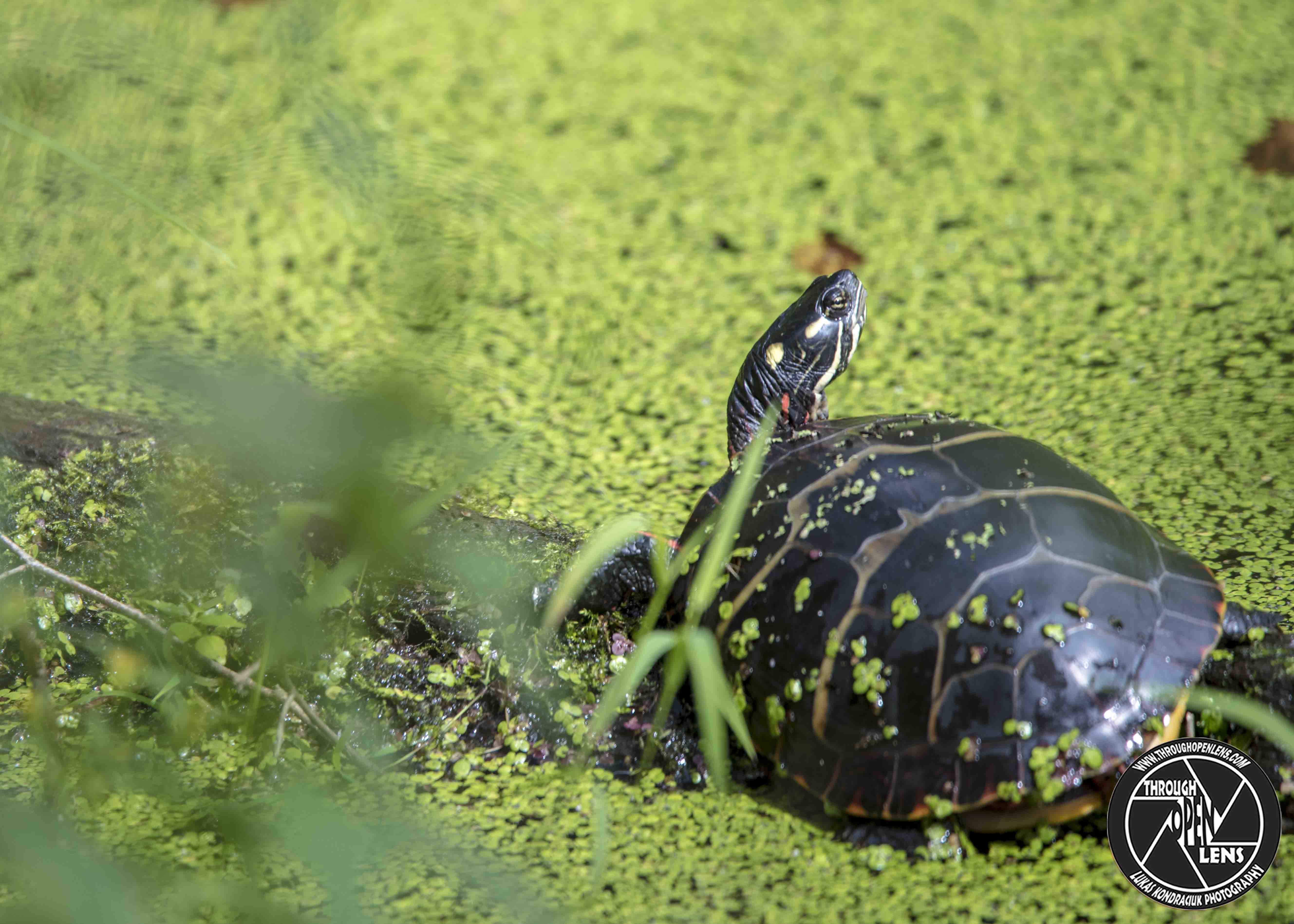
Turtle Power!

F/6.3, 1/125, ISO 200.

Red-Eared Slider Turtle 

What did one elevator say to the other?

I think I’m coming down with something!

Interesting Fact: Red-eared sliders are almost entirely aquatic, but as they are cold-blooded, they leave the water to sunbathe to regulate their temperature.  ( https://en.wikipedia.org/wiki/Red-eared_slider )

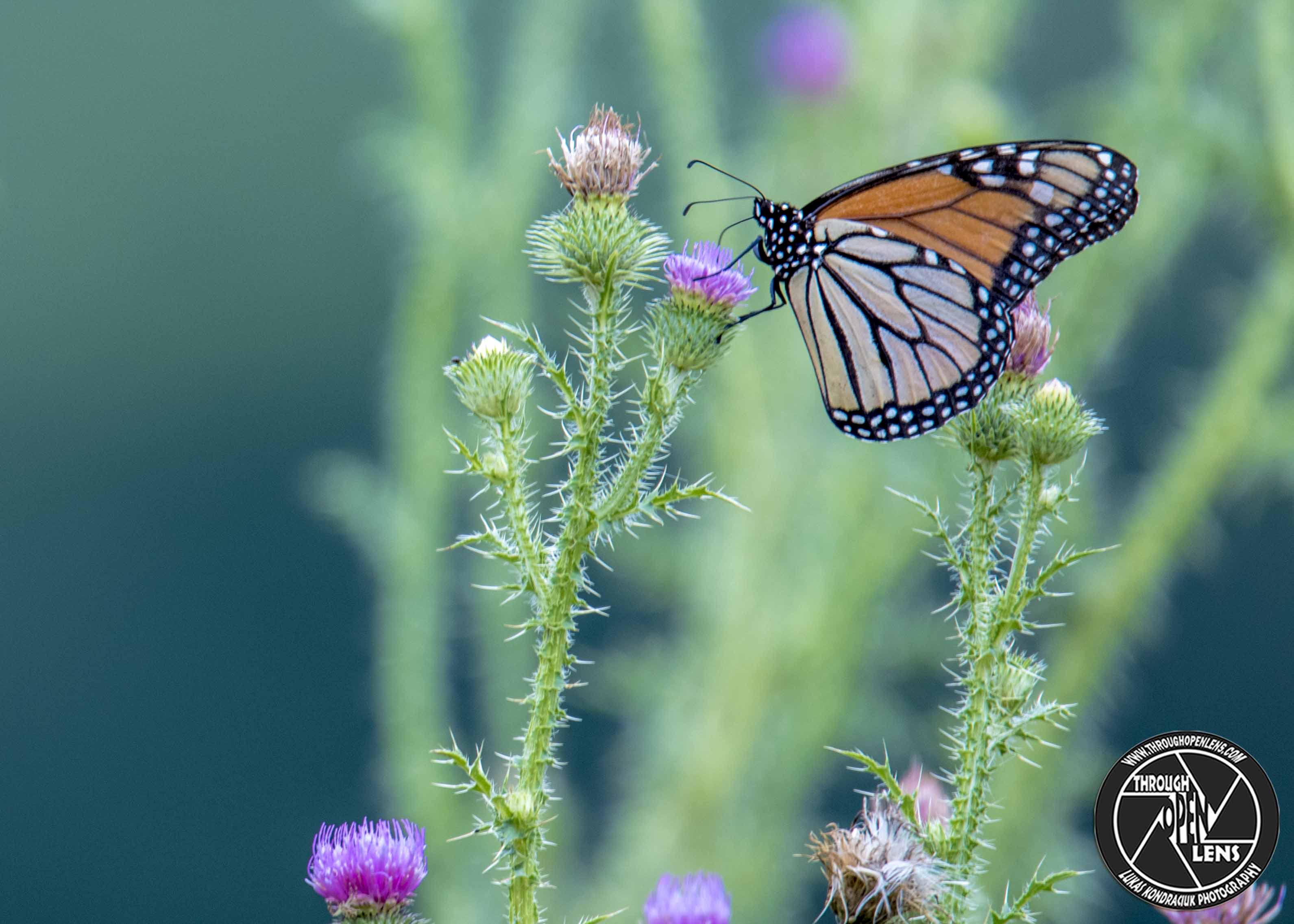
When Butterflies Fall In Love, Do They Feel Humans In Their Stomach?

F/6.3, 1/100, ISO 320.

Butterfly

What did the grape say when it was stepped on?

Nothing, it just let out a little wine.

Interesting Fact:  Butterflies are insects in the macrolepidopteranclade Rhopalocera from the orderLepidoptera, which also includes moths. Adult butterflies have large, often brightly coloured wings, and conspicuous, fluttering flight. The group comprises the large superfamilyPapilionoidea, which contains at least one former group, the skippers (formerly the superfamily “Hesperioidea”) and the most recent analyses suggest it also contains the moth-butterflies (formerly the superfamily “Hedyloidea”). Butterfly fossils date to the Paleocene, which was about 56 million years ago.  ( https://en.wikipedia.org/wiki/Butterfly )

Wazzaap!

F/6.3, 1/145, ISO640.

Turkey Vulture ( Juvenile )

Why are hairdressers never late for work?

Because they know all the short cuts!

Interesting Fact: Outside of the breeding season, Turkey Vultures form roosts of dozens to a hundred individuals. When Turkey Vultures court, pairs perform a “follow flight” display where one bird leads the other through twisting, turning, and flapping flights for a minute or so, repeated over periods as long as 3 hours. Migrating flocks can number in the thousands. At carcasses, several Turkey Vultures may gather but typically only one feeds at a time, chasing the others off and making them wait their turn. Despite their size, Turkey Vultures are often driven off by smaller Black Vultures, Crested Caracaras, Zone-tailed Hawks, and other species. ( https://www.allaboutbirds.org/guide/Turkey_Vulture/lifehistory )

I Am On A Seafood Diet. I See Food, And I Eat It.

F/ 6.3, 1/80, ISO 640.

Turkey Vulture

Two vultures are in a field, eating a dead clown.

One vulture says to the other, “Does this taste funny to you?”

Interesting Fact:  Turkey Vultures nest in rock crevices, caves, ledges, thickets, mammal burrows and hollow logs, fallen trees, abandoned hawk or heron nests, and abandoned buildings. These nest sites are typically much cooler (by 13°F or more) than surroundings, and isolated from human traffic or disturbance. While they often feed near humans, Turkey Vultures prefer to nest far away from civilization. ( https://www.allaboutbirds.org/guide/Turkey_Vulture/lifehistory )

Chill The Fox Out!

F/6.3, 1/40, ISO 500.

Red Fox

Why did the man lose his job at the orange juice factory?

He couldn’t concentrate!

Interesting Fact: In winter, foxes meet to mate. The vixen (female) typically gives birth to a litter of 2 to 12 pups. At birth, red foxes are actually brown or gray. A new red coat usually grows in by the end of the first month, but some red foxes are golden, reddish-brown, silver, or even black. Both parents care for their young through the summer before they are able to strike out on their own in the fall. ( https://www.nationalgeographic.com/animals/mammals/r/red-fox/ )

Bambi

F/5.0, 1/60, ISO 320.

White-Tailed Deer Fawns

What do you call a deer with no eyes?

I have no I-Deer

Interesting Fact: At birth, white tail fawns have a spotted reddish coat that is fairly silky. There may be several hundred spots on the coat. The spots enable the fawn to camouflage itself, with the colors blending well with the surrounding natural environment. They usually weigh between 4 to 8 pounds at birth. The whitetail fawn loses its spots by the end of October of the same year it was born, or within 3 to 4 months after birth.  ( http://www.the-whitetail-deer.com/whitetail-deer-fawns.html )

I Might Be Too Punk Rock For You.

F/ 7.1, 1/200, ISO 1600.

Pileated Woodpecker 

When is it bad luck to be followed by a black cat?

When you’re a mouse.

Interesting Fact: When hammering into this soft wood, Pileated Woodpeckers use their long necks to pull far back from the tree, then make powerful strikes with their heavy bills, pulling with their feet to increase the strength of the blow. The sound is often audible as a heavy thunk, and large chips of wood collect on the ground below. ( https://www.allaboutbirds.org/guide/Pileated_Woodpecker/lifehistory )