I Feel Loonly.

F/7.1, 1/200, ISO 400.

Common Loon ( Nonbreeding adult )

What did the chicken say when it got to the library?

“Book book book book book book book…”

Interesting Fact: Migrating Common Loons occasionally land on wet highways or parking lots, mistaking them for rivers and lakes. They become stranded without a considerable amount of open water for a long takeoff. A loon may also get stranded on a pond that is too small. ( https://www.allaboutbirds.org/guide/Common_Loon/ )

I Like To Be Alone But I Hate Being Lonely

F/8.0, 1/250, ISO 160.

Common Goldeneye

What did the salad say when the cabbage interrupted their meal?

Lettuce alone!

Interesting Fact: The eyes of a Common Goldeneye are gray-brown at hatching. They turn purple-blue, then blue, then green-blue as they age. By five months of age they have become clear pale green-yellow. The eyes will be bright yellow in adult males and pale yellow to white in females. ( https://www.allaboutbirds.org/guide/Common_Goldeneye )


Quack Head!

F/6.3, 1/1000, ISO 400.

Bufflehead

Why did the scientist take out his doorbell?

He wanted to win the no-bell prize.

Interesting Fact: The oldest Bufflehead on record was at least 18 years and 8 months old. It was caught and re-released by a bird bander in New York in 1975. ( https://www.allaboutbirds.org/guide/Bufflehead/lifehistory )

.

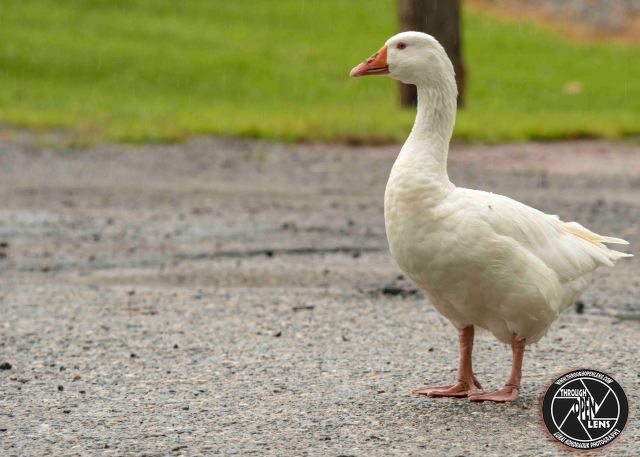
Goose On The Loose!

F/7.1, 1/200, ISO 400.

Domestic Goose in Wild

What did the tooth brush want to become when he grew older?

A broom.

Interesting Fact: The domestication, as Charles Darwin remarks (The Variation of Animals and Plants under Domestication i. 287), is of very ancient date, with archaeological evidence for domesticated geese in Egypt more than 4,000 years ago.[2] They are much larger, and they have been selected for that larger size, with domesticated breeds weighing up to 10 kilograms (22 lb),[2] compared to the maximum of 3.5 kilograms (7.7 lb) for the wild swan goose and 4.1 kilograms (9.0 lb) for the wild greylag goose.[3] This affects their body structure; whereas wild geese have a horizontal posture and slim rear end, domesticated geese lay down large fat deposits toward the tail end, giving a fat rear and forcing the bird into a more upright posture. Although their heavy weight affects their ability to fly, most breeds of domestic geese are capable of flight. ( https://en.m.wikipedia.org/wiki/Domestic_goose )

Those Who Fear The Thorns Cannot Pic The Roses.

F/8.0, 1/250, ISO 320.

Savannah Sparrow

Why did Cinderella get kicked off the soccer team?

Because she ran away from the ball.

Interesting Fact: Raising young is hard work: a female Savannah Sparrow must gather 10 times her weight in food to feed herself and her young during the 8 days they are in the nest. ( https://www.allaboutbirds.org/guide/Savannah_Sparrow/ )

The Time You Enjoy Wasting Is Not Wasted Time!

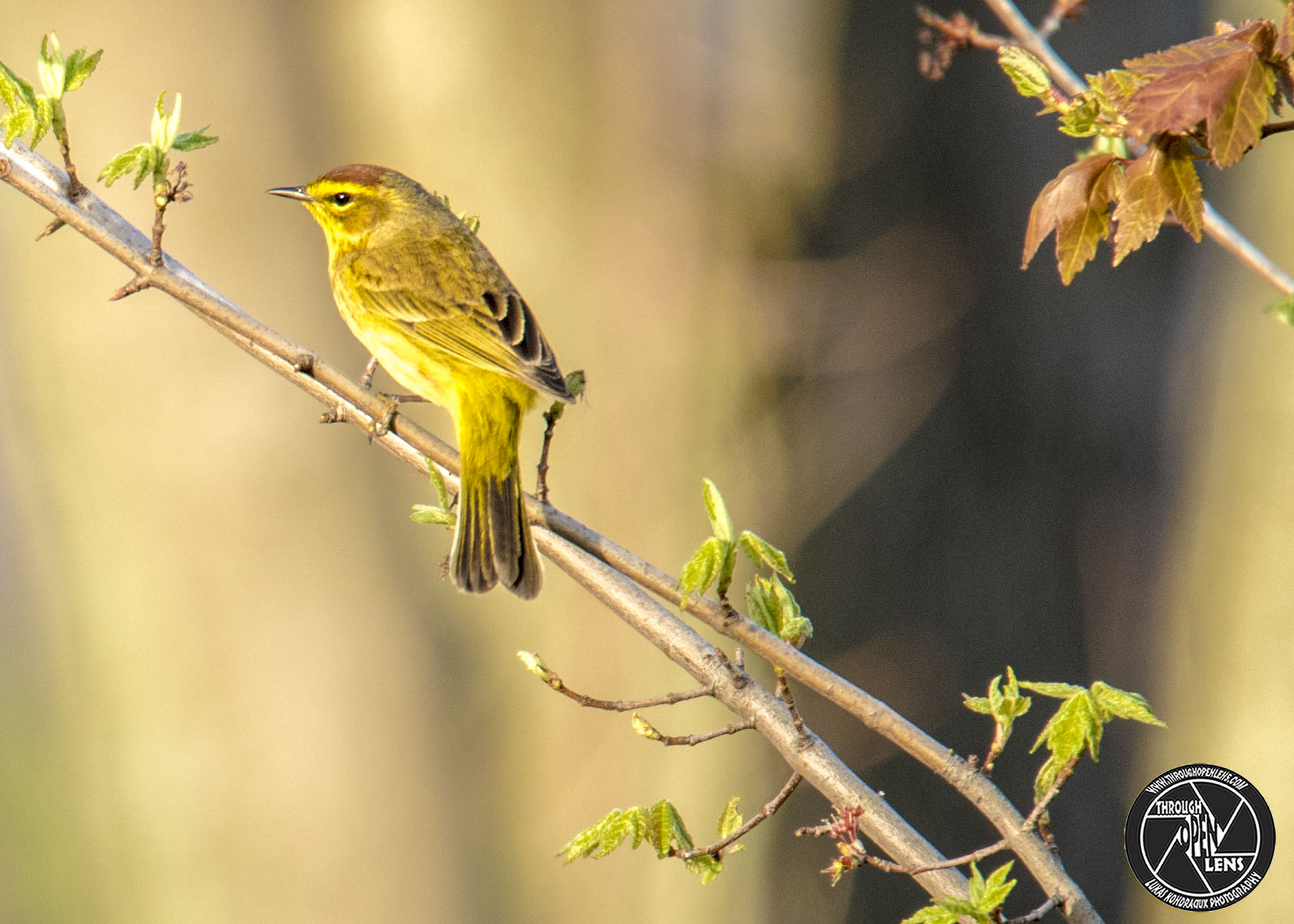
F/7.1, 1/200, ISO 320.

Palm Warbler

What’s red and bad for your teeth?

A brick.

Interesting Fact: Though the Palm Warbler’s name might imply it is a tropical bird, it’s actually one of the northernmost breeding of all warblers (only the Blackpoll Warbler breeds farther north). They got their name from J. P. Gmelin who named them based on a specimen collected on Hispaniola, a Caribbean island with a lot of palm trees. ( https://www.allaboutbirds.org/guide/Palm_Warbler )

You Are My Sunshine

F/7.1, 1/200, ISO 320.

Palm Warbler

Why didn’t the sailors play cards?

Because the captain was on the deck.

Interesting Fact: Canada’s boreal forests stretch for miles and miles. The great boreal forest, often called “North America’s bird nursery,” is the summer home to billions of migratory birds and an estimated 98% of all Palm Warblers. ( https://www.allaboutbirds.org/guide/Palm_Warbler )

I’m A Biter!

F/10.0, 1/400, ISO 800.

Common Loon ( Nonbreeding adult )

Why did the teddy bear say no to dessert?

Because she was stuffed.

Interesting Fact: Loons shoot through the water like a torpedo, propelled by powerful thrusts of feet located near the rear of their body. When their quarry changes direction, loons can execute an abrupt flip-turn that would make Olympic swimmers jealous: they extend one foot laterally as a pivot brake and kick with the opposite foot to turn 180 degrees in a fraction of a second. ( https://www.allaboutbirds.org/guide/Common_Loon/lifehistory )


It Time To Get My Beak Wet!

F/9.0, 1/250, ISO 640.

Common Loon ( Nonbreeding adult )

Where do snowmen keep their money?

In snow banks.

Interesting Fact: Loons are like airplanes in that they need a runway for takeoff. In the case of loons, they need from 30 yards up to a quarter-mile (depending on the wind) for flapping their wings and running across the top of the water in order to gain enough speed for lift-off. ( https://www.allaboutbirds.org/guide/Common_Loon )

Dear People, Quit Trying To Look Like Us In Photos… It’s Embarrassing To Our Species.

F/10.0, 1/400, ISO 320.

Gadwall

Why did the can crusher quit his job?

Because it was soda pressing.

Interesting Fact:  Gadwall are dabbling ducks—they ride fairly high in the water and they tip forward to graze on submerged plants that they can reach with their outstretched necks. They rarely dive. Gadwall sometimes steal food from American Coots. ( https://www.allaboutbirds.org/guide/Gadwall/lifehistory )