Should We Drink Today… Or Drink Today And Tomorrow… We are Confused!

F/6.3, 1/640, ISO 200.

Greater Yellowlegs

Why do ghosts carry tissues?

Because they have BOOOOgers.

Interesting Fact: The Greater Yellowlegs nests on the ground often at the base of short, coniferous trees. Nests from the previous year are occasionally reused in subsequent years.  ( https://www.allaboutbirds.org/guide/Greater_Yellowlegs/lifehistory )


By Invitation Only!

F/5.6, 1/500, ISO 200.

Mallard Female

Why do barbers make good drivers?

They know all the shortcuts.

Interesting Fact: During egg-laying phase, she lines the nest with grasses, leaves, and twigs from nearby. She also pulls tall vegetation over to conceal herself and her nest. After incubation begins, she plucks down feathers from her breast to line the nest and cover her eggs. The finished nest is about a foot across, with a bowl for the eggs that is 1–6 inches deep and 6–9 inches across. ( https://www.allaboutbirds.org/guide/Mallard/lifehistory )

Hanging Out Is Highly Recommended In This Area

F/8.0, 1/250, ISO 250.

Marsh Wren

What did one brick say to the one above it?

You’re too hard on me.

Interesting Fact: Marsh Wrens pick insects and spiders from stems and leaves of marsh vegetation. They tend to forage close to water, but occasionally fly up to catch a passing insect.  ( https://www.allaboutbirds.org/guide/Marsh_Wren/lifehistory )

We Are Not Talking If You Are Wondering!

F/6.3, 1/640, ISO 200.

Greater Yellowlegs

What’s invisible and smells like carrots?

Bunny Farts!

Interesting Fact: The Greater Yellowlegs walks with a distinctive high-stepping gait across wetlands when foraging, occasionally dashing forward in pursuit of a prey item. Compared to other shorebirds, the Greater Yellowlegs is often rather solitary.  ( https://www.allaboutbirds.org/guide/Greater_Yellowlegs/lifehistory )

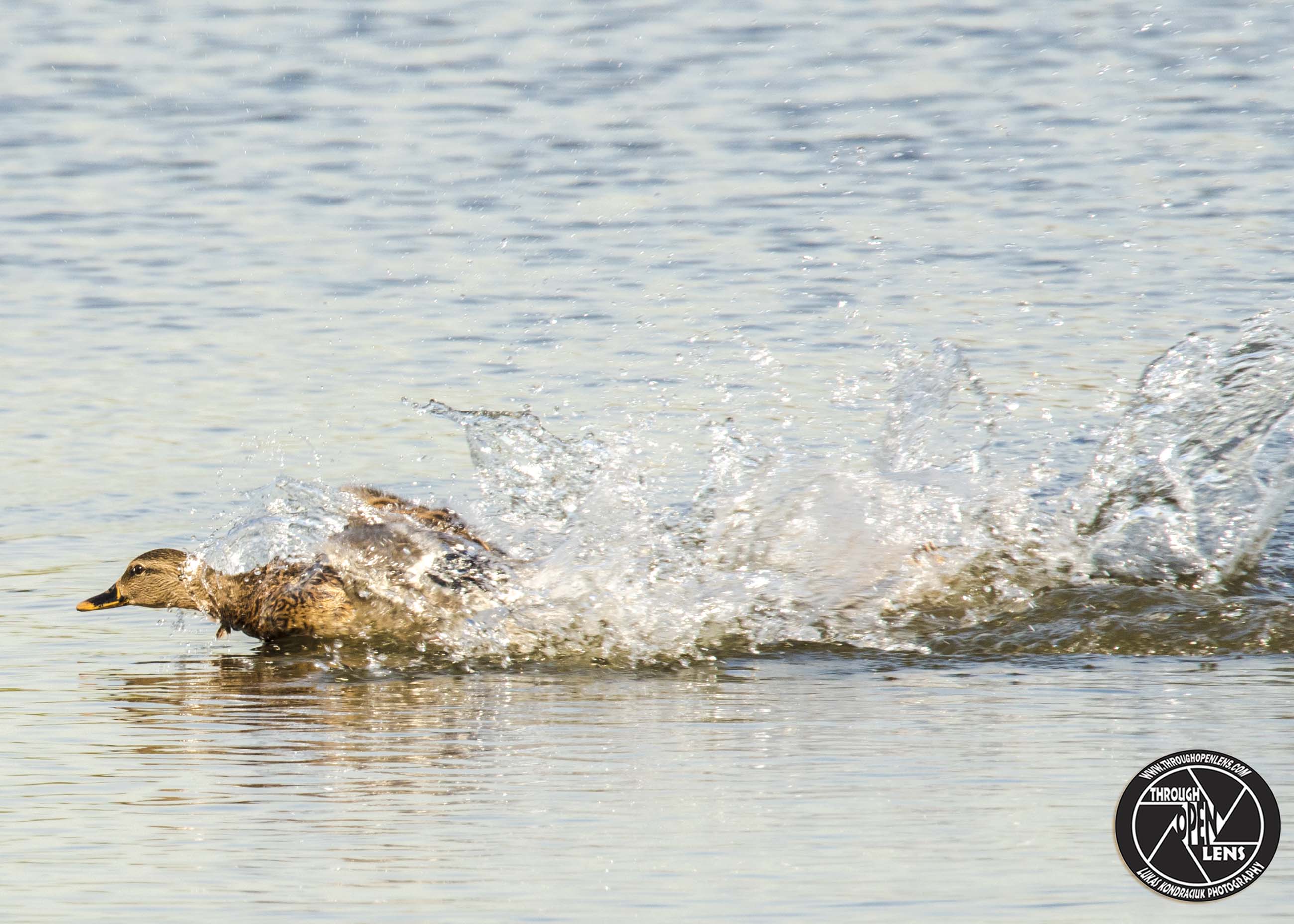
Motorboating Is My Thing!

F/11.0, 1/500, ISO 250.

Mallard Female

Which day of the week do chickens hate most?

Fry-day!

Interesting Fact: The female forms a shallow depression or bowl on the ground in moist earth. She does not carry material to the nest but rather pulls vegetation she can reach toward her while sitting on nest. During egg-laying phase, she lines the nest with grasses, leaves, and twigs from nearby. She also pulls tall vegetation over to conceal herself and her nest. ( https://www.allaboutbirds.org/guide/Mallard/lifehistory )

Chillin Like A Villain

F/11.0, 1/500, ISO 320.

Red-winged Blackbird ( Adult Female  )

What does a crying ghost say?

Boo-Hoo

Interesting Fact:  Females build the nests by winding stringy plant material around several close, upright stems and weaving in a platform of coarse, wet vegetation. Around and over this she adds more wet leaves and decayed wood, plastering the inside with mud to make a cup. ( https://www.allaboutbirds.org/guide/Red-winged_Blackbird/lifehistory )

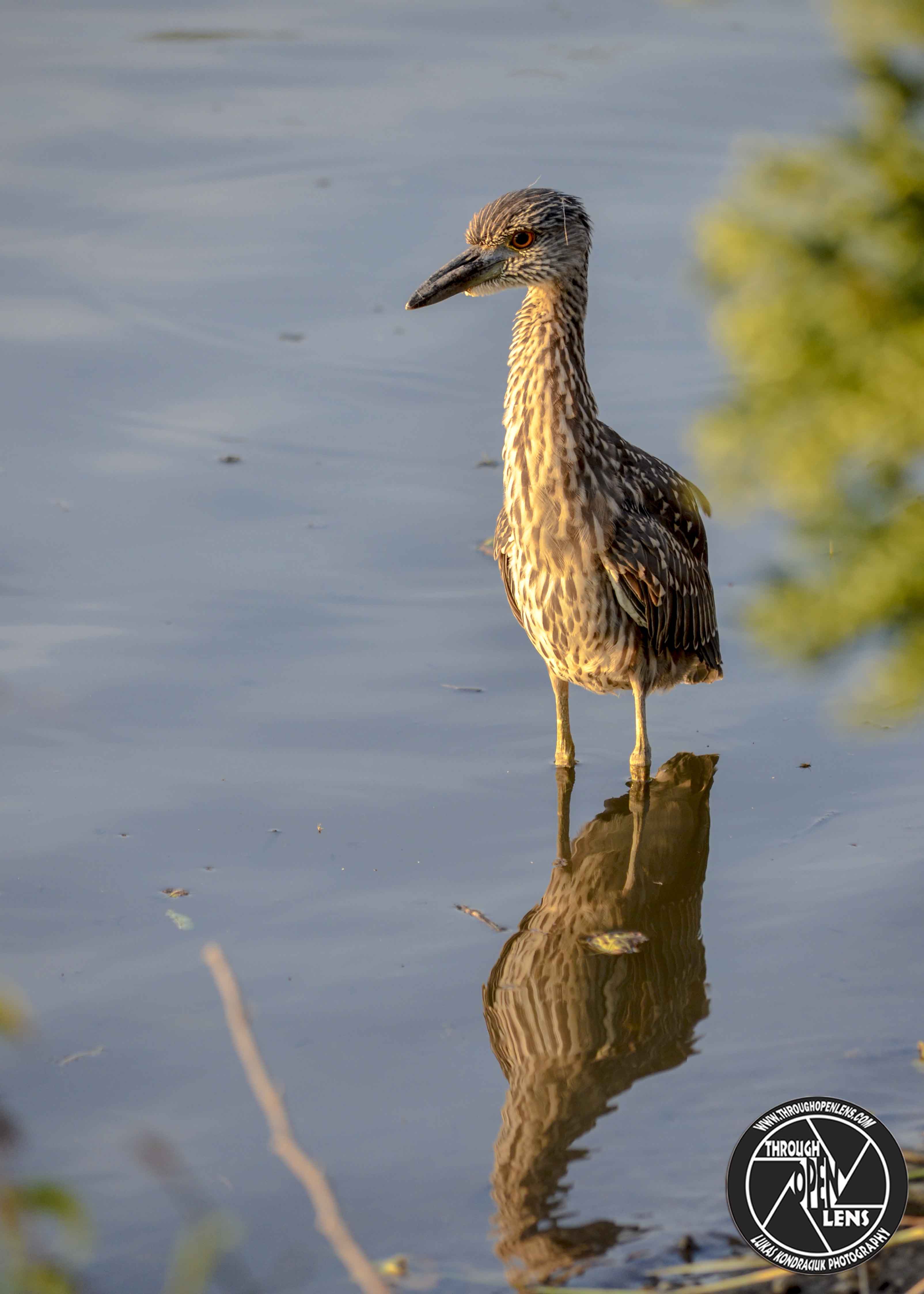
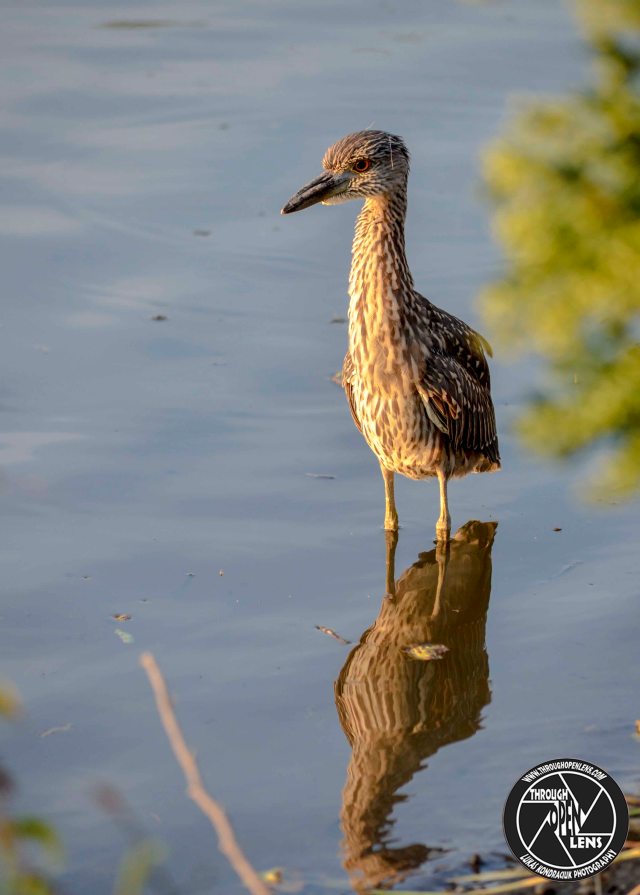
You Are Young. So Shut Up, And Enjoy Life.

F/5.6, 1/500, ISO 400.

Yellow-crowned Night-Heron ( Juvenile ) 

Why was the baby strawberry crying?

Because her mom and dad were in a jam

Interesting Fact: Foraging birds stand still or slowly stalk crabs and other prey along shorelines, marshes, and fields. Once in striking range they lunge at their prey and seize it in their bill. They swallow small prey whole, but often shake apart, crush, or spear larger prey. They forage on their own, typically keeping other individuals at a distance of 15 feet or more. Courting Yellow-crowned Night-Herons make display flights around their colonies, sometimes with the neck conspicuously extended. Courting pairs make a neck-stretching display, slowly raising and then quickly pushing the head back between its shoulders, while fanning the long shoulder plumes. Males do this first and females sometimes follow. ( https://www.allaboutbirds.org/guide/Yellow-crowned_Night-Heron )

You Like My Legs?

F/7.1, 1/200, ISO 250.

Greater Yellowlegs

A bear walks into a bar. He says, “I’ll have a gin… … … … … … … and tonic.”

The bartender says, “Sure, but what about the big pause?”

The bear says, “I was born with them.”

Interesting Fact: A common, tall, long-legged shorebird of freshwater ponds and tidal marshes, the Greater Yellowlegs frequently announces its presence by its piercing alarm calls. ( https://www.allaboutbirds.org/guide/Greater_Yellowlegs/lifehistory )

Going Crazy? Hang In There. I’ll Be Your Tour Guide!

F/8.0, 1/250, ISO 250.

Marsh Wren

Have you ever tried eating a clock?

It’s very time consuming.

Interesting Fact: Eastern and western populations of the Marsh Wren show slight differences in appearance, but large differences in song. In general, western birds are paler and drabber, and sing less musical songs. The differences may mean that the two forms are separate species. ( https://www.allaboutbirds.org/guide/Marsh_Wren/lifehistory )

Fish Out Of The Water!

F/10.0, 1/400, ISO 250.

Common Terns

How do birds fly?

They just wing it!

Interesting Fact: Common Terns nest in colonies on the ground in areas with loose sand, gravel, shell, or cobble pebbles typically less than 350 feet from the water. They tend to choose areas with scattered, low-growing vegetation to provide cover for chicks.  ( https://www.allaboutbirds.org/guide/Common_Tern/lifehistory )