Save Water Take Baths With A Friend!

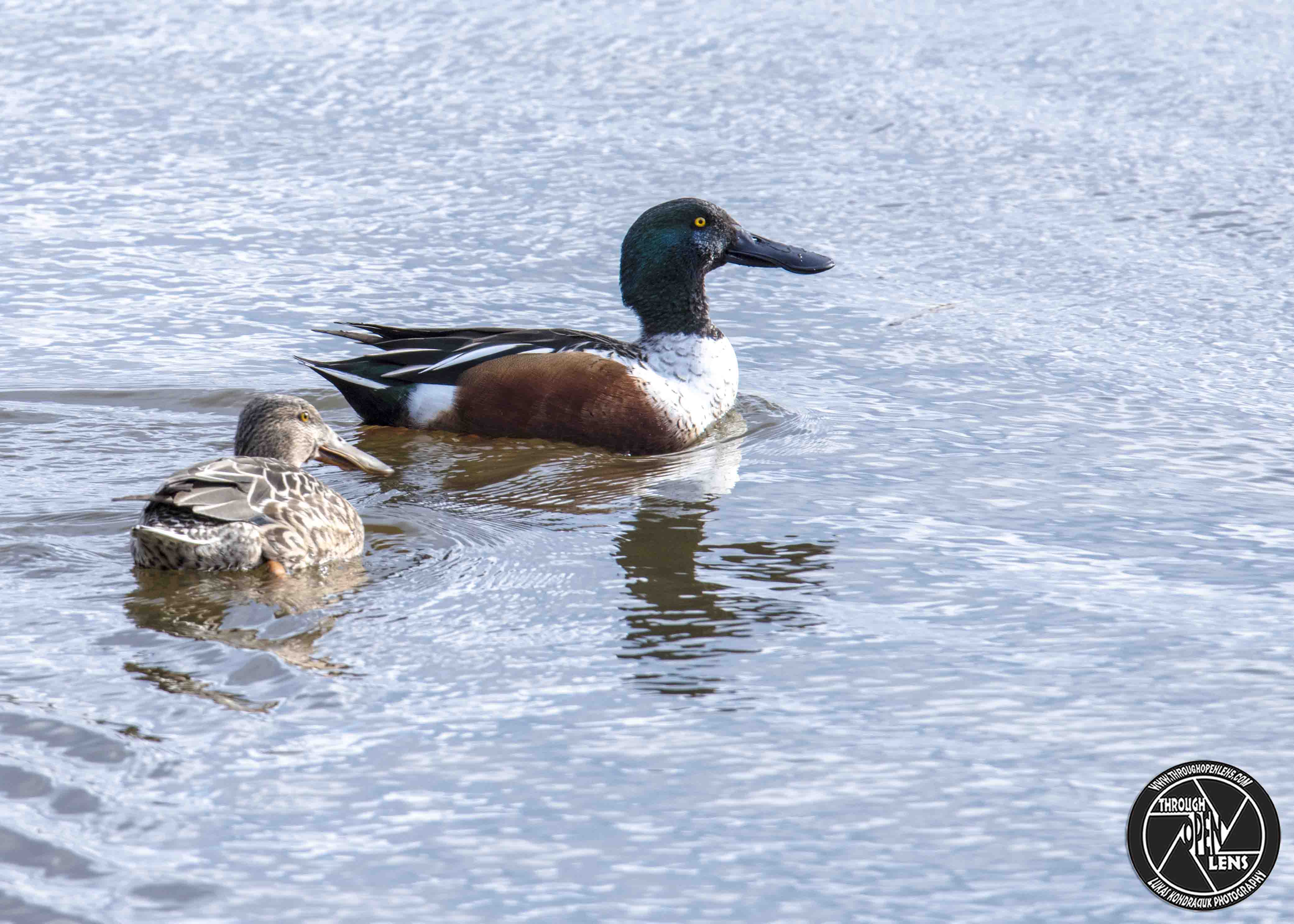
F/11.0, 1/500, ISO 400.

Northern Shoveler

What did the duck say when he dropped the dishes?

“I hope I didn’t quack any!”

Interesting Fact: Females use their body, feet, and bill to make a small depression on the ground about 8 inches wide. The nest scrape is usually surrounded on at least three sides by vegetation and lined with downy feathers. ( https://www.allaboutbirds.org/guide/Northern_Shoveler/lifehistory )


A song told me to Deck the Halls…so I did! Mr.and Mrs. Hall are not very happy!

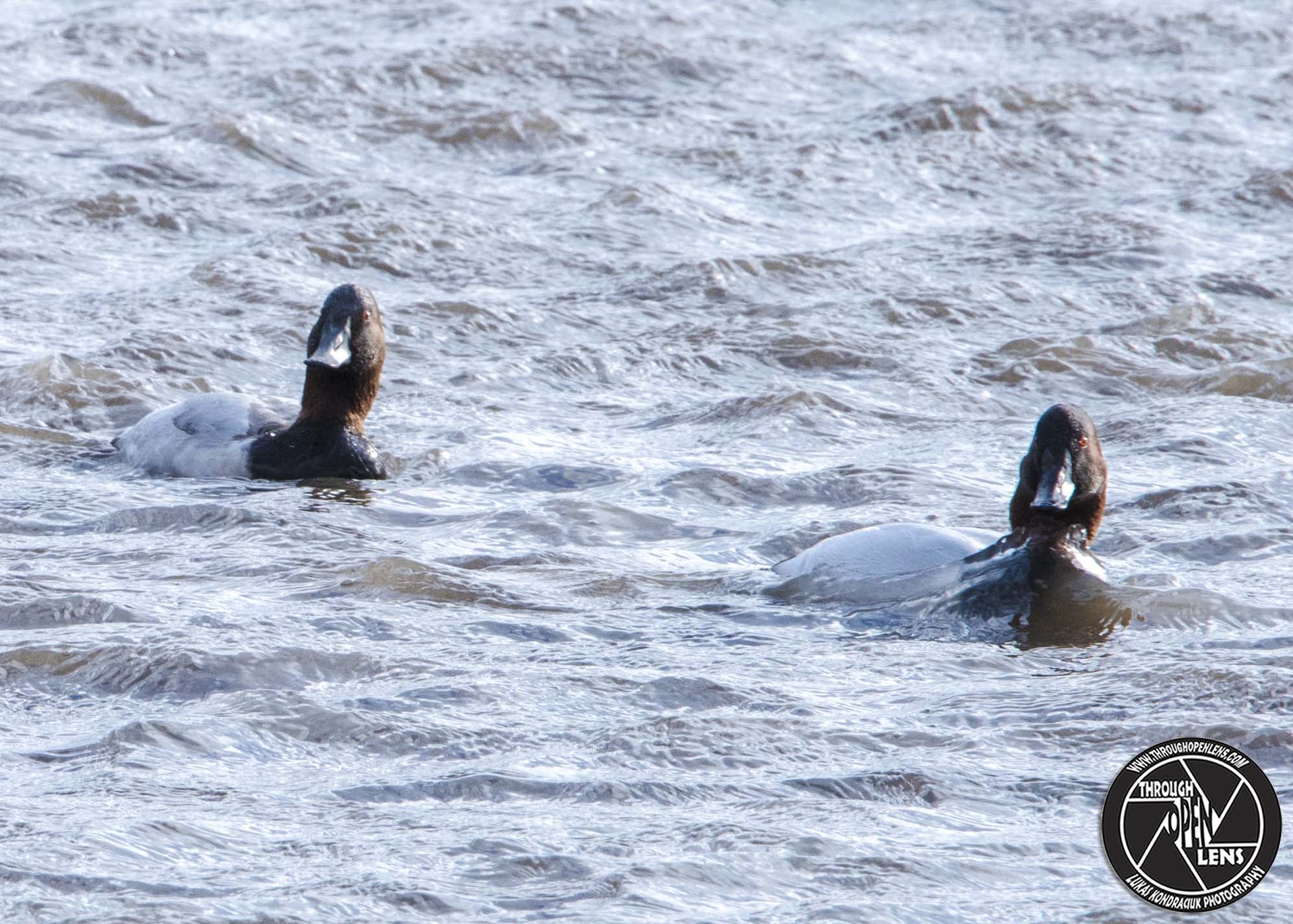
F/11.0, 1/500, ISO 500.

Canvasback 

Did you hear the joke about the roof?

Never mind, it’s over your head!

Interesting Fact: Canvasbacks are diving ducks at home in the water, seldom going ashore to dry land. They sleep on the water with their bill tucked under the wing, and they nest on floating mats of vegetation. To get airborne Canvasbacks need a running start, but once in the air they are strong and fast fliers, clocking airspeeds of up to 56 miles per hour. ( https://www.allaboutbirds.org/guide/Canvasback/lifehistory )

Swim At Your Own Risk

mute-swan-swimming

F/5.6, 1/125, ISO 320.

Mute Swan

Why did the teacher jump into the water?

She wanted to test the water!

Interesting Fact: The black knob at the base of the male Mute Swan’s bill swells during the breeding season and becomes noticeably larger than the female’s. The rest of the year the difference between the sexes is not obvious.  ( https://www.allaboutbirds.org/guide/Mute_Swan/lifehistory )

Together We Can Quack Everything!

F/9.0, 1/320, ISO 500.

Canvasback 

Did you hear about the duck with a drug problem?

He was a quackhead.

Interesting Fact: Canvasbacks are social outside of the breeding season; they gather in large rafts by the thousands to tens of thousands. Only when winter food is scarce or clumped do they defend foraging areas against other Canvasbacks. During spring and early in the breeding season, they act more aggressively. Threat displays include putting the bill in the water or on the chest, jabbing, pumping the head, or chasing.  ( https://www.allaboutbirds.org/guide/Canvasback/lifehistory )

Alone We Are Strong… Together We Are Stronger!

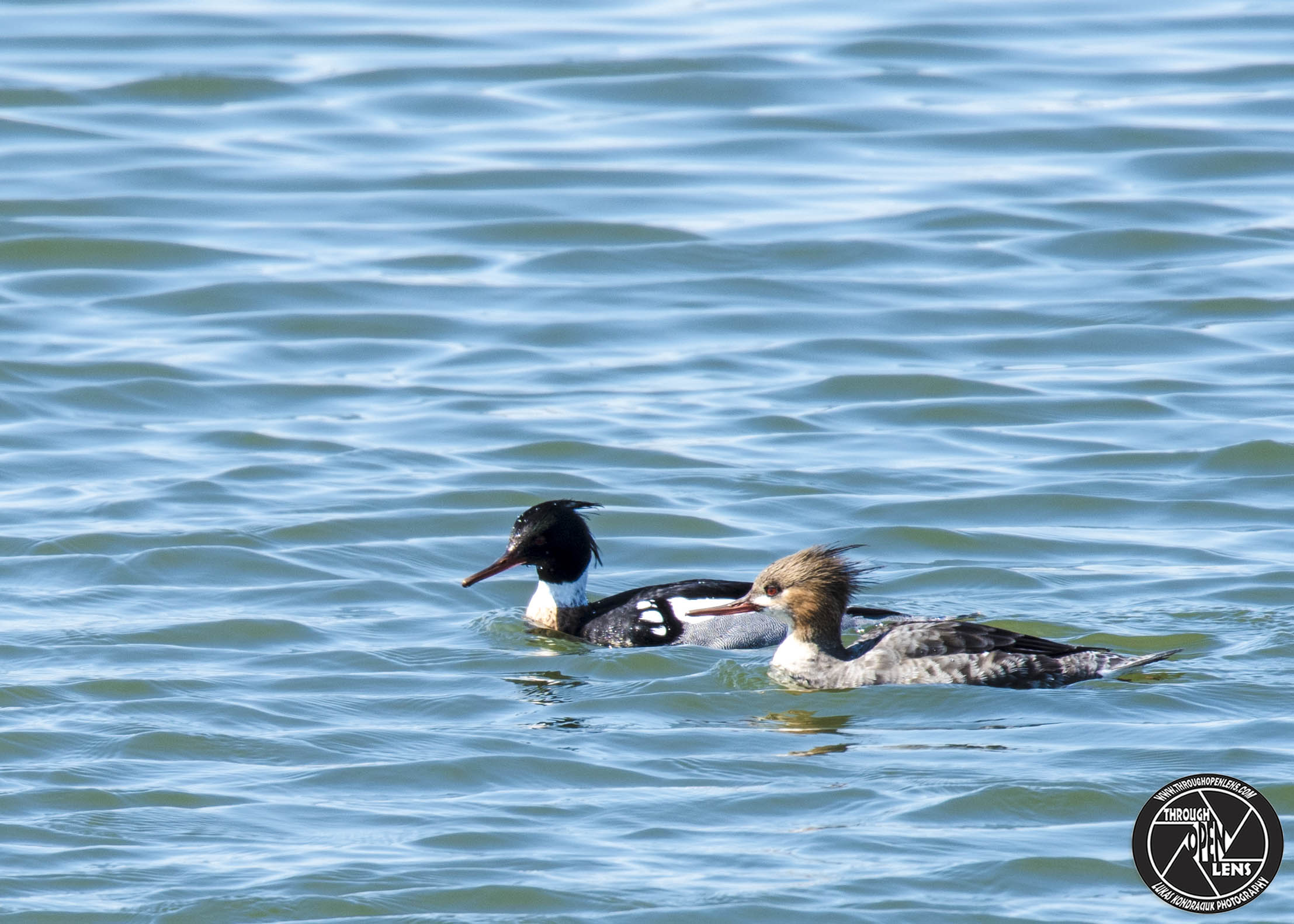
F/9.0, 1/320, ISO 200.

Red-breasted Merganser

Why can’t a leopard hide?

Because he’s always spotted!

Interesting Fact:  The Red-breasted Merganser breeds farther north and winters farther south than the other American mergansers. ( https://www.allaboutbirds.org/guide/Red-breasted_Merganser/lifehistory )

Got An Itch That I Can’t Reach!

F/10.0, 1/400, ISO 320.

Mallard

What do you call a duck that steals?

A robber ducky.

Interesting Fact: Mallards nest on the ground on dry land that is close to water; nests are generally concealed under overhanging grass or other vegetation. Occasionally, Mallards nest in agricultural fields, especially alfalfa but also winter wheat, barley, flax, and oats. Both urban and wild populations readily nest in artificial nesting structures. Pairs search for nest sites together, typically on evening flights circling low over the habitat. Occasionally nests are placed on floating mats of vegetation or woven into plant stems that rise out of the water. ( https://www.allaboutbirds.org/guide/Mallard/lifehistory )

Swim, Duck, Swim!

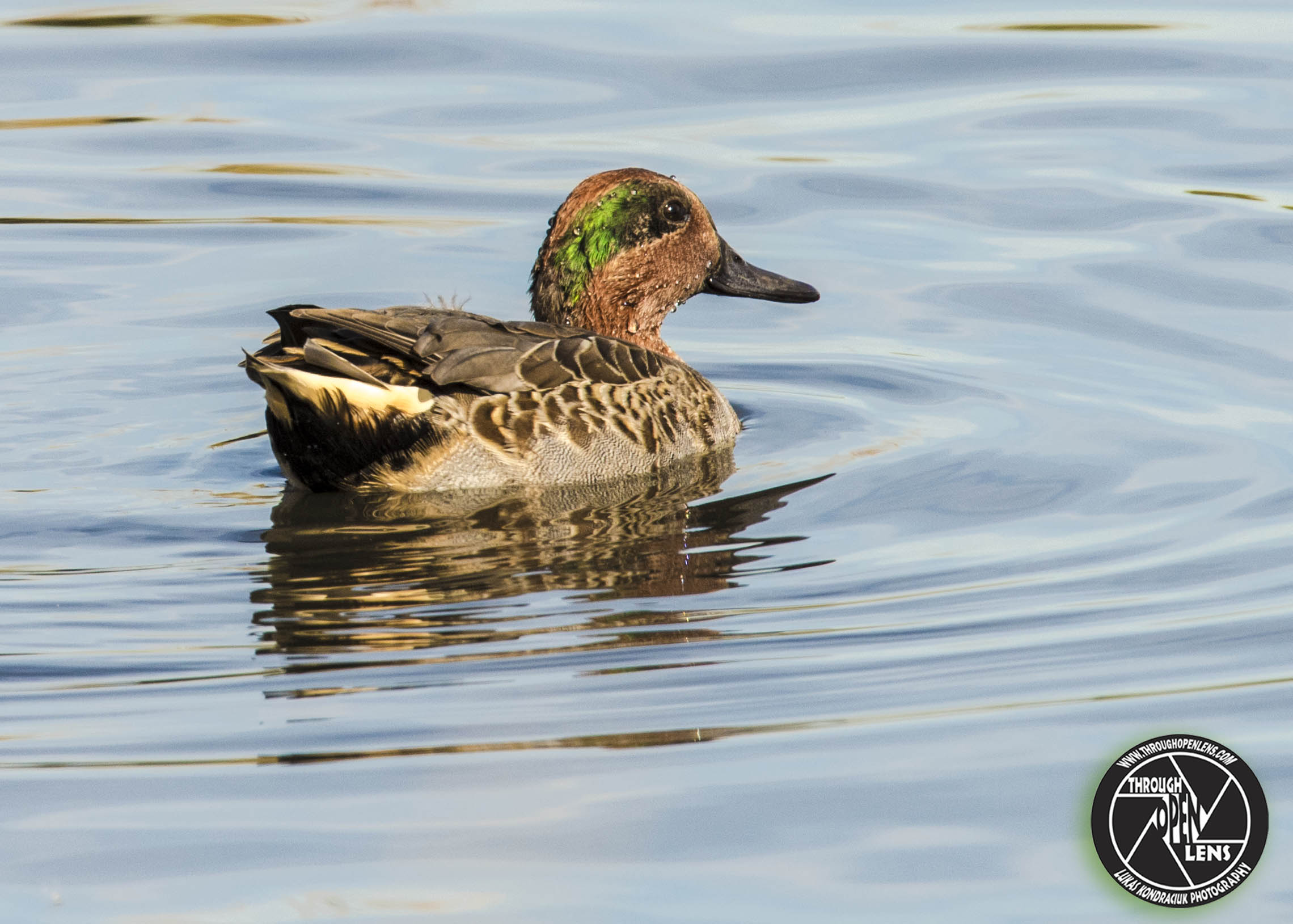
F/11.0, 1/500, ISO 320.

Green-Winged Teal

Why aren’t there any famous skeletons?

They’re a bunch of no bodies.

Interesting Fact:  The oldest known Green-winged Teal was at least 20 years and 3 months, based on banding data. It was a female banded in 1941 in Oklahoma, and recovered by a hunter 1960 in Missouri. ( https://www.allaboutbirds.org/guide/Green-winged_Teal/lifehistory )

Dear People, Quit Trying To Look Like Us In Photos… It’s Embarrassing To Our Species.

F/10.0, 1/400, ISO 320.

Gadwall

Why did the can crusher quit his job?

Because it was soda pressing.

Interesting Fact:  Gadwall are dabbling ducks—they ride fairly high in the water and they tip forward to graze on submerged plants that they can reach with their outstretched necks. They rarely dive. Gadwall sometimes steal food from American Coots. ( https://www.allaboutbirds.org/guide/Gadwall/lifehistory )

You Need A Bodyguard To Go Out

F/9.0, 1/320, ISO 250.

Brant Goose

What’s red and bad for your teeth?

A brick.

Interesting Fact: It used to be a strictly coastal bird in winter, seldom leaving tidal estuaries, where it feeds on eel-grass (Zostera marina) and the seaweed, sea lettuce (Ulva). On the east coast of North America, the inclusion of sea lettuce is a recent change to their diet, brought about by a blight on eelgrass in 1931. This resulted in the near-extirpation of the brant. The few that survived changed their diet to include sea lettuce until the eelgrass eventually began to return. Brants have maintained this diet ever since as a survival strategy.[6] In recent decades, it has started using agricultural land a short distance inland, feeding extensively on grass and winter-sown cereals. This may be behavior learned by following other species of geese. Food resource pressure may also be important in forcing this change, as the world population has risen over 10-fold to 400,000-500,000 by the mid-1980s, possibly reaching the carrying capacity of the estuaries. In the breeding season, it uses low-lying wet coastal tundra for both breeding and feeding. The nest is bowl-shaped, lined with grass and down, in an elevated location, often in a small pond. ( https://en.wikipedia.org/wiki/Brant_(goose) )

Emo Ducks

red-breasted-mergansers

F/9.0, 1/320, ISO 200.

Red-breasted Mergansers

Is it dangerous to swim on a full stomach?

Yes. It’s better to swim in water.

Interesting Fact: The Red-breasted Merganser breeds farther north and winters farther south than the other American mergansers. ( https://www.allaboutbirds.org/guide/Red-breasted_Merganser/lifehistory )