Sometimes What You Looking For Comes When You’re Not Looking At All.

F/5.6, 1/2000, ISO 500.

Semipalmated Plover 

How do trees get online?

They just log on!

Interesting Fact: They are migratory and winter in coastal areas of the southern United States, the Caribbean and much of South America. They are extremely rare vagrants to western Europe, and have been found in Tierra del Fuego and the Isles of Scilly.[4] Their true status may be obscured by the difficulty in identifying them from the very similar ringed plover of Eurasia, of which it was formerly considered a subspecies. ( https://en.wikipedia.org/wiki/Semipalmated_plover )


I’m Sick Of Following My Dreams, Man. I’m Just Going To Ask Where They’re Going And Hook Up With ’em Later.

F/7.1, 1/200, ISO 320.

Palm Warbler

Why couldn’t Dracula’s wife get to sleep?

Because of his coffin.

Interesting Fact: The Palm Warbler, unlike most warblers, spends a lot of time walking on the ground and bobbing its tail as it goes—an obvious trait whether the bird is on the ground or perched in a tree or shrub. Despite its affinity for the ground it also forages and sings from taller trees and shrubs. It sometimes sallies out to grab an insect from a low shrub or tree like a flycatcher. ( https://www.allaboutbirds.org/guide/Palm_Warbler/lifehistory )


And It Was All Yellow!

F/7.1, 1/200, ISO 250.

Ruby-crowned Kinglet 

Why did the boy take a ladder to school?

It was a high school.

Interesting Fact: Ruby-Crowned Kinglets make their nests in trees, occasionally as high up as 100 feet. Females choose a nest site near the tree trunk or suspended from small twigs and branchlets. Because of the nest site’s height and often remote location, not much is known about kinglet nesting habits. Their nest sites, chosen by the females, are protected and often hidden by overhanging foliage. ( https://www.allaboutbirds.org/guide/Ruby-crowned_Kinglet/lifehistory )


Roses Are Red And I Am Blue

F/6.3, 1/60, ISO 250.

Blue Jay

Why did the girl bring lipstick and eye shadow to school?

She had a make-up exam!

Interesting Fact: The pigment in Blue Jay feathers is melanin, which is brown. The blue color is caused by scattering light through modified cells on the surface of the feather barbs. ( https://www.allaboutbirds.org/guide/Blue_Jay/lifehistory )

You Make Me Happy When Skies Are Grey

F/ 6.3, 1/125, ISO 500.

Yellow Warblers

How do birds fly?

They just wing it!

Interesting Fact: The nests of the Yellow Warbler are frequently parasitized by the Brown-headed Cowbird. The warbler often builds a new nest directly on top of the parasitized one, sometimes resulting in nests with up to six tiers. ( https://www.allaboutbirds.org/guide/Yellow_Warbler/lifehistory )

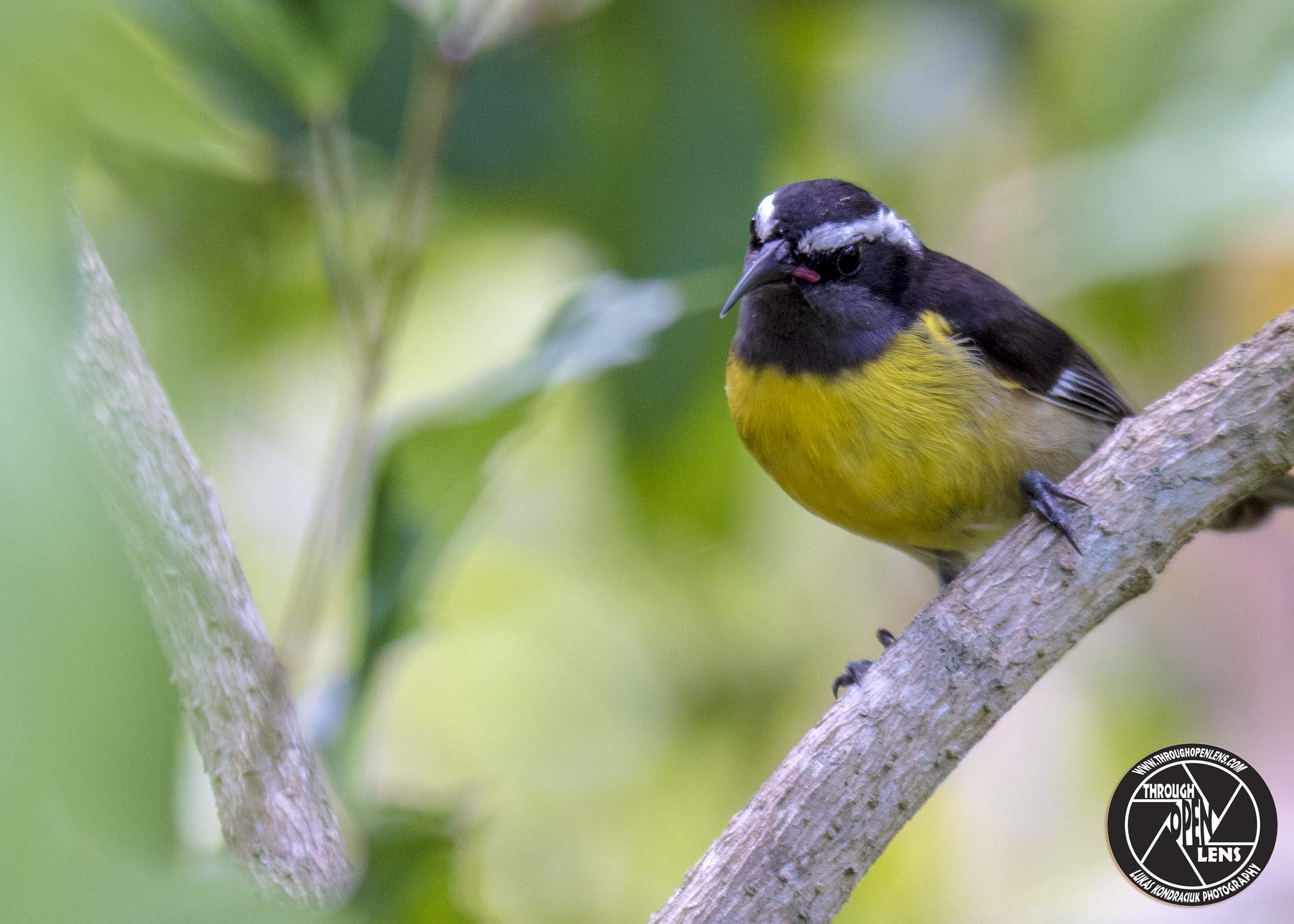
Hey Autocorrect! Quit Tampering With My Curse Words, You Mother Forklift!

F/5.6, 1/100, ISO 640.

Bananaquit

Why did the fly fall off the toilet?

It got pissed off.

Interesting Fact: The bananaquit is known for its ability to adjust remarkably to human environments. It often visits gardens and may become very tame. Its nickname, the sugar bird, comes from its affinity for bowls or bird feeders stocked with granular sugar, a common method of attracting these birds.[19] The bananaquit builds a spherical lined nest with a side entrance hole, laying up to three eggs, which are incubated solely by the female.[4] It may also build its nest in human-made objects, such as lampshades and garden trellises. The birds breed all year regardless of season and build new nests throughout the year. ( https://en.wikipedia.org/wiki/Bananaquit )


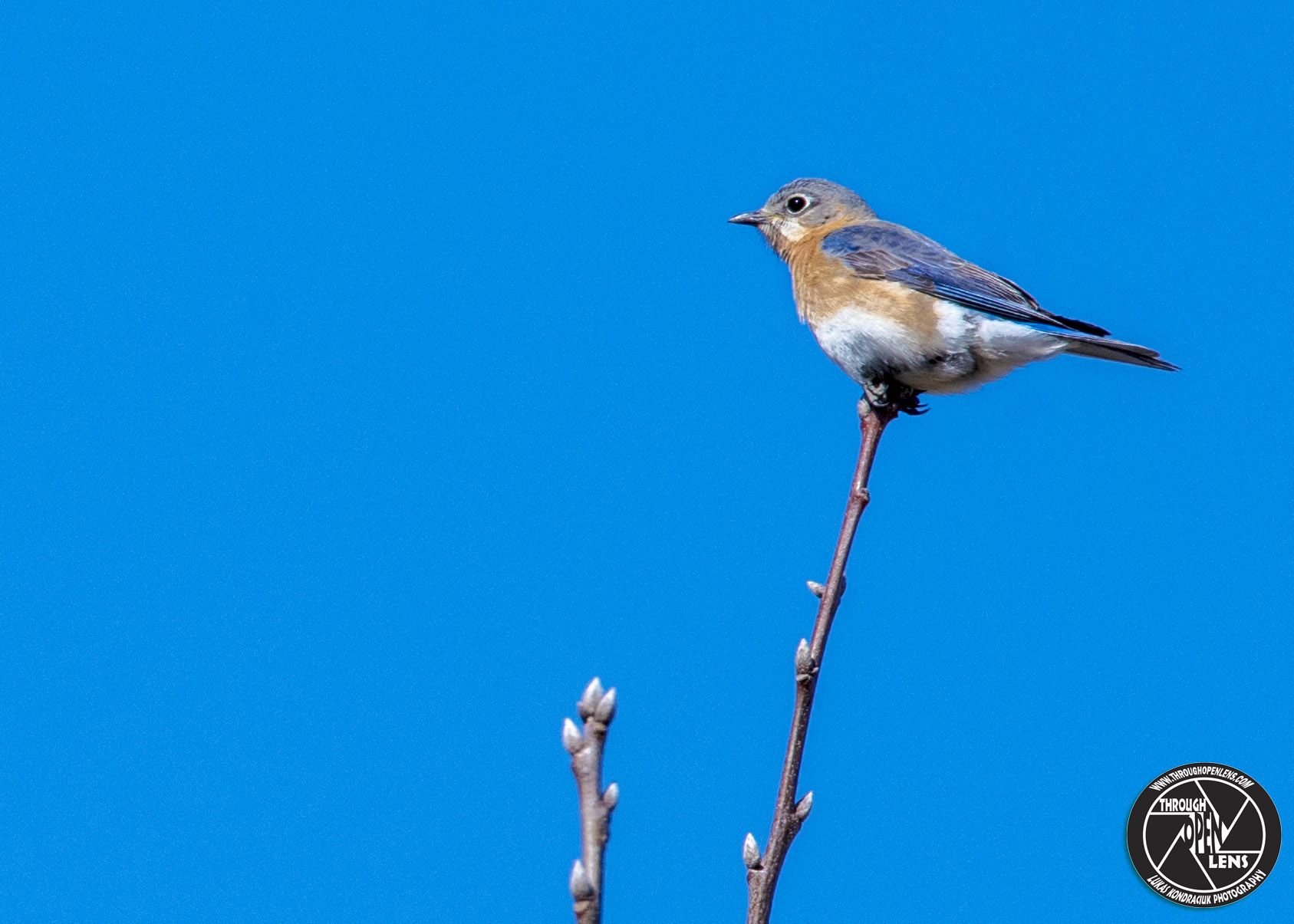
I See Sky Of Blue!

F/11.0, 1/500, ISO 320.

Eastern Bluebird 

Imagine you are in a water tank with a roof. There are no objects in the tank to help you escape. How do you get out?

Stop imagining.

Interesting Fact: Males vying over territories chase each other at high speed, sometimes grappling with their feet, pulling at feathers with their beaks, and hitting with their wings. The boxes and tree cavities where bluebirds nest are a hot commodity among birds that require holes for nesting, and male bluebirds will attack other species they deem a threat, including House Sparrows, European Starlings, Tree Swallows, Great Crested Flycatchers, Carolina Chickadees, and Brown-headed Nuthatches, as well as non-cavity nesters such as robins, Blue Jays, mockingbirds, and cowbirds. ( https://www.allaboutbirds.org/guide/Eastern_Bluebird/lifehistory )

There Is No “We” In Food, So Get Away From Me.

F/9.0, 1/320, ISO 320.

Palm Warbler

What did the janitor say when he jumped out of the closet?

“SUPPLIES!”

Interesting Fact: Despite its tropical sounding name, the Palm Warbler lives farther north than most other warblers. It breeds far to the north in Canada, and winters primarily in the southern United States and northern Caribbean. ( https://www.allaboutbirds.org/guide/Palm_Warbler/lifehistory )

I Hate When I’m Staring At Nothing In Particular, And Then Realize I’m Staring At Someone.

F/9.0, 1/320, ISO 160.

White-breasted Nuthatch

When do people start using their trampoline?

Spring-Time

Interesting Fact: White-breasted Nuthatches forage up, down, and sideways over tree trunks and around large branches. They often (though not always) start high in trees and move down them head first, pausing to crane their necks up and back, toward the horizontal, for a look around. They probe into bark crevices or chip away at wood to find food. When they find large nuts and seeds, they jam them into the bark and hammer them open. White-breasted Nuthatches often store seeds and insects one at a time, and somewhat haphazardly, under loose bark on their territory. They typically hide the food by covering it with a piece of bark, lichen, moss, or snow. ( https://www.allaboutbirds.org/guide/White-breasted_Nuthatch/id )

When I Was Born I Was So Surprised I Didn’t Talk For A Year And Half

F/5.6, 1/800, ISO 250.

White-throated Sparrow

What do you call a fake noodle?

An Impasta

Interesting Fact:  White-throated Sparrows eat mainly the seeds of grasses and weeds, including ragweed and buckwheat, as well as fruits of sumac, grape, cranberry, mountain ash, rose, blueberry, blackberry, and dogwood. In summer they eat large numbers of insects that they catch on the forest floor or, occasionally on quick flights out from low vegetation. These include dragonflies, wasps, stinkbugs, beetles, flies, and caterpillars, as well as spiders, millipedes, centipedes, and snails. Parents feed their nestlings almost exclusively animal matter. During winter, White-throated Sparrows readily visit bird feeders for millet and black oil sunflower seeds. In spring they eat the tender buds, blossoms, and young seeds of oak, apple, maple, beech, and elm. ( https://www.allaboutbirds.org/guide/White-throated_Sparrow/lifehistory )