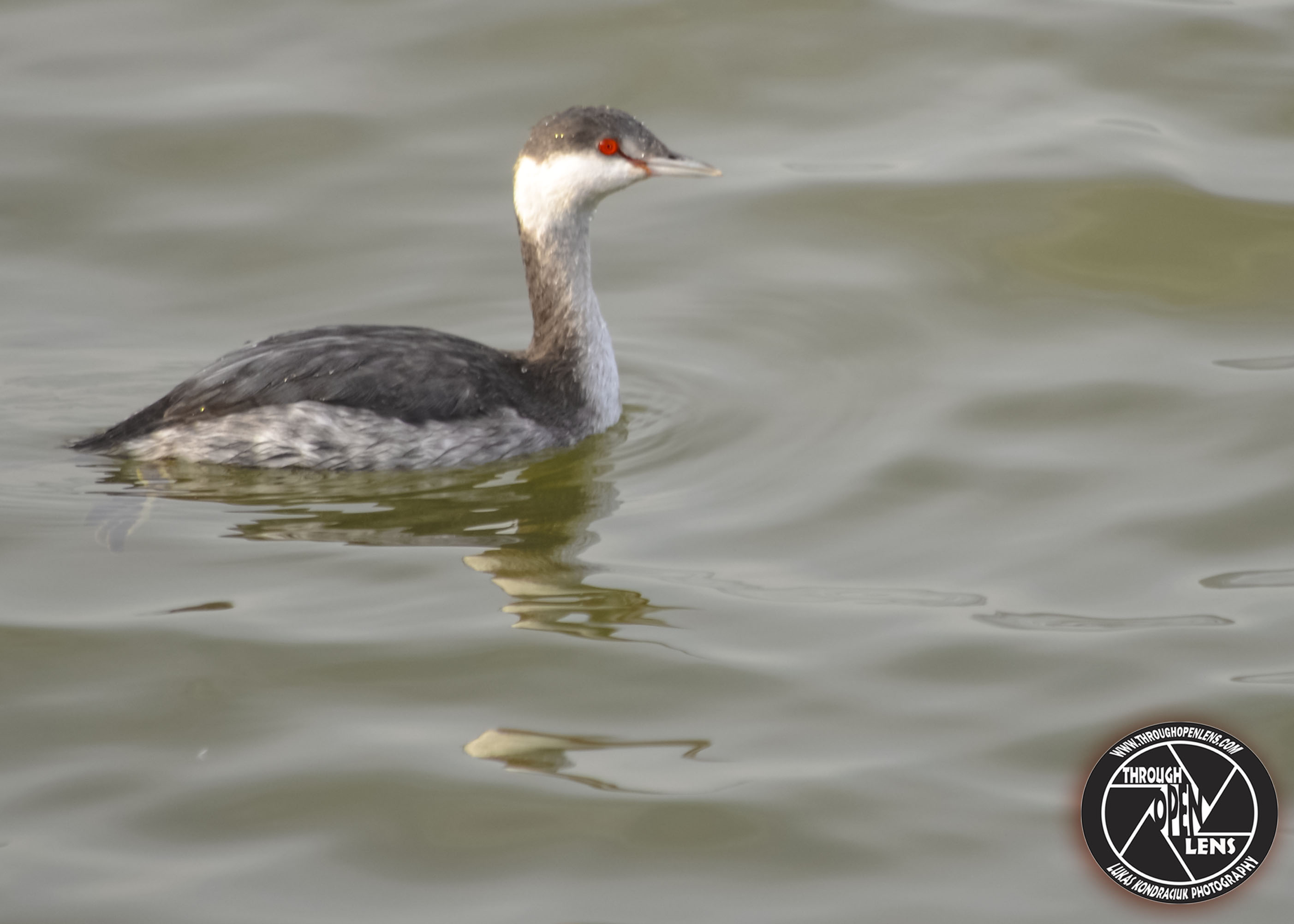
My Eyes Always Come Out Red In Photos

F/ 6.3, 1/640, ISO 200.

Canvasback

“Doctor, doctor, my wife thinks she’s a duck.”

“You better bring her in to see me straight away.”

“I can’t do that – she’s already flown south for the winter.”  

Interesting Fact: The species name of the Canvasback, Aythya valisineria, comes from Vallisneria americana, or wild celery, whose winter buds and rhizomes are its preferred food during the nonbreeding period.  ( https://www.allaboutbirds.org/guide/Canvasback/lifehistory )

You Wanna Fly You Got To Give Up The Shit That Weighs You Down.

F/9.0, 1/320, ISO 640.

Double-crested Cormorant 

How does NASA organize a party?

They planet

Interesting Fact: The male chooses the nest site and then attracts a female. Nests can be on the ground, on rocks or reefs with no vegetation, or atop trees, which may be alive when a cormorant colony first forms but typically die after a few years from the guano build-up. Nests are built in the center of a colony first, then expand outward. ( https://www.allaboutbirds.org/guide/Double-crested_Cormorant/lifehistory )

I Give Out Swimming Lessons

F/8.0, 1/250, ISO 640.

Double-crested Cormorant

What do you call a bear with no socks on?

Bare-foot.

Interesting Fact: Large pebbles are occasionally found in cormorant nests, and the cormorants treat them as eggs. ( https://www.allaboutbirds.org/guide/Double-crested_Cormorant )

I Want To Swim Away!

Red-Necked Grebe

F/5.6, 1/200, ISO 100.

Red-Necked Grebe

One day, two thieves stole a bunch of money from a house. First thief: Let us count the money we have stolen. Second thief: Leave, why we will count and waste our time. We can see in the newspaper, tomorrow.

Interesting Fact: The Red-necked Grebe migrates over land strictly at night. It sometimes migrates over water or along coasts by day, in large flocks. ( https://www.allaboutbirds.org/guide/Red-necked_Grebe/lifehistory )

If I’m Going To Get Wet, I May As Well Swim.

horned-grebe

F/5.6, 1/200, ISO 500.

Horned Grebe

Why won’t they allow elephants in public swimming pools?

Because they might let down their trunks.

Interesting Fact: The Horned Grebe regularly eats some of its own feathers, enough that its stomach usually contains a matted plug of them. This plug may function as a filter or may hold fish bones in the stomach until they can be digested. The parents even feed feathers to their chicks to get the plug started early. ( https://www.allaboutbirds.org/guide/Horned_Grebe/lifehistory )

Got An Itch That I Can’t Reach!

F/10.0, 1/400, ISO 320.

Mallard

What do you call a duck that steals?

A robber ducky.

Interesting Fact: Mallards nest on the ground on dry land that is close to water; nests are generally concealed under overhanging grass or other vegetation. Occasionally, Mallards nest in agricultural fields, especially alfalfa but also winter wheat, barley, flax, and oats. Both urban and wild populations readily nest in artificial nesting structures. Pairs search for nest sites together, typically on evening flights circling low over the habitat. Occasionally nests are placed on floating mats of vegetation or woven into plant stems that rise out of the water. ( https://www.allaboutbirds.org/guide/Mallard/lifehistory )

I Wonder If Earth Makes Fun Of Other Planets For Having No Life.

F/8.0, 1/250, ISO 320.

American Coot

Why was the broom late?

It over swept!

Interesting Fact: The ecological impact of common animals, like this ubiquitous waterbird, can be impressive when you add it all up. One estimate from Back Bay, Virginia, suggested that the local coot population ate 216 tons (in dry weight) of vegetation per winter. ( https://www.allaboutbirds.org/guide/American_Coot )

Yes, I’m On Quack And No, I Don’t Give A Duck!

F/10.0, 1/400, ISO 250.

Bufflehead Duck ( Female )

Why are trees very forgiving?

Because in the Fall they “Let It Go” and in the Spring they “turn over a new leaf”.

Interesting Fact:  Unlike most ducks, the Bufflehead is mostly monogamous, often remaining with the same mate for several years. ( https://www.allaboutbirds.org/guide/Bufflehead/lifehistory )

You Need A Bodyguard To Go Out

F/9.0, 1/320, ISO 250.

Brant Goose

What’s red and bad for your teeth?

A brick.

Interesting Fact: It used to be a strictly coastal bird in winter, seldom leaving tidal estuaries, where it feeds on eel-grass (Zostera marina) and the seaweed, sea lettuce (Ulva). On the east coast of North America, the inclusion of sea lettuce is a recent change to their diet, brought about by a blight on eelgrass in 1931. This resulted in the near-extirpation of the brant. The few that survived changed their diet to include sea lettuce until the eelgrass eventually began to return. Brants have maintained this diet ever since as a survival strategy.[6] In recent decades, it has started using agricultural land a short distance inland, feeding extensively on grass and winter-sown cereals. This may be behavior learned by following other species of geese. Food resource pressure may also be important in forcing this change, as the world population has risen over 10-fold to 400,000-500,000 by the mid-1980s, possibly reaching the carrying capacity of the estuaries. In the breeding season, it uses low-lying wet coastal tundra for both breeding and feeding. The nest is bowl-shaped, lined with grass and down, in an elevated location, often in a small pond. ( https://en.wikipedia.org/wiki/Brant_(goose) )

Hey There Ace!

F/6.3, 1/500, ISO 220.

Brant Goose

What did the big flower say to the little one?

You’re really growing, bud!

Interesting Fact: The oldest recorded Brant was a female, and was over 27 years, 6 months old. It had been banded in Alaska and was found in Washington. ( https://www.allaboutbirds.org/guide/Brant )