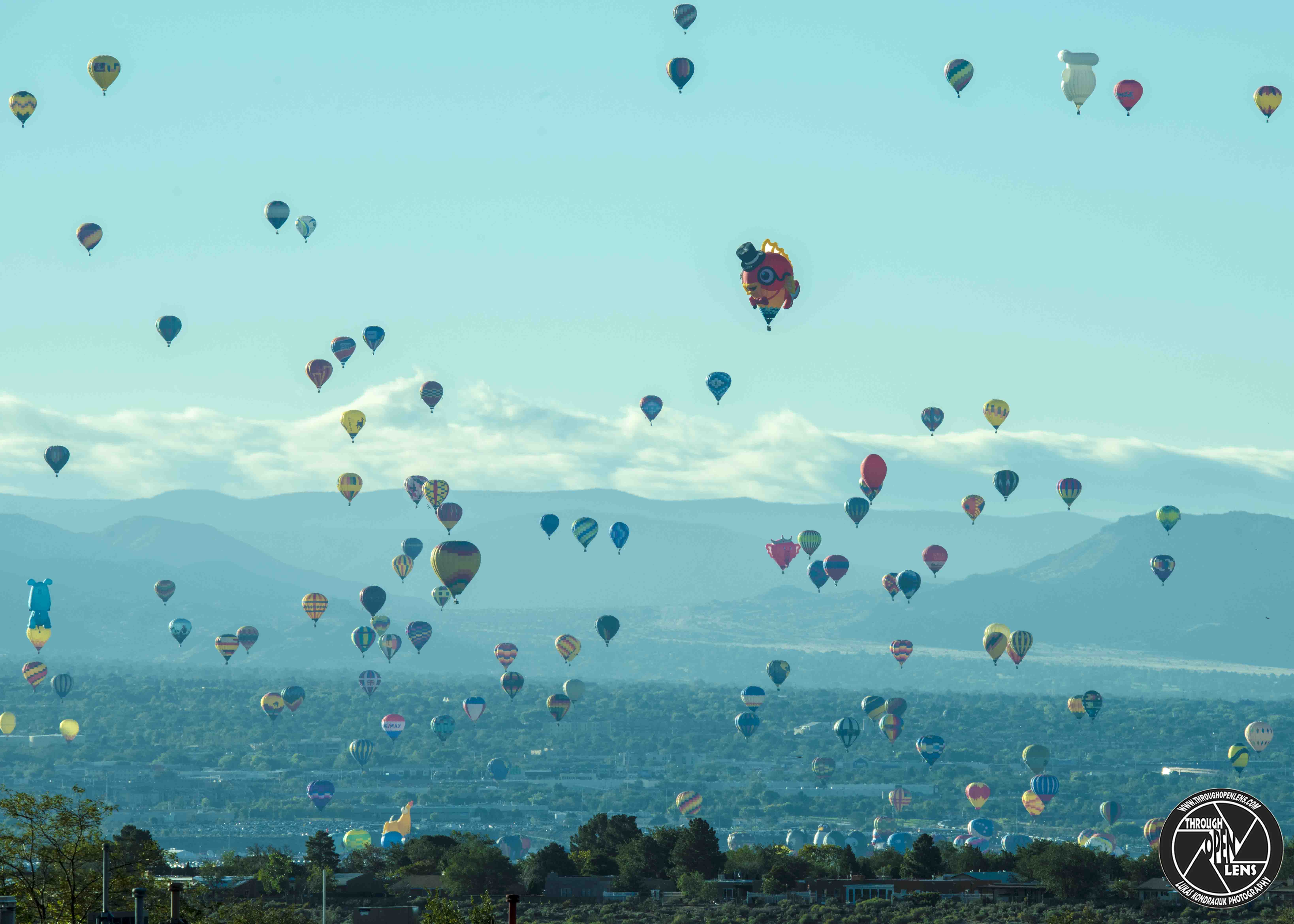
Lets Get Carried Away!

F/13.0, 1/640, ISO 250.

Albuquerque International Balloon Fiesta

What did the balloon say to the doctor?

“I feel lightheaded!”

Interesting Fact: In 1975 Albuquerque was looking at hosting the World Championships again, but the event was scheduled for October. So the fiesta was moved to correspond with the championships. To maintain interest in Albuquerque’s bid to host the championships, a balloon rally was held in February of that year. Autumn being a far better flying time than February, the event has remained in early October to the present day.  ( https://en.wikipedia.org/wiki/Albuquerque_International_Balloon_Fiesta#History )

I Never Get Tired Of The Blue Sky!

F/13.0, 1/500, ISO 250.

Albuquerque International Balloon Fiesta

What is a balloon’s least favorite school activity?

A pop quiz.

Interesting Fact: The Balloon Fiesta began in 1972 as the highlight of a 50th birthday celebration for 770 KOB Radio. Radio station manager Dick McKee asked Sid Cutter, owner of Cutter Flying Service and the first person to own a hot air balloon in New Mexico, if KOB could use his new hot-air balloon as part of the festivities. The two began discussing ballooning, along with conversation and help from Oscar Kratz, and McKee asked what the largest gathering of hot air balloons to date had been. 19 balloons in England, Cutter replied. Kratz asked “Can we get 19 here?” Cutter agreed to try. He got commitments from 21 pilots, but bad weather kept some of them from arriving in time. The first fiesta ended up as a gathering of 13 balloons on April 8, 1972, sponsored by KOB. The first event was located in the parking lot of the Coronado Center Shopping Mall with 20,000 spectators and with balloonists from Arizona, California, Iowa, Michigan, Minnesota, Nevada and Texas taking part. McKee, Cutter, and Kratz are the three men who had originally started the balloon races.[2] The first fiesta incorporated a “Roadrunner-Coyote Balloon Race” (a “hare-and-hounds” race elsewhere in the world) with 1 balloon being the “Roadrunner” and the others being “Coyote” balloons (the “Roadrunner” balloon was actually emblazoned with likenesses of both Warner Bros. characters). The winner of the race – the “Coyote” that landed closest to the Roadrunner – was Don Piccard of the noted aerostation dynasty, flying a balloon of his company’s design and construction (his wife also placed in the race). This race has continued as part of the Balloon Fiesta today.  ( https://en.wikipedia.org/wiki/Albuquerque_International_Balloon_Fiesta#History )

If You Never Let Your Self Go, You Will Never Know How Far You Can Rise!

F/11.0, 1/500, ISO 250.

Albuquerque International Balloon Fiesta

Why can’t you give Elsa a balloon?

She’s sure to let it go.

Interesting Fact: The Albuquerque International Balloon Fiesta is a yearly hot air balloon festival that takes place in Albuquerque, New Mexico, during early October. The Balloon Fiesta is a nine-day event from October 6th to October 14th, and has over 500 hot air balloons each year. The event is the largest balloon festival in the world[1]. ( https://en.wikipedia.org/wiki/Albuquerque_International_Balloon_Fiesta )

Should I Get A Tatoo Of A Human on My Back?

F/8.0, 1/250, ISO 250.

Butterfly

What do Butterfly learn at school?

Mothmatics !

Interesting Fact:  Butterflies are often polymorphic, and many species make use of camouflage, mimicry and aposematism to evade their predators. Some, like the monarch and the painted lady, migrate over long distances. Many butterflies are attacked by parasites or parasitoids, including wasps, protozoans, flies, and other invertebrates, or are preyed upon by other organisms. Some species are pests because in their larval stages they can damage domestic crops or trees; other species are agents of pollination of some plants. Larvae of a few butterflies (e.g., harvesters) eat harmful insects, and a few are predators of ants, while others live as mutualists in association with ants. Culturally, butterflies are a popular motif in the visual and literary arts. ( https://en.wikipedia.org/wiki/Butterfly )

Peek A Boo, I See You!

F/7.1, 1/200, ISO 160.

Green Heron

Patient: “Doctor, I’ve broken my arm in several places”

Doctor: “Well don’t go to those places.”

Interesting Fact: Each breeding season, Green Herons pair up with one mate apiece, performing courtship displays that include stretching their necks, snapping their bills, flying with exaggerated flaps, and calling loudly. They often nest solitarily, although they may join colonies with other Green Herons or with other species. They defend breeding areas from each other and from birds like crows and grackles that prey on their nests. Other predators include snakes and raccoons. ( https://www.allaboutbirds.org/guide/Green_Heron/lifehistory )

When Fears Are Grounded Dreams Take Flight

F/13.0, 1/640, ISO 320.

Ruby-throated Hummingbird

Where do you learn how to make ice cream?

Sundae School

Interesting Fact: The Ruby-throated Hummingbird beats its wings about 53 times a second. ( https://www.allaboutbirds.org/guide/Ruby-throated_Hummingbird  )

Don’t Look At My Hole!

F/9.0, 1/320, ISO 160.

Hispaniolan Woodpecker

Why aren’t there any shark puppeteers?

They have no hands!

Interesting Fact: This woodpecker forages in small noisy groups; the diet is varied and includes insects, spiders, scorpions, lizards, fruit, seeds, grain and sap. It can catch flying insects on the wing, and larger food items are bashed on an “anvil” to break them up. ( https://en.wikipedia.org/wiki/Hispaniolan_woodpecker )

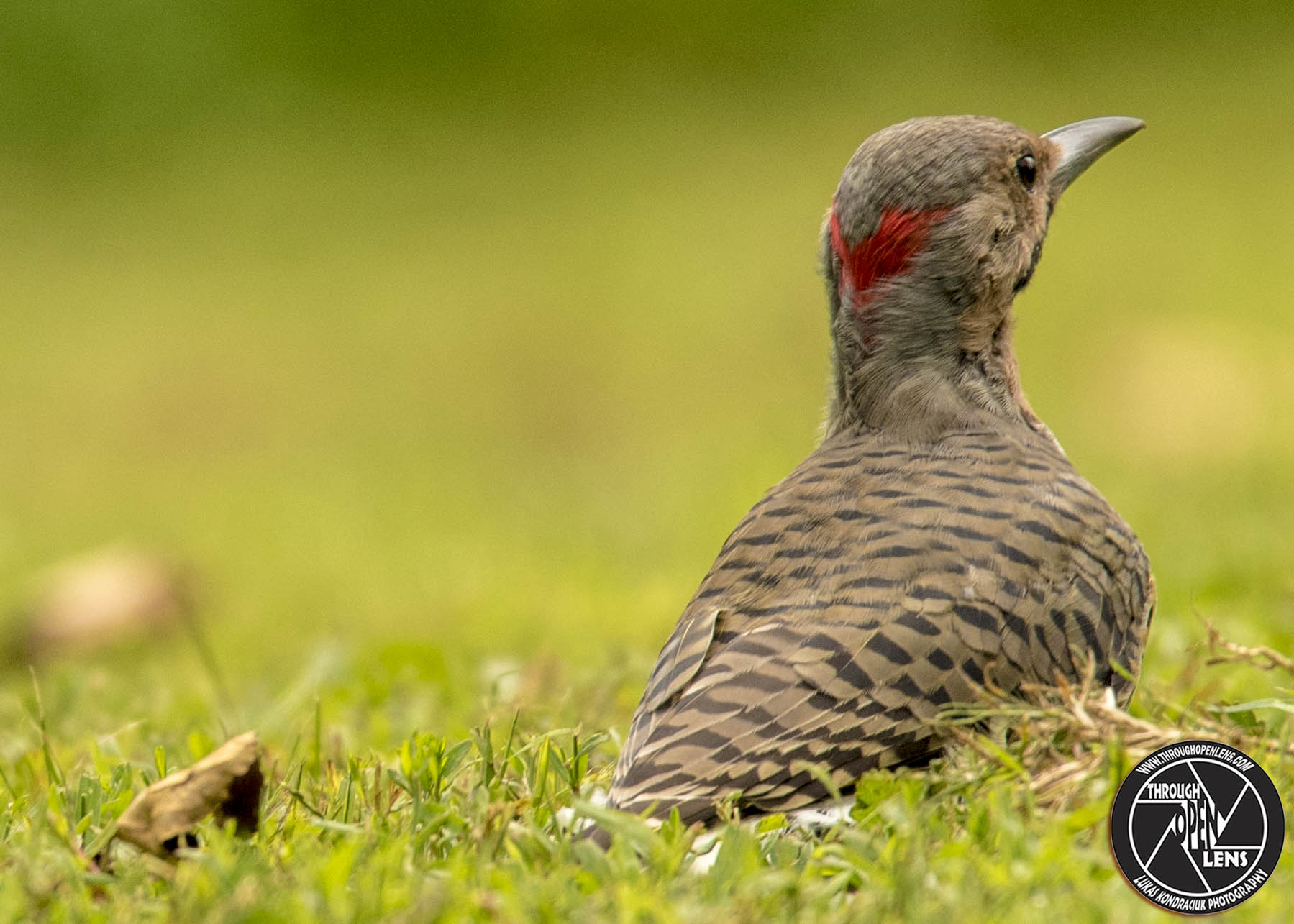
When Your Past Calls Don’t Answer. It Has Noting New To Say.

F/8.0, 1/250, ISO 400.

Northern Flicker

What do you call a bear with no socks on?

Bare-foot.

Interesting Fact: Northern Flickers generally nest in holes in trees like other woodpeckers. Occasionally, they’ve been found nesting in old, earthen burrows vacated by Belted Kingfishers or Bank Swallows. ( https://www.allaboutbirds.org/guide/Northern_Flicker )

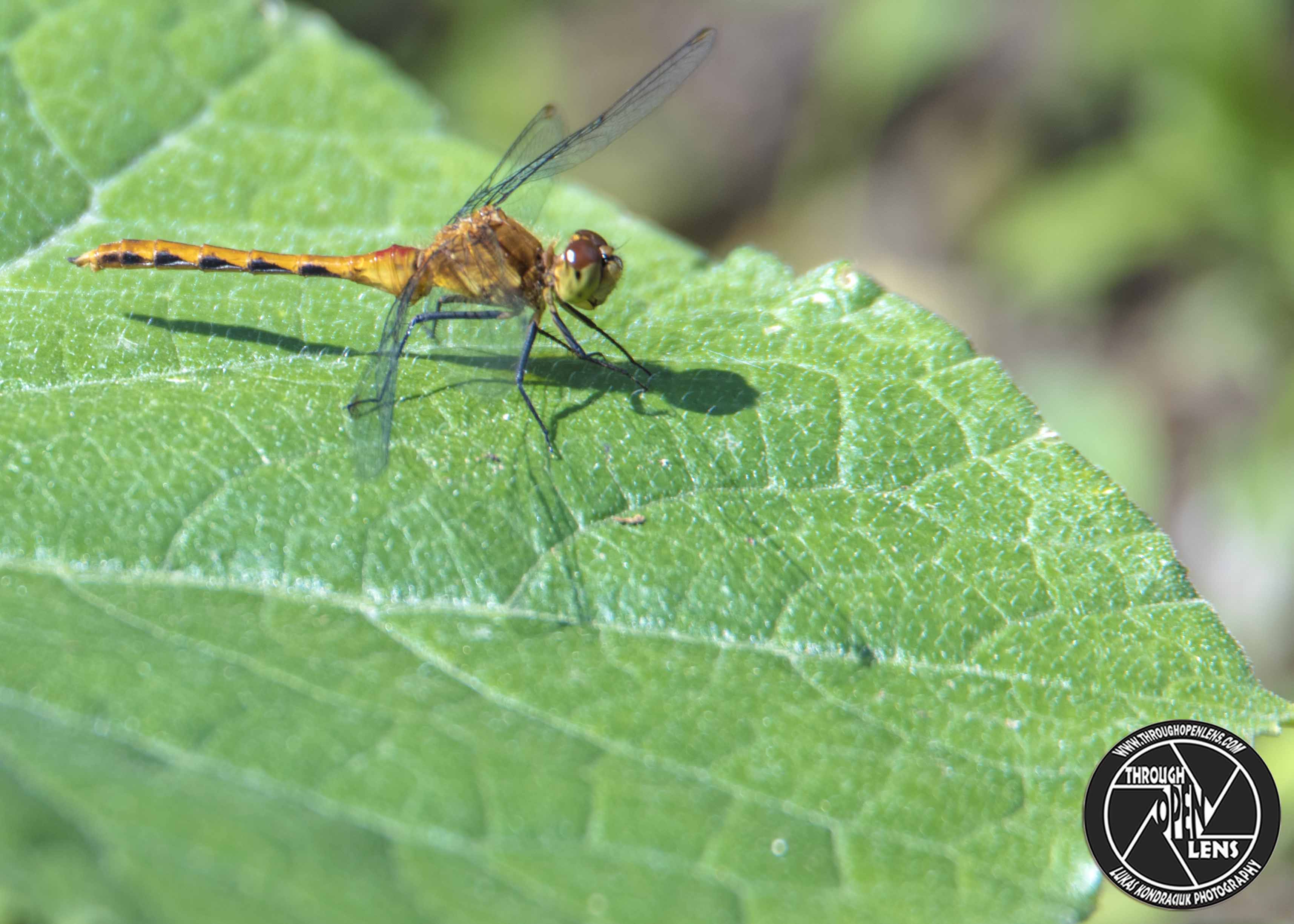
Let Me Give You The Skinney

F/7.1, 1/200, ISO 200.

Dragonfly

What do you get when you cross a parrot with a shark?

An animal that talks your head off.

Interesting Fact: Old and unreliable claims are made that dragonflies such as the southern giant darner can fly up to 60 miles per hour (97 km/h).[50] However, the greatest reliable flight speed records are for other types of insects.[51] In general, large dragonflies like the hawkers have a maximum speed of 10–15 metres per second (22–34 mph) with average cruising speed of about 4.5 metres per second (10 mph).[52] Dragonflies can fly at 100 body-lengths per second, and three lengths per second backwards. ( https://en.wikipedia.org/wiki/Dragonfly#Flight )

Stay Out Of My Territory!

F/10.0, 1/400, ISO 250.

Marsh Wren

What animal has the best sense of time?

A Watchdog!

Interesting Fact: The secret life of the Marsh Wren plays out under the cover of reeds. Here, males routinely mate with 2 or more females and build at least 6 dummy nests for every female they mate with. One male built 22 nests on his territory. ( https://www.allaboutbirds.org/guide/Marsh_Wren