
F/6.3, 1/60, ISO 320.
Gray Catbird
Why did the computer break up with the internet?
There was no “Connection”.
Interesting Fact: The Gray Catbird’s long song may last for up to 10 minutes. ( https://www.allaboutbirds.org/guide/Gray_Catbird )

F/6.3, 1/60, ISO 320.
Gray Catbird
Why did the computer break up with the internet?
There was no “Connection”.
Interesting Fact: The Gray Catbird’s long song may last for up to 10 minutes. ( https://www.allaboutbirds.org/guide/Gray_Catbird )

F/6.3, 1/100, ISO 320.
Brown-headed Cowbird
What did the stamp say to the envelope?
Stick with me and we will go places!
Interesting Fact: Brown-headed Cowbird lay eggs in the nests of more than 220 species of birds. Recent genetic analyses have shown that most individual females specialize on one particular host species. ( https://www.allaboutbirds.org/guide/Brown-headed_Cowbird/ )

F/6.3, 1/1000, ISO 450.
American Tree Sparrow
Why don’t skeletons fight each other?
They don’t have the guts
Interesting Fact: Misleadingly named by European settlers reminded of Eurasian Tree Sparrows back home, American Tree Sparrows are ground birds. They forage on the ground, nest on the ground, and breed primarily in scrubby areas at or above the treeline. ( https://www.allaboutbirds.org/guide/American_Tree_Sparrow/lifehistory )
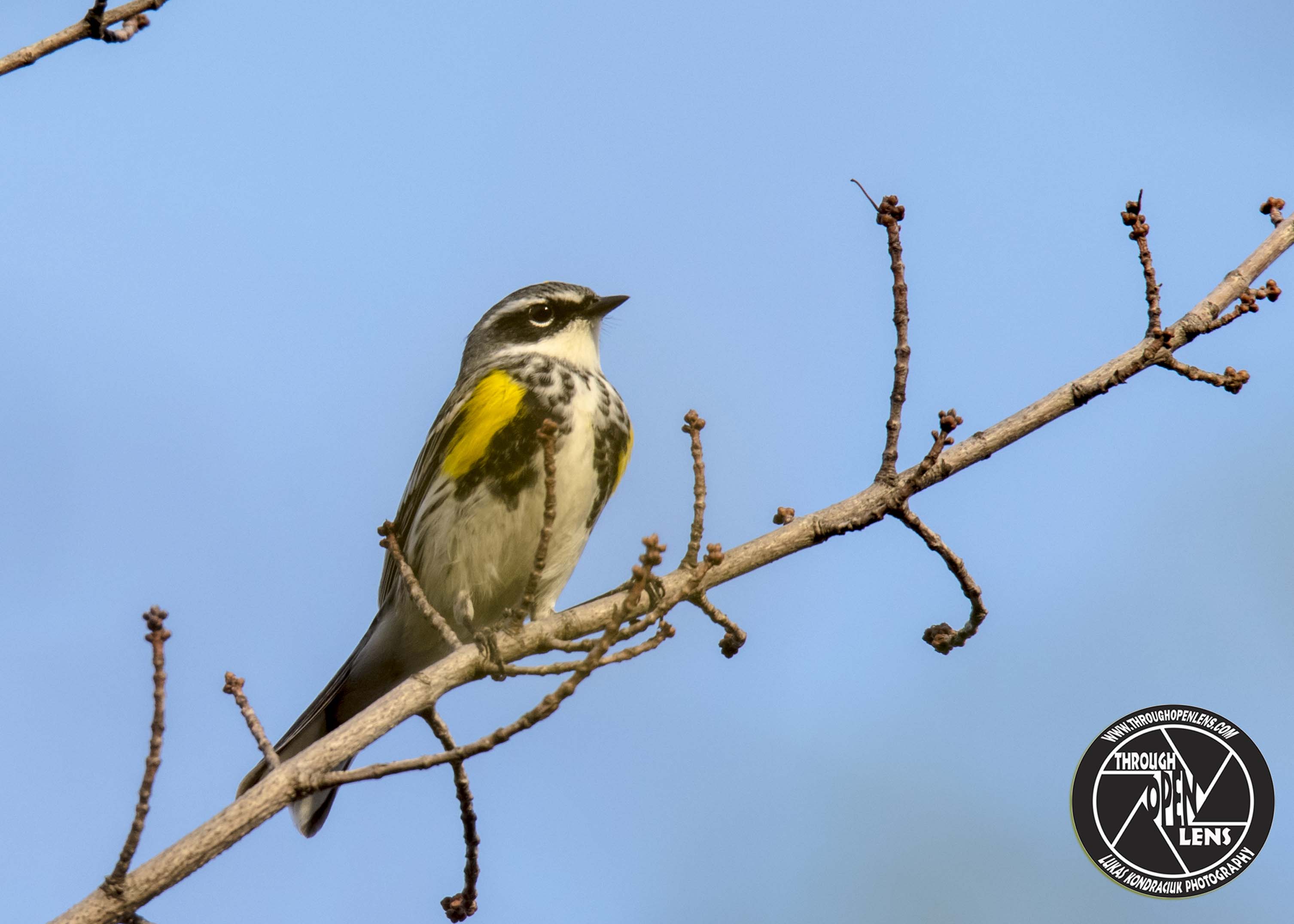
F/9.0, 1/320, ISO 400.
Yellow-Rumped Warbler
I just got fired from my job at the keyboard factory.
They told me I wasn’t putting in enough shifts.
Interesting Fact: When males court females, they fluff their feathers, raise their wings and the feathers of the crown, and hop from perch to perch, chipping. They may also make display flights in which they glide back and forth or fly slowly with exaggerated wingbeats. The Yellow-rumped Warbler’s flight is agile and swift, and the birds often call as they change direction. ( https://www.allaboutbirds.org/guide/Yellow-rumped_Warbler/lifehistory#behavior )
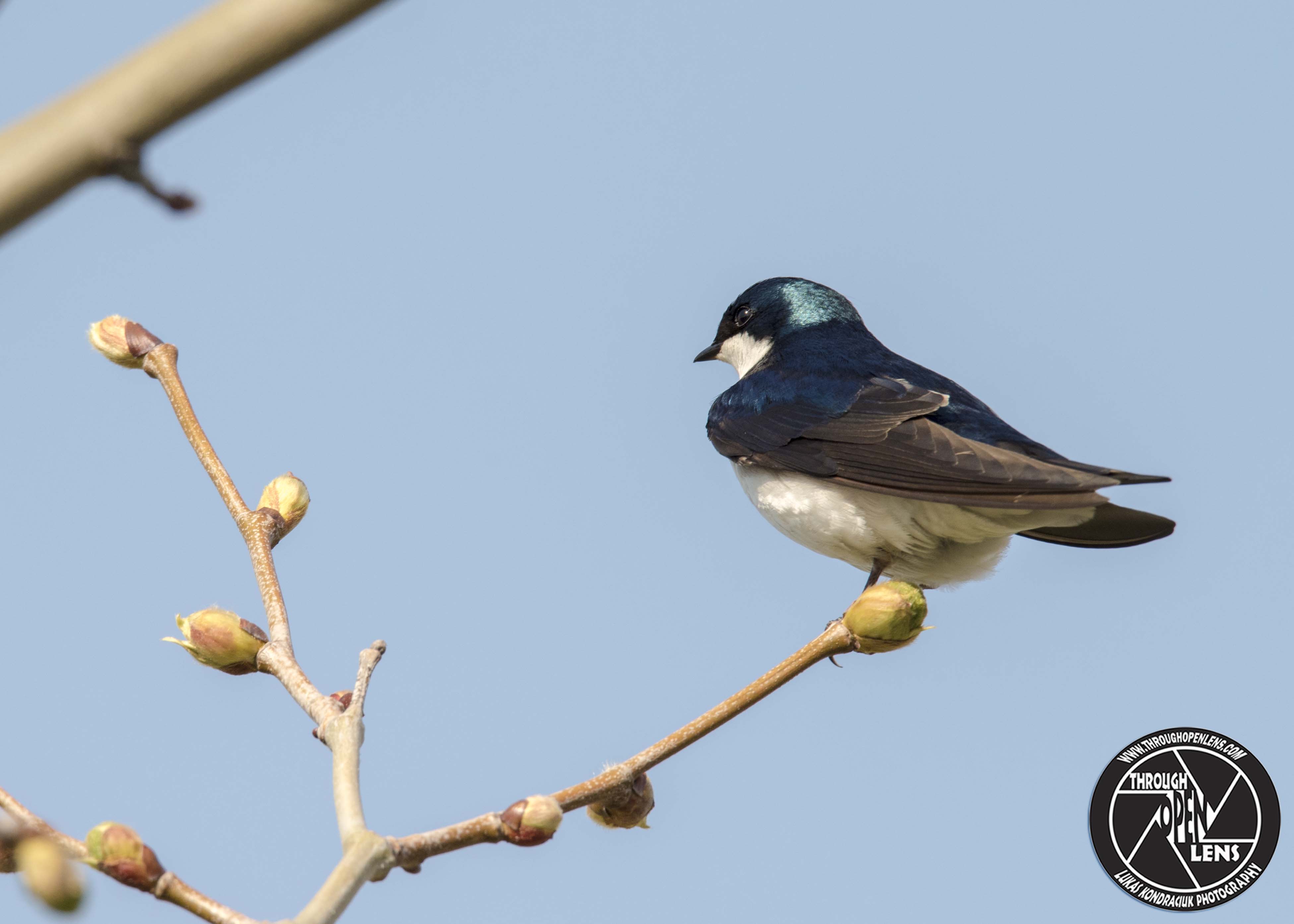
F/11.0, 1/500, ISO 320.
Tree Swallow
What do you get when cross a donkey and an onion?
A piece of ass that’ll bring a tear to your eye!
Interesting Fact: Tree Swallows line their nests with feathers, and they seem to display or even play with these feathers during the early nesting season. A bird flies above the nest with a feather held in its bill; sometimes this leads to chases, and sometimes the bird drops the feather, causing an aerial free-for-all to see which bird retrieves it. ( https://www.allaboutbirds.org/guide/Tree_Swallow/lifehistory )

F/6.3, 1/180, ISO 320.
American Goldfinch
Who earns a living driving their customers away?
A taxi driver.
Interesting Fact: Goldfinches move south in winter following a pattern that seems to coincide with regions where the minimum January temperature is no colder than 0 degrees Fahrenheit on average. ( https://www.allaboutbirds.org/guide/American_Goldfinch )

F/5.6, 1/80, ISO 320.
California Scrub-Jay
How did the barber win the race?
He knew a short cut.
Interesting Fact: You might see California Scrub-Jays standing on the back of a mule deer. They’re eating ticks and other parasites. The deer seem to appreciate the help, often standing still and holding up their ears to give the jays access. ( https://www.allaboutbirds.org/guide/California_Scrub-Jay/overview )

F/6.3, 1/160, ISO 320.
Northern Cardinal ( Female )
What season is it best to go on a trampoline?
Spring time
Interesting Fact: The brilliant red of a male Northern Cardinal calls attention to itself when males are around. You can also find cardinals by getting a sense of the warm, red-tinged brown of females – a pattern you can learn to identify in flight. Away from backyards, cardinals are still common but inconspicuous owing to their affinity for dense tangles. Listen for their piercing chip notes to find where they are hiding. ( https://www.allaboutbirds.org/guide/Northern_Cardinal/overview )
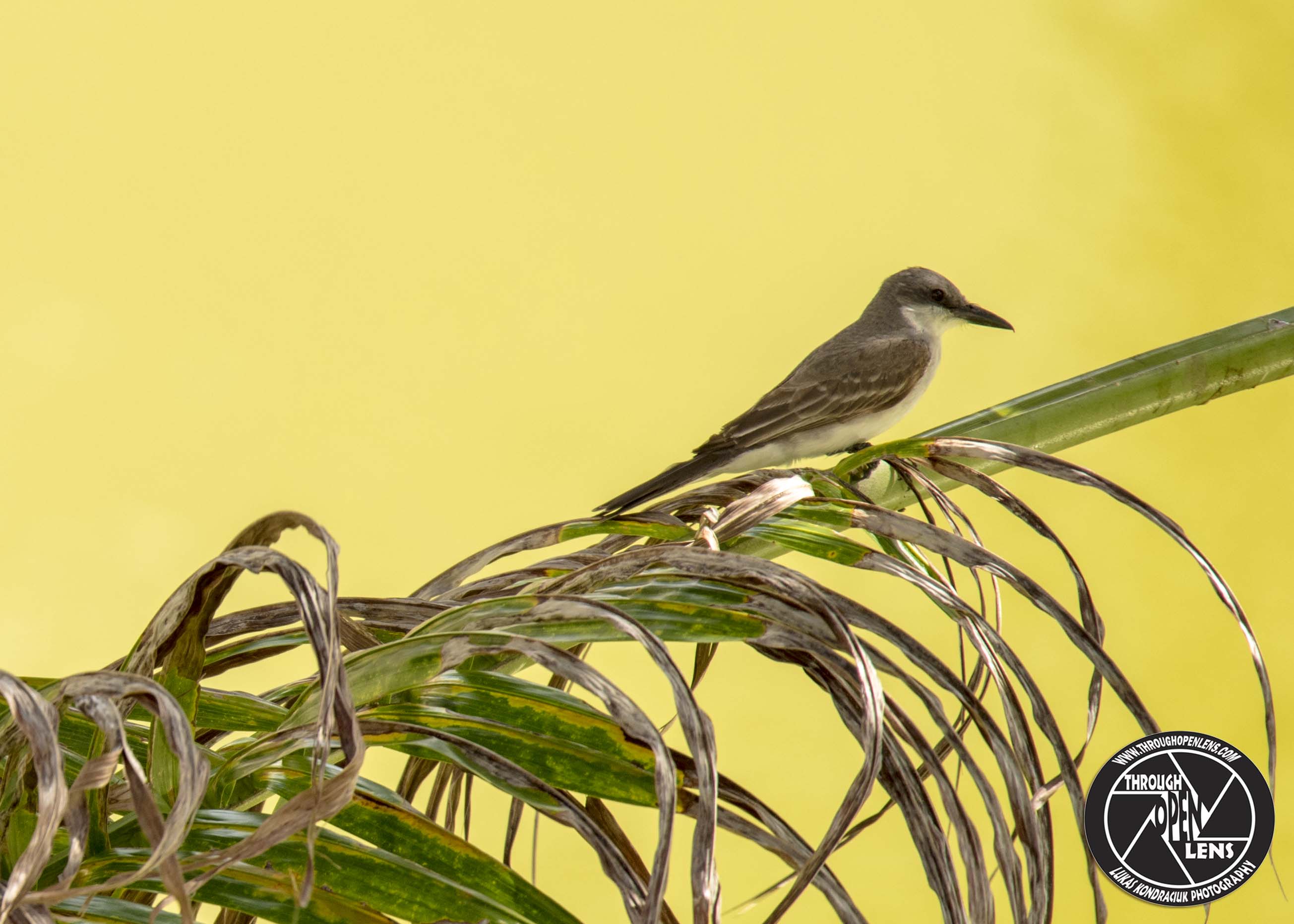
F/8.0, 1/250, ISO 250.
Gray Kingbird
Where do most zombies live?
On DEAD end streets!
Interesting Fact: Like other kingbirds, these birds aggressively defend their territory against intruders, including mammals and much larger birds such as caracaras, red-tailed hawks and broad-winged hawks. ( https://en.wikipedia.org/wiki/Gray_kingbird )

F/11.0, 1/500, ISO 400.
Black capped Chickadee
What is always coming but never arrives?
Tomorrow.
Interesting Fact: Chickadees are active, acrobatic, curious, social birds that live in flocks, often associating with woodpeckers, nuthatches, warblers, vireos, and other small woodland species. They feed on insects and seeds, but seldom perch within several feet of one another while taking food or eating. ( Black-capped Chickadee Life History, All About Birds, Cornell Lab of Ornithology )
 Through Open Lens