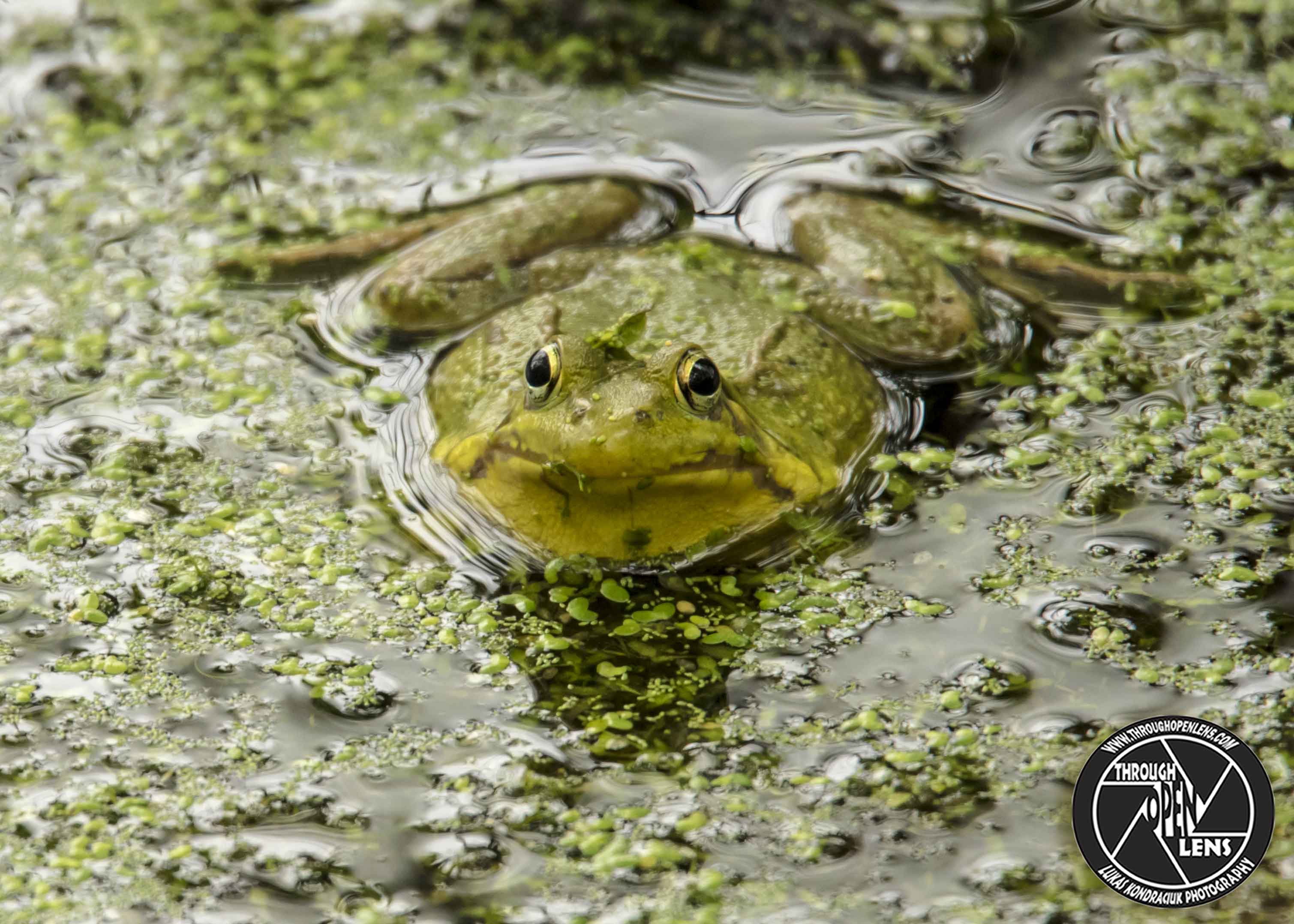
I Am Too Busy Working On My Own Grass To Notice If Yours Is Greener

F/6.3, 1/250, ISO 640.

Muskrat

Why is sex like math?

You add a bed, subtract the clothes, divide the legs, and pray there’s no multiplying!

Interesting Fact: Muskrats provide an important food resource for many other animals, including minkfoxescoyoteswolveslynxbobcatsbearseaglessnakesalligators, and large owls and hawksOtterssnapping turtles, and large fish such as pike prey on baby muskrats. Caribou and elk sometimes feed on the vegetation which makes up muskrat push-ups during the winter when other food is scarce for them.[24] In their introduced range in the former Soviet Union, the muskrat’s greatest predator is the golden jackal. They can be completely eradicated in shallow water bodies, and during the winter of 1948–49 in the Amu Darya (river in central Asia), muskrats constituted 12.3% of jackal faeces contents, and 71% of muskrat houses were destroyed by jackals, 16% of which froze and became unsuitable for muskrat occupation. Jackals also harm the muskrat industry by eating muskrats caught in traps or taking skins left out to dry. ( https://en.wikipedia.org/wiki/Muskrat#Behavior )

You Really CHANGED!

F/9.0, 1/320, ISO 320.

Butterfly

What’s the secret to telling a good postman joke?

It’s all in the delivery

Interesting Fact: Butterflies feed primarily on nectar from flowers. Some also derive nourishment from pollen,[54] tree sap, rotting fruit, dung, decaying flesh, and dissolved minerals in wet sand or dirt. Butterflies are important as pollinators for some species of plants. In general, they do not carry as much pollen load as bees, but they are capable of moving pollen over greater distances.[55] Flower constancy has been observed for at least one species of butterfly. ( https://en.wikipedia.org/wiki/Butterfly )


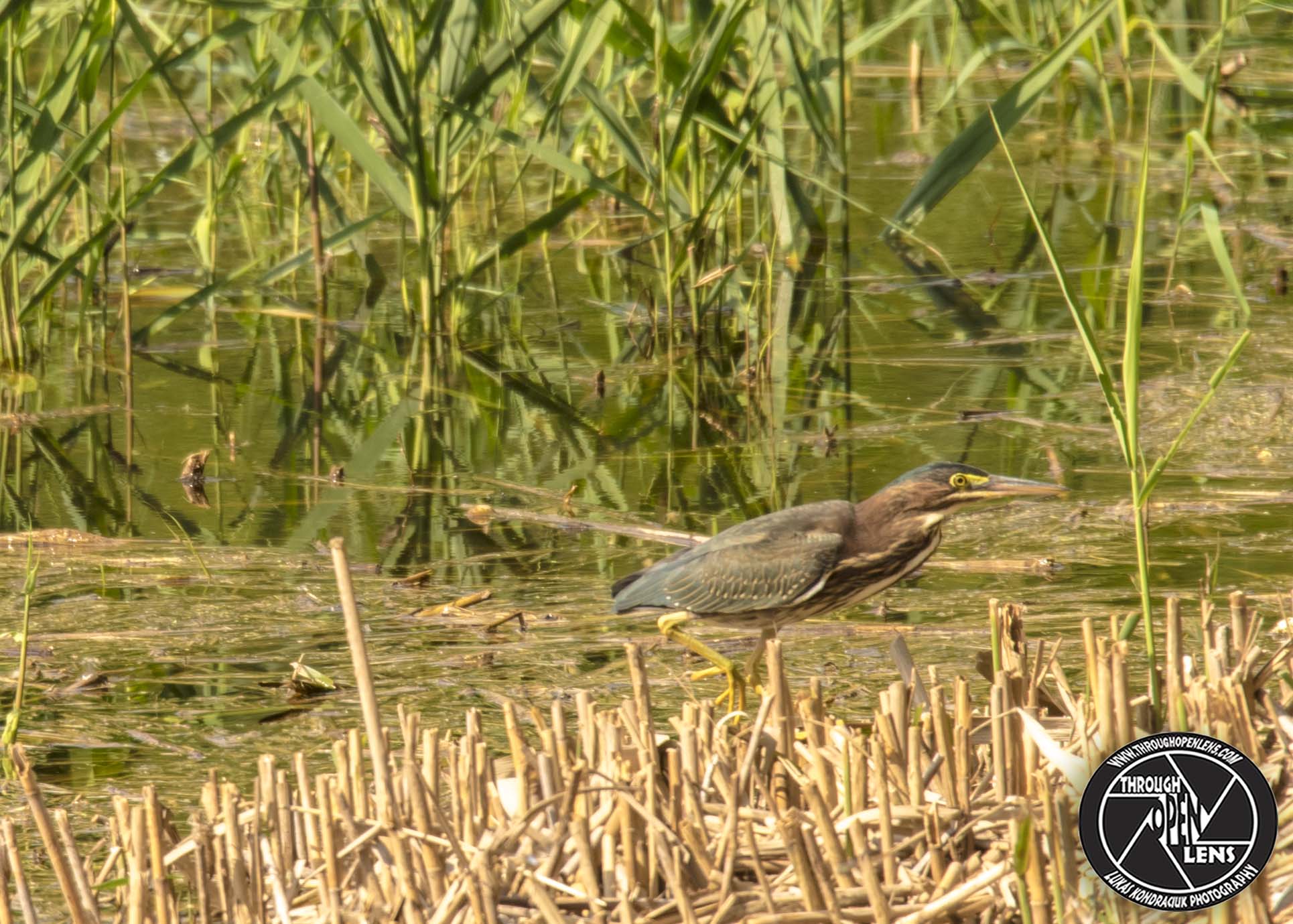
When Nothing Goes Right Just Go Fishing!

F/9.0, 1/320, ISO 250.

Green Heron

What is the difference between a cat and a dog?

Dogs think, “Humans are benevolent, they feed me and take care of me, so they must be Gods.”

Cats think, “Humans are benevolent, they feed me and take care of me, so I must be God.”

Interesting Fact: The Green Heron is part of a complex of small herons that sometimes are considered one species. When lumped, they are called Green-backed Heron. When split, they are the Green Heron, the widespread Striated Heron, and the Galapagos Heron. ( https://www.allaboutbirds.org/guide/Green_Heron/lifehistory )

Be Cool Honey Bunny!

F/6.3, 1/160, ISO 250.

Eastern Cottontail Rabbit

What did the salad say when the cabbage interrupted their meal?

Lettuce alone!

Interesting Fact: The cottontail prefers an area where it can hide quickly but be out in the open. Forests, swamps, thickets, bushes, or open areas where shelter is close by are optimal habitation sites for this species.  ( https://en.wikipedia.org/wiki/Eastern_cottontail )

I Am Here For You!

F/9.0, 1/320, ISO 250.

American Goldfinch

What can you serve but never eat?

A volleyball.

Interesting Fact: Paired-up goldfinches make virtually identical flight calls; goldfinches may be able to distinguish members of various pairs by these calls. ( https://www.allaboutbirds.org/guide/American_Goldfinch )

Yes I Walked Away Mid-Conversation. You Were Boring Me To Death And My Survival Instincts Kicked In.

F/11.0, 1/500, ISO 400.

Great Blue Heron 

What happened when the lion ate the comedian?

He felt funny!

Interesting Fact: Great Blue Herons can hunt day and night thanks to a high percentage of rod-type photoreceptors in their eyes that improve their night vision. ( https://www.allaboutbirds.org/guide/Great_Blue_Heron )


What? You Are Expecting A Prince Or Something?

F/6.3, 1/80, ISO 640.

Northern Green Frog

Why are frogs so happy?

They eat whatever bugs them!

Interesting Fact: The northern green frog dwells in marshes, swamps, ponds, lakes, springs, and other aquatic environment. It is active both day and night. ( https://en.wikipedia.org/wiki/Northern_green_frog )

What The Fox!

F/6.3, 1/30, ISO 500.

Red Fox 

What do you call a drunk shark?

Hammered Head

Interesting Fact: Red foxes are usually together in pairs or small groups consisting of families, such as a mated pair and their young, or a male with several females having kinship ties. The young of the mated pair remain with their parents to assist in caring for new kits.[8] The species primarily feeds on small rodents, though it may also target rabbitsgame birdsreptilesinvertebrates[6] and young ungulates.[6] Fruit and vegetable matter is also eaten sometimes.[9] Although the red fox tends to kill smaller predators, including other fox species, it is vulnerable to attack from larger predators, such as wolvescoyotesgolden jackals and medium- and large-sized felines. ( https://en.wikipedia.org/wiki/Red_fox )


Everyday May Not Be Good, But There Is Something Good In Everyday.

F/9.0, 1/250, ISO 320.

Muskrat

Why did the dog sit in the shade?

Because he didn’t want to be a hot dog!

Interesting Fact: Native Americans have long considered the muskrat to be a very important animal. Some predict winter snowfall levels by observing the size and timing of muskrat lodge construction.[26]  In several Native American creation myths, the muskrat dives to the bottom of the primordial sea to bring up the mud from which the earth is created, after other animals have failed in the task. ( https://en.wikipedia.org/wiki/Muskrat#Behavior )


It Seems To Me The Vultures Have Stopped Circling.

F/6.3, 1/60, ISO 400.

Turkey Vultures

What do you call security guards working outside Samsung shops?

Guardians of the Galaxy.

The Turkey Vulture’s distinctive slow, teetering flight style probably helps the bird soar at low altitudes, where it is best able to use its nose to find carrion. At other times they may soar high on thermals and form mixed flocks or kettles. On the ground they move with ungainly hops and are less agile than Black Vultures. Often, especially in the morning, they can be seen standing erect, wings spread in the sun, presumably to warm up, cool off, or dry off. ( https://www.allaboutbirds.org/guide/Turkey_Vulture/lifehistory )