Don’t Forget To Duck!

F/6.3, 1/400, ISO 400.

Hooded Merganser

What did the calculator say to the math student?

You can count on me.

Interesting Fact: On the bird family tree, Hooded Mergansers (genus Lophodytes) lie between goldeneyes (Bucephala) and the other North American mergansers (Mergus). They share many courtship behaviors and calls with both of those groups. ( https://www.allaboutbirds.org/guide/Hooded_Merganser/lifehistory )

Sometimes I Pretend To Be Normal But It Gets Boring. So I Go Back To Being Me.

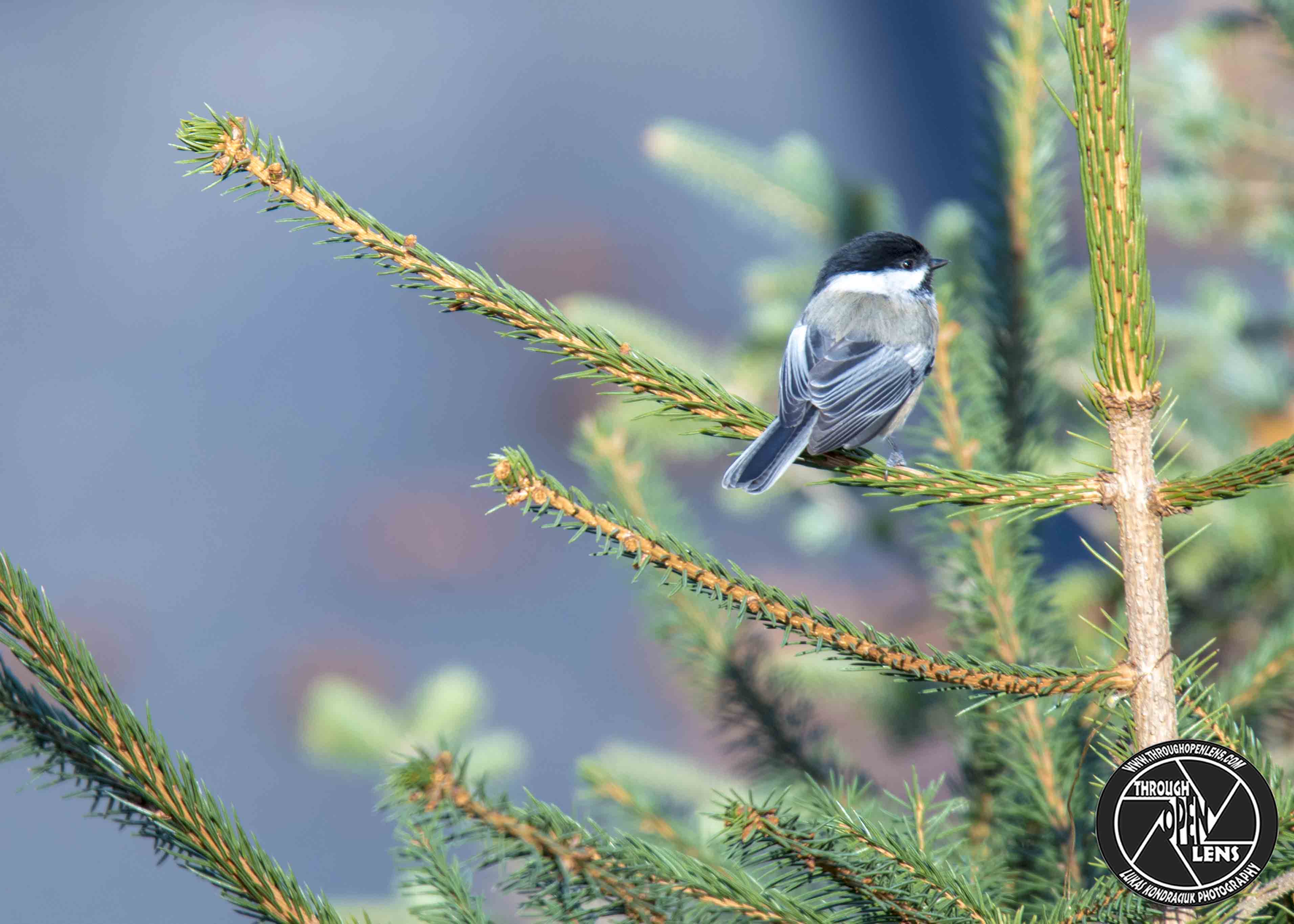
F/7.1, 1/200, ISO 250.

Black-capped Chickadee 

What’s the difference between a cat and a frog?

A Cat has nine lives but a Frog croaks every night!

Interesting Fact: Even when temperatures are far below zero, chickadees virtually always sleep in their own individual cavities. In rotten wood, they can excavate nesting and roosting holes entirely on their own. ( https://www.allaboutbirds.org/guide/Black-capped_Chickadee )

I’m Feeling A Bit Puffy Today!

F/7.1, 1/200, ISO 250.

Blue Jay

Why did the girl bring lipstick and eye shadow to school?

She had a make-up exam!

Interesting Fact: The Blue Jay frequently mimics the calls of hawks, especially the Red-shouldered Hawk. These calls may provide information to other jays that a hawk is around, or may be used to deceive other species into believing a hawk is present. (  https://www.allaboutbirds.org/guide/Blue_Jay/lifehistory )

Come At Me Bro!

F/9.0,  1/320, ISO 320.

Cooper’s Hawk

What did the tree say to spring?

What a re-leaf.

Interesting Fact: Dashing through vegetation to catch birds is a dangerous lifestyle. In a study of more than 300 Cooper’s Hawk skeletons, 23 percent showed old, healed-over fractures in the bones of the chest, especially of the furcula, or wishbone. ( https://www.allaboutbirds.org/guide/Coopers_Hawk )

I’m So Fly!

F/11.0, 1/500, ISO 320.

Northern Harrier

A camel meets an elephant.

The elephant asks jokingly: “Why do you have two breasts on your back?”

The camel replies: “With a face like yours, I’d just shut up.”

Interesting Fact: Northern Harriers are the most owl-like of hawks (though they’re not related to owls). They rely on hearing as well as vision to capture prey. The disk-shaped face looks and functions much like an owl’s, with stiff facial feathers helping to direct sound to the ears. ( https://www.allaboutbirds.org/guide/Northern_Harrier

Blue Me!

F/6.3, 1/160, ISO 400.

Eastern Bluebird

Doctor is talking to a patient.

Doctor:  “Do you do sports?”

Patient:  “Does sex count?”

Doctor:  “Yes.”

Patient:  “Then no.”

Interesting Fact: Eastern Bluebirds typically have more than one successful brood per year. Young produced in early nests usually leave their parents in summer, but young from later nests frequently stay with their parents over the winter.  ( https://www.allaboutbirds.org/guide/Eastern_Bluebird/lifehistory )

OWL Get You!

F/6.3, 1/250, ISO 1600.

Short Eared Owl

When does a Owl go “mooooo”?

When it is learning a new language!

Interesting Fact: As suggested by their wide global distribution, Short-eared Owls can travel long distances over vast expanses of ocean. Witnesses have reported seeing these owls descending on ships hundreds of miles from land.  ( https://www.allaboutbirds.org/guide/short-eared_owl/lifehistory )

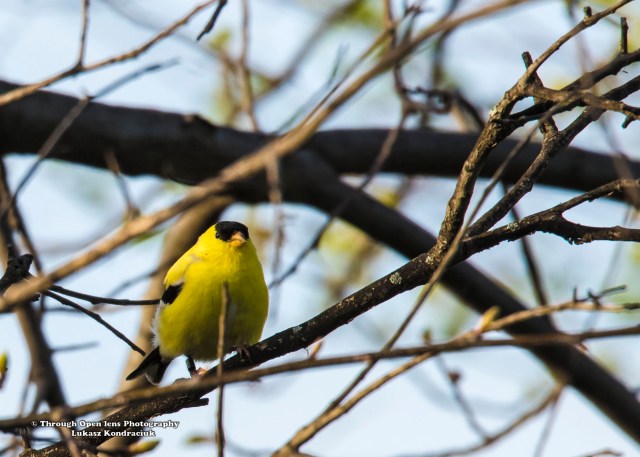
Ask Me Why I’m Angry?!

American Goldfinch

F/10.0, 1/400, ISO 400.

American Goldfinch

An angry wife was complaining about her husband spending all his free time in a bar, so one night he took her along with him. “What’ll you have?” he asked.

“Oh, I don’t know. The same as you I suppose,” she replied.

So, the husband ordered a couple of Jack Daniel’s and threw his down in one shot. His wife watched him, then took a sip from her glass and immediately spat it out.

“Yuck, that’s TERRIBLE!” she spluttered. “I don’t know how you can drink this stuff!”

“Well, there you go,” cried the husband. “And you think I’m out enjoying myself every night!”

Interesting Fact: American Goldfinches are the only finch that molts its body feathers twice a year, once in late winter and again in late summer. The brightening yellow of male goldfinches each spring is one welcome mark of approaching warm months. ( https://www.allaboutbirds.org/guide/American_Goldfinch/lifehistory )

Sing… The World Needs More Music!

F/8.0, 1/250, ISO 320.

Yellow Warbler Immature (Northern)

How do you make an egg laugh?

Tell it a yolk.

Interesting Fact: In addition to the migratory form of the Yellow Warbler that breeds in North America, several other resident forms can be found in Mexico, Central America, and the Caribbean. Males in these populations can have chestnut caps or even chestnut covering the entire head. ( https://www.allaboutbirds.org/guide/Yellow_Warbler/overview )

Wazzaap!

F/6.3, 1/145, ISO640.

Turkey Vulture ( Juvenile )

Why are hairdressers never late for work?

Because they know all the short cuts!

Interesting Fact: Outside of the breeding season, Turkey Vultures form roosts of dozens to a hundred individuals. When Turkey Vultures court, pairs perform a “follow flight” display where one bird leads the other through twisting, turning, and flapping flights for a minute or so, repeated over periods as long as 3 hours. Migrating flocks can number in the thousands. At carcasses, several Turkey Vultures may gather but typically only one feeds at a time, chasing the others off and making them wait their turn. Despite their size, Turkey Vultures are often driven off by smaller Black Vultures, Crested Caracaras, Zone-tailed Hawks, and other species. ( https://www.allaboutbirds.org/guide/Turkey_Vulture/lifehistory )