Together We Can Quack Everything!

F/9.0, 1/320, ISO 500.

Canvasback 

Did you hear about the duck with a drug problem?

He was a quackhead.

Interesting Fact: Canvasbacks are social outside of the breeding season; they gather in large rafts by the thousands to tens of thousands. Only when winter food is scarce or clumped do they defend foraging areas against other Canvasbacks. During spring and early in the breeding season, they act more aggressively. Threat displays include putting the bill in the water or on the chest, jabbing, pumping the head, or chasing.  ( https://www.allaboutbirds.org/guide/Canvasback/lifehistory )
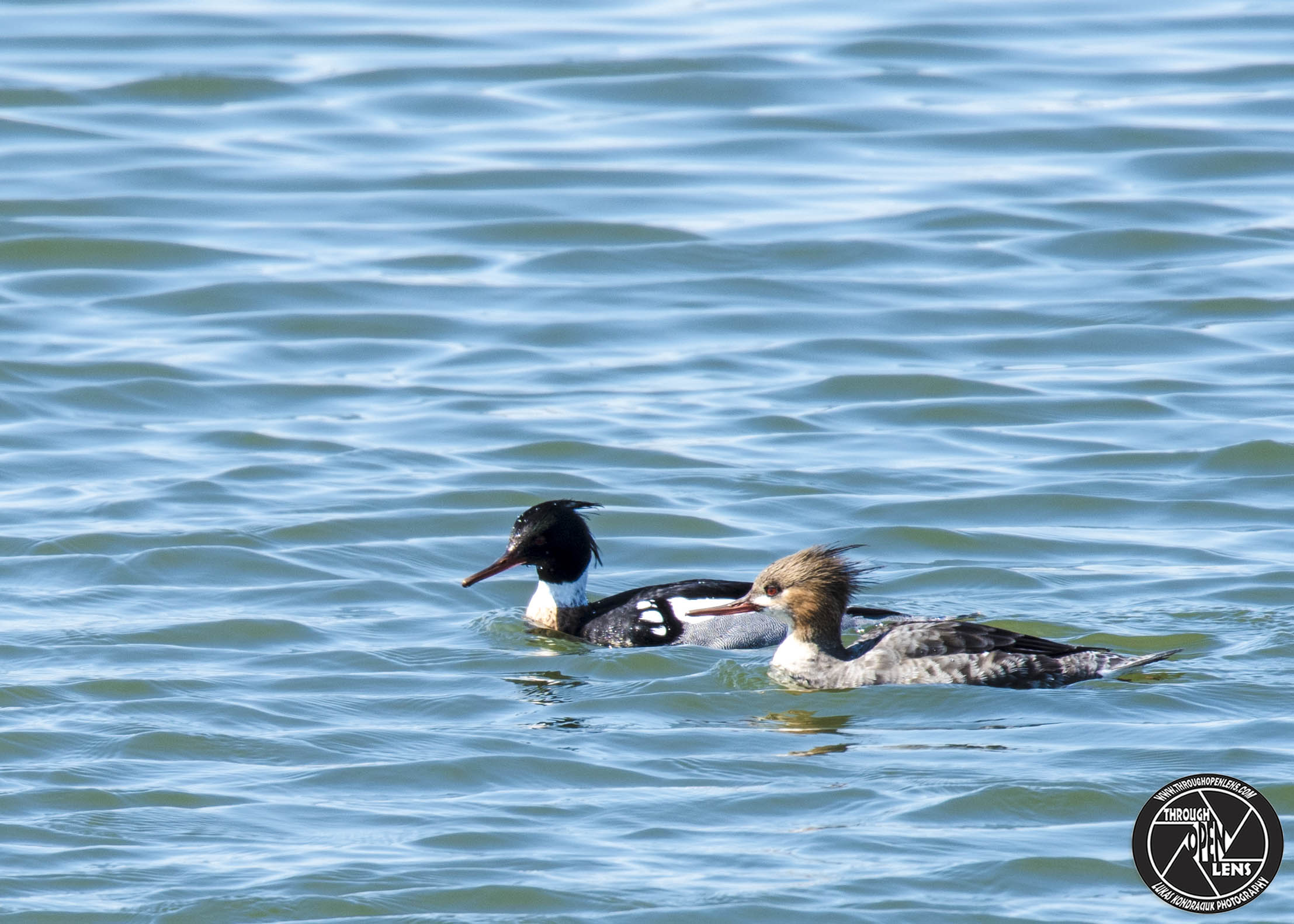
Alone We Are Strong… Together We Are Stronger!

F/9.0, 1/320, ISO 200.

Red-breasted Merganser

Why can’t a leopard hide?

Because he’s always spotted!

Interesting Fact:  The Red-breasted Merganser breeds farther north and winters farther south than the other American mergansers. ( https://www.allaboutbirds.org/guide/Red-breasted_Merganser/lifehistory )

Dear People, Quit Trying To Look Like Us In Photos… It’s Embarrassing To Our Species.

F/10.0, 1/400, ISO 320.

Gadwall

Why did the can crusher quit his job?

Because it was soda pressing.

Interesting Fact:  Gadwall are dabbling ducks—they ride fairly high in the water and they tip forward to graze on submerged plants that they can reach with their outstretched necks. They rarely dive. Gadwall sometimes steal food from American Coots. ( https://www.allaboutbirds.org/guide/Gadwall/lifehistory )

Yes, I’m On Quack And No, I Don’t Give A Duck!

F/10.0, 1/400, ISO 250.

Bufflehead Duck ( Female )

Why are trees very forgiving?

Because in the Fall they “Let It Go” and in the Spring they “turn over a new leaf”.

Interesting Fact:  Unlike most ducks, the Bufflehead is mostly monogamous, often remaining with the same mate for several years. ( https://www.allaboutbirds.org/guide/Bufflehead/lifehistory )

Emo Ducks

red-breasted-mergansers

F/9.0, 1/320, ISO 200.

Red-breasted Mergansers

Is it dangerous to swim on a full stomach?

Yes. It’s better to swim in water.

Interesting Fact: The Red-breasted Merganser breeds farther north and winters farther south than the other American mergansers. ( https://www.allaboutbirds.org/guide/Red-breasted_Merganser/lifehistory )

Don’t You Flap Your Wings At Me!

F/9.0, 1/320, ISO 320.

Hooded Merganser

In School

Teacher: “If I gave you 2 cats and another 2 cats and another 2, how many would you have?”
Bob: “Seven.”
Teacher: “No, listen carefully… If I gave you two cats, and another two cats and another two, how many would you have?”
Bob: “Seven.”
Teacher: “Let me put it to you differently. If I gave you two apples, and another two apples and another two, how many would you have?”
Bob: “Six.”
Teacher: “Good. Now if I gave you two cats, and another two cats and another two, how many would you have?”
Bob: “Seven!”
Teacher: “Bob, where in the heck do you get seven from?!”
Bob: “Because I’ve already got a freaking cat!”

Interesting Fact:  The Hooded Merganser is the second-smallest of the six living species of mergansers (only the Smew of Eurasia is smaller) and is the only one restricted to North America. ( https://www.allaboutbirds.org/guide/Hooded_Merganser/lifehistory )

Beware Of The Quacks!

F/9.0, 1/250, ISO 320.

Ring-necked Ducks

Two friends are talking:

Bobby: Where will you be in two years?

Tommy: I don’t know. I don’t have 2020 vision.

Interesting Fact: On migration, Ring-necked Ducks stop to rest and feed on shallow lakes and impoundments with dense stands of cattails, bulrushes, and other emergent vegetation. They can form very large flocks on some lakes. During the winter, look for them in swamps, river floodplains, brackish portions of estuaries, shallow inland lakes, sloughs, marshes, reservoirs, and other managed freshwater impoundments. (  https://www.allaboutbirds.org/guide/Ring-necked_Duck/lifehistory#habitat  )

Let’s Swim Away Together!

F/9.0, 1/320, ISO 200.

Wood Ducks

A man and a woman have just had their 50th wedding anniversary.

The husband turns to his wife and asks, “What do you want to do to celebrate our anniversary dear?”

She replies, “Let’s run upstairs and make love.”

He turns to her and says, “Well make up your mind, we can’t do both!”

Interesting Fact: Egg-dumping, or “intraspecific brood parasitism” is common in Wood Ducks—females visit other Wood Duck cavities, lay eggs in them, and leave them to be raised by the other female. This may have been made more common by the abundance and conspicuousness of artificial nest boxes; in some areas it happens in more than half of all nests. Individual females typically lay 10-11 eggs per clutch, but some very full nests have been found containing 29 eggs, the result of egg-dumping. ( https://www.allaboutbirds.org/guide/Wood_Duck/lifehistory#behavior )

Rain Makes Everything Wet

F/6.3, 1/125, ISO 320.

Red-breasted Merganser

A teacher wanted to teach her students about self-esteem, so she asked anyone who thought they were stupid to stand up.

One kid stood up and the teacher was surprised.

She didn’t think anyone would stand up so she asked him, “Why did you stand up?”

He answered, “I didn’t want to leave you standing up by yourself.”

Interesting Fact: The fastest duck ever recorded was a red-breasted merganser that attained a top airspeed of 100 mph while being pursued by an airplane. This eclipsed the previous speed record held by a canvasback clocked at 72 mph. ( https://en.wikipedia.org/wiki/Red-breasted_merganser )

We Are Rolling Deep Today!

F/8.0, 1/250, ISO 320.

Ring-necked Duck

Why don`t ducks tell jokes when they fly?

Because they would quack up!

Interesting Fact: Ring-necked Ducks breed in northern North America and spend winters in southern and western North America, northern Central America, and the Caribbean, often on freshwater. Much of the population migrates from central Canada to the southeastern United States, staging along the way in Minnesota and other parts of the upper Midwest.  ( https://www.allaboutbirds.org/guide/Ring-necked_Duck/maps-range