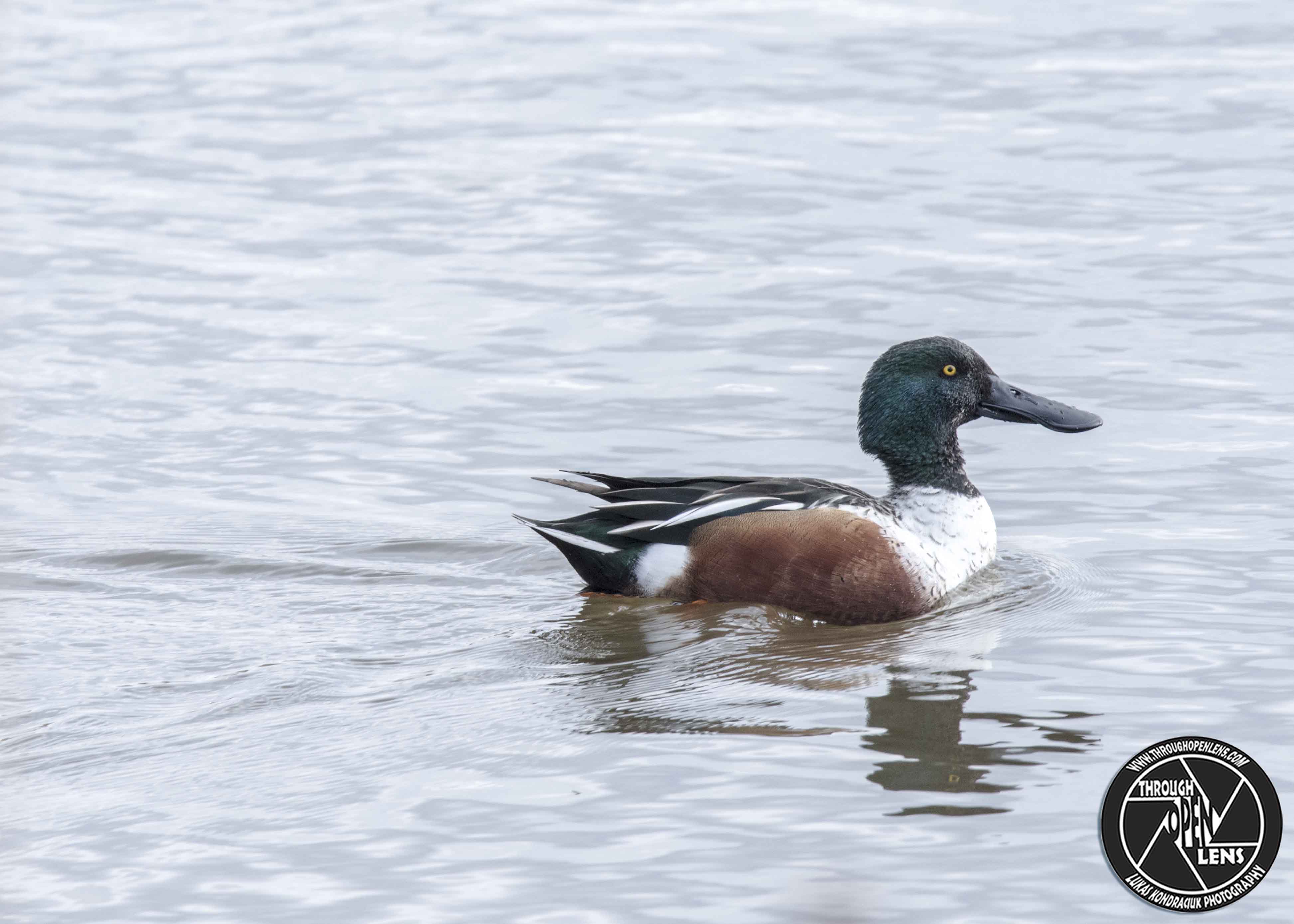
Quack You, You Quacker!

F/ 10.0, 1/320, ISO 320.

Northern Shoveler 

What do you call a kid who doesn’t believe in Santa?

A rebel without a Claus.

Interesting Fact: They are often referred to as the “Spoonbill” or “Spoony” because of their unique spatulate shaped bill, which has about 110 fine projections (called lamellae) along the edges, for straining food from water.  ( http://identify.whatbird.com/obj/97/overview/Northern_Shoveler.aspx )

Away With You…. PHEASANT.

ring-necked-pheasant

F/6.3, 1/500, ISO 1100.

Ring-Necked Pheasant

A pheasant says to a bull, “I would love to get on top of that tree, but I haven’t the energy.”

“Well,” says the bull, “why don’t you eat some of my dung? It’s packed with nutrients.”

So the pheasant eats some dung and finds that it gives him enough energy to get to the first branch. The next day, he eats some more and gets to the next branch. This cycle continues for a week. Finally, the pheasant is at the top of the tree, where he is spotted by the farmer, who shoots him with a shotgun.

Moral of the Story: bullsh*t might take you to the top, but it won’t keep you there.

Interesting Fact: While the birds normally don’t cover more than about 600 feet at a time, strong winds can extend their flights considerably. Observers in 1941 reported seeing a pheasant fly a record four miles while crossing a body of water. ( https://www.allaboutbirds.org/guide/Ring-necked_Pheasant/lifehistory )

What The Duck?

bufflehead

F/10.0, 1/400, ISO 250.
Bufflehead Duck

Two ducks are in a pond.

One went “Quack quack!”

And the other duck said “That’s funny I was just about to say that!”

Interesting Fact: The Bufflehead nests almost exclusively in holes excavated by Northern Flickers and, on occasion, by Pileated Woodpeckers. ( https://www.allaboutbirds.org/guide/Bufflehead/lifehistory )

Duck Magnet!

F/9.0, 1/320, ISO 250.

Ruddy Duck

How do you know that carrots are good for your eyesight?

Have you ever seen a rabbit wearing glasses?

Interesting Fact:  Ruddy Ducks lay big, white, pebbly-textured eggs—the largest of all duck eggs relative to body size. Energetically expensive to produce, the eggs hatch into well-developed ducklings that require only a short period of care. ( http://www.allaboutbirds.org/guide/Ruddy_Duck/lifehistory )

Swim Your Heart Out!

F/10.0, 1/400, ISO 250.

Bufflehead Duck 

What do you call two ducks and a cow?

Quackers and Milk.

Interesting Fact: Bufflehead fossils from the late Pleistocene (about 500,000 years ago) have been found in Alaska, California, Florida, Illinois, Kansas, Texas, and Washington. One California fossil that resembles a modern Bufflehead dates to the late Pliocene, two million years ago.  ( https://www.allaboutbirds.org/guide/Bufflehead/lifehistory )

Todays Post Has Been Brought To You By The Letter “S”.

F/10.0, 1/400, ISO 400.

Great Egret

What do lawyers wear to court?

Lawsuits!

Interesting Fact: The Great Egret walks with its neck extended and its wings held close to its body. In flight, it is graceful and buoyant, with its neck tucked back against its shoulders and its legs trailing behind. ( http://www.allaboutbirds.org/guide/great_egret/lifehistory )

Should I Get A Tatoo Of A Human on My Back?

F/8.0, 1/250, ISO 250.

Butterfly

What do Butterfly learn at school?

Mothmatics !

Interesting Fact:  Butterflies are often polymorphic, and many species make use of camouflage, mimicry and aposematism to evade their predators. Some, like the monarch and the painted lady, migrate over long distances. Many butterflies are attacked by parasites or parasitoids, including wasps, protozoans, flies, and other invertebrates, or are preyed upon by other organisms. Some species are pests because in their larval stages they can damage domestic crops or trees; other species are agents of pollination of some plants. Larvae of a few butterflies (e.g., harvesters) eat harmful insects, and a few are predators of ants, while others live as mutualists in association with ants. Culturally, butterflies are a popular motif in the visual and literary arts. ( https://en.wikipedia.org/wiki/Butterfly )

Fly By!

F/10.0, 1/400, ISO 200.

Great Egret

Bobby went in to a pet shop.

Bobby: “Can I buy a goldfish?”

The Sales Guy: “Do you want an aquarium?”

Bobby: “I don’t care what star sign it is.”

Interesting Fact: The oldest known Great Egret was 22 years, 10 months old and was banded in Ohio. ( https://www.allaboutbirds.org/guide/Great_Egret )

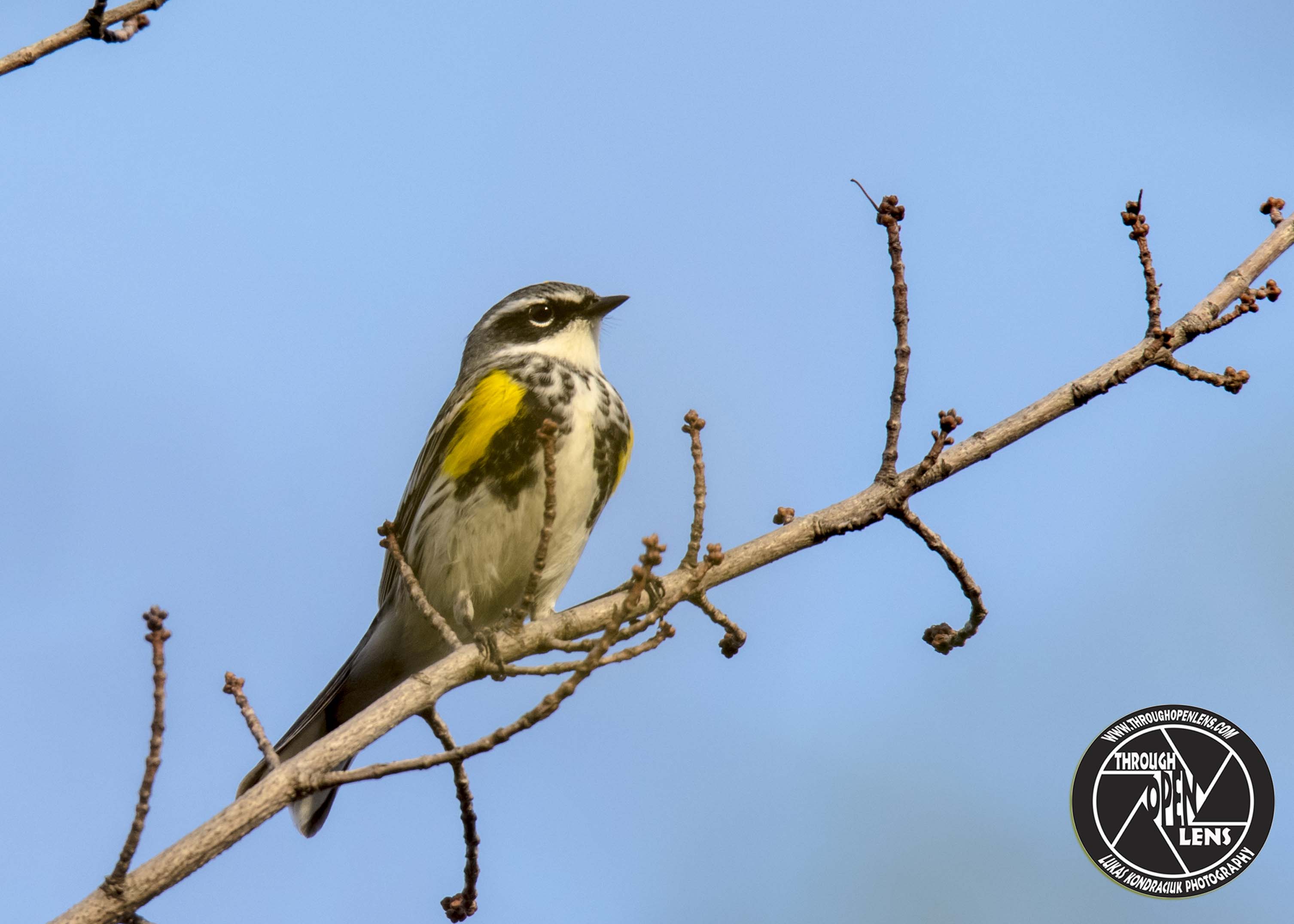
Sometimes I pretend To Be Normal. But It Gets Boaring. So I Go Back To Being Me.

F/9.0, 1/320, ISO 400.

 Yellow-Rumped Warbler

I just got fired from my job at the keyboard factory.

They told me I wasn’t putting in enough shifts.

Interesting Fact: When males court females, they fluff their feathers, raise their wings and the feathers of the crown, and hop from perch to perch, chipping. They may also make display flights in which they glide back and forth or fly slowly with exaggerated wingbeats. The Yellow-rumped Warbler’s flight is agile and swift, and the birds often call as they change direction. ( https://www.allaboutbirds.org/guide/Yellow-rumped_Warbler/lifehistory#behavior )

Do You Have My Quack?

F/9.0, 1/320, ISO 320.

Ruddy Duck

Did you hear about the duck with a drug problem?

He was a quackhead.

Interesting Fact:  The oldest Ruddy Duck on record was a male and at least 13 years, 7 months old. He was banded in British Columbia and 1951 and found in Oregon in 1964. ( https://www.allaboutbirds.org/guide/Ruddy_Duck )