
F/8.0, 1/250, ISO 320.
Downy Woodpecker
Why did Adele cross the road?
To sing, “Hello from the other side!”

F/8.0, 1/250, ISO 320.
Downy Woodpecker
Why did Adele cross the road?
To sing, “Hello from the other side!”

F/8.0, 1/250, ISO 400.
Northern Flicker
What can you hold without ever touching it?
A conversation.
Interesting Fact: The red-shafted and yellow-shafted forms of the Northern Flicker formerly were considered different species. The two forms hybridize extensively in a wide zone from Alaska to the panhandle of Texas. A hybrid often has some traits from each of the two forms and some traits that are intermediate between them. The Red-shafted Flicker also hybridizes with the Gilded Flicker, but less frequently. ( https://www.allaboutbirds.org/guide/Northern_Flicker )

F/8.0, 1/250, ISO 320.
Brown Creeper
Why was Cinderella thrown off the basketball team?
She ran away from the ball.
Interesting Fact: Brown Creepers burn an estimated 4–10 calories (technically, kilocalories) per day, a tiny fraction of a human’s daily intake of about 2,000 kilocalories. By eating a single spider, a creeper gains enough energy to climb nearly 200 feet vertically. ( https://www.allaboutbirds.org/guide/Brown_Creeper )

F/ 5.6, 1/500, ISO 100.
Caspian Tern
Why did the cookie go to the hospital?
Because he felt crummy.
Interesting Fact: The Caspian Tern aggressively defends its breeding colony. It will pursue, attack, and chase potential predatory birds, and can cause bloody wounds on the heads of people who invade the colony. The entire colony will take flight, however, when a Bald Eagle flies overhead, exposing the chicks to predation from gulls. ( https://www.allaboutbirds.org/guide/Caspian_Tern/overview )

F/9.0, 1/320, ISO 160.
Hispaniolan Woodpecker
Why aren’t there any shark puppeteers?
They have no hands!
Interesting Fact: This woodpecker forages in small noisy groups; the diet is varied and includes insects, spiders, scorpions, lizards, fruit, seeds, grain and sap. It can catch flying insects on the wing, and larger food items are bashed on an “anvil” to break them up. ( https://en.wikipedia.org/wiki/Hispaniolan_woodpecker )

F/10.0, 1/400, ISO 250.
Marsh Wren
What animal has the best sense of time?
A Watchdog!
Interesting Fact: The secret life of the Marsh Wren plays out under the cover of reeds. Here, males routinely mate with 2 or more females and build at least 6 dummy nests for every female they mate with. One male built 22 nests on his territory. ( https://www.allaboutbirds.org/guide/Marsh_Wren )

F/10.0, 1/400, ISO 160.
White-winged Dove
What kind of candy do zombies refuse to eat?
LIFE Savers!
Interesting Fact: Like other doves and pigeons, White-winged Doves have some unusual abilities. They can suck and swallow water without moving their heads. And they use a secretion from the esophagus, known as crop milk, to feed nestlings. Both parents may consume snails and bone fragments to help their bodies create the nutritious fluid. ( https://www.allaboutbirds.org/guide/White-winged_Dove )

F/9.0, 1/320, ISO 250.
Semipalmated Sandpipers
What never asks questions but receives a lot of answers?
The Telephone.
Interesting Fact: The oldest recorded Semipalmated Sandpiper was at least 14 years, 2 months old when it was recaptured and rereleased during banding operations in New Brunswick. ( https://www.allaboutbirds.org/guide/Semipalmated_Sandpiper/overview )

F/9.0, 1/320, ISO 160.
Palmchat
What’s a zombies favorite desert?
I-Scream!
Interesting Fact: Palmchats are very sociable birds, often seen in small flocks containing several pairs which will roost closely together with their bodies in contact. ( https://en.wikipedia.org/wiki/Palmchat )
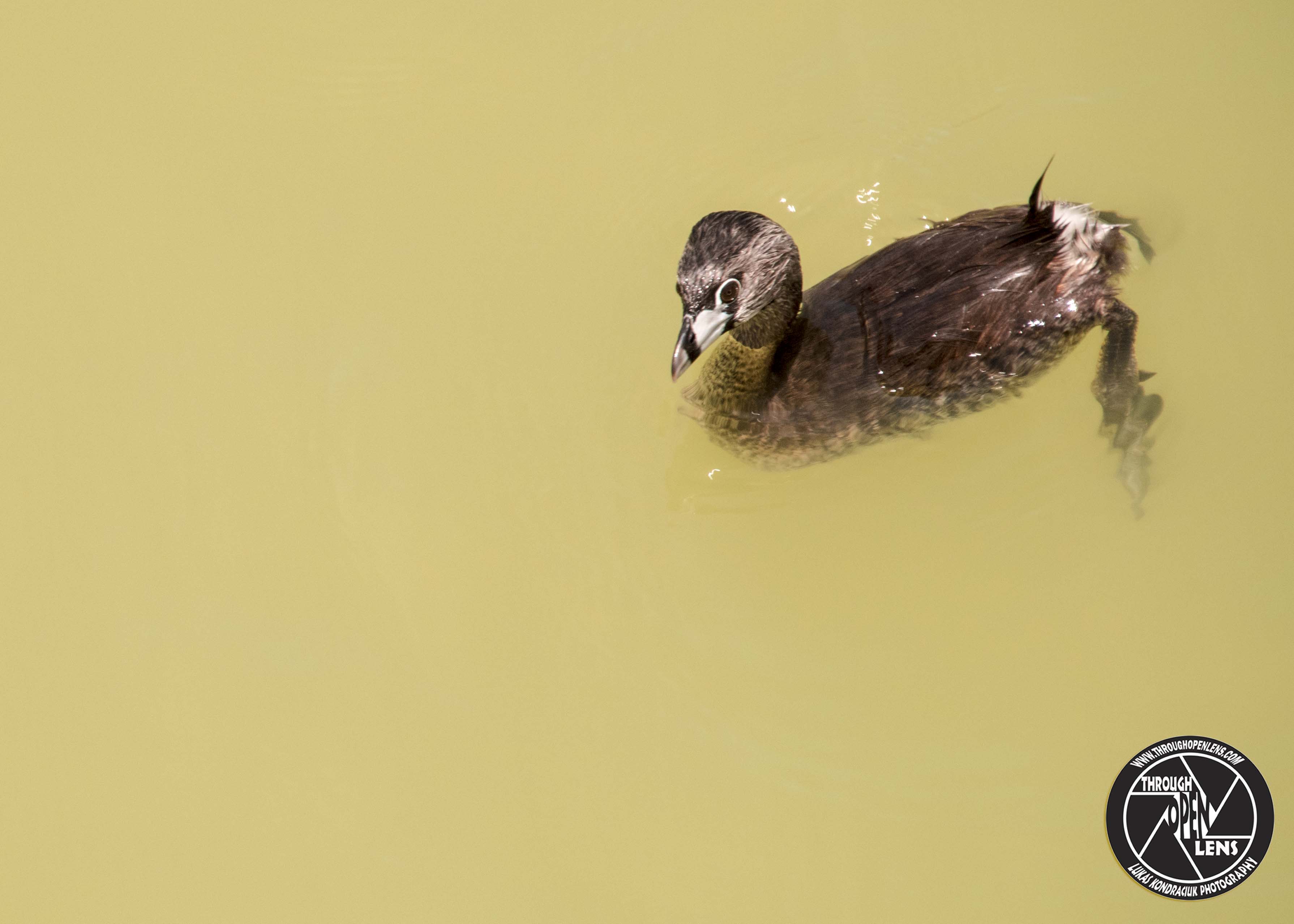
F/7.1, 1/200, ISO 400.
Pied-Billed Grebe
Did you hear about the big zombie party?
It was DEAD & full of STIFFS!
Interesting Fact: Like other grebes, the Pied-billed Grebe eats large quantities of its own feathers. Feathers may at times fill up more than half of a grebe’s stomach, and they are sometimes fed to newly hatched chicks. The ingested plumage appears to form a sieve-like plug that prevents hard, potentially harmful prey parts from passing into the intestine, and it helps form indigestible items into pellets which they can regurgitate. ( https://www.allaboutbirds.org/guide/Pied-billed_Grebe )

