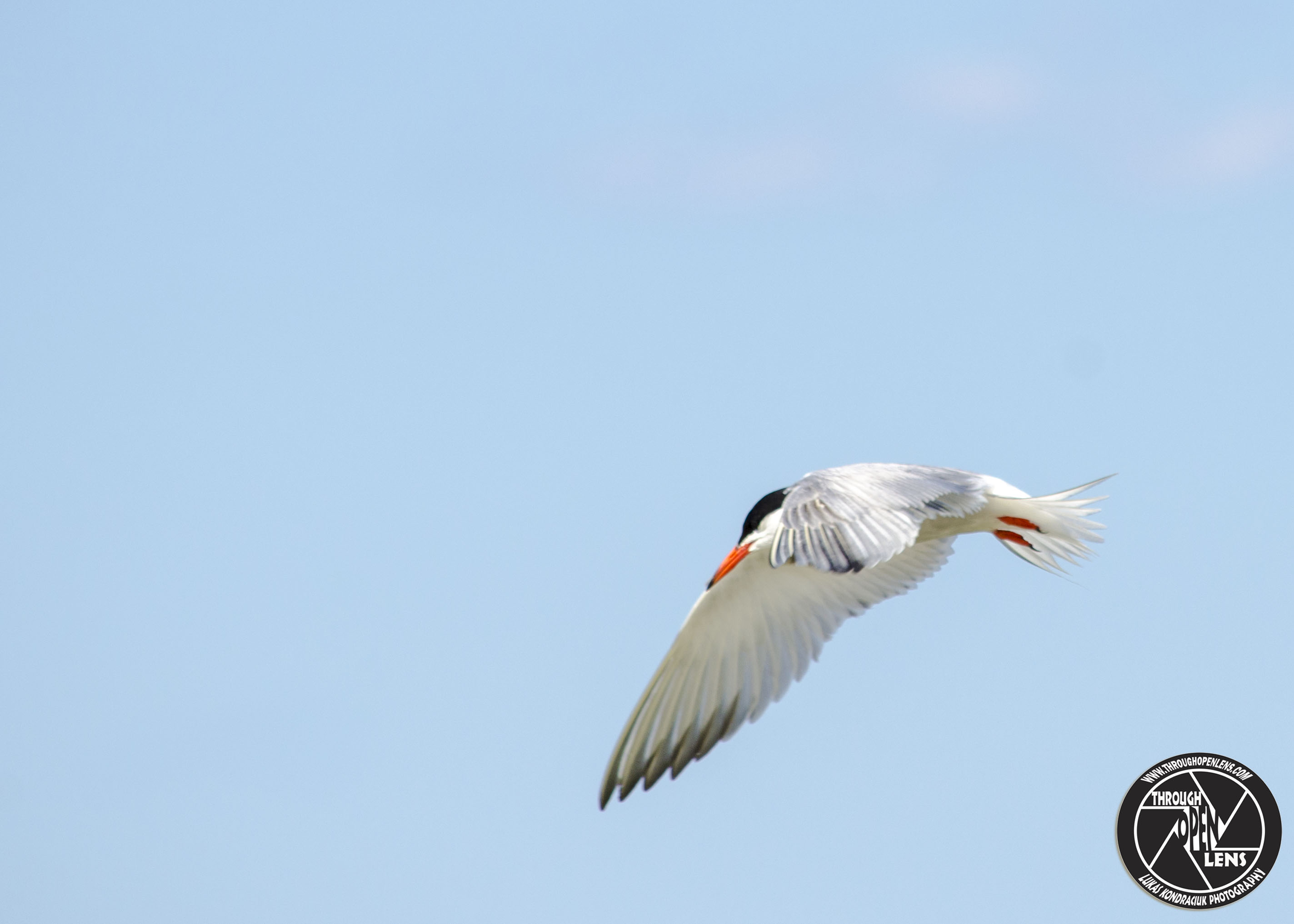
I Don’t Have To Take This… I’m Going Home.

F/7.1, 1/200, ISO 200.

Black Scoter

Why did the tiny ghost join the football team?

He heard they needed a little team spirit.

Interesting Fact: A coastal duck that breeds in the subarctic, the Black Scoter is not well studied in North America. Only a few nests have ever been found. ( https://www.allaboutbirds.org/guide/Black_Scoter )


Quack Head!

F/6.3, 1/1000, ISO 400.

Bufflehead

Why did the scientist take out his doorbell?

He wanted to win the no-bell prize.

Interesting Fact: The oldest Bufflehead on record was at least 18 years and 8 months old. It was caught and re-released by a bird bander in New York in 1975. ( https://www.allaboutbirds.org/guide/Bufflehead/lifehistory )

.

But Officer, I’ve Never Been Able To Walk A Straight Line.

F/5.6, 1/280, ISO 500.

Atlantic Ghost Crab

Why is there only one Yogi Bear?

Because when they tried to make another one, they made a Boo-Boo.

Interesting Fact: Crabs of this species usually engage in a combat that is non-contact. The combat style is more ritualistic in style and ends in contact in very rare cases. ( https://www.animalspot.net/ghost-crab-sand-crab.html )


F.L.Y. ( First Love Yourself )

F/7.1, 1/800, ISO 200.

Common Tern

Why do you always see teen girls in groups of three?

Because they literally can’t even.

Interesting Fact: Males and females make a small scrape on the ground. Females add dead vegetation that has washed onshore, shell fragments, bones, stones, and sometimes plastic to the nest scrape before and after laying eggs.  ( https://www.allaboutbirds.org/guide/Common_Tern/lifehistory )


Quack Like You Mean It!

F/14.0, 1/500, ISO 800.

Black Scoter

This guy went to school and he asked
“May I use the bathroom?”
The teacher replied, ” no not unless you say your abc’s.”
The guy said “a b c d e f g h i j k l m n o q r s t u v w x y z.”
The teacher asked “Where’s the p?
He replied, ” running down my leg!”

Interesting Fact:  The Black Scoter occasionally does a “Wing-flap” display while swimming, flapping its wings with its body held up out of the water. Unlike other scoters, it almost always punctuates a Wing-flap with a characteristic downward thrust of head, as if its neck were momentarily broken. Surf and White-winged scoters keep their heads and bills pointing more or less above the horizontal throughout a Wing-flap.  ( https://www.allaboutbirds.org/guide/Black_Scoter/lifehistory )

In Memory Of 9/11

F/16.0, 30.0, ISO 160.

We Will Never Forget 9/11.

Interesting Fact: On clear nights, the lights can be seen from over 60 miles (97 km) away, visible in all of New York City and most of suburban Northern New Jersey and Long Island. The lights can also be seen in Fairfield County, Connecticut, as well as Westchester, Orange, and Rockland counties in New York. The beams have been clearly visible as far north as the terrace at Century Country Club in Purchase, New York, from at least as far west as western Morris County, in Flanders, New Jersey, at least as far east as the barrier beach of Fire Island in Suffolk County, New York on Long Island, and as far south near Trenton, New Jersey in nearby Hamilton. ( https://en.m.wikipedia.org/wiki/Tribute_in_Light )

Everyone Tells Me To Keep My Head Up But Food Is Down Here

F/6.3, 1/640, ISO 200.

Willet

Did your hear about the man with a broken left arm and broken left leg?

Don’t worry he’s “ALRIGHT” now!

Interesting Fact: Willets breeding in the interior of the West differ from the Atlantic Coastal form in ecology, shape, and subtly in calls. Western Willets breed in freshwater habitats, and are slightly larger and paler gray. Eastern Willets have stouter bills and more barring on their chest and back. The difference in pitch between the calls of the two subspecies is very difficult for a person to detect, but the birds can hear the difference and respond more strongly to recorded calls of their own type.  ( https://www.allaboutbirds.org/guide/Willet/lifehistory )

Let The Sea Set You Free.

F/13.0, 1/640, ISO 400.

Common Terns

Why was the math textbook so sad?

He had a lot of problems!

Interesting Fact: The Common Tern is sometimes called the sea swallow. A group of common terns are collectively known as a “committee” of terns. ( http://identify.whatbird.com/mwg/_/0/identify.whatbird.com/obj/465/overview/Common_Tern.aspx )


Sunshine Is My Favorite Accessory!

F/8.0, 1/250, ISO 100.

California Sea Lion 

What did E.T.’s mother say to him when he got home?

Where on Earth have you been?

Interesting Fact: The sea lion’s ancient ancestors, like those of whales and dolphins, lived on land. The modern animal is well adapted to an aquatic environment, with its streamlined body and powerful flippers. (The rear flippers rotate forward to allow a California sea lion to move surprisingly well on land.) California sea lions also boast thick layers of blubber to insulate their bodies from the chill of marine waters. ( https://www.nationalgeographic.com/animals/mammals/c/california-sea-lion/ )


I’m So Crabby!

F/8.0, 1/640, ISO 100.

Atlantic Ghost Crabs

Did you hear about the crab that went to the seafood disco?

He pulled a muscle

Interesting Fact: Contrary to what many think, these creatures cannot swim in water. However, female crabs can keep themselves afloat by turning upside down in water. This is done to let the egg mass under their abdomen respire freely. ( http://www.animalspot.net/ghost-crab-sand-crab.html )