I Wanna Rock!

F/6.3, 1/100, ISO 500.

Chipping Sparrow

Why do fish live in salt water?

Because pepper makes them sneeze.

Interesting Fact: In summer, male Chipping Sparrows defend territories against other Chipping Sparrows, but often tolerate other species as long as they don’t go too near the nest. After the breeding season, Chipping Sparrows form flocks of several dozen, foraging together among grasses and at bird feeders. Their flight pattern is energetic, straight, and only slightly undulating. ( https://www.allaboutbirds.org/guide/Chipping_Sparrow/lifehistory )


I’m Sick Of Following My Dreams, Man. I’m Just Going To Ask Where They’re Going And Hook Up With ’em Later.

F/7.1, 1/200, ISO 320.

Palm Warbler

Why couldn’t Dracula’s wife get to sleep?

Because of his coffin.

Interesting Fact: The Palm Warbler, unlike most warblers, spends a lot of time walking on the ground and bobbing its tail as it goes—an obvious trait whether the bird is on the ground or perched in a tree or shrub. Despite its affinity for the ground it also forages and sings from taller trees and shrubs. It sometimes sallies out to grab an insect from a low shrub or tree like a flycatcher. ( https://www.allaboutbirds.org/guide/Palm_Warbler/lifehistory )


When In Doubt Wear Red!

F/6.3, 1/125, ISO 250.

Northern Cardinal 

What do you call two birds in love?

Tweethearts !

Interesting Fact: Only a few female North American songbirds sing, but the female Northern Cardinal does, and often while sitting on the nest. This may give the male information about when to bring food to the nest. A mated pair shares song phrases, but the female may sing a longer and slightly more complex song than the male. ( http://www.allaboutbirds.org/guide/Northern_Cardinal/lifehistory )

Ordinarily, Staring is Creepy. But If You Spread Your Attention Across Many Individuals, Then It’s Just People Watching.

F/7.1, 1/200, ISO 320.

Common Grackle

Tom is sitting on the ice all day fishing with no luck, not even a nibble. Cold and tired he is about to leave, when a guy walks up cuts a hole in the ice beside him, and starts pulling out fish as fast a he can drop his hook in the water. Tom cant believe it, he yells over ” whats your secret?” “woogatkakeptewrwm” he answers back. “what did you say?” replies Tom. The man spits a large ball of worms on the ice and says to Tom, ” you have to keep your worms warm”.

Interesting Fact: Those raggedy figures out in cornfields may be called scare-crows, but grackles are the #1 threat to corn. They eat ripening corn as well as corn sprouts, and their habit of foraging in big flocks means they have a multimillion dollar impact. Some people have tried to reduce their effects by spraying a foul-tasting chemical on corn sprouts or by culling grackles at their roosts. ( https://www.allaboutbirds.org/guide/Common_Grackle/lifehistory )


Happiness Is Enjoying The Little Things In Life

F/7.1, 1/200, ISO 250.

American Goldfinch 

How do cows do mathematics?

They use a cow-culator.

Interesting Fact: American Goldfinches are active, acrobatic finches that balance on the seedheads of thistles, dandelions, and other plants to pluck seeds. They have a bouncy flight during which they frequently make their po-ta-to-chip calls. Although males sing exuberantly during spring, pairs do not nest until mid-summer, when thistles and other weeds have gone to seed. Goldfinches do not join other songbirds mobbing predators. ( https://www.allaboutbirds.org/guide/American_Goldfinch/lifehistory )


And It Was All Yellow!

F/7.1, 1/200, ISO 250.

Ruby-crowned Kinglet 

Why did the boy take a ladder to school?

It was a high school.

Interesting Fact: Ruby-Crowned Kinglets make their nests in trees, occasionally as high up as 100 feet. Females choose a nest site near the tree trunk or suspended from small twigs and branchlets. Because of the nest site’s height and often remote location, not much is known about kinglet nesting habits. Their nest sites, chosen by the females, are protected and often hidden by overhanging foliage. ( https://www.allaboutbirds.org/guide/Ruby-crowned_Kinglet/lifehistory )


OH SH*T!

F/9.0, 1/320, ISO 250.

Tree Swallow

Why do ghosts ride in elevators?

It keeps their spirits up.

Interesting Fact: They bathe by flying low over the water and skimming their bodies against the surface, then rising quickly while shaking off droplets. ( https://www.allaboutbirds.org/guide/Tree_Swallow/lifehistory )

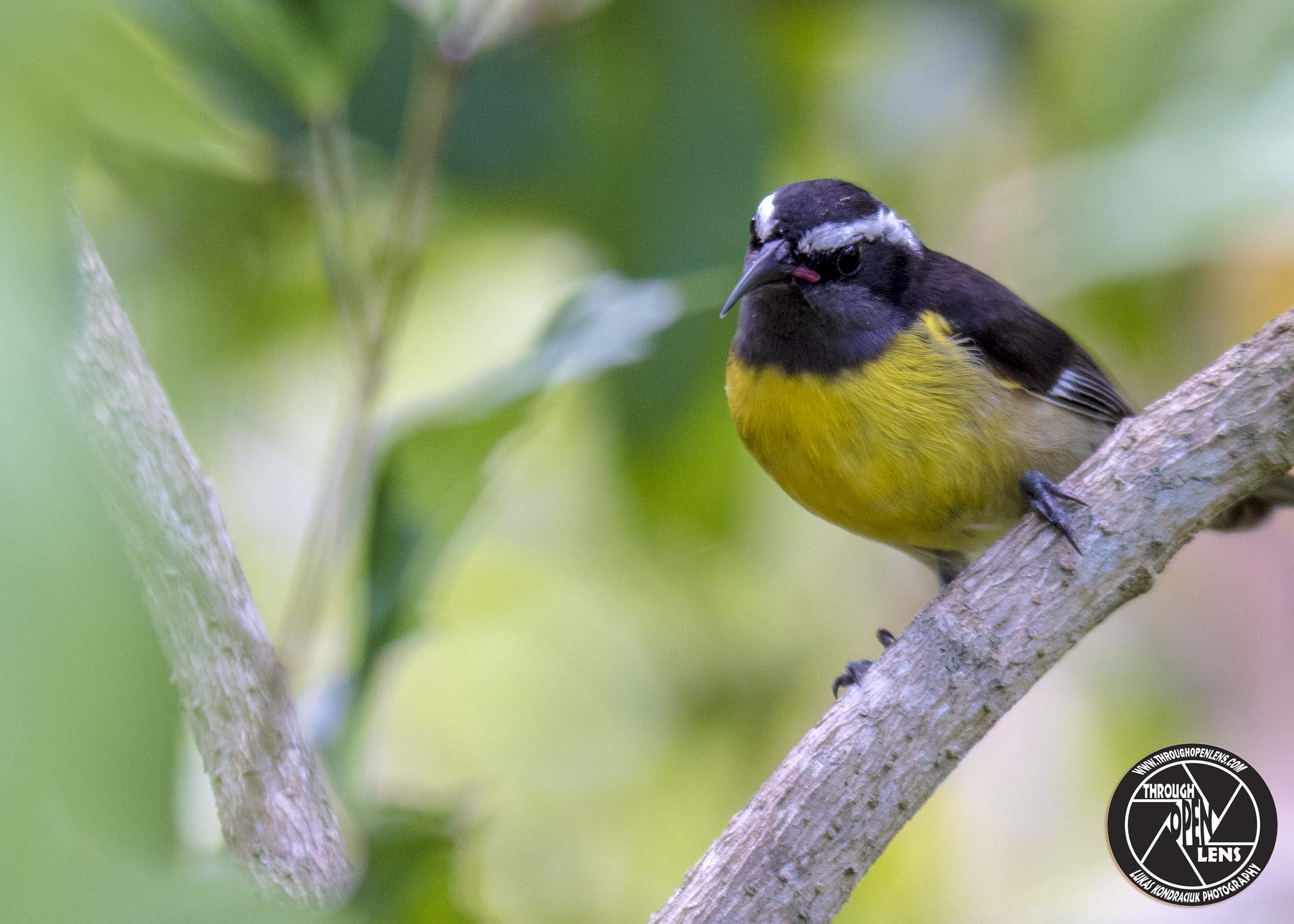
Hey Autocorrect! Quit Tampering With My Curse Words, You Mother Forklift!

F/5.6, 1/100, ISO 640.

Bananaquit

Why did the fly fall off the toilet?

It got pissed off.

Interesting Fact: The bananaquit is known for its ability to adjust remarkably to human environments. It often visits gardens and may become very tame. Its nickname, the sugar bird, comes from its affinity for bowls or bird feeders stocked with granular sugar, a common method of attracting these birds.[19] The bananaquit builds a spherical lined nest with a side entrance hole, laying up to three eggs, which are incubated solely by the female.[4] It may also build its nest in human-made objects, such as lampshades and garden trellises. The birds breed all year regardless of season and build new nests throughout the year. ( https://en.wikipedia.org/wiki/Bananaquit )


Sing… The World Needs Your Music In It.

F/9.0, 1/320, ISO 320.

Eastern Wood-Pewee

Why can’t you write with a broken pencil?

Because it’s pointless.

Interesting Fact: The Eastern Wood-Pewee’s lichen-covered nest is so inconspicuous that it often looks like a knot on a branch. ( https://www.allaboutbirds.org/guide/Eastern_Wood-Pewee )


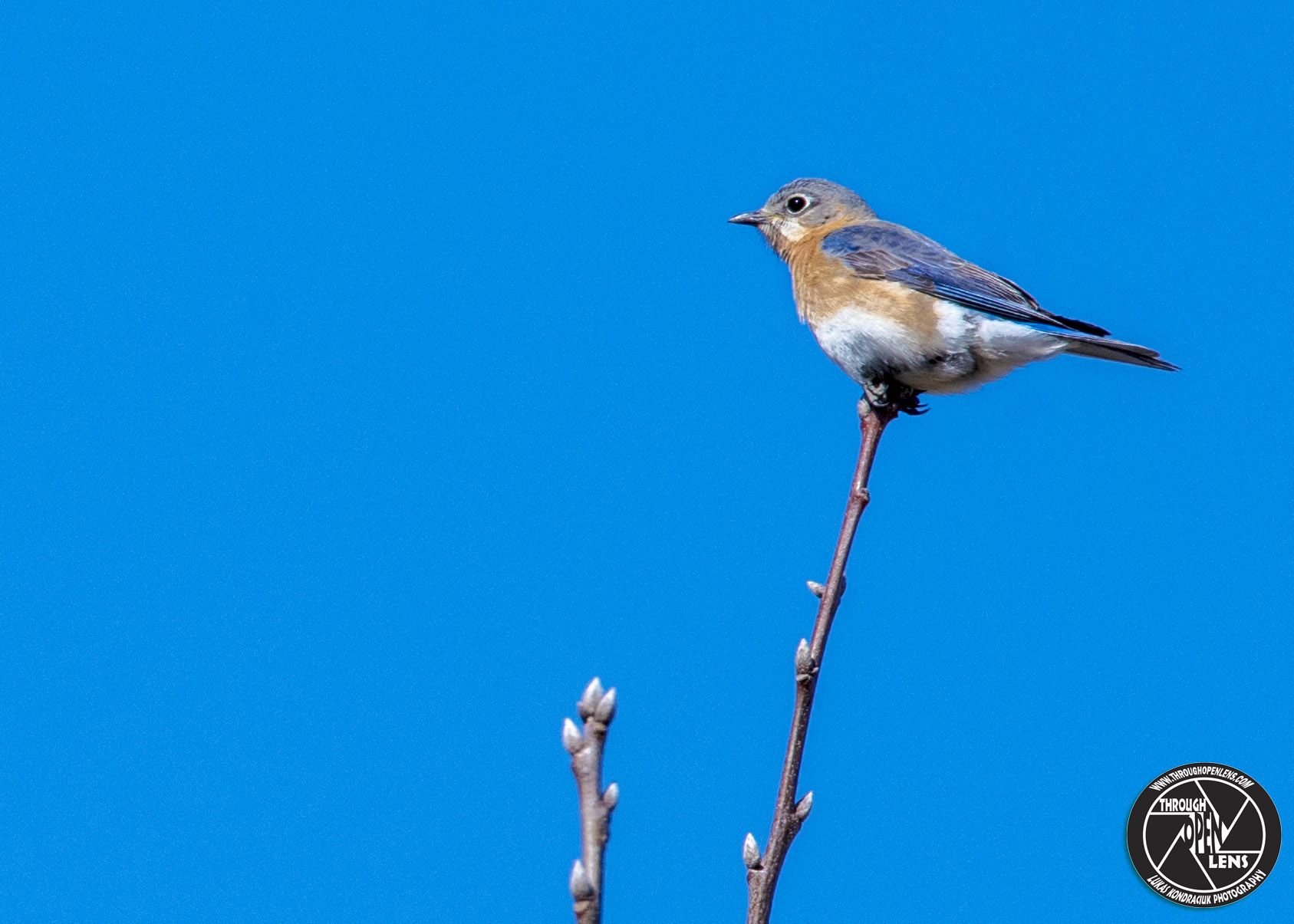
I See Sky Of Blue!

F/11.0, 1/500, ISO 320.

Eastern Bluebird 

Imagine you are in a water tank with a roof. There are no objects in the tank to help you escape. How do you get out?

Stop imagining.

Interesting Fact: Males vying over territories chase each other at high speed, sometimes grappling with their feet, pulling at feathers with their beaks, and hitting with their wings. The boxes and tree cavities where bluebirds nest are a hot commodity among birds that require holes for nesting, and male bluebirds will attack other species they deem a threat, including House Sparrows, European Starlings, Tree Swallows, Great Crested Flycatchers, Carolina Chickadees, and Brown-headed Nuthatches, as well as non-cavity nesters such as robins, Blue Jays, mockingbirds, and cowbirds. ( https://www.allaboutbirds.org/guide/Eastern_Bluebird/lifehistory )