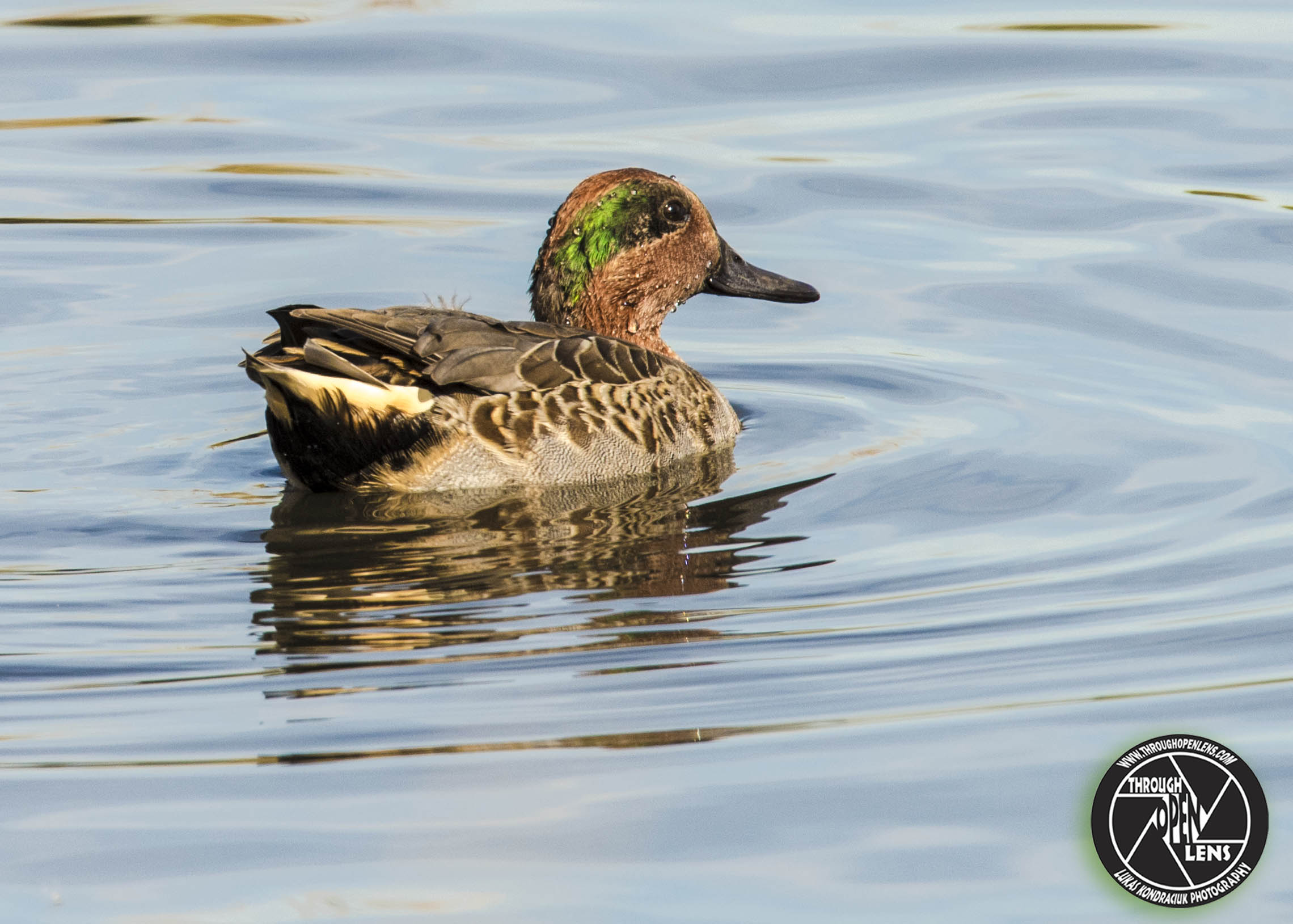
Swim, Duck, Swim!

F/11.0, 1/500, ISO 320.

Green-Winged Teal

Why aren’t there any famous skeletons?

They’re a bunch of no bodies.

Interesting Fact:  The oldest known Green-winged Teal was at least 20 years and 3 months, based on banding data. It was a female banded in 1941 in Oklahoma, and recovered by a hunter 1960 in Missouri. ( https://www.allaboutbirds.org/guide/Green-winged_Teal/lifehistory )

I Got A Headache!

F/8.0, 1/250, ISO  320.

Downy Woodpecker

What’s the problem with twin witches?

You never know which witch is which.

Interesting Fact: Downy Woodpeckers nest in dead trees or in dead parts of live trees. They typically choose a small stub (averaging around 7 inches in diameter) that leans away from the vertical, and place the entrance hole on the underside. Nest trees are often deciduous and the wood is often infected with a fungus that softens the wood, making excavating easier. ( https://www.allaboutbirds.org/guide/Downy_Woodpecker/lifehistory )


Music Helps Me Escape From The Reality I Live In

F/6.3, 1/320, ISO 400.

Song Sparrow

What did the Mummy movie director say when the final scene was done?

Ok, that’s a wrap.

Interesting Fact:  Some scientists think that Song Sparrows of wet, coastal areas have darker plumage as a defense against feather mites and other decay agents that thrive in humid climates. The darker plumage contains more of a pigment called melanin, which makes feathers tougher and harder to degrade than lighter, unpigmented feathers. ( https://www.allaboutbirds.org/guide/Song_Sparrow/lifehistory )

Dear People, Quit Trying To Look Like Us In Photos… It’s Embarrassing To Our Species.

F/10.0, 1/400, ISO 320.

Gadwall

Why did the can crusher quit his job?

Because it was soda pressing.

Interesting Fact:  Gadwall are dabbling ducks—they ride fairly high in the water and they tip forward to graze on submerged plants that they can reach with their outstretched necks. They rarely dive. Gadwall sometimes steal food from American Coots. ( https://www.allaboutbirds.org/guide/Gadwall/lifehistory )

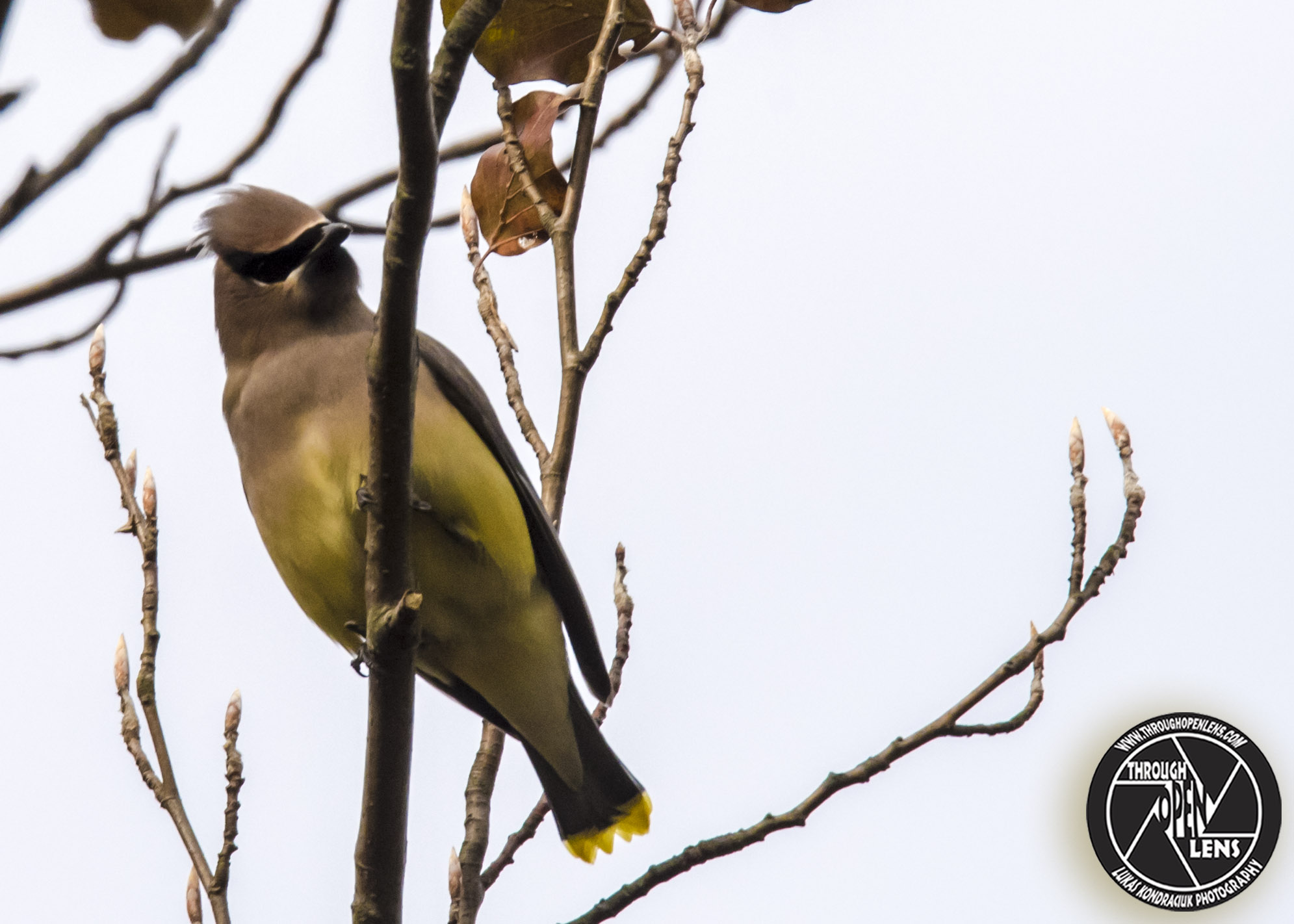
Do I Look Like Cyclops From X-MEN!

F/13.0, 1/640, ISO 400.

Cedar Waxwing

Why was Tigger looking inside the toilet

He was looking for Pooh!

Interesting Fact:  Many birds that eat a lot of fruit separate out the seeds and regurgitate them, but the Cedar Waxwing lets them pass right through. Scientists have used this trait to estimate how fast waxwings can digest fruits. ( https://www.allaboutbirds.org/guide/Cedar_Waxwing/lifehistory )

I Swim Because I Am Too SEXY For A Sport That Requires Clothes

F/6.3, 1/500, ISO 250.

Horned Grebe

Little Red Riding Hood walks all alone through the deep dark wood. Suddenly she hears rustling in a thick bush. Cautiously she moves the branches aside and finds herself facing the big bad wolf.

Little Red Riding Hood: “Oh, Big Bad Wolf, why do you have such huge red eyes?”

Big Bad Wolf: “Go away! I’m crapping!”

Interesting Fact: Dives underwater for food, in open water and among aquatic vegetation. Picks insects off water surface. ( https://www.allaboutbirds.org/guide/Horned_Grebe/lifehistory )

Walk Like You Talk!

F/5.6, 1/500, ISO 250.

Black-bellied Plover ( Juvenile )

I went to a seafood disco last week… and pulled a mussel.

Interesting Fact: Wary and quick to give alarm calls, the Black-bellied Plover functions worldwide as a sentinel for mixed groups of shorebirds. These qualities allowed it to resist market hunters, and it remained common when populations of other species of similar size were devastated. ( https://www.allaboutbirds.org/guide/Black-bellied_Plover/overview )

I Wonder If Earth Makes Fun Of Other Planets For Having No Life.

F/8.0, 1/250, ISO 320.

American Coot

Why was the broom late?

It over swept!

Interesting Fact: The ecological impact of common animals, like this ubiquitous waterbird, can be impressive when you add it all up. One estimate from Back Bay, Virginia, suggested that the local coot population ate 216 tons (in dry weight) of vegetation per winter. ( https://www.allaboutbirds.org/guide/American_Coot )

You’ll Never Find A Rainbow If You’re Looking Down.

F/8.0, 1/125, ISO 125.

White-breasted Nuthatch

What do bulls do when they go shopping?

They CHARGE!

Interesting Fact:  White-breasted Nuthatches typically build their nests in natural tree cavities or abandoned woodpecker holes. They sometimes enlarge these holes but rarely excavate them entirely on their own (as Red-breasted Nuthatches often do). Nuthatches are smaller than woodpeckers, and White-breasted Nuthatches don’t seem bothered by nest holes considerably larger than they are. Despite their association with deciduous woods, they nest in both coniferous and deciduous trees. White-breasted Nuthatches sometimes use nest boxes. ( https://www.allaboutbirds.org/guide/White-breasted_Nuthatch/lifehistory