Don’t You Flap Your Wings At Me!

F/9.0, 1/320, ISO 320.

Hooded Merganser

In School

Teacher: “If I gave you 2 cats and another 2 cats and another 2, how many would you have?”
Bob: “Seven.”
Teacher: “No, listen carefully… If I gave you two cats, and another two cats and another two, how many would you have?”
Bob: “Seven.”
Teacher: “Let me put it to you differently. If I gave you two apples, and another two apples and another two, how many would you have?”
Bob: “Six.”
Teacher: “Good. Now if I gave you two cats, and another two cats and another two, how many would you have?”
Bob: “Seven!”
Teacher: “Bob, where in the heck do you get seven from?!”
Bob: “Because I’ve already got a freaking cat!”

Interesting Fact:  The Hooded Merganser is the second-smallest of the six living species of mergansers (only the Smew of Eurasia is smaller) and is the only one restricted to North America. ( https://www.allaboutbirds.org/guide/Hooded_Merganser/lifehistory )

Hey There Ace!

F/6.3, 1/500, ISO 220.

Brant Goose

What did the big flower say to the little one?

You’re really growing, bud!

Interesting Fact: The oldest recorded Brant was a female, and was over 27 years, 6 months old. It had been banded in Alaska and was found in Washington. ( https://www.allaboutbirds.org/guide/Brant )

It’s Been A Rough Week So Far… But On Positive Note, I Didn’t Need Any Bail Money And Didn’t Have To Hide Any Bodies!

F/6.3, 1/800, ISO 800.

Rough-legged Hawk

Daughter: “Mom, where do tampons go?”

Mom: “Where the babies come from, darling.”

Daughter “In the stork?”

Check out this really funny jokes: http://www.short-funny.com/#ixzz5540ew6c6

Interesting Fact: The Rough-legged Hawk’s cliffside nest, a bulky mass of sticks, sometimes contains caribou bones. Nesting pairs need a lot of space: usually only a single pair will nest on a quarter-mile-long cliff. However, the pair may nest within 100 feet of Gyrfalcons, Peregrine Falcons, or Common Ravens. ( https://www.allaboutbirds.org/guide/Rough-legged_Hawk/lifehistory  )

We Are Rolling Deep Today!

F/8.0, 1/250, ISO 320.

Ring-necked Duck

Why don`t ducks tell jokes when they fly?

Because they would quack up!

Interesting Fact: Ring-necked Ducks breed in northern North America and spend winters in southern and western North America, northern Central America, and the Caribbean, often on freshwater. Much of the population migrates from central Canada to the southeastern United States, staging along the way in Minnesota and other parts of the upper Midwest.  ( https://www.allaboutbirds.org/guide/Ring-necked_Duck/maps-range

It’s Your Hair Do Whatever You Want!

F/6.3, 1/500, ISO 200.

Hooded Merganser ( Female )

How do ducks talk?

They don’t You Quack.

Interesting Fact: The female chooses the nest site, and may start scouting for next year’s tree cavity at the end of each breeding season. Nest cavities can be in live or dead trees and are usually close to water. Cavities are typically 10–50 feet off the ground, up to about 90 feet. Hooded Mergansers nest readily in boxes, preferring those with wood shavings or nest material from previous uses. They prefer cavities with 3–5 inch openings. ( https://www.allaboutbirds.org/guide/Hooded_Merganser/lifehistory

I Lost My Temper, But It Came Back!

F/9.0, 1/250, ISO 160.

Ring-necked Duck

Why did the cookie go to the hospital?

He felt crummy!

Interesting Fact: Ring-necked Ducks feed by diving underwater, rather than by tipping up as “dabbling” ducks do. When diving, they leap forward in an arc to plunge underwater, and they swim using only their feet for propulsion. ( https://www.allaboutbirds.org/guide/Ring-necked_Duck/lifehistory )


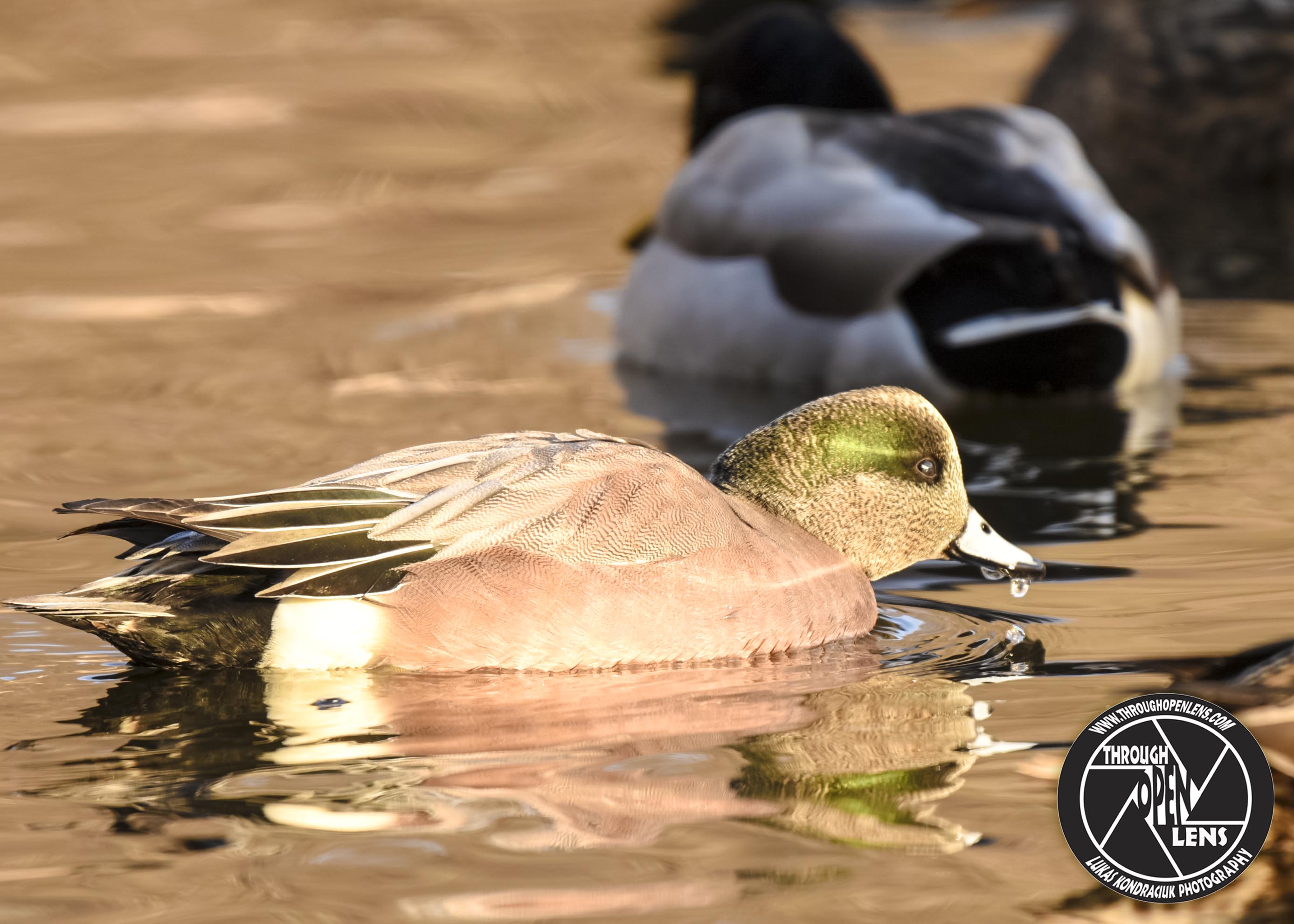
My Nose Has Done More Running This Winter Than I Have.

american-wigeon

F/7.1, 1/200, ISO 320.

American Wigeon

I went to a really emotional wedding over the weekend.

Even the cake was in tiers.

Interesting Fact: The American Wigeon’s short bill enables it to exert more force at the bill tip than other dabbling ducks, thus permitting efficient dislodging and plucking of vegetation.  ( https://www.allaboutbirds.org/guide/American_Wigeon/lifehistory )

If The Mud Ain’t Flying You Ain’t Trying!

F/9.0, 1/320, ISO 320.

Northern Pintail Duck

How do crazy people go through the forest?

They take the psycho path.

Interesting Fact: When it comes to breeding, Northern Pintails don’t waste any time. They start nesting as soon as the ice starts to thaw, arriving by late April in places as far north as the Northwest Territories, Canada. ( https://www.allaboutbirds.org/guide/Northern_Pintail/ )

Owl We Need Is Love!

F/6.3, 1/160, ISO 800.

Short Eared Owl

What kind of flower doesn’t sleep at night?

The Day-zzz

Interesting Fact: Normally reluctant to leave the nest, female Short-eared Owls that are forced to flush often defecate on their eggs. The resulting putrid smell may repel predators or mask the scent of the nest. ( https://www.allaboutbirds.org/guide/Short-eared_Owl/ )

CANNONBALL!!!!!!

F/8.0, 1/2000, ISO 800.

Common Merganser

What did the pencil say to the other pencil?

your looking sharp.

Interesting Fact: Common Mergansers spend the breeding season in northern forested habitats near large lakes and rivers. Since they nest in cavities of large trees, breeding Common Mergansers are usually found in mature forests. They spend winters on large lakes, rivers, and reservoirs in the southern and coastal regions of their breeding range, and in additional wintering grounds across the northern and western United States. They tend to prefer freshwater wintering habitat over saltwater, but they may winter in coastal bays, estuaries, and harbors. ( https://www.allaboutbirds.org/guide/Common_Merganser/lifehistory )