You Never Realize How Boring Your Life Is Until Someone Asks What You Like To Do For Fun.

F/9.0, 1/320, ISO 160.

Palmchat

What happened to the wooden car with wooden wheels and wooden engine?

It wooden go!

Interesting Fact: The species is endemic to the island of Hispaniola (Haiti and the Dominican Republic), including the adjacent Saona and Gonâve Islands, where it is common and widespread. It inhabits areas from sea-level to 1500 m asl where palm savannas can be found, or other open areas with scattered trees. Where its food trees are present, it has adapted well to city parks and gardens. ( https://en.wikipedia.org/wiki/Palmchat )

Is Yellow Really The Color For Me?!

savannah-sparrow

F/10.0, 1/400, ISO 500.

Savannah Sparrow   

What can you catch but not in your hands?

A cold!

Interesting Fact: In many parts of the species’ range, especially in coastal areas and islands, Savannah Sparrows tend very strongly to return each year to the area where they hatched. This tendency, called natal philopatry, is the driving force for differentiation of numerous Savannah Sparrow subspecies. ( https://www.allaboutbirds.org/guide/Savannah_Sparrow/lifehistory )

I Don’t Stalk. I Investigate!

F/7.1, 1/200, ISO 320.

Black-and-white Warbler 

What do you call a guy who never farts in public?

A private tutor.

Interesting Fact: The Black-and-white Warbler is the only member of the genus Mniotilta. The genus name means “moss-plucking,” a reference to its habit of probing bark and moss for insects.  ( https://www.allaboutbirds.org/guide/Black-and-white_Warbler )

You Are My Sunshine

F/7.1, 1/200, ISO 320.

Palm Warbler

Why didn’t the sailors play cards?

Because the captain was on the deck.

Interesting Fact: Canada’s boreal forests stretch for miles and miles. The great boreal forest, often called “North America’s bird nursery,” is the summer home to billions of migratory birds and an estimated 98% of all Palm Warblers. ( https://www.allaboutbirds.org/guide/Palm_Warbler )

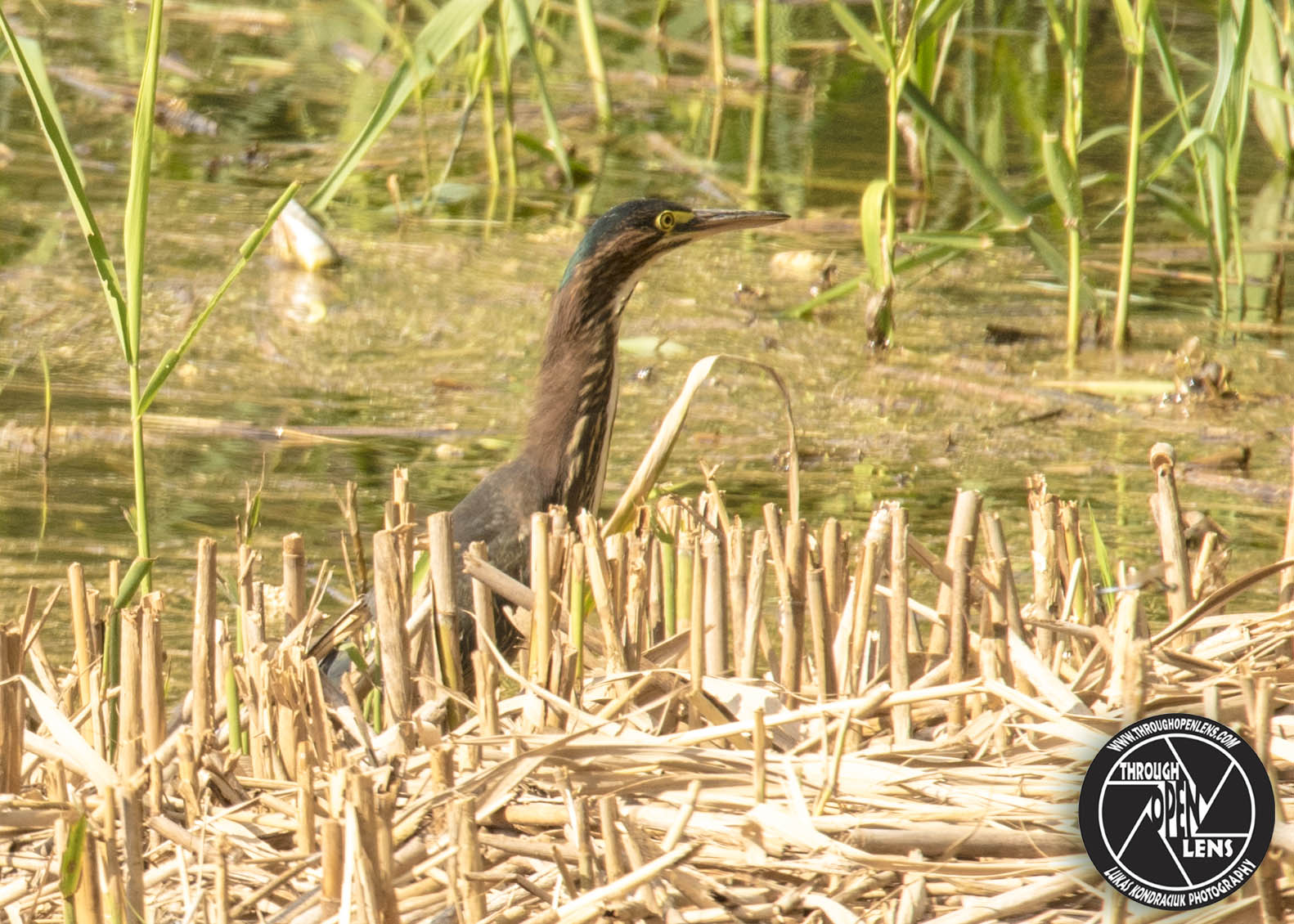
Peek A Boo!

F/9.0, 1/320, ISO 250.

Green Heron

Why are ghosts so bad at lying?

Because you can see right through them!

Interesting Fact: Green Herons usually hunt by wading in shallow water, but occasionally they dive for deep-water prey and need to swim back to shore—probably with help from the webs between their middle and outer toes. One juvenile heron was seen swimming gracefully for more than 60 feet, sitting upright “like a little swan,” according to one observer. ( https://www.allaboutbirds.org/guide/Green_Heron/lifehistory )

I Peck You!

F/9.0, 1/200, ISO 160.

Hairy Woodpecker

What did the blanket say to the bed?

Don’t worry, I’ve got you covered!

Interesting Fact: Hairy Woodpeckers sometimes drink sap leaking from wells in the bark made by sapsuckers. They’ve also been seen pecking into sugar cane to drink the sugary juice. ( https://www.allaboutbirds.org/guide/Hairy_Woodpecker/lifehistory )

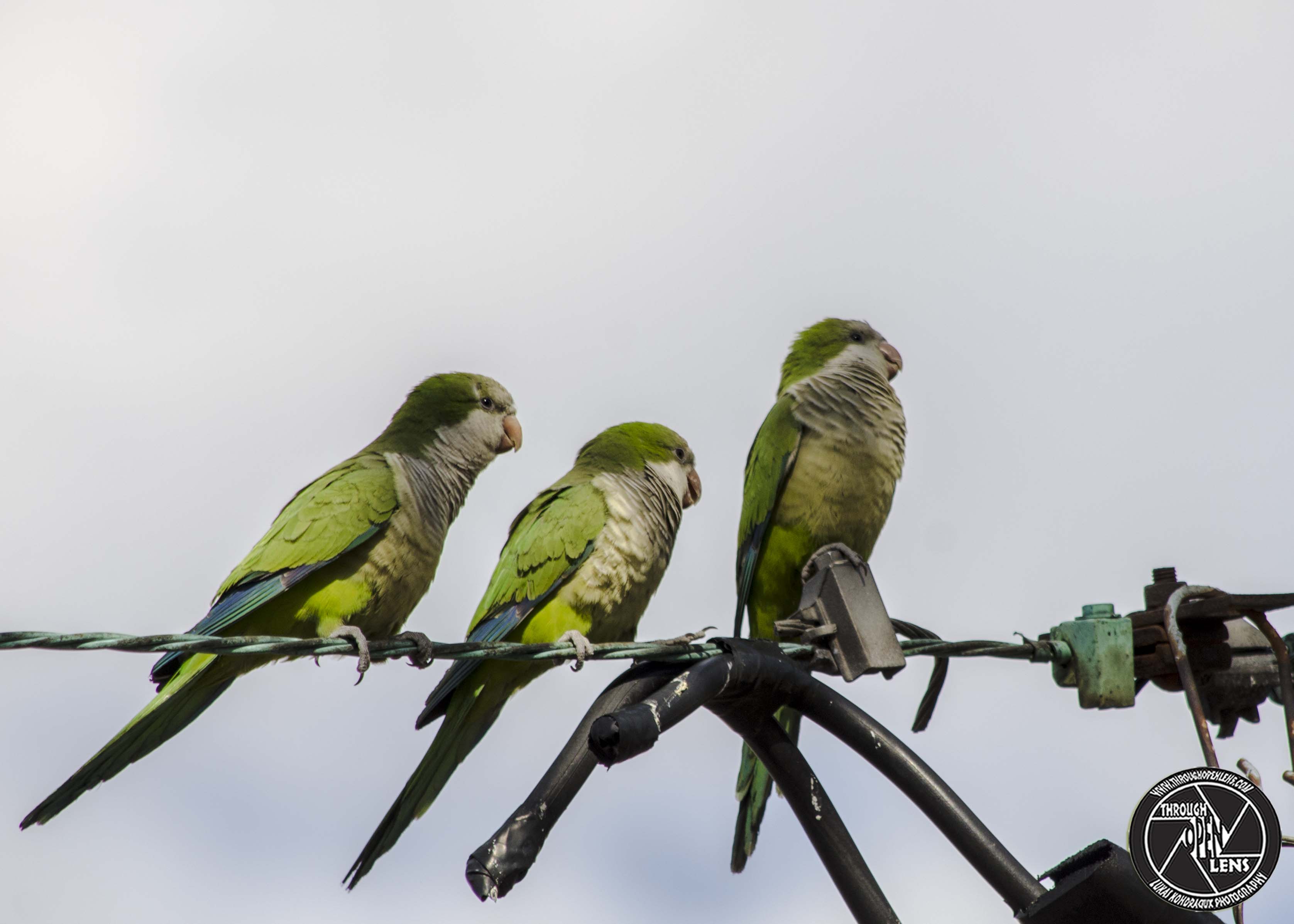
We Are Online Now.

F/7.1, 1/800, ISO 200.

Monk Parakeets

Where does a bee keep his stinger?

In his honey!

Interesting Fact: Monk Parakeets spend a lot of time preening each other. These long-lived birds form socially monogamous pairs, and courtship involves a pair preening each other and grasping each other by the beak while shaking their heads.  ( https://www.allaboutbirds.org/guide/Monk_Parakeet/lifehistory )

Look, I Found Your Business…. It Was All Up In Mine Again!

F/7.1, 1/200, ISO 320.

Northern Cardinal ( Female )

How do you make a lemon drop?

Just let it fall.

Interesting Fact: Northern Cardinals eat mainly seeds and fruit, supplementing these with insects (and feeding nestlings mostly insects). Common fruits and seeds include dogwood, wild grape, buckwheat, grasses, sedges, mulberry, hackberry, blackberry, sumac, tulip-tree, and corn. Cardinals eat many kinds of birdseed, particularly black oil sunflower seed. They also eat beetles, crickets, katydids, leafhoppers, cicadas, flies, centipedes, spiders, butterflies, and moths. ( https://www.allaboutbirds.org/guide/Northern_Cardinal/lifehistory )

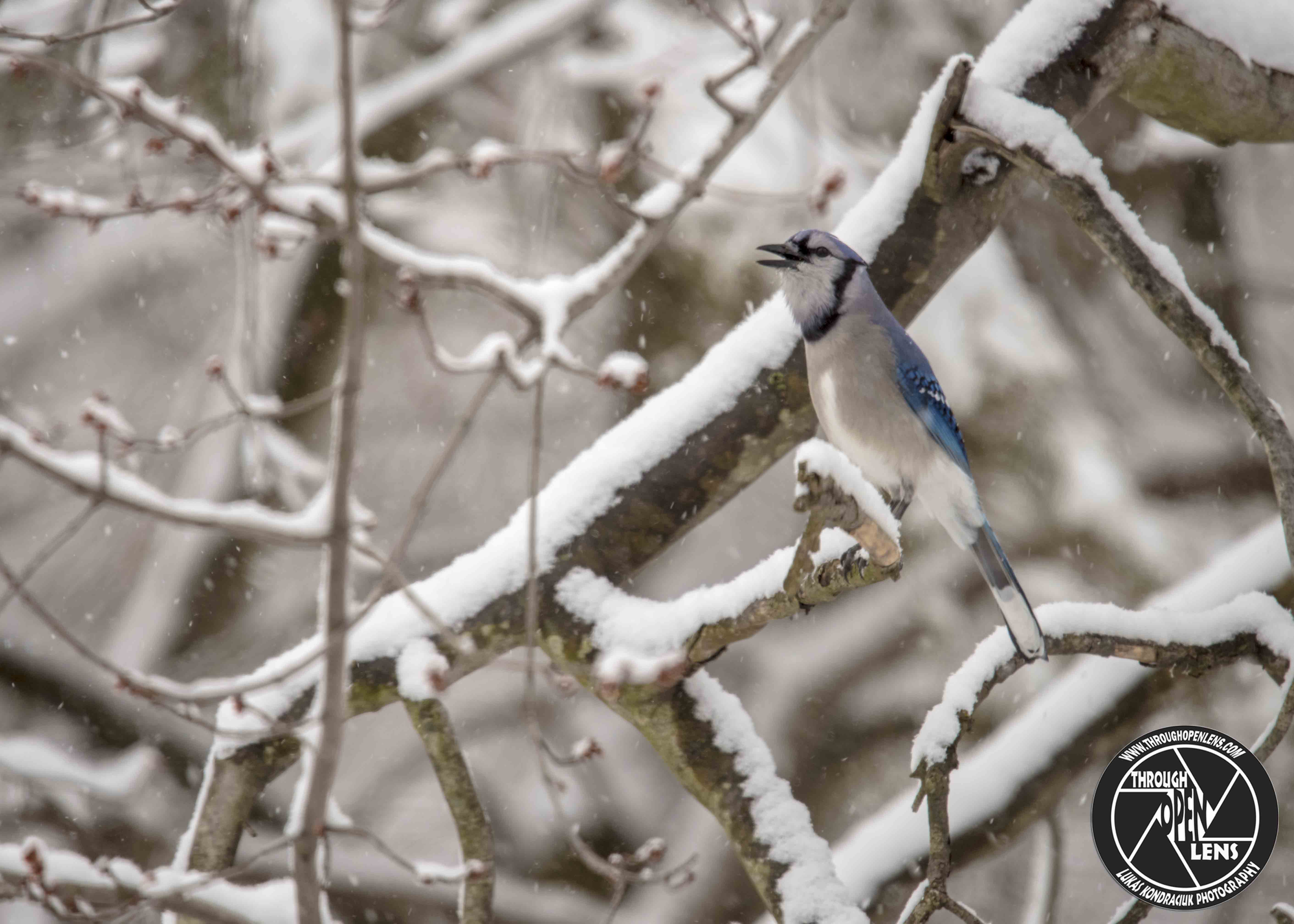
Let It Snow! Let It Snow! The Cold Never Bothered Me Anyway!

F/6.3, 1/160, ISO 400.

Blue Jay

Bobby went in to a pet shop.

He asked the employee, “Can I buy a goldfish?”

The employee: “Do you want an aquarium?”

Bobby: “I don’t care what star sign it is.”

Interesting Fact: Blue Jays are known to take and eat eggs and nestlings of other birds, but we don’t know how common this is. In an extensive study of Blue Jay feeding habits, only 1% of jays had evidence of eggs or birds in their stomachs. Most of their diet was composed of insects and nuts. (  https://www.allaboutbirds.org/guide/Blue_Jay )

With The New Day Comes New Strength And New Thoughts

F/11.0, 1/500, ISO 400.

Cedar Waxwing

What do you call a cow that eats your grass?

A lawn moo-er.

Interesting Fact: The name “waxwing” comes from the waxy red secretions found on the tips of the secondaries of some birds. The exact function of these tips is not known, but they may help attract mates. ( https://www.allaboutbirds.org/guide/Cedar_Waxwing/lifehistory )