It’s Your Hair Do Whatever You Want!

F/6.3, 1/500, ISO 200.

Hooded Merganser ( Female )

How do ducks talk?

They don’t You Quack.

Interesting Fact: The female chooses the nest site, and may start scouting for next year’s tree cavity at the end of each breeding season. Nest cavities can be in live or dead trees and are usually close to water. Cavities are typically 10–50 feet off the ground, up to about 90 feet. Hooded Mergansers nest readily in boxes, preferring those with wood shavings or nest material from previous uses. They prefer cavities with 3–5 inch openings. ( https://www.allaboutbirds.org/guide/Hooded_Merganser/lifehistory

My Nose Has Done More Running This Winter Than I Have.

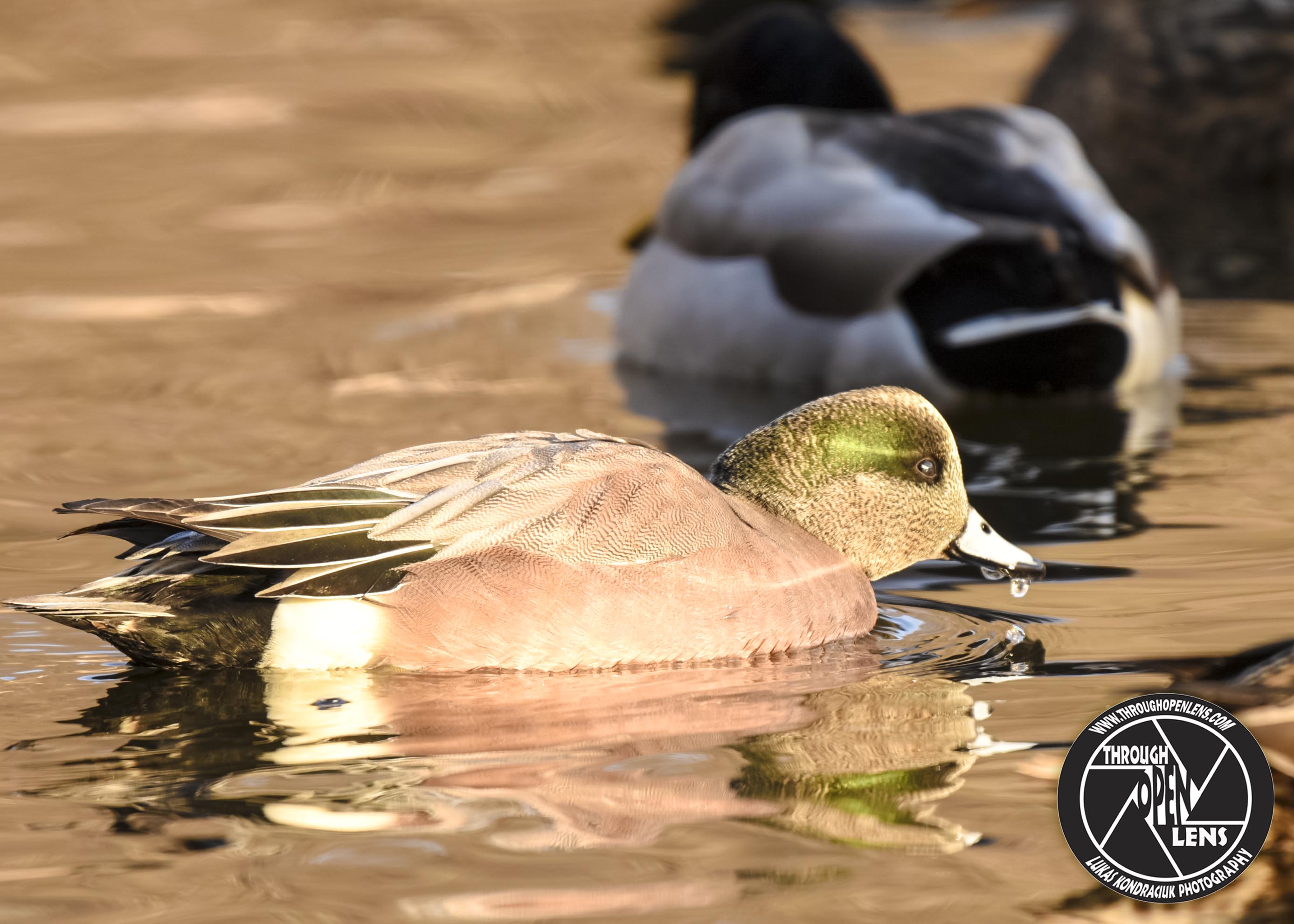
american-wigeon

F/7.1, 1/200, ISO 320.

American Wigeon

I went to a really emotional wedding over the weekend.

Even the cake was in tiers.

Interesting Fact: The American Wigeon’s short bill enables it to exert more force at the bill tip than other dabbling ducks, thus permitting efficient dislodging and plucking of vegetation.  ( https://www.allaboutbirds.org/guide/American_Wigeon/lifehistory )

If The Mud Ain’t Flying You Ain’t Trying!

F/9.0, 1/320, ISO 320.

Northern Pintail Duck

How do crazy people go through the forest?

They take the psycho path.

Interesting Fact: When it comes to breeding, Northern Pintails don’t waste any time. They start nesting as soon as the ice starts to thaw, arriving by late April in places as far north as the Northwest Territories, Canada. ( https://www.allaboutbirds.org/guide/Northern_Pintail/ )

CANNONBALL!!!!!!

F/8.0, 1/2000, ISO 800.

Common Merganser

What did the pencil say to the other pencil?

your looking sharp.

Interesting Fact: Common Mergansers spend the breeding season in northern forested habitats near large lakes and rivers. Since they nest in cavities of large trees, breeding Common Mergansers are usually found in mature forests. They spend winters on large lakes, rivers, and reservoirs in the southern and coastal regions of their breeding range, and in additional wintering grounds across the northern and western United States. They tend to prefer freshwater wintering habitat over saltwater, but they may winter in coastal bays, estuaries, and harbors. ( https://www.allaboutbirds.org/guide/Common_Merganser/lifehistory )

He Is On My Tail!

F/6.3, 1/160, ISO 160.

Wood Duck

What do you call an old snowman?

Water!

Interesting Fact: Breeding pairs search for nest cavities during early morning. The male stands outside as the female enters and examines the site. They typically choose a tree more than 1 foot and often 2 feet in diameter, with a cavity anywhere from 2–60 feet high (higher sites seem to be preferred). ( https://www.allaboutbirds.org/guide/Wood_Duck/lifehistory


I Am Not Going To Making Duck Face For You!

F/9.0, 1/320, ISO 250.

Common Eider ( Males )

What did Detective Duck say to his partner?

“Let’s quack this case!”

Interesting Fact: A famous colony lives on the Farne Islands in Northumberland, Britain. These birds were the subject of one of the first ever bird protection laws, established by Saint Cuthbert in the year 676. About 1,000 pairs still nest there every year. ( https://identify.whatbird.com/obj/1095/overview/Common_Eider.aspx )

Something’s Stuck In My Butt Quack…

F/8.0, 1/250, ISO 160.

Common Eider ( Females ) 

What do you call a duck that steals?

A robber ducky.

Interesting Fact: Mother Common Eiders lead their young to water, and often are accompanied by nonbreeding hens that participate in chick protection. Broods often come together to form “crèches” of a few to over 150 ducklings. Attacks by predators may cause several broods to cluster together into a crèche. Once formed, a crèche tends to stay together throughout the brood rearing period, although some of the different females attending it may leave.  ( https://www.allaboutbirds.org/guide/Common_Eider/ )

You Quack Me Up!

F/9.0, 1/320, ISO 250.

Northern Shoveler

At what time does a duck wake up?

At the quack of dawn.

Interesting Fact: When flushed off the nest, a female Northern Shoveler often defecates on its eggs, apparently to deter predators. ( https://www.allaboutbirds.org/guide/Northern_Shoveler/overview )

I Would Cry But Mascara Is Designer

green-winged-teal

F/6.3, 1/500, ISO 360.

Green-Winged Teal

Men are like mascara, any sign of emotion and they’re running.

Interesting Fact: Green-winged Teals have closely spaced, comblike projections called lamellae around the inner edge of the bill. They use them to filter tiny invertebrates from the water, allowing the birds to capture smaller food items than other dabbling ducks. ( https://www.allaboutbirds.org/guide/Green-winged_Teal/lifehistory )

I Am Very Saucy, You Can Call Me Duck Sauce.

ruddy-duck-2

F/10.0, 1/320, ISO 400.

Ruddy Duck

Why did the scarecrow get promoted?

Because he was outstanding in his field.

Interesting Fact: Pleistocene fossils of Ruddy Ducks, at least 11,000 years old, have been unearthed in Oregon, California, Virginia, Florida, and Illinois. ( https://www.allaboutbirds.org/guide/Ruddy_Duck/lifehistory )