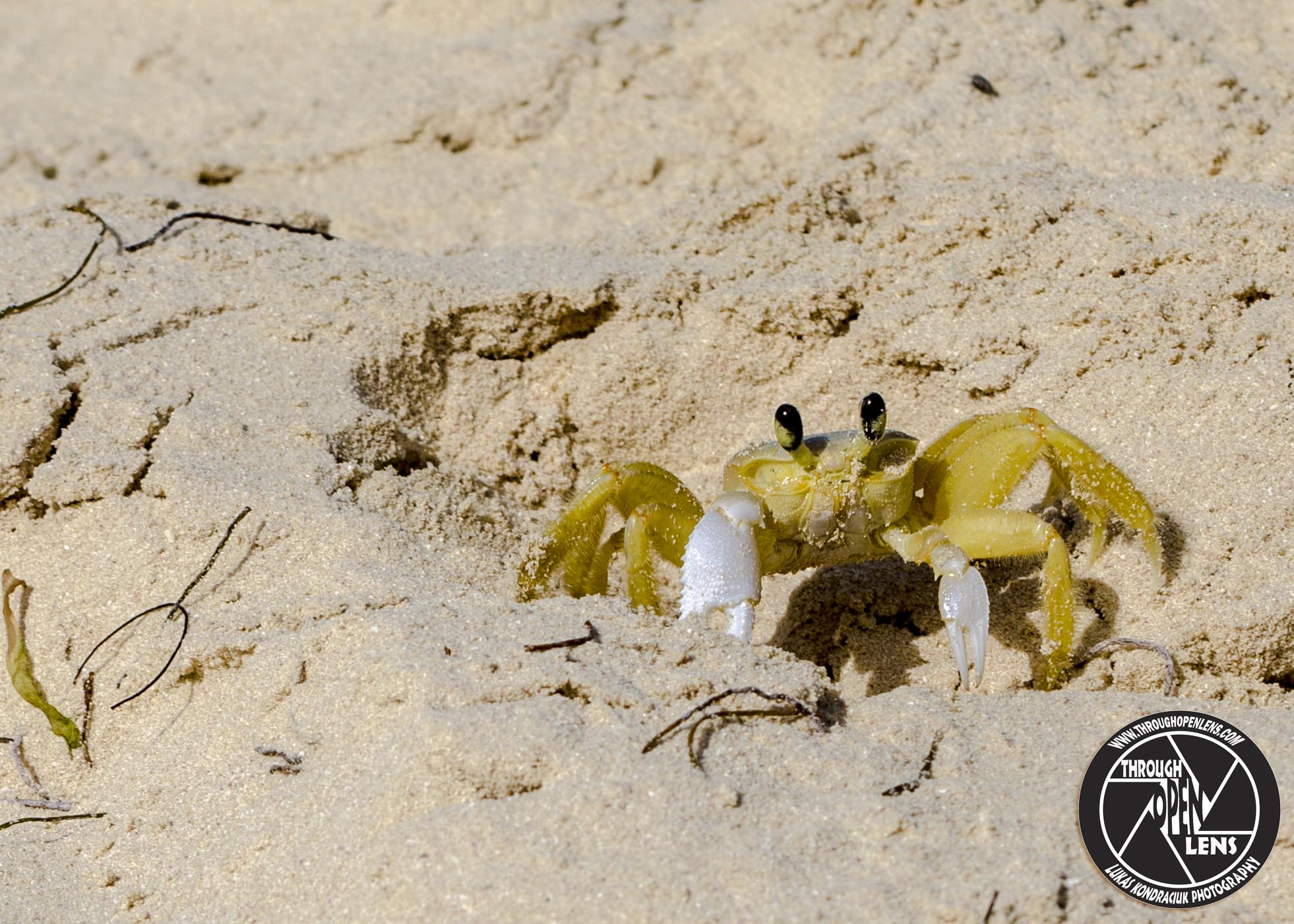
Don’t Stand So, Don’t Stand So, Don’t Stand So, Close To Me!

F/10.0, 1/400, ISO 125.

Semipalmated Sandpipers 

Where do you learn to make ice cream?

Sundae school.

Interesting Fact: Semipalmated Sandpipers from eastern populations probably undertake nonstop transoceanic flights of 3,000 – 4,000 km (1,900 – 2,500 mi) from New England and southern Canada to South America, powered by extensive fat reserves. ( https://www.allaboutbirds.org/guide/Semipalmated_Sandpiper/ )

Be Clawsome!

F/8.0, 1/640, ISO 100.

Atlantic Ghost Crab

What’s red and moves up and down?

A tomato in an elevator!

Interesting Fact: The Atlantic ghost crab lives in burrows in sand above the strandline.[2] Older individuals dig their burrows farther from the sea, some starting as much as 400 m (1,300 ft) inland.[4] Burrows can be up to 1.3 m (4 ft 3 in) deep, and can be closed off with sand during hot periods. ( https://en.wikipedia.org/wiki/Atlantic_ghost_crab )

Down The Rabbit Hole!

F/8.0, 1/250, ISO 250.

Desert Cottontail Rabbit 

What is a tree’s favorite drink?

Root beer!

Interesting Fact: The lifespan of a cottontail that reaches adulthood averages less than two years, depending on the location.[6] Unfortunately for the cottontail, almost every local carnivore larger or faster than the lagomorph is its predator. Some predators, like snakes for example, are familiar with the area inhabited by the cottontails, and can catch and eat the young at will; the mother is unable to defend the litter. Although cottontails are highly active sexually, and mated pairs have multiple litters throughout the year, few young survive to adulthood. Those that survive grow quickly and are full grown at three months. ( https://en.wikipedia.org/wiki/Desert_cottontail )


Do Not Disturb!

F/14.0, 1/250, ISO 200.

Punta Cana, Dominican Republic Beach

What is the best day to go to the beach?

Sunday, of course!

Interesting Fact: Fraser Island off the coast of Queensland, Australia, is the largest sand island in the world covering around 163,000 ha and it has a beach 65 km (40 mi) long. ( http://www.sciencekids.co.nz/sciencefacts/earth/beaches.html )

I’m Walking Here!

Common Grackle 2

F/6.3, 1/1600, ISO 250.

Common Grackle 

How do men exercise at the beach?

By sucking in their stomach every time they see a girl in a bikini.

Interesting Fact: Common Grackles are resourceful foragers. They sometimes follow plows to catch invertebrates and mice, wade into water to catch small fish, pick leeches off the legs of turtles, steal worms from American Robins, raid nests, and kill and eat adult birds. ( https://www.allaboutbirds.org/guide/Common_Grackle/lifehistory )

Lazy Like A Log

Log

F/11.0, 1/500, ISO 320.

Pretend you’re in a box, under the ocean, and there’s no way out. How do you survive?

You stop pretending!

Interesting Fact: Beaches became popular as tourist attractions during the 18th century. Today, beachside towns and beach resort areas are a magnet for tourist who come to sunbathe, swim, stroll the beach, build sandcastles, surf and bodyboard. ( http://www.sciencekids.co.nz/sciencefacts/earth/beaches.html )


Feed Me!

Heermann's Gull

F/7.1, 1/800, ISO 200.

Heermann’s Gull

If someone ever says, “What are you staring at?”

Say “I don’t know, give me a minute.”

Interesting Fact: The Heermann’s Gull, like many other gulls, frequently steals food from other birds. The Brown Pelican is a frequent victim. An adult Heermann’s Gull is most likely to try to steal food from an adult pelican, and an immature gull is more likely to steal from an immature pelican. ( https://www.allaboutbirds.org/guide/Heermanns_Gull/lifehistory )

And I Ran, I Ran So Far Away!

Sanderling

F/7.1, 1/800, ISO 200.

Sanderling

Did you hear about the race between the lettuce and the tomato?

The lettuce was a “head” and the tomato was trying to “ketchup”!

Interesting Fact: The Sanderling’s mating system varies from area to area and possibly from year to year. Sanderlings are usually monogamous, but in some cases the female breeds with multiple males in a row within a single breeding season. ( https://www.allaboutbirds.org/guide/Sanderling/lifehistory )

Reverse Mohawk Is In!

Elegant Tern

F/5.6, 1/500, ISO 220.

Elegant Tern

California Week Two 

A sailor trying to sneak back to his ship about 3 o’clock in the morning was spotted by a chief petty officer who ordered him to explain his tardiness. The lame explanation didn’t work. “Take this broom and sweep every link on this anchor chain by morning or it’s the brig for you,” the chief said. The sailor began to sweep, but a tern landed on the broom handle and he couldn’t continue. He yelled at the bird, but it didn’t budge. He finally plucked it off the broom and gave it a toss. But the bird came right back and again landed on the handle. Over and over, the same routine was repeated. A toss, one sweep, and the bird was back. When morning came, the chief also was back. “What have you been doing all night? This chain is no cleaner than when you started!” “Honest, chief,” said the sailor, “I tossed a tern all night and couldn’t sweep a link.”

Interesting Fact: Unlike some of the smaller white terns, it is not very aggressive toward potential predators, relying on the sheer density of the nests and nesting close to other more aggressive species such as Heermann’s Gulls to avoid predation. ( http://identify.whatbird.com/obj/467/_/Elegant_Tern.aspx )

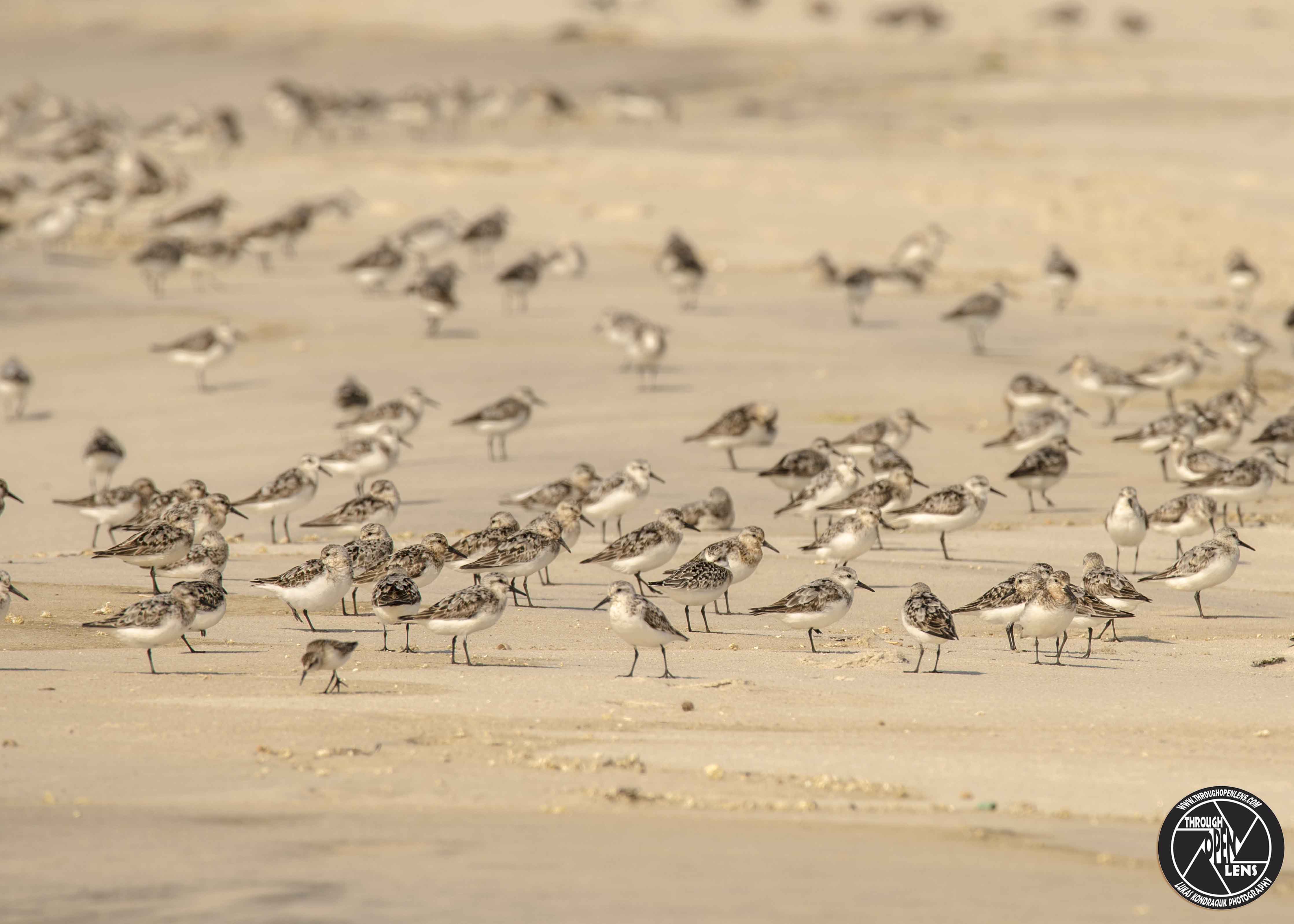
 

Brotherly Love

brotherly love

F/5.6, 1/60, ISO 400.

Day 269 / 365

What did the beach say to the wave?…

“Long tide, no sea.”

Interesting Fact: Most beaches are found on the coast, where wave action, currents, tides and seawater rises continuously rework and shape the sediment. As a result, beaches are usually regarded as dynamic, natural phenomenon.  ( http://www.sciencekids.co.nz/sciencefacts/earth/beaches.html )