I Wonder If Chickens Do The “People Dance ” At Their Wedding

F/10.0, 1/400, ISO 400.

Chickens

What did the chicken say when it got to the library?

Book book book book book book book…

Interesting Fact: People have been raising chickens for more than 7,000 years. Chickens were first domesticated in Indian and China. You might think of chickens as farm animals, but even people in cities can raise a few chickens in the backyard. Chicken coops don’t take up much room. ( http://easyscienceforkids.com/all-about-chickens/ )

HEY GIRL! NO, I Meant ” HAY GIRL”. That Is Your Job, Right?

F/5.6, 1/200, ISO 100.

HORSE

Which state has the smallest drinks?

Mini-soda.

Interesting Fact: Horses are prey animals with a strong fight-or-flight response. Their first reaction to a threat is to startle and usually flee, although they will stand their ground and defend themselves when flight is impossible or if their young are threatened.[88] They also tend to be curious; when startled, they will often hesitate an instant to ascertain the cause of their fright, and may not always flee from something that they perceive as non-threatening. Most light horse riding breeds were developed for speed, agility, alertness and endurance; natural qualities that extend from their wild ancestors. However, through selective breeding, some breeds of horses are quite docile, particularly certain draft horses. ( https://en.wikipedia.org/wiki/Horse )


Not Fair You Are Peeking!

F/8.0, 1/250, ISO 200.

White-Tailed Deer 

How does NASA organize a birthday party?

They planet!

Interesting Fact: Males compete for the opportunity of breeding females. Sparring among males determines a dominance hierarchy.[63] Bucks attempt to copulate with as many females as possible, losing physical condition, since they rarely eat or rest during the rut. The general geographical trend is for the rut to be shorter in duration at increased latitude. Many factors determine how intense the “rutting season” will be; air temperature is a major one. Any time the temperature rises above 40 °F (4 °C), the males do much less traveling looking for females, else they will be subject to overheating or dehydrating. Another factor for the strength in rutting activity is competition. If numerous males are in a particular area, then they compete more for the females. If fewer males or more females are present, then the selection process will not need to be as competitive. ( https://en.wikipedia.org/wiki/White-tailed_deer )


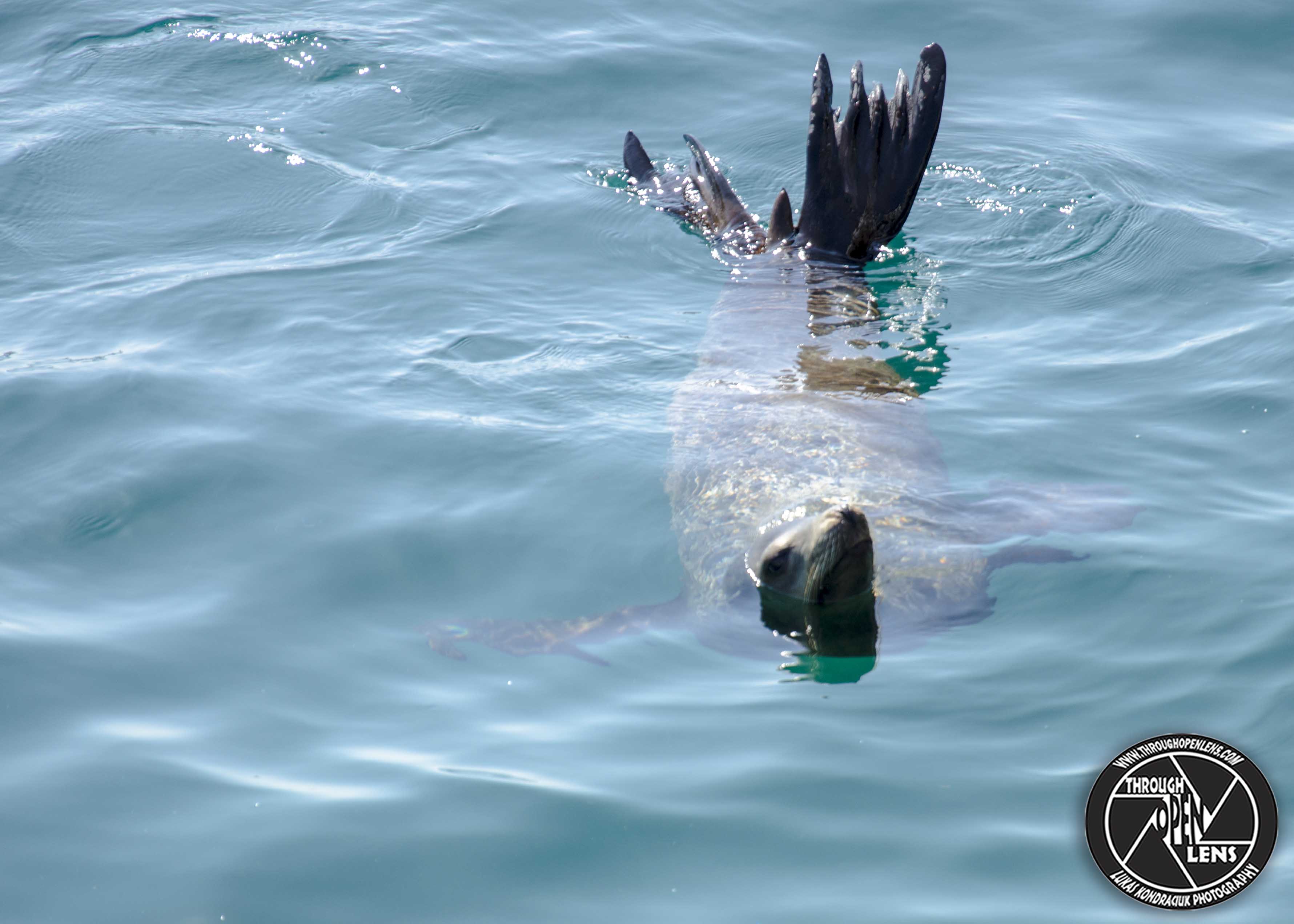
Just Smile And Wave!

F/5.6, 1/320, ISO 100.

California Sea Lion 

Why do sea lions go to Tupperware parties?

To find a tight seal!

Interesting Fact: When diving deep, California sea lions slow their heart rates to allow them to remain underwater for nearly ten minutes before surfacing to breathe. This ability gives them an edge in the pursuit of the fish, squid, and shellfish that make up their primary diet. ( http://www.nationalgeographic.com/animals/mammals/c/california-sea-lion/ )

Ask Us About Our Hole?

F/6.3, 1/125, ISO 320.

Eastern chipmunks

What do you call a rooster who wakes you up at the same time every morning?

An alarm cluck!

Interesting Fact: The eastern chipmunk defends its burrow and lives a solitary life, except during mating season. Females usually produce one or two litters of three to five young.[5] The two breeding seasons are from February to April and from June to August. During the winter, the chipmunk may enter long periods of torpor, but does not truly hibernate. ( https://en.wikipedia.org/wiki/Eastern_chipmunk )


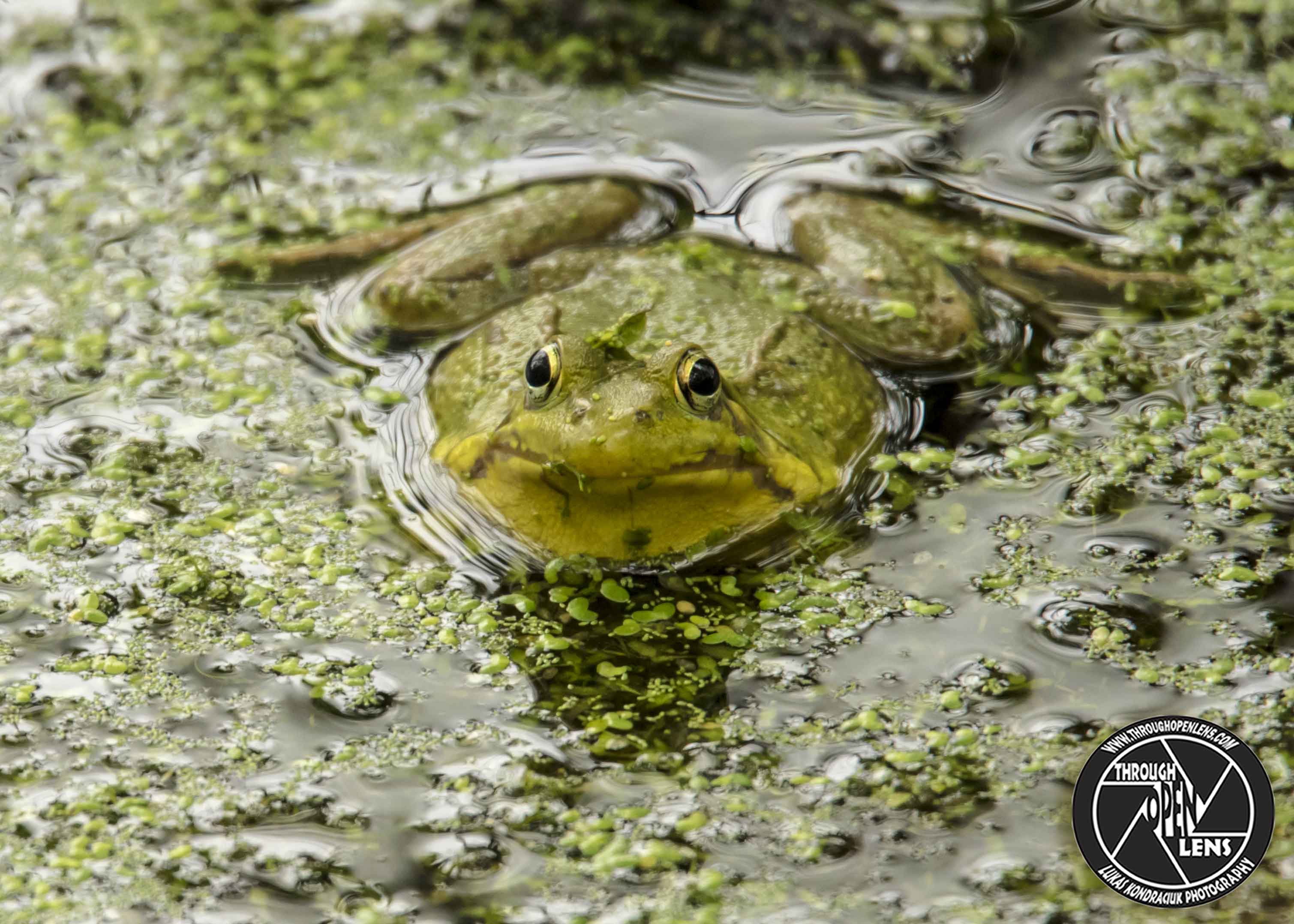
What? You Are Expecting A Prince Or Something?

F/6.3, 1/80, ISO 640.

Northern Green Frog

Why are frogs so happy?

They eat whatever bugs them!

Interesting Fact: The northern green frog dwells in marshes, swamps, ponds, lakes, springs, and other aquatic environment. It is active both day and night. ( https://en.wikipedia.org/wiki/Northern_green_frog )

Down The Rabbit Hole!

F/8.0, 1/250, ISO 250.

Desert Cottontail Rabbit 

What is a tree’s favorite drink?

Root beer!

Interesting Fact: The lifespan of a cottontail that reaches adulthood averages less than two years, depending on the location.[6] Unfortunately for the cottontail, almost every local carnivore larger or faster than the lagomorph is its predator. Some predators, like snakes for example, are familiar with the area inhabited by the cottontails, and can catch and eat the young at will; the mother is unable to defend the litter. Although cottontails are highly active sexually, and mated pairs have multiple litters throughout the year, few young survive to adulthood. Those that survive grow quickly and are full grown at three months. ( https://en.wikipedia.org/wiki/Desert_cottontail )


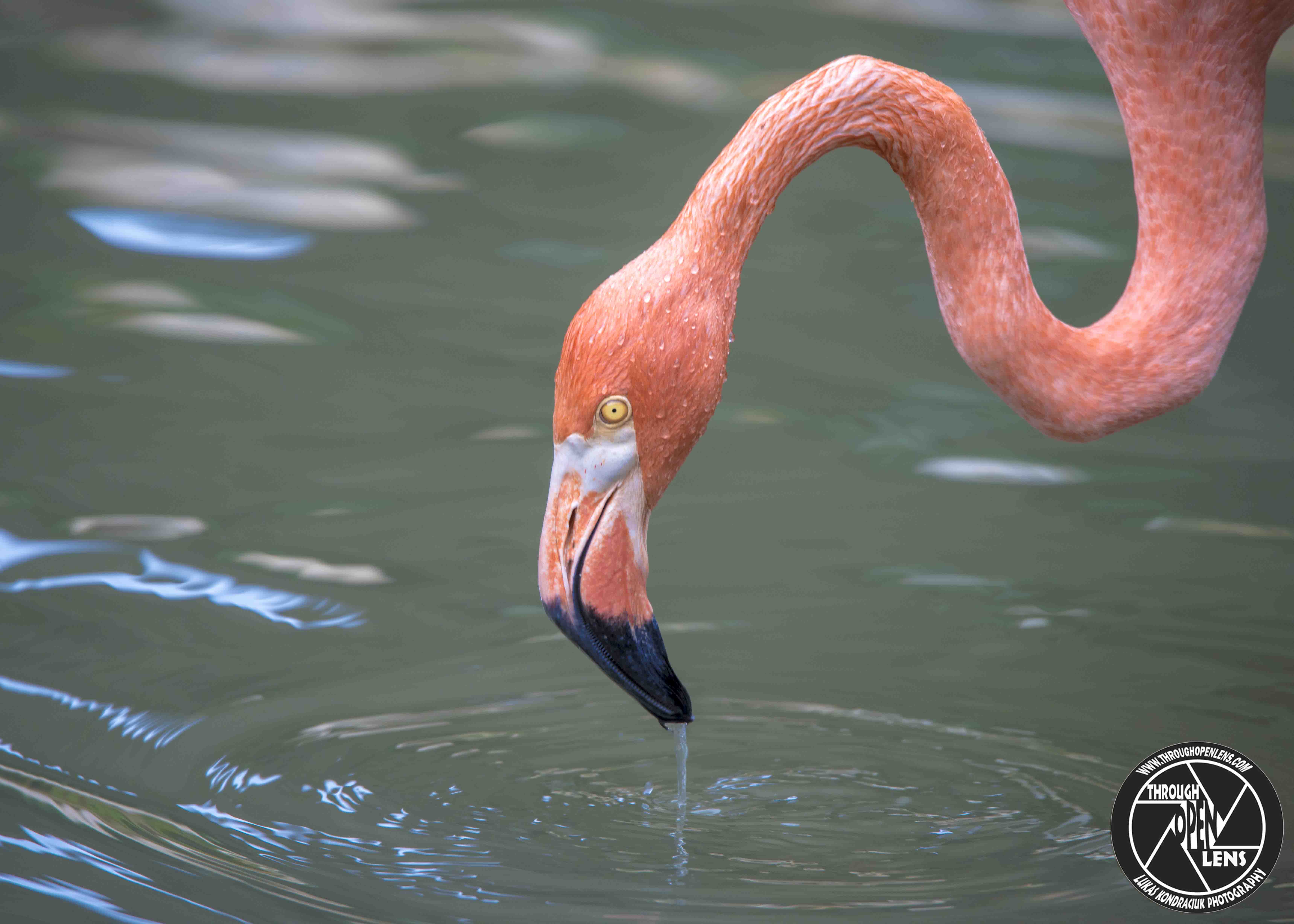
I Don’t Have A Drinking Problem, I Drink, I Get Drunk, I Pass Out, No Problem!

F/7.1, 1/200, ISO 320.

American Flamingo 

Why did the baseball player bring a rope to the game?

He wanted to tie the score

Interesting Fact: American flamingos are saltwater birds that ingest food with a high salt content and mostly drink salt water (with an osmolarity of usually 1000), hyperosmotic to the bodies cells . Also, though not commonly, they can drink fresh water at near-boiling temperatures from geysers. From their high-salt diet, they would lose more water and have a greater salt uptake. One way in which they osmoregulate is through the use of a salt gland, which is found in their beaks.[17] This salt gland helps excrete excess salt from the body through the nasal openings in the flamingo’s beaks. When these birds consume salt, the osmolarity increases in the blood plasma through the gut. This causes water to move out of the cells, increasing extracellular fluids. Both these changes, in turn, activate the salt glands of the bird,[18] but before any activity occurs in the salt glands, the kidney has to reabsorb the ingested sodium from the small intestine. As seen in other saltwater birds, the fluid that is excreted has been seen to have an osmolarity greater than that of the salt water, but this varies with salt consumption and body size. ( https://en.wikipedia.org/wiki/American_flamingo )

Sleeping Beauty.

F/6.3, 1/160, ISO 200.

Common Snapping Turtle

What do you get when you mix an elephant with a rhino?

Elephino!!!

Joke complementary of: robinwrites

F/5.6, 1/125, ISO 200.

F/5.6, 1/500, ISO 400.

Interesting Fact: Snapping turtles ambush their prey from the bottom of the water. Fish mistake their tongue for warms and viola dinner is served. yum

Sorry… We Are Busy Sunbathing.

F/8.0, 1/250, ISO 320.

Red-Eared Slider Turtle

What did the Sewage Worker say to his apprentice?

Urine for a surprise.

Interesting Fact: Red-eared sliders do not hibernate, but actually brumate; while they become less active, they do occasionally rise to the surface for food or air. Brumation can occur to varying degrees. In the wild, red-eared sliders brumate over the winter at the bottoms of ponds or shallow lakes. They generally become inactive in October, when temperatures fall below 10 °C (50 °F).[9] During this time, the turtles enter a state of sopor, during which they do not eat or defecate, they remain nearly motionless, and the frequency of their breathing falls. Individuals usually brumate underwater, but they have also been found under banks and rocks, and in hollow stumps. In warmer winter climates, they can become active and come to the surface for basking. When the temperature begins to drop again, however, they quickly return to a brumation state. Sliders generally come up for food in early March to as late as the end of April. ( https://en.wikipedia.org/wiki/Red-eared_slider )