Come At Me Bro!

F/9.0,  1/320, ISO 320.

Cooper’s Hawk

What did the tree say to spring?

What a re-leaf.

Interesting Fact: Dashing through vegetation to catch birds is a dangerous lifestyle. In a study of more than 300 Cooper’s Hawk skeletons, 23 percent showed old, healed-over fractures in the bones of the chest, especially of the furcula, or wishbone. ( https://www.allaboutbirds.org/guide/Coopers_Hawk )

Blue Me!

F/6.3, 1/160, ISO 400.

Eastern Bluebird

Doctor is talking to a patient.

Doctor:  “Do you do sports?”

Patient:  “Does sex count?”

Doctor:  “Yes.”

Patient:  “Then no.”

Interesting Fact: Eastern Bluebirds typically have more than one successful brood per year. Young produced in early nests usually leave their parents in summer, but young from later nests frequently stay with their parents over the winter.  ( https://www.allaboutbirds.org/guide/Eastern_Bluebird/lifehistory )

OWL Get You!

F/6.3, 1/250, ISO 1600.

Short Eared Owl

When does a Owl go “mooooo”?

When it is learning a new language!

Interesting Fact: As suggested by their wide global distribution, Short-eared Owls can travel long distances over vast expanses of ocean. Witnesses have reported seeing these owls descending on ships hundreds of miles from land.  ( https://www.allaboutbirds.org/guide/short-eared_owl/lifehistory )

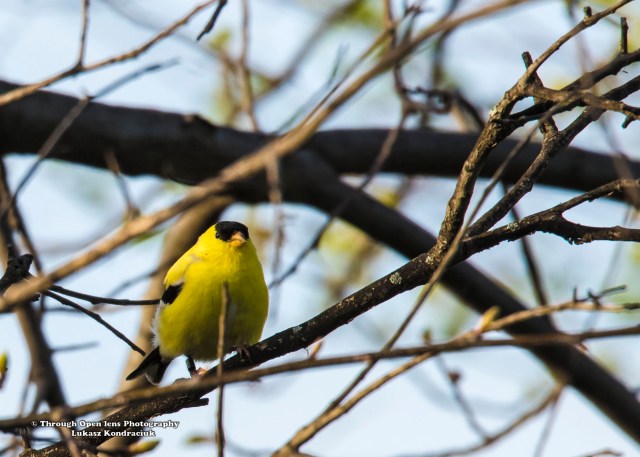
Ask Me Why I’m Angry?!

American Goldfinch

F/10.0, 1/400, ISO 400.

American Goldfinch

An angry wife was complaining about her husband spending all his free time in a bar, so one night he took her along with him. “What’ll you have?” he asked.

“Oh, I don’t know. The same as you I suppose,” she replied.

So, the husband ordered a couple of Jack Daniel’s and threw his down in one shot. His wife watched him, then took a sip from her glass and immediately spat it out.

“Yuck, that’s TERRIBLE!” she spluttered. “I don’t know how you can drink this stuff!”

“Well, there you go,” cried the husband. “And you think I’m out enjoying myself every night!”

Interesting Fact: American Goldfinches are the only finch that molts its body feathers twice a year, once in late winter and again in late summer. The brightening yellow of male goldfinches each spring is one welcome mark of approaching warm months. ( https://www.allaboutbirds.org/guide/American_Goldfinch/lifehistory )

Chill The Duck Out!

F/10.0, 1/400, ISO 250.

Ring-necked Duck

Why did the duck go to jail?

Because he got caught selling quack.

Interesting Fact: Ring-necked Ducks on their breeding grounds occasionally get attacked by the much larger Common Loon, the Red-necked Grebe, and even the much smaller Pied-billed Grebe. ( https://www.allaboutbirds.org/guide/Ring-necked_Duck/lifehistory )

What Was That?

F/13.0, 1/500, ISO 800.

Northern Cardinal ( Female )

Why couldn’t the leopard play hide and seek?

Because he was always spotted.

Interesting Fact: A week or two before the female starts building, she starts to visit possible nest sites with the male following along. The pair call back and forth and hold nesting material in their bills as they assess each site. Nests tend to be wedged into a fork of small branches in a sapling, shrub, or vine tangle, 1-15 feet high and hidden in dense foliage. They use many kinds of trees and shrubs, including dogwood, honeysuckle, hawthorn, grape, redcedar, spruce, pines, hemlock, rose bushes, blackberry brambles, elms, sugar maples, and box elders. ( https://www.allaboutbirds.org/guide/Northern_Cardinal/lifehistory )

Sing… The World Needs More Music!

F/8.0, 1/250, ISO 320.

Yellow Warbler Immature (Northern)

How do you make an egg laugh?

Tell it a yolk.

Interesting Fact: In addition to the migratory form of the Yellow Warbler that breeds in North America, several other resident forms can be found in Mexico, Central America, and the Caribbean. Males in these populations can have chestnut caps or even chestnut covering the entire head. ( https://www.allaboutbirds.org/guide/Yellow_Warbler/overview )

Headbanger!

F/6.3, 1/100, ISO 320.

Pileated Woodpecker

Two men visit a prostitute.

The first man goes into the bedroom. He comes out ten minutes later and says, “Heck. My wife is better than that.”

The second man goes in. He comes out ten minutes later and says, “You know? Your wife IS better.”

Interesting Fact: The Pileated Woodpecker prefers large trees for nesting. In young forests, it will use any large trees remaining from before the forest was cut. Because these trees are larger than the rest of the forest, they present a lightning hazard to the nesting birds. ( https://www.allaboutbirds.org/guide/Pileated_Woodpecker  )

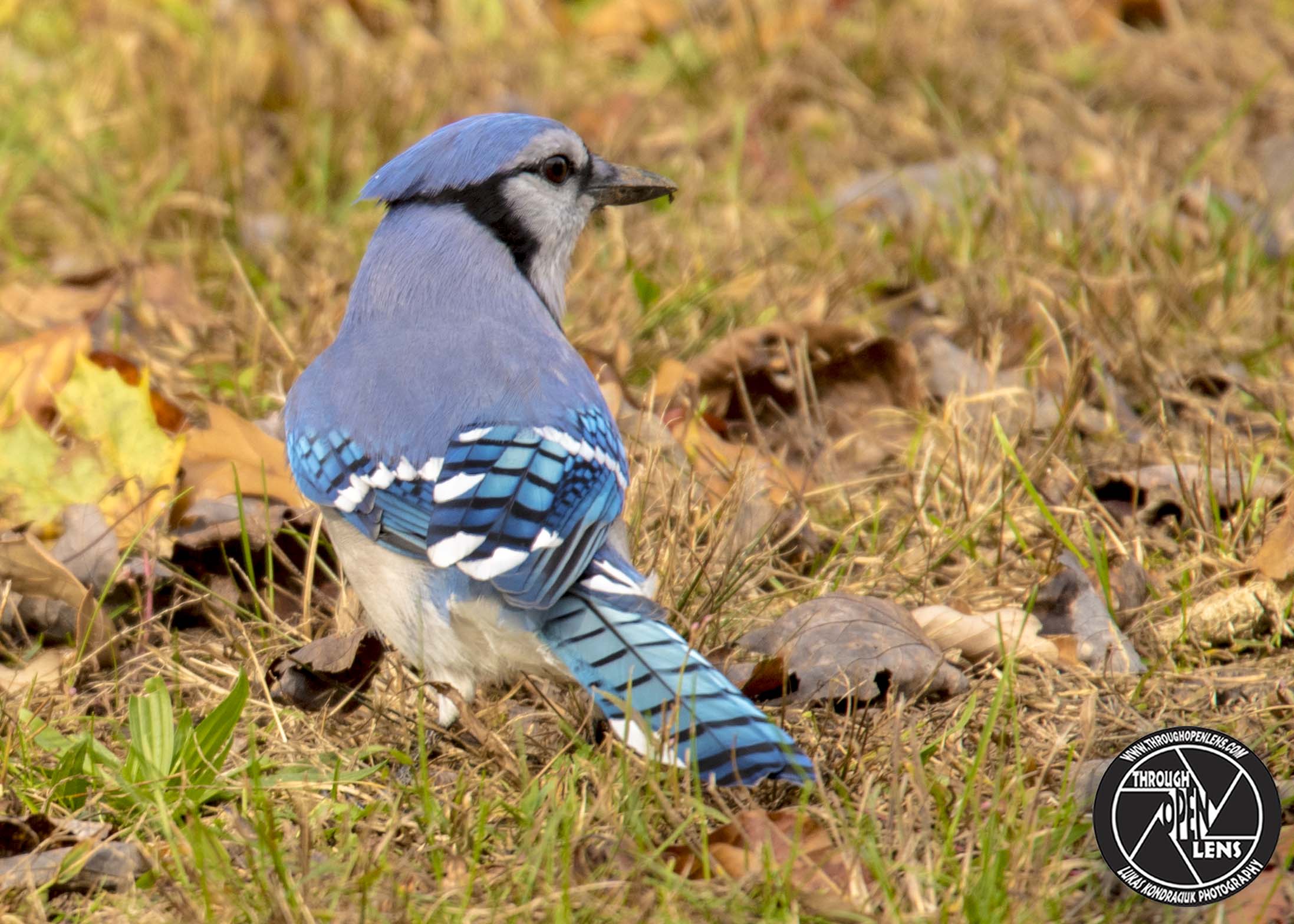
Bluetiful!

F/8.0, 1/250, ISO 400.

Blue Jay

Where do cows go for entertainment?

The mooooo-vies!

Interesting Fact:  The Blue Jay frequently mimics the calls of hawks, especially the Red-shouldered Hawk. These calls may provide information to other jays that a hawk is around, or may be used to deceive other species into believing a hawk is present. (  https://www.allaboutbirds.org/guide/Blue_Jay/lifehistory )

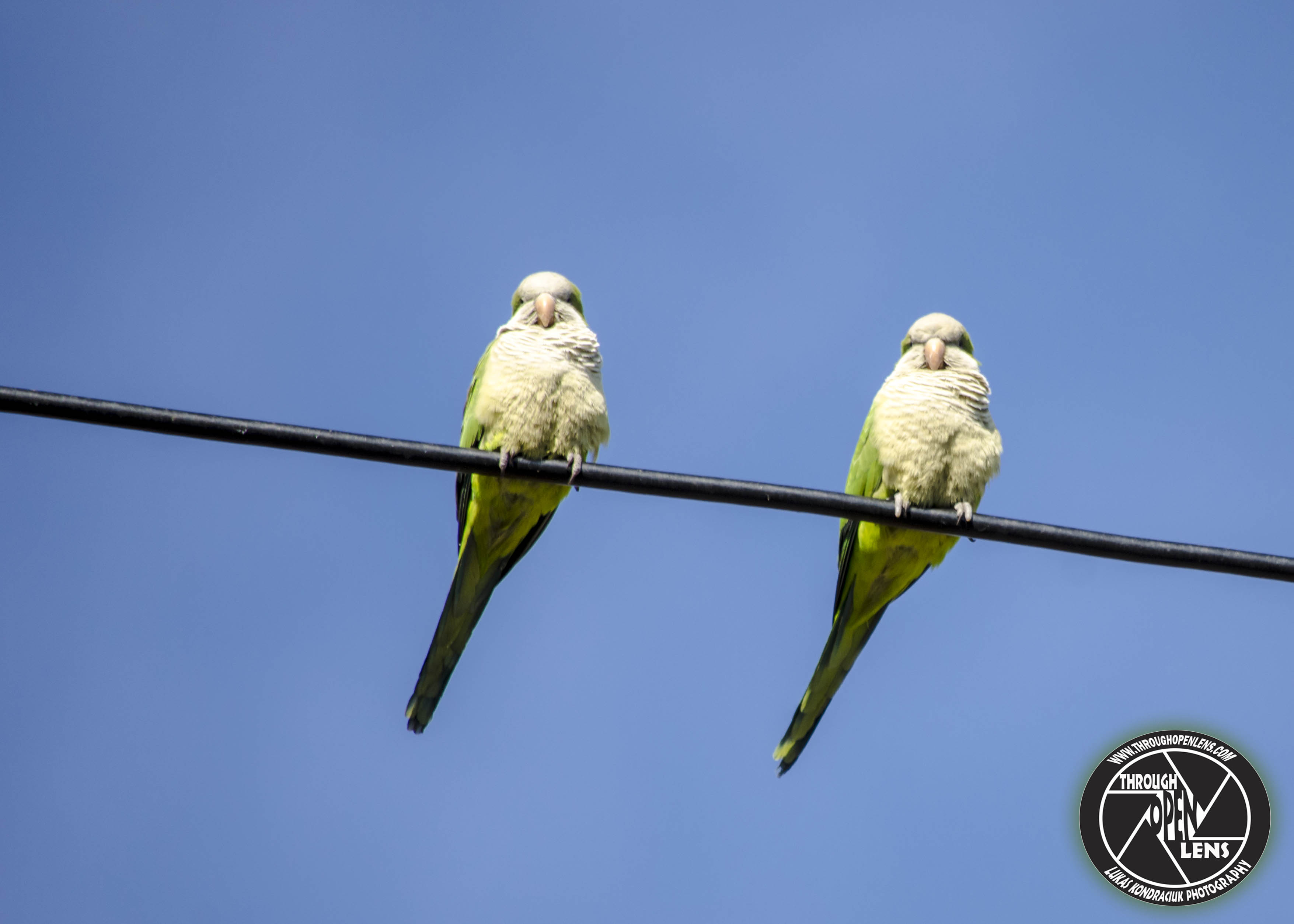
“So What’s So Great About Being OnLine?! “

monk-parakeets-online

F/6.3, 1/640, ISO 200.

Monk Parakeets

What is a parrot’s favorite game?

Hide and Speak!

Interesting Fact: In their native Argentina, Monk Parakeets sometimes adopt old nests of other species. Some ornithologists have suggested that this behavior may have been the first step, evolutionarily speaking, to transitioning from nesting in tree cavities to constructing stick nests. ( https://www.allaboutbirds.org/guide/Monk_Parakeet/lifehistory )