Keep Calm And Quack Quack!

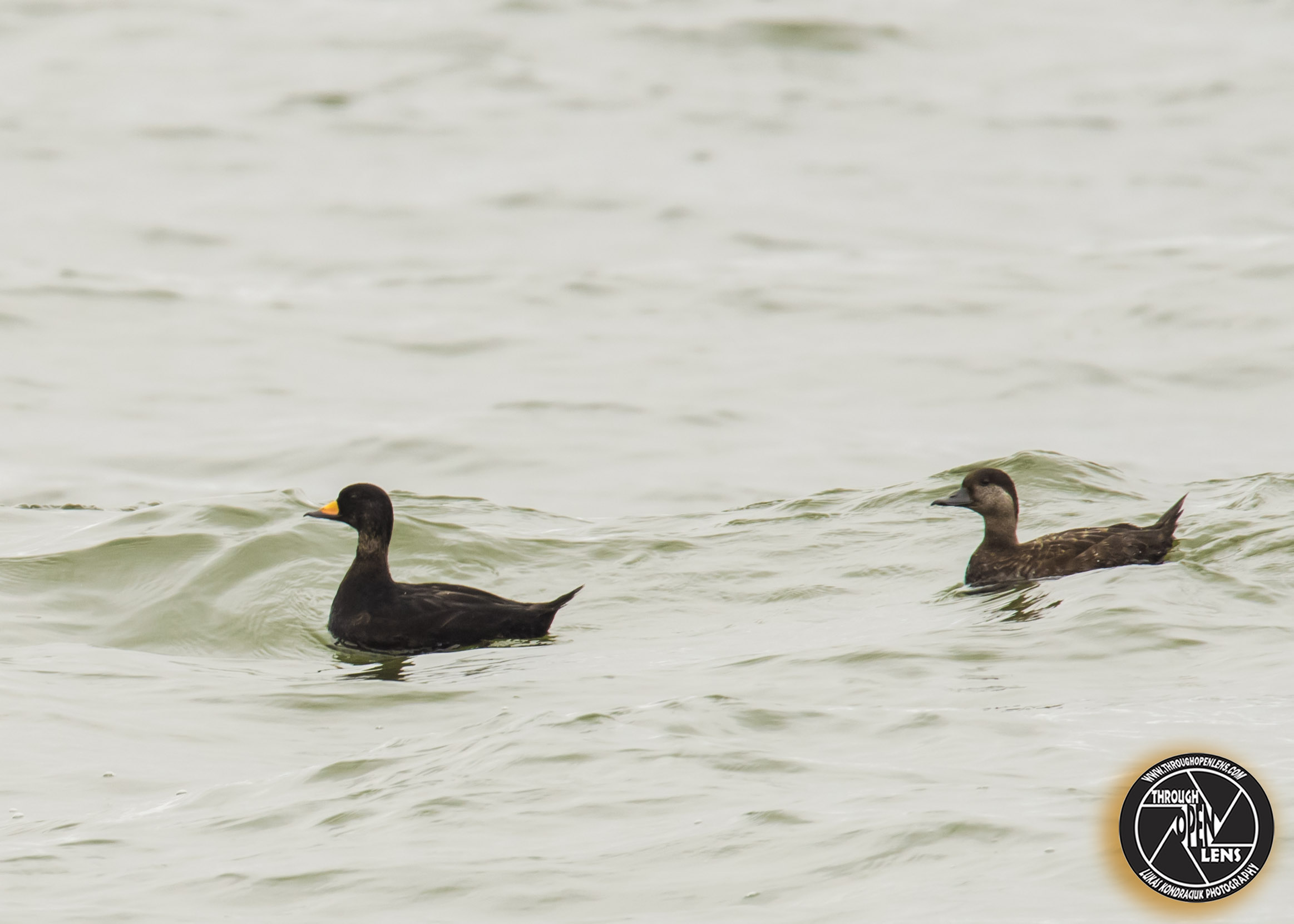
F/11.0, 1/500, ISO 500.

Black Scoter

Mother: What did you learn in school today

Son: How to write.

Mother: What did you write?

Son: I don’t know, they haven’t taught us how to read yet!

Interesting Fact: The Black Scoter is divided into two subspecies. In the form found in Europe, the “Common Scoter,” the male has a larger swollen knob at the base of the upper bill that is black on the sides with a yellow stripe on top, not entirely yellow. ( https://www.allaboutbirds.org/guide/Black_Scoter/lifehistory )


The Crack Of Dawn!

F/10.0, 1/400, ISO 125.

John Deere Tractor At Dawn

What do you get when you cross a robot and a tractor?

transfarmer.

Interesting Fact: The first powered farm implements in the early 19th century were portable engines – steam engines on wheels that could be used to drive mechanical farm machinery by way of a flexible belt. Richard Trevithick designed the first ‘semi-portable’ stationary steam engine for agricultural use, known as a “barn engine” in 1812, and it was used to drive a corn threshing machine.[4] The truly portable engine was invented in 1839 by William Tuxford of Boston, Lincolnshire who started manufacture of an engine built around a locomotive-style boiler with horizontal smoke tubes. A large flywheel was mounted on the crankshaft, and a stout leather belt was used to transfer the drive to the equipment being driven. In the 1850s, John Fowler used a Clayton & Shuttleworth portable engine to drive apparatus in the first public demonstrations of the application of cable haulage to cultivation. ( https://en.wikipedia.org/wiki/Tractor#History )

I Only Have Crazy Eyes For You!

F/9.0, 1/320, ISO 320.

Northern Mockingbird 

Why don’t witches like to ride their brooms when they’re angry?

They’re afraid of flying off the handle!

Interesting Fact:  The Northern Mockingbird frequently gives a “wing flash” display, where it half or fully opens its wings in jerky intermediate steps, showing off the big white patches. No one knows why it does this, but it may startle insects, making them easier to catch. On the other hand, it doesn’t often seem to be successful, and different mockingbird species do this same display even though they don’t have white wing patches.  ( https://www.allaboutbirds.org/guide/Northern_Mockingbird/lifehistory )

I Am Too Busy Working On My Own Grass To Notice If Yours Is Greener

F/6.3, 1/250, ISO 640.

Muskrat

Why is sex like math?

You add a bed, subtract the clothes, divide the legs, and pray there’s no multiplying!

Interesting Fact: Muskrats provide an important food resource for many other animals, including minkfoxescoyoteswolveslynxbobcatsbearseaglessnakesalligators, and large owls and hawksOtterssnapping turtles, and large fish such as pike prey on baby muskrats. Caribou and elk sometimes feed on the vegetation which makes up muskrat push-ups during the winter when other food is scarce for them.[24] In their introduced range in the former Soviet Union, the muskrat’s greatest predator is the golden jackal. They can be completely eradicated in shallow water bodies, and during the winter of 1948–49 in the Amu Darya (river in central Asia), muskrats constituted 12.3% of jackal faeces contents, and 71% of muskrat houses were destroyed by jackals, 16% of which froze and became unsuitable for muskrat occupation. Jackals also harm the muskrat industry by eating muskrats caught in traps or taking skins left out to dry. ( https://en.wikipedia.org/wiki/Muskrat#Behavior )

Only The Bold Get To The Top.

F/8.0, 1/250, ISO 320.

Red-Eared Slider Turtles

Why did the nurse go to art school?

To learn how to draw blood!

Interesting Fact: Red-eared sliders are almost entirely aquatic, but as they are cold-blooded, they leave the water to sunbathe to regulate their temperature. ( https://en.wikipedia.org/wiki/Red-eared_slider )


Sitting Like A King

F/13.0, 1/640, ISO 320.

Eastern Kingbirds

Why does a dog stay in a shadow.

Because it doesn’t want to be a Hotdog.

Interesting Fact: Kingbirds sometimes catch small frogs, treating them the same way they deal with large insects: beating them against a perch and swallowing them whole. Eastern Kingbirds apparently rely almost completely on insects and fruit for moisture; they are rarely seen drinking water. ( https://www.allaboutbirds.org/guide/Eastern_Kingbird/lifehistory )


Today’s Forecast Calling For A 90% Chance Of Swamp-Ass.

F/6.3, 1/160, ISO 800.

Great Egret

Why did the lady quit her job at the orange juice factory?

She couldn’t concentrate.

Interesting Fact: Males choose the display areas, where nests are later constructed. The nest itself is up to 100 feet off the ground, often over water, usually in or near the top of a shrub or tree such as a redwood, tamarisk, live oak, eastern redcedar, yaupon holly, wax myrtle, mangrove, Australian pine, buttonwood, Brazilian pepper, black willow, or privet. Great Egrets occasionally nest on the ground or on artificial platforms. ( https://www.allaboutbirds.org/guide/Great_Egret/lifehistory )

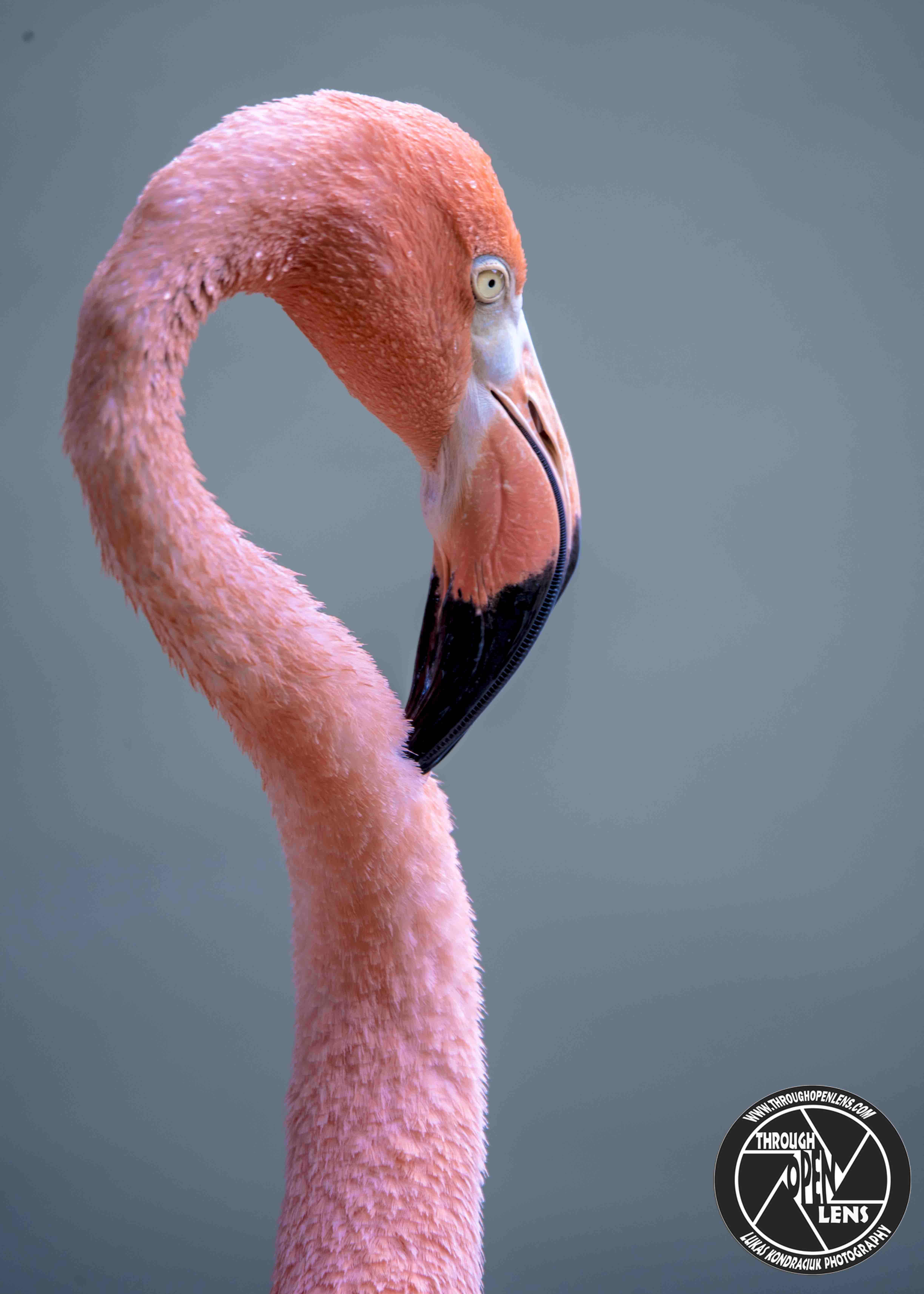
So Much On My Mind It’s A Wonder My Neck Doesn’t Snap.

F/6.3, 1/50, ISO 200.

American Flamingo 

What did one hat say to the other?

You stay here, I’ll go on a head.

Interesting Fact: The American flamingo has adapted to its shallow-water environment in several ways. It has evolved long legs and large webbed feet to wade and stir up the bottom of the water bed to bring up their food source to then be retrieved. To feed, it has evolved a specialized beak which is hooked downward and features marginal lamellae on the upper mandible, and inner and outer lamellae on both the upper and lower mandibles. These are adapted for filtering out differently sized food from water.[16] Depending on the food source in their area, diets depend on the exact morphology of their beaks on what can and cannot be strained out of them. It submerges its head under water to retrieve its food, and may have its head under water for long times, which requires it to hold its breath. Factors which affect the habitat choice of American flamingos are environmental temperatures, water depth, food source, accessibility of an area, and the presence of vegetation beds in feeding areas. If available food items do not meet the needs of the flamingos or the temperature is not appropriate to their requirements, they move to a better feeding or more temperate area. ( https://en.wikipedia.org/wiki/American_flamingo )

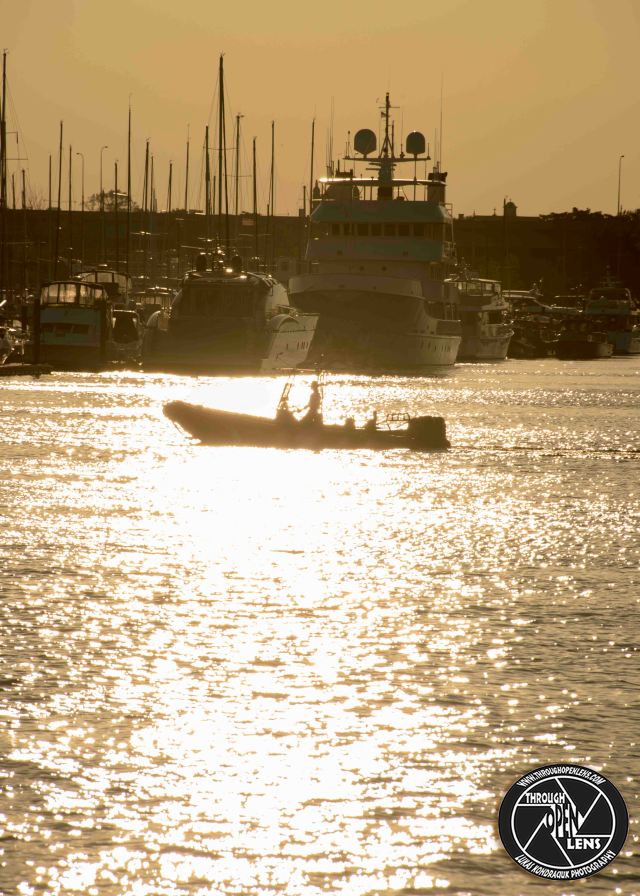
Don’t Be Afraid To Rock The Boat

F/13.0, 1/640, ISO 200.

Jersey City Hudson River

What does a cheetah say when someone looks at it?

I’ve been spotted!

Interesting Fact: The land comprising what is now Jersey City was inhabited by the Lenape, a collection of tribes (later called Delaware Indian). In 1609, Henry Hudson, seeking an alternate route to East Asia, anchored his small vessel Halve Maen (English: Half Moon) at Sandy Hook, Harsimus Cove and Weehawken Cove, and elsewhere along what was later named the North River. After spending nine days surveying the area and meeting its inhabitants, he sailed as far north as Albany. By 1621, the Dutch West India Company was organized to manage this new territory and in June 1623, New Netherland became a Dutch province, with headquarters in New Amsterdam. Michael Reyniersz Pauw received a land grant as patroon on the condition that he would establish a settlement of not fewer than fifty persons within four years. He chose the west bank of the North River (Hudson River) and purchased the land from the Lenape. This grant is dated November 22, 1630 and is the earliest known conveyance for what are now Hoboken and Jersey City. Pauw, however, was an absentee landlord who neglected to populate the area and was obliged to sell his holdings back to the Company in 1633.[39] That year, a house was built at Communipaw for Jan Evertsen Bout, superintendent of the colony, which had been named Pavonia (the Latinized form of Pauw’s name, which means peacock).[40] Shortly after, another house was built at Harsimus Cove and became the home of Cornelius Van Vorst, who had succeeded Bout as superintendent, and whose family would become influential in the development of the city. Relations with the Lenape deteriorated, in part because of the colonialist’s mismanagement and misunderstanding of the indigenous people, and led to series of raids and reprisals and the virtual destruction of the settlement on the west bank. During Kieft’s War, approximately eighty Lenapes were killed by the Dutch in a massacre at Pavonia on the night of February 25, 1643. ( https://en.wikipedia.org/wiki/Jersey_City,_New_Jersey#History )

POLLEN: When Flowers Can’t Keep It In Their Plants.

F/14.0, 1/60, ISO 250.

Daylily

Why did the gardener plant a light bulb?

She wanted to grow a power plant!

Interesting Fact: Daylilies are perennial plants, whose name alludes to the flowers which typically last no more than 24 hours (about a day or so). The flowers of most species open in early morning and wither during the following night, possibly replaced by another one on the same scape (flower stalk) the next day. Some species are night-blooming. Daylilies are not commonly used as cut flowers for formal flower arranging, yet they make good cut flowers otherwise as new flowers continue to open on cut stems over several days. ( https://en.wikipedia.org/wiki/Daylily#Etymology )