I Feel Loonly.

F/7.1, 1/200, ISO 400.

Common Loon ( Nonbreeding adult )

What did the chicken say when it got to the library?

“Book book book book book book book…”

Interesting Fact: Migrating Common Loons occasionally land on wet highways or parking lots, mistaking them for rivers and lakes. They become stranded without a considerable amount of open water for a long takeoff. A loon may also get stranded on a pond that is too small. ( https://www.allaboutbirds.org/guide/Common_Loon/ )

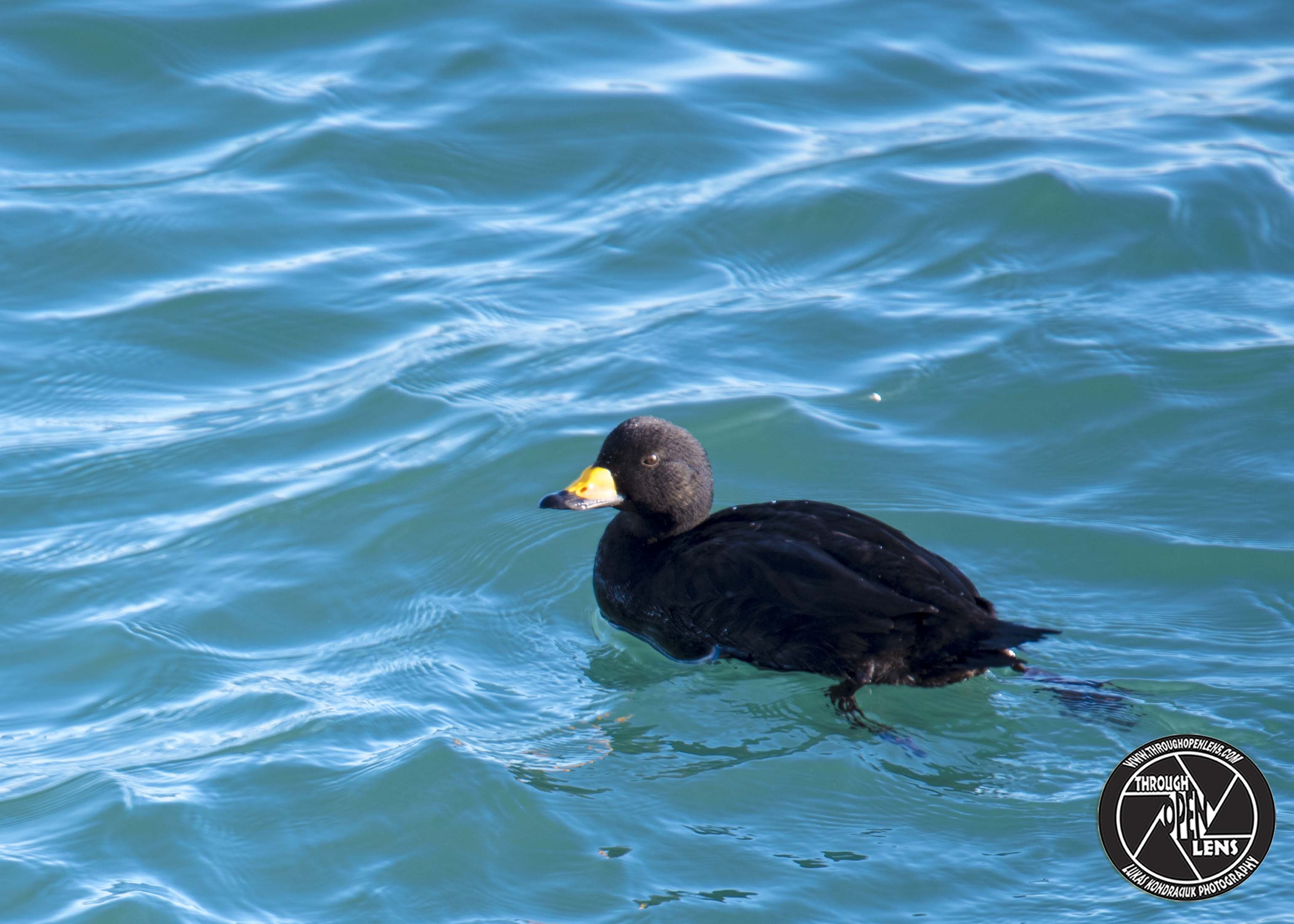
I Don’t Have To Take This… I’m Going Home.

F/7.1, 1/200, ISO 200.

Black Scoter

Why did the tiny ghost join the football team?

He heard they needed a little team spirit.

Interesting Fact: A coastal duck that breeds in the subarctic, the Black Scoter is not well studied in North America. Only a few nests have ever been found. ( https://www.allaboutbirds.org/guide/Black_Scoter )


Touchdown!

F/11.0, 1/500, ISO 400.

Ring-billed Gull 

What should you do if you’re afraid of elevators?

Take steps to avoid them.

Interesting Fact: Ring-billed Gulls are strong, graceful flyers. They can race along at more than 40 miles per hour, and they’re adept at snatching food from the air. ( https://www.allaboutbirds.org/guide/Ring-billed_Gull/lifehistory )

Quack Like You Mean It!

F/14.0, 1/500, ISO 800.

Black Scoter

This guy went to school and he asked
“May I use the bathroom?”
The teacher replied, ” no not unless you say your abc’s.”
The guy said “a b c d e f g h i j k l m n o q r s t u v w x y z.”
The teacher asked “Where’s the p?
He replied, ” running down my leg!”

Interesting Fact:  The Black Scoter occasionally does a “Wing-flap” display while swimming, flapping its wings with its body held up out of the water. Unlike other scoters, it almost always punctuates a Wing-flap with a characteristic downward thrust of head, as if its neck were momentarily broken. Surf and White-winged scoters keep their heads and bills pointing more or less above the horizontal throughout a Wing-flap.  ( https://www.allaboutbirds.org/guide/Black_Scoter/lifehistory )

The Awkward Moment When You’re In Deep Thought, Then Realize You’re Staring Directly at Someone…

F/11.0, 1/500, ISO 400.

Ring-billed Gull 

Two guys are talking:

Guy 1: I’m on a .

Guy 2: Really.

Guy 1: I’ve lost three days already.

Interesting Fact: Some Ring-billed Gull nests at study sites in California and Oregon contained pebbles the size and shape of gull eggs. The parents apparently pulled the pebbles into their nests from the surrounding ground, mistaking them for eggs gone astray. ( https://www.allaboutbirds.org/guide/Ring-billed_Gull/lifehistory )


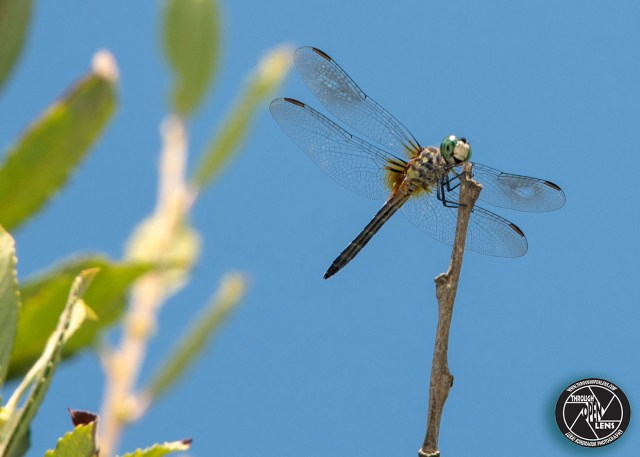
Oh I’m Sorry. Did I Just Roll My Eyes Out loud?!

F/10.0, 1/250, ISO 125.

Dragonfly

What does a baby computer call its dad?

Data

Interesting Fact: Dragonflies are powerful and agile fliers, capable of migrating across oceans, moving in any direction, and changing direction suddenly. In flight, the adult dragonfly can propel itself in six directions: upward, downward, forward, back, to left and to right.[47] They have four different styles of flight:[48] A number of flying modes are used that include counter-stroking, with forewings beating 180° out of phase with the hindwings, is used for hovering and slow flight. This style is efficient and generates a large amount of lift; phased-stroking, with the hindwings beating 90° ahead of the forewings, is used for fast flight. This style creates more thrust, but less lift than counter-stroking; synchronised-stroking, with forewings and hindwings beating together, is used when changing direction rapidly, as it maximises thrust; and gliding, with the wings held out, is used in three situations: free gliding, for a few seconds in between bursts of powered flight; gliding in the updraft at the crest of a hill, effectively hovering by falling at the same speed as the updraft; and in certain dragonflies such as darters, when “in cop” with a male, the female sometimes simply glides while the male pulls the pair along by beating his wings. ( https://en.wikipedia.org/wiki/Dragonfly#Flight )

Gone Fishing!

F/11.0, 1/500, ISO 125.

Osprey

What did the fish say when he posted bail?

“I’m off the hook!”

Interesting Fact:  The Osprey is the only hawk on the continent that eats almost exclusively live fish. In North America, more than 80 species of live fresh- and saltwater fish account for 99 percent of the Osprey’s diet. Captured fish usually measure about 6–13 inches in length and weigh one-third to two-thirds of a pound. The largest catch on record weighed about 2.5 pounds.  (  https://www.allaboutbirds.org/guide/Osprey/lifehistory )

I’m A Biter!

F/10.0, 1/400, ISO 800.

Common Loon ( Nonbreeding adult )

Why did the teddy bear say no to dessert?

Because she was stuffed.

Interesting Fact: Loons shoot through the water like a torpedo, propelled by powerful thrusts of feet located near the rear of their body. When their quarry changes direction, loons can execute an abrupt flip-turn that would make Olympic swimmers jealous: they extend one foot laterally as a pivot brake and kick with the opposite foot to turn 180 degrees in a fraction of a second. ( https://www.allaboutbirds.org/guide/Common_Loon/lifehistory )


It Time To Get My Beak Wet!

F/9.0, 1/250, ISO 640.

Common Loon ( Nonbreeding adult )

Where do snowmen keep their money?

In snow banks.

Interesting Fact: Loons are like airplanes in that they need a runway for takeoff. In the case of loons, they need from 30 yards up to a quarter-mile (depending on the wind) for flapping their wings and running across the top of the water in order to gain enough speed for lift-off. ( https://www.allaboutbirds.org/guide/Common_Loon )

Watch It! I Am Swimming HERE!

F/ 6.3, 1/160, ISO 200.

Black Scoter 

What did the nose say to the finger?

Stop picking on me.

Interesting Fact:  Birds occasionally do a “wing-flap” display while swimming, flapping their wings with the body held up and punctuating this with a downward thrust of head, as if its neck were momentarily broken. ( https://identify.whatbird.com/obj/298/overview/Black_Scoter.aspx )