I Don’t Have To Take This… I’m Going Home.

F/7.1, 1/200, ISO 200.

Black Scoter

Why did the tiny ghost join the football team?

He heard they needed a little team spirit.

Interesting Fact: A coastal duck that breeds in the subarctic, the Black Scoter is not well studied in North America. Only a few nests have ever been found. ( https://www.allaboutbirds.org/guide/Black_Scoter )


Just Like The Seasons, People Have The Ability To Change

F/5.6, 1/125, ISO 280

What did one autumn leaf say to another?

I’m falling for you.

Interesting Fact: Fall is a peak migration time for many species of birds. During autumn, birds will fly to other areas seeking more hospitable climates. The Arctic tern journeys about 11,000 miles each way for its annual migration. That is like going all the way across the United States about three and a half times. ( http://www.richmond.com/life/celebrations/article_aa9e91de-402a-11e4-8c0f-001a4bcf6878.html )

Quack Like You Mean It!

F/14.0, 1/500, ISO 800.

Black Scoter

This guy went to school and he asked
“May I use the bathroom?”
The teacher replied, ” no not unless you say your abc’s.”
The guy said “a b c d e f g h i j k l m n o q r s t u v w x y z.”
The teacher asked “Where’s the p?
He replied, ” running down my leg!”

Interesting Fact:  The Black Scoter occasionally does a “Wing-flap” display while swimming, flapping its wings with its body held up out of the water. Unlike other scoters, it almost always punctuates a Wing-flap with a characteristic downward thrust of head, as if its neck were momentarily broken. Surf and White-winged scoters keep their heads and bills pointing more or less above the horizontal throughout a Wing-flap.  ( https://www.allaboutbirds.org/guide/Black_Scoter/lifehistory )

Life Begins At Night

F/22.0, 6.0, ISO 250.

New York State Capitol

What do you call a man with no nose and no body?

Nobody nose.

Interesting Fact: Legislative sessions had been held at different buildings in different places before Albany was declared the State capital in 1797. From that time until 1811, the State Legislature met at the Old Albany City Hall. The first State Capitol was designed by Albany native Philip Hooker, started in 1804, inaugurated in 1812 and remained in use until 1879 when the current building was inaugurated.  ( https://en.wikipedia.org/wiki/New_York_State_Capitol )

The Awkward Moment When You’re In Deep Thought, Then Realize You’re Staring Directly at Someone…

F/11.0, 1/500, ISO 400.

Ring-billed Gull 

Two guys are talking:

Guy 1: I’m on a .

Guy 2: Really.

Guy 1: I’ve lost three days already.

Interesting Fact: Some Ring-billed Gull nests at study sites in California and Oregon contained pebbles the size and shape of gull eggs. The parents apparently pulled the pebbles into their nests from the surrounding ground, mistaking them for eggs gone astray. ( https://www.allaboutbirds.org/guide/Ring-billed_Gull/lifehistory )


Sometimes I Get Road Rage From Standing In Lines.

F/10.0, 1/400, ISO 125.

Semipalmated Sandpipers

Why do ghosts ride in elevators?

It keeps their spirits up.

Interesting Fact: Semipalmated Sandpiper: Breeds in lower Arctic regions from western Alaska to Labrador. Migrates through central North America to the Atlantic coast to reach its wintering grounds, which extend from the extreme southern U.S. to the Caribbean Islands and South America. Preferred habitats include shorelines and mudflats. ( http://identify.whatbird.com/obj/427/overview/Semipalmated_Sandpiper.aspx )


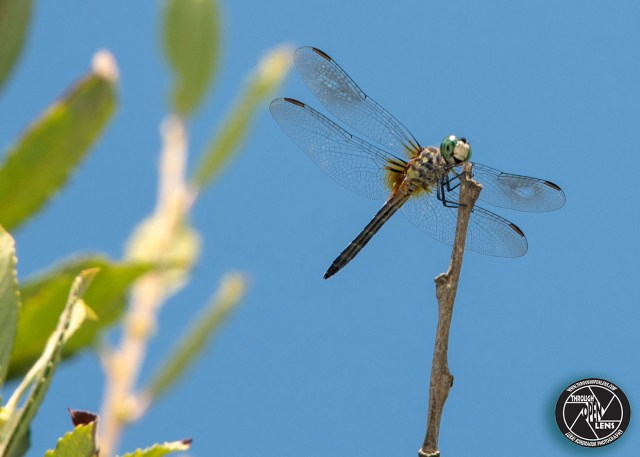
Oh I’m Sorry. Did I Just Roll My Eyes Out loud?!

F/10.0, 1/250, ISO 125.

Dragonfly

What does a baby computer call its dad?

Data

Interesting Fact: Dragonflies are powerful and agile fliers, capable of migrating across oceans, moving in any direction, and changing direction suddenly. In flight, the adult dragonfly can propel itself in six directions: upward, downward, forward, back, to left and to right.[47] They have four different styles of flight:[48] A number of flying modes are used that include counter-stroking, with forewings beating 180° out of phase with the hindwings, is used for hovering and slow flight. This style is efficient and generates a large amount of lift; phased-stroking, with the hindwings beating 90° ahead of the forewings, is used for fast flight. This style creates more thrust, but less lift than counter-stroking; synchronised-stroking, with forewings and hindwings beating together, is used when changing direction rapidly, as it maximises thrust; and gliding, with the wings held out, is used in three situations: free gliding, for a few seconds in between bursts of powered flight; gliding in the updraft at the crest of a hill, effectively hovering by falling at the same speed as the updraft; and in certain dragonflies such as darters, when “in cop” with a male, the female sometimes simply glides while the male pulls the pair along by beating his wings. ( https://en.wikipedia.org/wiki/Dragonfly#Flight )

I May Look Like I’m Having Deep Thoughts, But Really I Need To Fart.

F/13.0, 1/640, ISO 400.

Semipalmated Sandpiper

Why do scuba divers fall backwards into the water?

Because if they fell forwards they’d still be in the boat.

Interesting Fact:  Semipalmated Sandpipers from eastern populations probably undertake nonstop transoceanic flights of 3,000 – 4,000 km (1,900 – 2,500 mi) from New England and southern Canada to South America, powered by extensive fat reserves. ( https://www.allaboutbirds.org/guide/Semipalmated_Sandpiper/lifehistory )


Gone Fishing!

F/11.0, 1/500, ISO 125.

Osprey

What did the fish say when he posted bail?

“I’m off the hook!”

Interesting Fact:  The Osprey is the only hawk on the continent that eats almost exclusively live fish. In North America, more than 80 species of live fresh- and saltwater fish account for 99 percent of the Osprey’s diet. Captured fish usually measure about 6–13 inches in length and weigh one-third to two-thirds of a pound. The largest catch on record weighed about 2.5 pounds.  (  https://www.allaboutbirds.org/guide/Osprey/lifehistory )

Let The Sea Set You Free.

F/13.0, 1/640, ISO 400.

Common Terns

Why was the math textbook so sad?

He had a lot of problems!

Interesting Fact: The Common Tern is sometimes called the sea swallow. A group of common terns are collectively known as a “committee” of terns. ( http://identify.whatbird.com/mwg/_/0/identify.whatbird.com/obj/465/overview/Common_Tern.aspx )