His Feathers Didn’t Go Up, But They Have A Pill For That.

F/5.6, 1/60, ISO 320.

Peafowl

Did you hear the story about the peacock?

It’s a beautiful tail.

Interesting Fact: Peafowl are forest birds that nest on the ground, but roost in trees. They are terrestrial feeders. All species of peafowl are believed to be polygamous. In common with other members of the Galliformes, the males possess metatarsal spurs or “thorns” on their legs used during intraspecific territorial fights with other members of their kind. ( https://en.wikipedia.org/wiki/Peafowl#Behaviour )
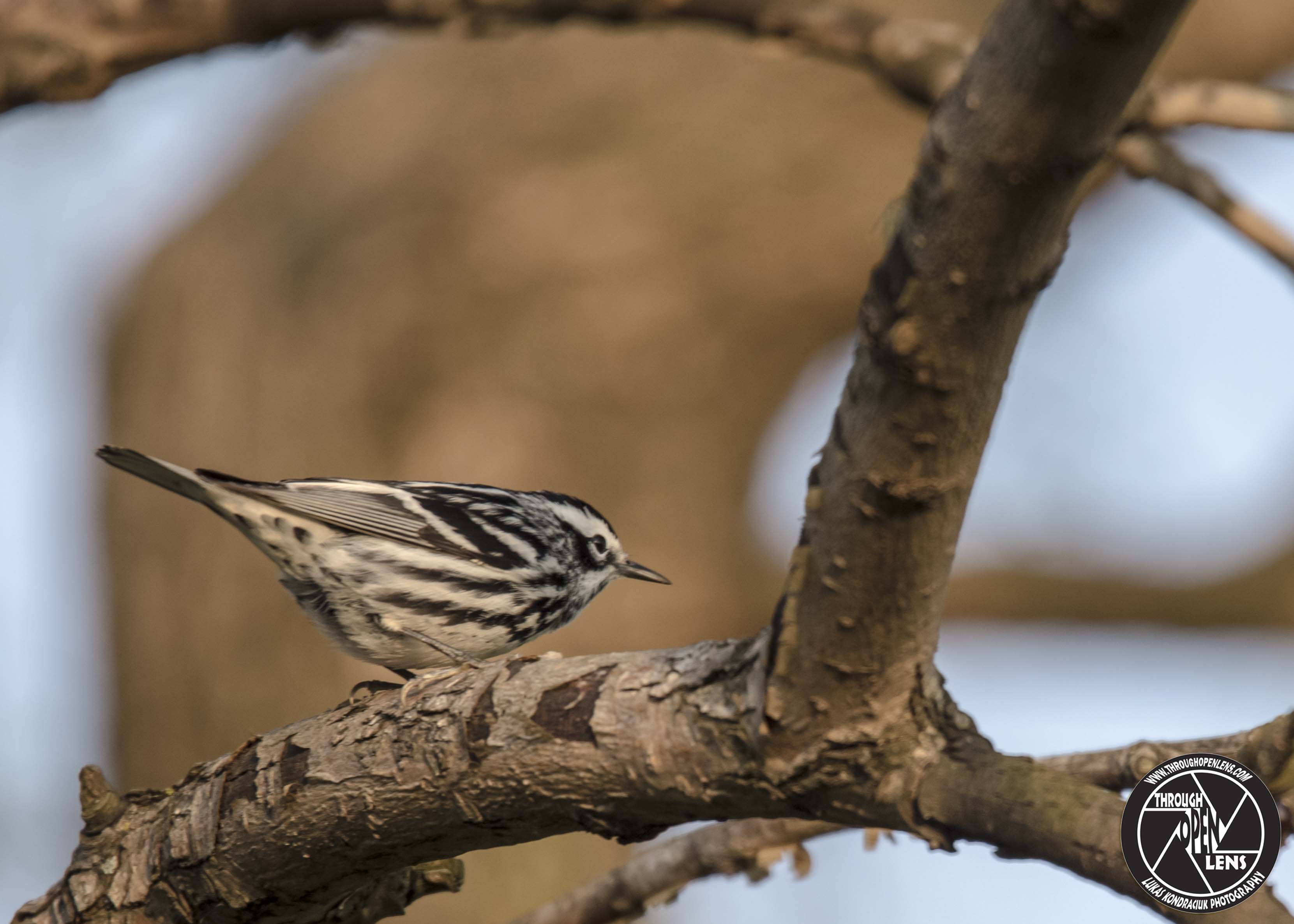
I Have A Audition For A Zebra.

F/7.1, 1/200, ISO 320.

Black-and-white Warbler 

Why are ghosts such good cheerleaders?

Because they have a lot of spirit!

Interesting Fact: The female Black-and-white Warbler selects a well-hidden nesting location at the base of a tree, rock, stump, or fallen log, or under a bush or shrub. Nests are usually built on the ground but occasionally are placed in a cavity atop a tree stump, in a rock crevice, or on a mossy bank up to six feet high. ( https://www.allaboutbirds.org/guide/Black-and-white_Warbler/lifehistory )

Here I Sit Broken Hearted Tried To Poop But Only Farted

F/9.0, 1/320, ISO 500.

Yellow-Rumped Warbler

Why did Bob throw the clock out of the window?

Because he wanted to see time fly!

Interesting Fact: Yellow-rumped Warblers flit through the canopies of coniferous trees as they forage. They cling to the bark surface to look for hidden insects more than many warblers do, but they also frequently sit on exposed branches and catch passing insects like a flycatcher does. ( https://www.allaboutbirds.org/guide/Yellow-rumped_Warbler/lifehistory )

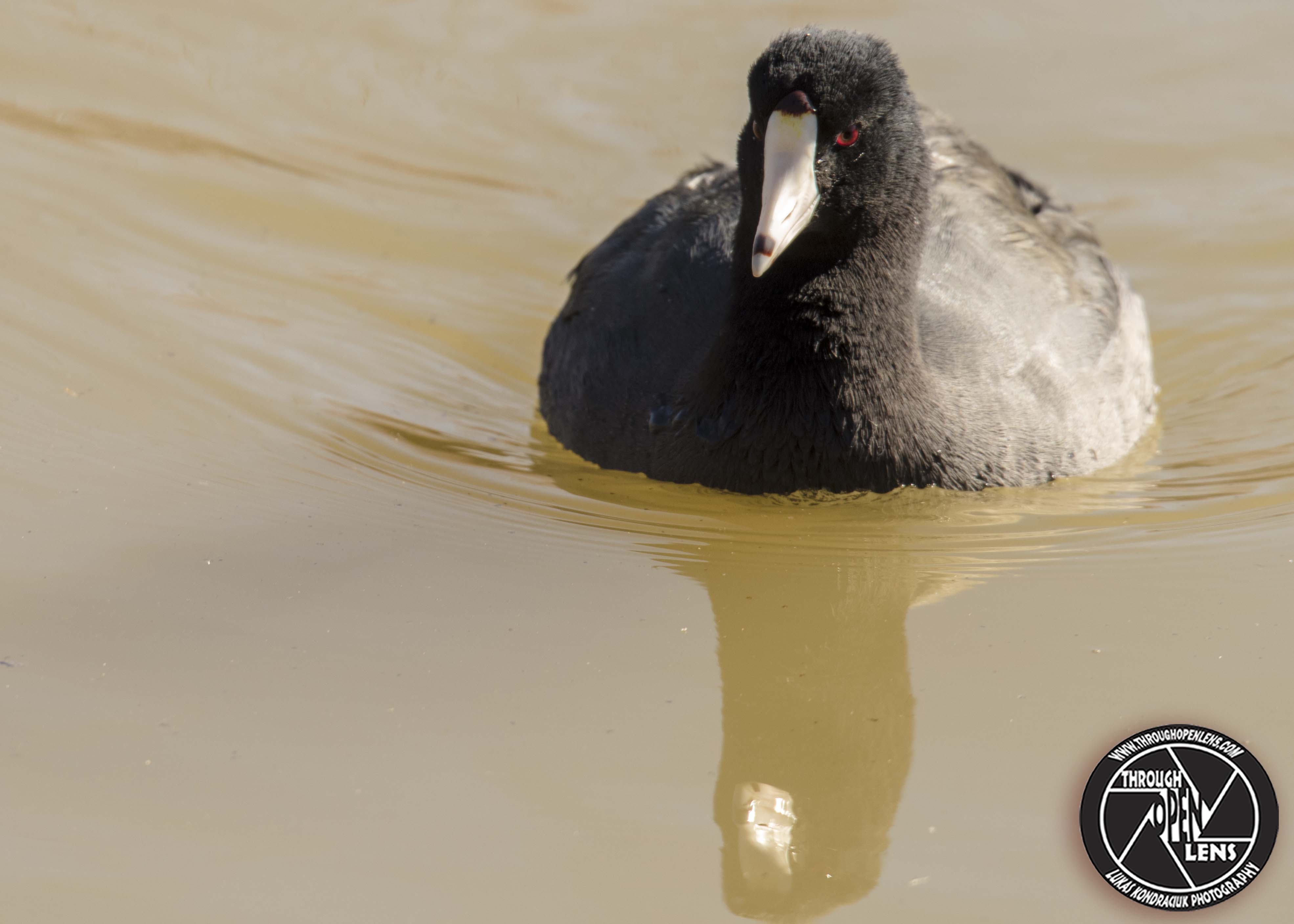
Water Chicken!

F/9.0, 1/320, ISO 320.

American Coot

“Babe is it in?”

“Yea.” “Does it hurt?”

“Uh huh.”

“Let me put it in slowly.”

“It still hurts.”

“Okay, let’s try another shoe size.”

Interesting Fact: A slow and meticulous forager, the American Coot plucks at plants while walking, swimming, dabbling with its head just underwater, or in full dives. In flight coots are clumsy and labored (though less so than Common Moorhens). To get airborne, coots typically have to beat their wings while running across the water for many yards. ( https://www.allaboutbirds.org/guide/American_Coot/lifehistory# )

Which Way Do We Go?

F/9.0, 1/320, ISO 320.

Ruddy Ducks

Where do sheep go to get haircuts?

To the Baa Baa shop!

Interesting Fact: Ruddy Ducks spend the vast majority of their time on the water. They are fast fliers but have little maneuverability in the air, and they tend to swim and dive rather than fly to escape predators—which include Red-tailed Hawks, Great Horned Owls, mink, raccoons, and red foxes.  ( https://www.allaboutbirds.org/guide/Ruddy_Duck/lifehistory )

Bellllyyyy Floooop!

F/11.0, 1/500, ISO 320.

Bufflehead Duck

Why are hairdressers never late for work?

Because they know all the short cuts!

Interesting Fact: Bufflehead nest only in cavities, using holes dug by Northern Flickers and sometimes Pileated Woodpeckers (as well as artificial nest boxes). In the summer, females that are too young to breed, or whose nests have failed, fly around in noisy groups and scope out the available nest holes for the following breeding season. Just before laying, females make more secretive flights to prospective holes, either alone or with their mates. They usually choose cavities in poplar or aspen trees, except in California where they often use pine trees. ( https://www.allaboutbirds.org/guide/Bufflehead/lifehistory )

It Will Be A Good Day As Long As You Won’t Hit Or Bite Anyone!

F/6.3, 1/80, ISO 320.

Common Yellowthroat

Why is Peter Pan always flying?

Because he neverlands.

Interesting Fact: Each male normally has only one mate in his territory during a breeding season. However, a female’s mating calls often attract other males, and she may mate with them behind her mate’s back. ( https://www.allaboutbirds.org/guide/Common_Yellowthroat/ )

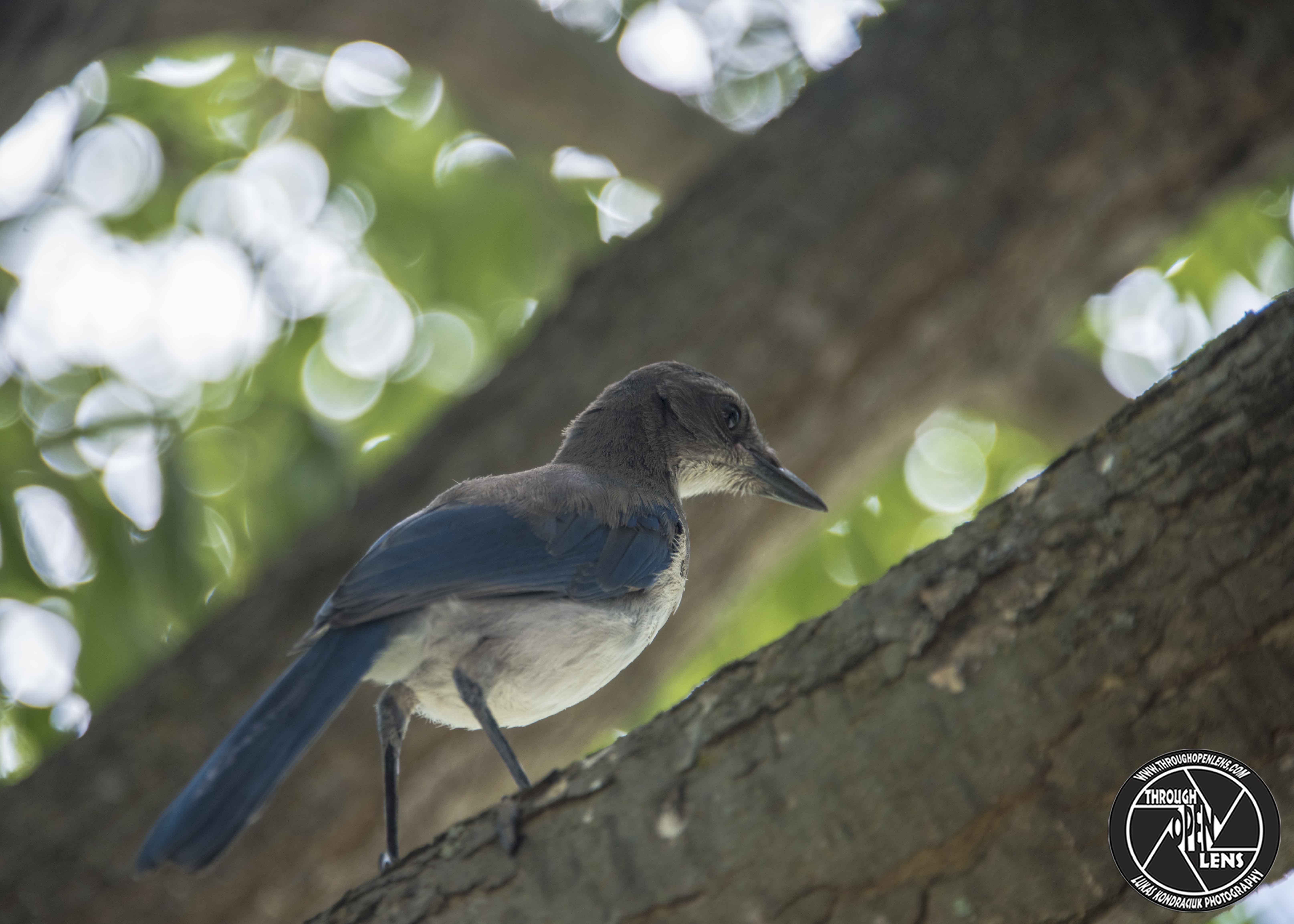
Blue Looks Good On You!

F/5.6, 1/160, ISO 320.

California Scrub-Jay

Why did Papa Smurf send Smurfette to see a doctor???

She was always feeling blue…

Interesting Fact: Look closely, and you’ll see an intriguing difference between the California Scrub-Jay and its close relative, Woodhouse’s Scrub-Jay. The bill of a California Scrub-Jay is stout and hooked, giving it extra power and grip as the birds hammer open acorns in their oak woodland habitats. By comparison, Woodhouse’s have thinner, more pointed bills that nimbly reach deep into pinyon pine cones to pull out the pine nuts inside. ( https://www.allaboutbirds.org/guide/California_Scrub-Jay )

Life Is Too Short To Have Boring Hair!

F/9.0, 1/320, ISO 200.

Polish chicken

What do you get when a chicken lays an egg on top of a barn?

An eggroll!

Interesting Fact: 

The Polish or Poland is a European breed of crested chickens known for its remarkable crest of feathers. The oldest accounts of these birds come from The Netherlands; their exact origins are unknown, however.[1] In addition to combs, they are adorned with large crests that nearly cover the entirety of the head. This crest limits their vision, and as a result can affect their temperament. Thus, though normally tame, they may be timid and easily frightened.  ( https://en.wikipedia.org/wiki/Polish_chicken

When I Am Knocking, You Better Open Up!

F/9.0, 1/320, ISO 250.

Red-Bellied Woodpecker

A police officer caught two kids playing with a firework and a car battery.

He charged one and let the other one off.

Interesting Fact: A Red-bellied Woodpecker can stick out its tongue nearly 2 inches past the end of its beak. The tip is barbed and the bird’s spit is sticky, making it easier to snatch prey from deep crevices. Males have longer, wider-tipped tongues than females, possibly allowing a breeding pair to forage in slightly different places on their territory and maximize their use of available food.  ( https://www.allaboutbirds.org/guide/Red-bellied_Woodpecker/lifehistory )