I Have My Goldeneye On You!

F/9.0, 1/320, ISO 160.

Common Goldeneye

Why did the cookie go to the hospital?

He felt crummy!

Interesting Fact: In winter and early spring, male Common Goldeneyes perform a complex series of courtship displays that includes up to 14 moves with names like “masthead,” “bowsprit,” and “head throw kick,” in which the male bends his head back to touch his rump, then thrusts forward and kicks up water with his feet. ( https://www.allaboutbirds.org/guide/Common_Goldeneye/

Stop, Don’t Move!

black-capped-chickadee

F/9.0, 1/320, ISO 400.

Black-Capped Chickadee

Did you hear about the actor who fell through the floorboards?

He was just going through a stage.

Interesting Fact: Every autumn Black-capped Chickadees allow brain neurons containing old information to die, replacing them with new neurons so they can adapt to changes in their social flocks and environment even with their tiny brains. ( https://www.allaboutbirds.org/guide/Black-capped_Chickadee/lifehistory )

He Tried To Imagine The Sound Of The Color Red

F/8.0, 1/250, ISO 800.

Scarlet Tanager

What happened when the two antennas got married?

Well, the ceremony was kinda boring, but the reception was great!

Interesting Fact: The female Scarlet Tanager sings a song similar to the male’s, but softer, shorter, and less harsh. She sings in answer to the male’s song and while she is gathering nesting material. ( https://www.allaboutbirds.org/guide/Scarlet_Tanager/overview )

I Trying To Get My Duck In The Row But I Got Geese Instead!

F/7.1, 1/200, ISO 250.

Canada Goose and Goslings

What did the triangle say to the circle?

Your pointless!

Interesting Fact:  In spring and summer, geese concentrate their feeding on grasses and sedges, including skunk cabbage leaves and eelgrass. During fall and winter, they rely more on berries and seeds, including agricultural grains, and seem especially fond of blueberries. They’re very efficient at removing kernels from dry corn cobs. Two subspecies have adapted to urban environments and graze on domesticated grasses year round. ( https://www.allaboutbirds.org/guide/Canada_Goose/lifehistory )

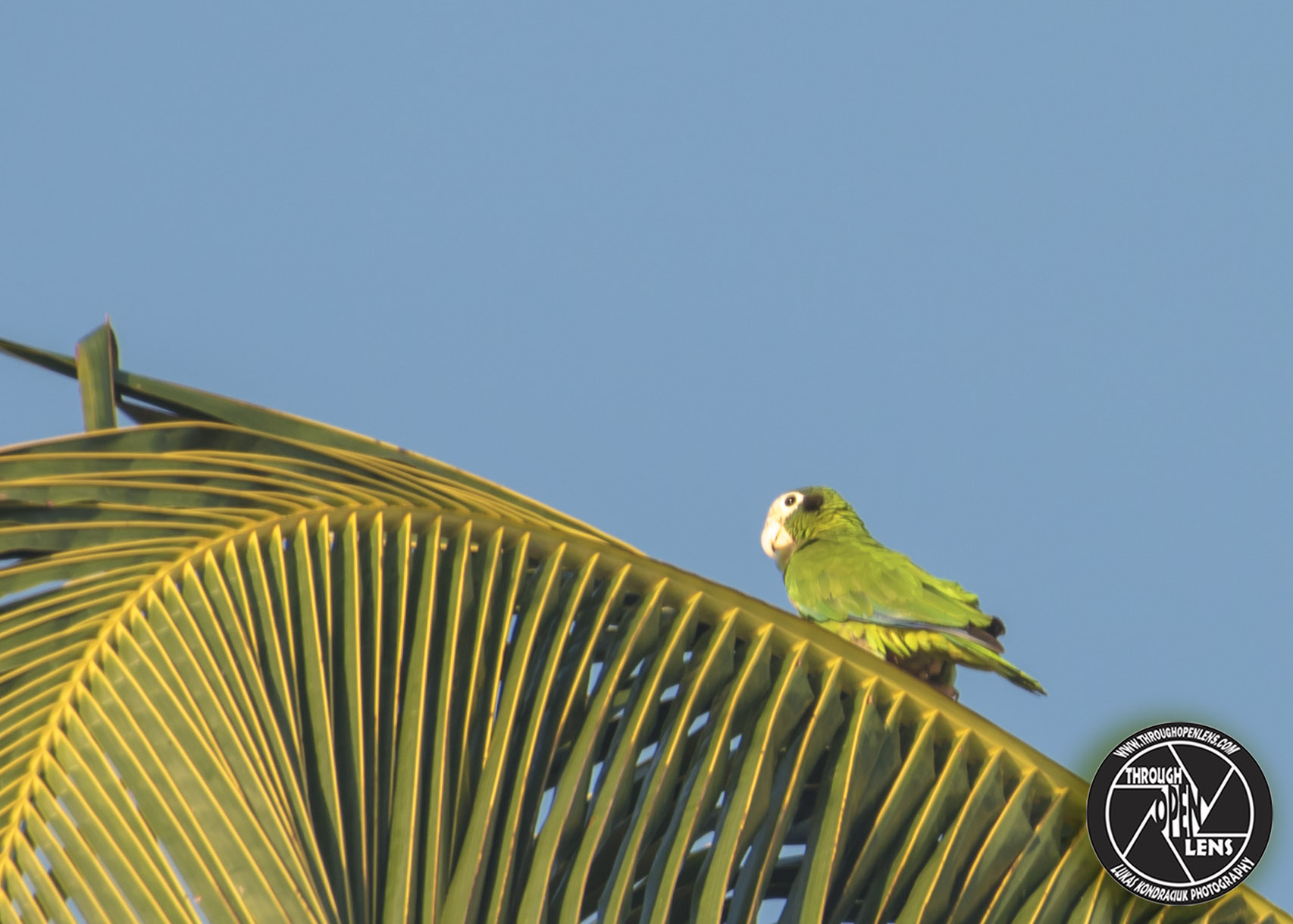
Of Course I Talk To Myself… Sometimes I Need Expert Advice.

F/6.3, 1/160, ISO 125.

Hispaniolan amazon or Hispaniolan parrot

What do you get when you cross a parrot with a shark?

An animal that talks your head off.

Interesting Fact: As with other amazons, it prefers forested areas where food is plentiful. This parrot lives in the wood forests in Haiti and the Dominican Republic. However over the recent years they have been captured out of their natural habitat illegally for pet trades or just to keep them as pets which are very popular in the Dominican Republic. Right now[when?] the population ranges from 10,000 to 19,000 in the wild and decreasing. ( https://en.wikipedia.org/wiki/Hispaniolan_amazon#Habitat_and_distribution )

I Wanna Go Fast!

F/6.3, 1/60, ISO 400.

White-throated Sparrow

Two state officials are talking  “I don’t know what people have against us, We haven’t done anything.”

Interesting Fact:  Males are typically dominant over females, but whether an individual is white-striped or tan-striped seems to have no bearing on status. When pairing up, white-striped forms tend to choose tan-striped individuals, and vice versa. Pairs stay together for the summer, but birds often choose new partners the next year.  ( https://www.allaboutbirds.org/guide/White-throated_Sparrow/lifehistory )

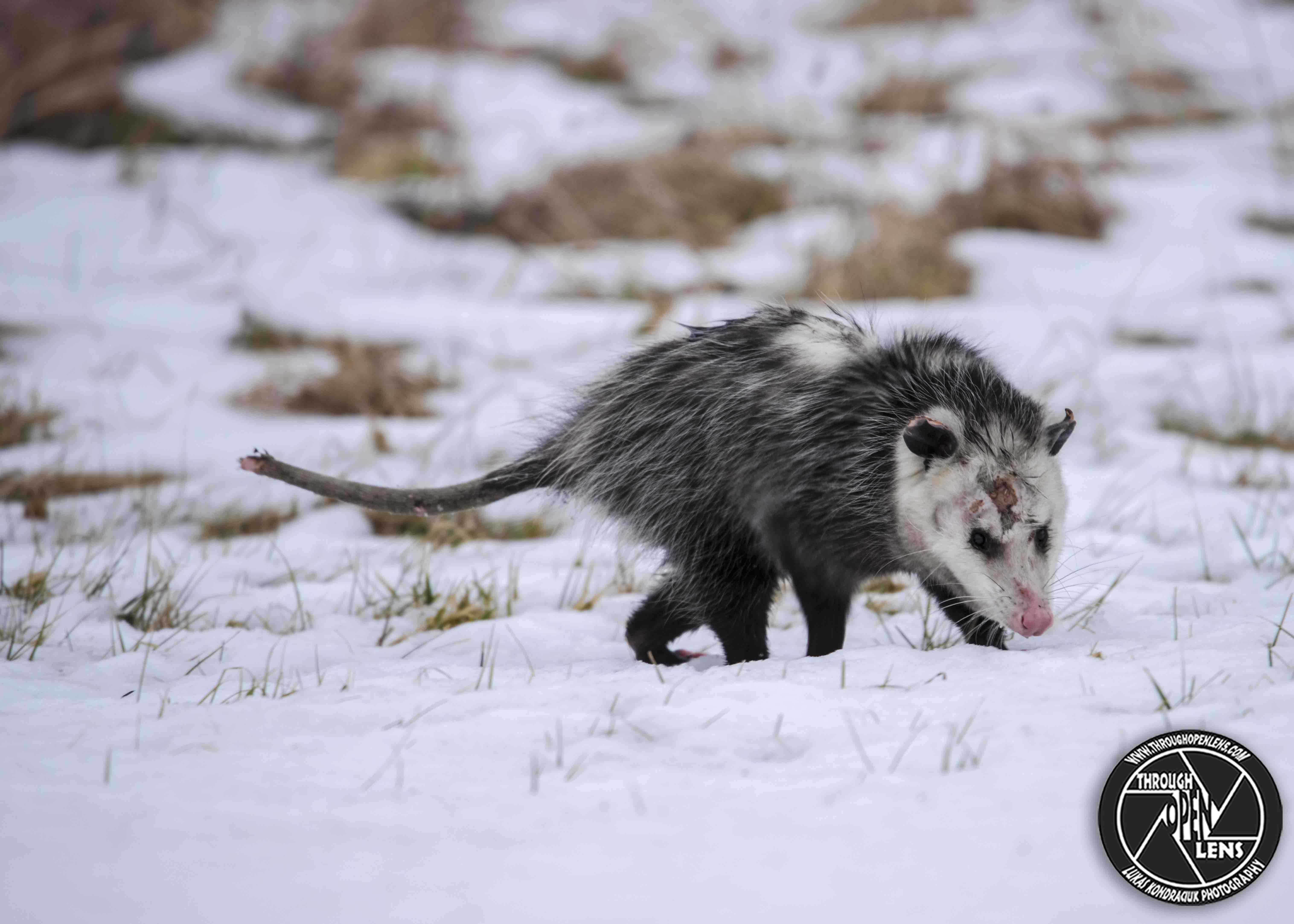
If You Want To Go Running With Me, You’d Better Be Prepared To Walk A Lot.

F/6.3, 1/80, ISO 400.

Opossums

A 3 years old boy sits near a pregnant woman.

Boy: Why do you look so fat?

Pregnant woman: I have a baby inside me.

Boy: Is it a good baby?

Pregnant woman: Yes, it is a very good baby.

Boy: Then why did you eat it?!

Interesting Fact:  These animals are most famous for “playing possum.” When threatened by dogs, foxes, or bobcats, opossums sometimes flop onto their sides and lie on the ground with their eyes closed or staring fixedly into space. They extend their tongues and generally appear to be dead. This ploy may put a predator off its guard and allow the opossum an opportunity to make its escape. ( https://www.nationalgeographic.com/animals/mammals/group/opossums/ )

There Have Been Many Times In 2017, When I Have Annoyed You, Distubed You, Irritated You, And Bugged The Hell Out Of You….Today I Just Wanna Tell You I Plan To Continue In 2018!

F/9.0, 1/320, ISO 320.

Curve-billed Thrasher

How does one snowman greet another snowman?….

Ice to meet you

Interesting Fact: Forages on ground, pokes and probes in plant litter, and digs holes in the soil with its long, down-curved bill. (  https://www.allaboutbirds.org/guide/Curve-billed_Thrasher/lifehistory )

Don’t Just Stand There, Summer Is Here!

F/5.6, 1/500, ISO 200.

Greater Yellowlegs

What did the pig say on a hot summer day?

I’m bacon!

Interesting Fact:  Greater Yellowlegs eats small aquatic and terrestrial invertebrates, small fish, frogs, and occasionally seeds and berries. ( https://www.allaboutbirds.org/guide/Greater_Yellowlegs/lifehistory )


At The Quack Of Dawn

F/6.3, 1/160, ISO 250.

Wood Duck

What do you get when a duck bends over?

Buttquack

Interesting Fact: Wood Ducks feed by dabbling or short, shallow dives. They are strong fliers and can reach speeds of 30 mph. Wood Ducks are not territorial, with the exception that a male may fight off other males that approach his mate too closely. ( https://www.allaboutbirds.org/guide/Wood_Duck/lifehistory )