Muddy Quack!

F/6.3, 1/250, ISO 450.

Northern Pintail Duck

What day do fish hate?

Fry-day!

Interesting Fact: The Northern Pintail is among the earliest nesting ducks in North America, beginning shortly after ice-out in many northern areas. ( https://www.allaboutbirds.org/guide/Northern_Pintail/lifehistory )

I Can Walk On Water!

F/13.0, 1/640, ISO 320.

Ring-billed Gull

Two Police officers are talking:

A naked women robbed a bank.

Nobody could remember her face.

Interesting Fact: Ring-billed Gulls near Tampa Bay, Florida, became accustomed to feasting on garbage at an open landfill site. Then, in 1983, operators replaced the dumping grounds with closed incinerators. The thwarted scavengers found themselves another open dump, but the pattern continues all across the gull’s range. When waste-management practices shift from open landfills to closed incinerators, gull numbers often drop. ( https://www.allaboutbirds.org/guide/Ring-billed_Gull/lifehistory )

Bring On The Night!

jersey-city-downtown-park

F/18.0, 24.0, ISO 80.

Newport Green Park Downtown Jersey City

A man asked his wife what she’d like for her birthday. “I’d love to be six again,” she replied.
On the morning of her birthday, he got her up bright and early and off they went to a local theme park.
What a day! He put her on every ride in the park: the Death Slide, the Screaming Loop, the Wall of Fear, everything there was!
Wow! Five hours later she staggered out of
the theme park, her head reeling and her stomach upside down.
Right to a McDonald’s they went, where her husband ordered her a Happy Meal with extra fries and a refreshing chocolate shake.
Then it was off to a movie, the latest Star Wars epic, a hot dog, popcorn, Pepsi, and M&Ms.
What a fabulous adventure! Finally she wobbled home with her husband and collapsed into bed.
He leaned over and lovingly, asked, “Well, dear, what was it like being six again?”
One eye opened. “You idiot, I meant my dress size.”
The moral of this story: Even when the man is listening, he’s still gonna get it wrong.

Interesting Fact: Newport is a 600-acre (2.4 km2) master-planned, mixed-use community in Downtown Jersey City, New Jersey, United States, consisting of retail, residential, office, and entertainment facilities. The neighborhood is situated on the Hudson Waterfront opposite the Tribeca area of Lower Manhattan in New York City, on what had been the yards of Erie Railroad‘s Pavonia Terminal. Redevelopment of the neighborhood began in 1986 as a $10 billion project led by real-estate tycoon Samuel J. LeFrak and his firm The LeFrak Organization.  ( https://en.wikipedia.org/wiki/Newport,_Jersey_City )


Believe You Can And You’re Halfway There.

F/10.0, 1/400, ISO 400.

Dark-eyed Junco

Why did the golfer wear two pairs of pants?

In case he got a hole in one.

Interesting Fact: The female chooses the nest site, typically in a depression or niche on sloping ground, rock face, or amid the tangled roots of an upturned tree. Around people, juncos may nest in or underneath buildings. Occasionally, juncos nest above the ground on horizontal branches (rarely as high as 45 feet), window ledges, and in hanging flower pots or light fixtures. ( https://www.allaboutbirds.org/guide/Dark-eyed_Junco/lifehistory )

Dive Dive Dive!!!

F/9.0, 1/320, ISO 340.

Common Loon ( Nonbreeding adult )

Have you read the book about anti-gravity?

It’s impossible to put down!

Interesting Fact: The Common Loon is flightless for a few weeks after molting all of its wing feathers at the same time in midwinter. ( Common Loon Overview, All About Birds, Cornell Lab of Ornithology )

Don’t Stick Your Nose Where It Doesn’t Belong

F/9.0, 1/320, ISO 320.

Northern Pintail Duck

Father and son are talking over dinner in a nice restaurant.  A boy asks his father, “Dad, are bugs good to eat?”

“That’s disgusting. Don’t talk about things like that over dinner,” the dad replies.

After dinner the father asks, “Now, son, what did you want to ask me?”

“Oh, nothing,” the boy says. “There was a bug in your soup, but now it’s gone.”

Interesting Fact: Northern Pintails migrate at night at speeds around 48 miles per hour. The longest nonstop flight recorded for a Northern Pintail was 1,800 miles. ( https://www.allaboutbirds.org/guide/Northern_Pintail/

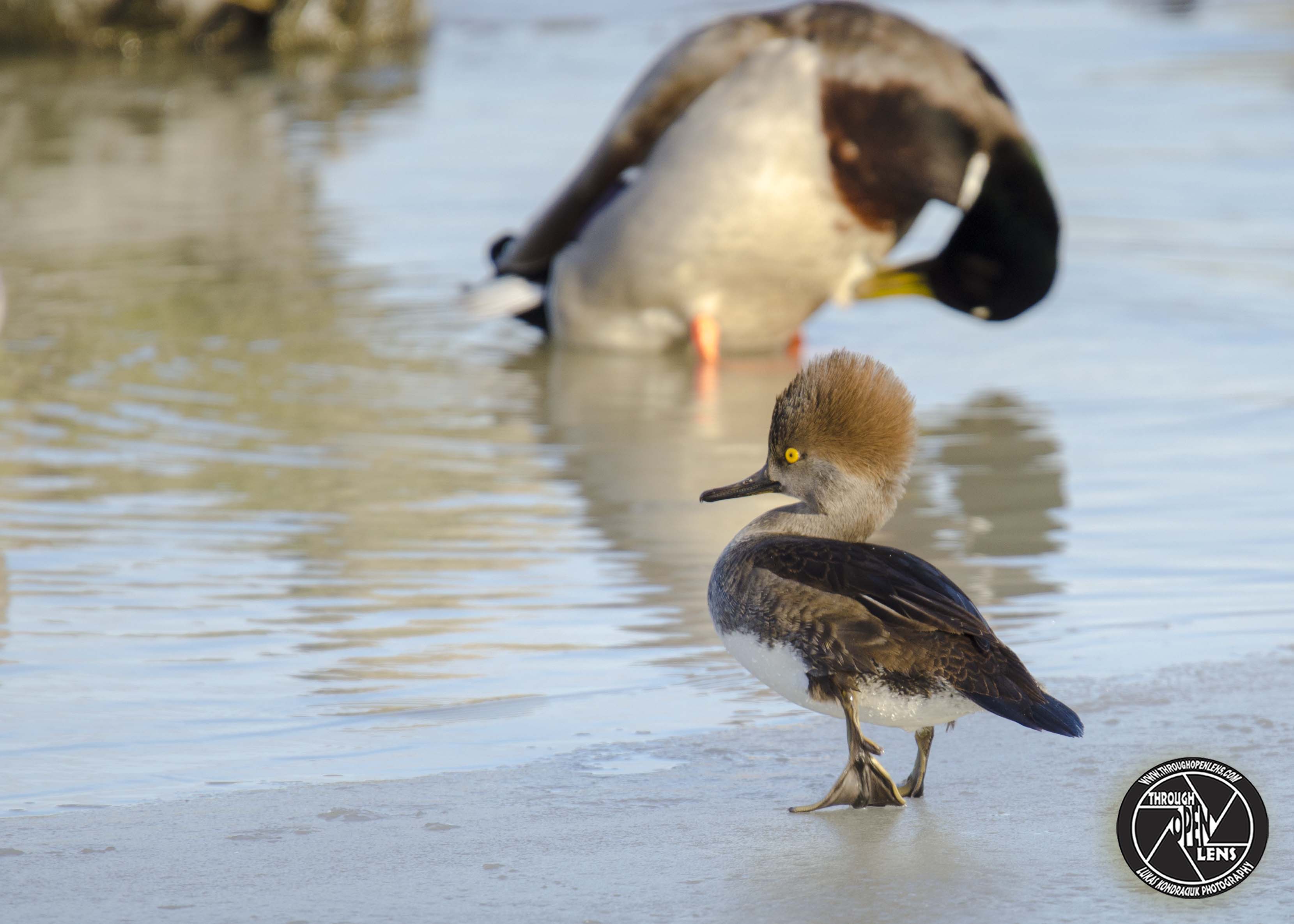
I’m A Duck That Does Not Give A Quack!

F/6.3, 1/500, ISO 250.

Hooded Merganser ( Female )

2 Guys walking down the street.

One walks into a bar, the other ducks.

Interesting Fact:  The female chooses the nest site, and may start scouting for next year’s tree cavity at the end of each breeding season. Nest cavities can be in live or dead trees and are usually close to water. Cavities are typically 10–50 feet off the ground, up to about 90 feet. Hooded Mergansers nest readily in boxes, preferring those with wood shavings or nest material from previous uses. They prefer cavities with 3–5 inch openings. ( https://www.allaboutbirds.org/guide/Hooded_Merganser/overview )

When You Stop Beliving In Santa You Get Underwear

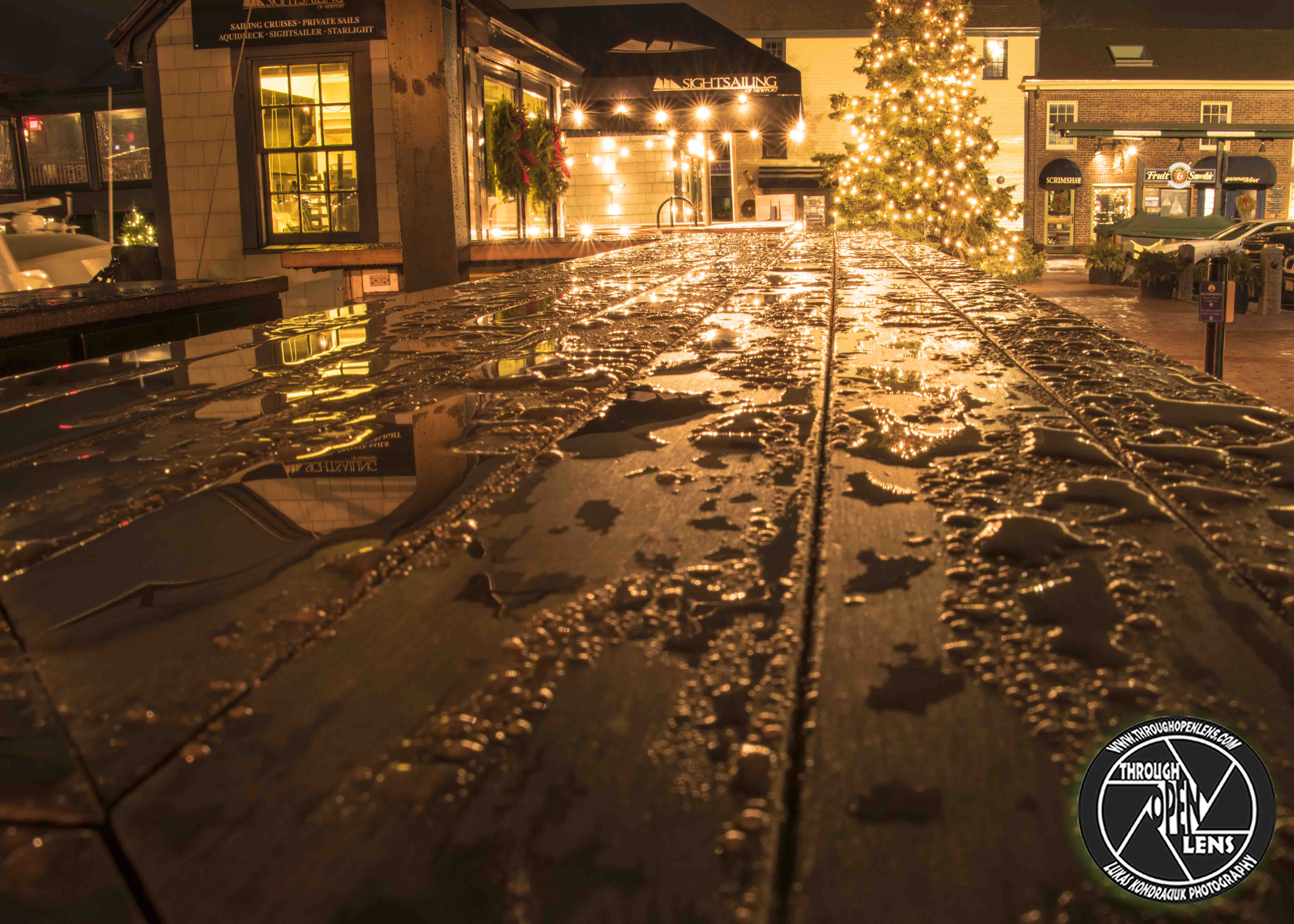
Merry Christmas And Happy Holidays To All

F/22.0, 30.0, ISO 250.

Why is Santa so jolly?

Because he knows where all the naughty girls live.

Interesting Fact:  The first known electrically illuminated Christmas tree was the creation of Edward H. Johnson, an associate of inventor Thomas Edison. While he was vice president of the Edison Electric Light Company, a predecessor of today’s Con Edison electric utility, he had Christmas tree light bulbs especially made for him. He proudly displayed his Christmas tree, which was hand-wired with 80 red, white and blue electric incandescent light bulbs the size of walnuts, on December 22, 1882 at his home on Fifth Avenue in New York City. Local newspapers ignored the story, seeing it as a publicity stunt. However, it was published by a Detroit newspaper reporter, and Johnson has become widely regarded as the Father of Electric Christmas Tree Lights. By 1900, businesses started stringing up Christmas lights behind their windows.[14] Christmas lights were too expensive for the average person; as such, electric Christmas lights did not become the majority replacement for candles until 1930. ( https://en.wikipedia.org/wiki/Christmas_lights#History )

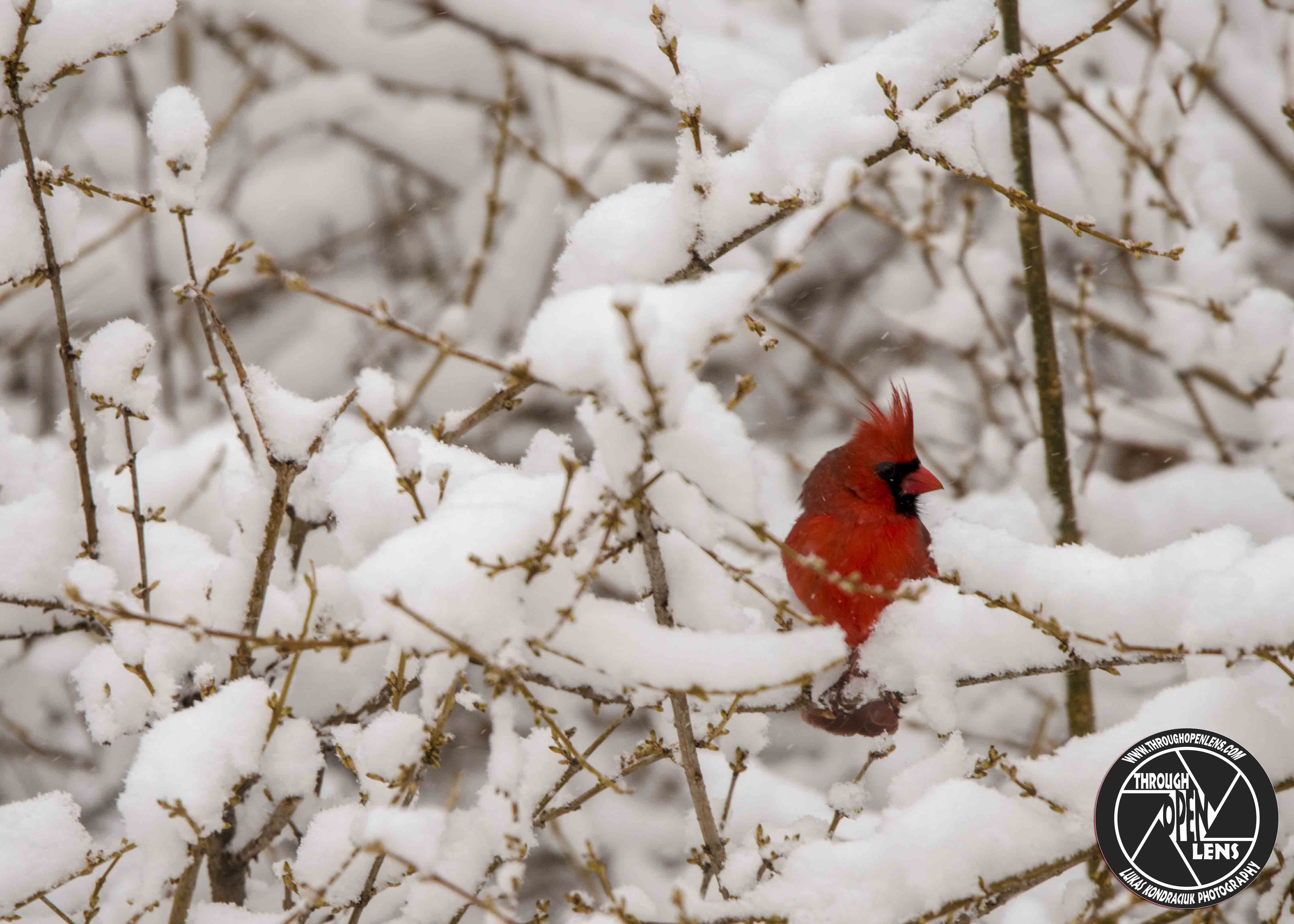
Snow Way!

F/8.0, 1/250, ISO 400.

Northern Cardinal ( Male )

In the class room

Bobby: ” Can I go the toilet? ” 

Teacher: ” Say the alphabet ”

Bobby: ” ABCDEFGHIJKLMNOQRSTUVWXYZ “

Teacher: “Where’s the P “

Bobby: ” Half way down my leg “

Interesting Fact: Northern Cardinals hop through low branches and forage on or near the ground. Cardinals commonly sing and preen from a high branch of a shrub. The distinctive crest can be raised and pointed when agitated or lowered and barely visible while resting. You typically see cardinals moving around in pairs during the breeding season, but in fall and winter they can form fairly large flocks of a dozen to several dozen birds. ( https://www.allaboutbirds.org/guide/Northern_Cardinal/lifehistory#behavior )

Swan Lake Ballet ( On Ice )

mute-swan-on-ice

F/8.0, 1/1000, ISO 640.

Mute Swan

A good looking woman walks into a bar wearing a tube top. She raises her hand to signal the bartender for a beer, revealing that she does not shave her

armpits.

Meanwhile, a sloppy drunk on the other side of the bar signals the bartender, “Buy that ballerina over there a drink on me.”

The bartender replies, “What makes you think she’s a ballerina?”

“Because,” answers the drunken man, “any chick that can lift her leg that high has GOT to be a ballerina.”

Interesting Fact: All of the Mute Swans in North America descended from swans imported from Europe from the mid 1800s through early 1900s to adorn large estates, city parks, and zoos. Escapees established breeding populations and are now established in the Northeast, Midatlantic, Great Lakes, and Pacific Northwest of the U.S. ( https://www.allaboutbirds.org/guide/Mute_Swan/lifehistory )