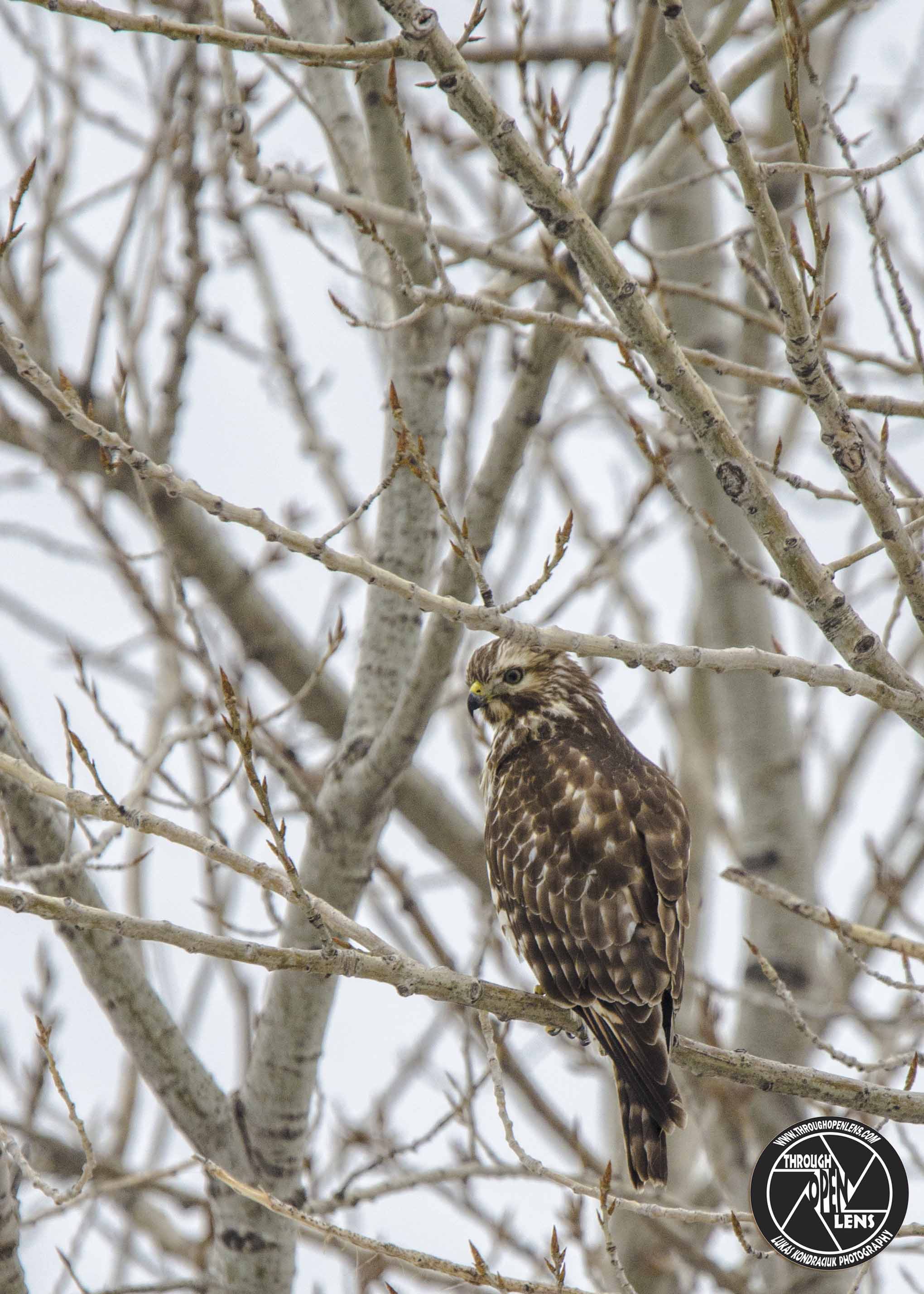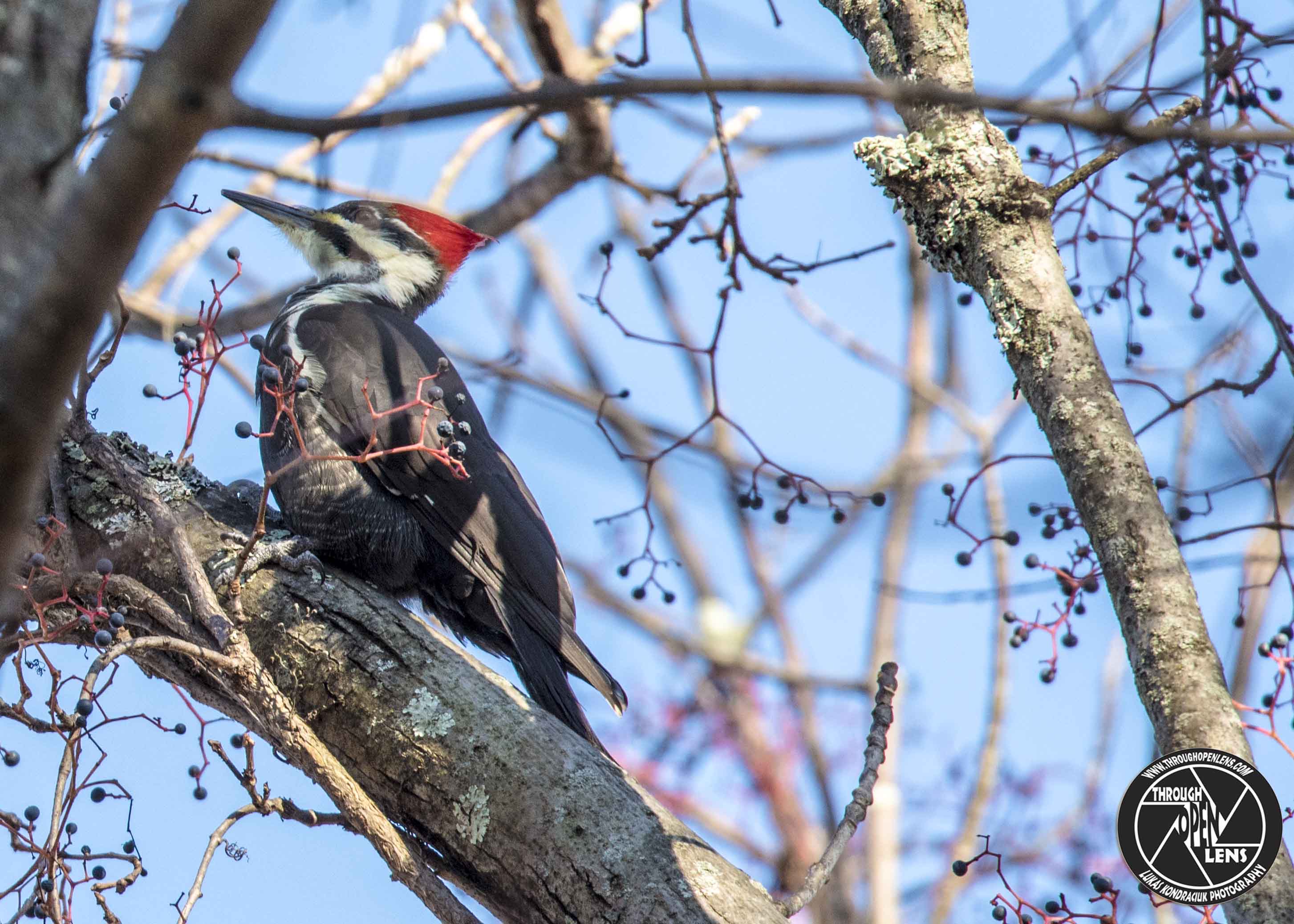
Peck Like There Is No Tomorrow!

F/9.0, 1/320, ISO 400.

Pileated Woodpecker 

Why do mummies make great spies?

They’re good at keeping things under wraps.

Interesting Fact: Pileated Woodpeckers forage in large, dead wood—standing dead trees, stumps, or logs lying on the forest floor. They make impressive rectangular excavations that can be a foot or more long and go deep inside the wood. These holes pursue the tunnels of carpenter ants, the woodpecker’s primary food. The birds also use their long, barbed tongues to extract woodboring beetle larvae (which can be more than an inch long) or termites lying deep in the wood. ( https://www.allaboutbirds.org/guide/Pileated_Woodpecker/lifehistory )
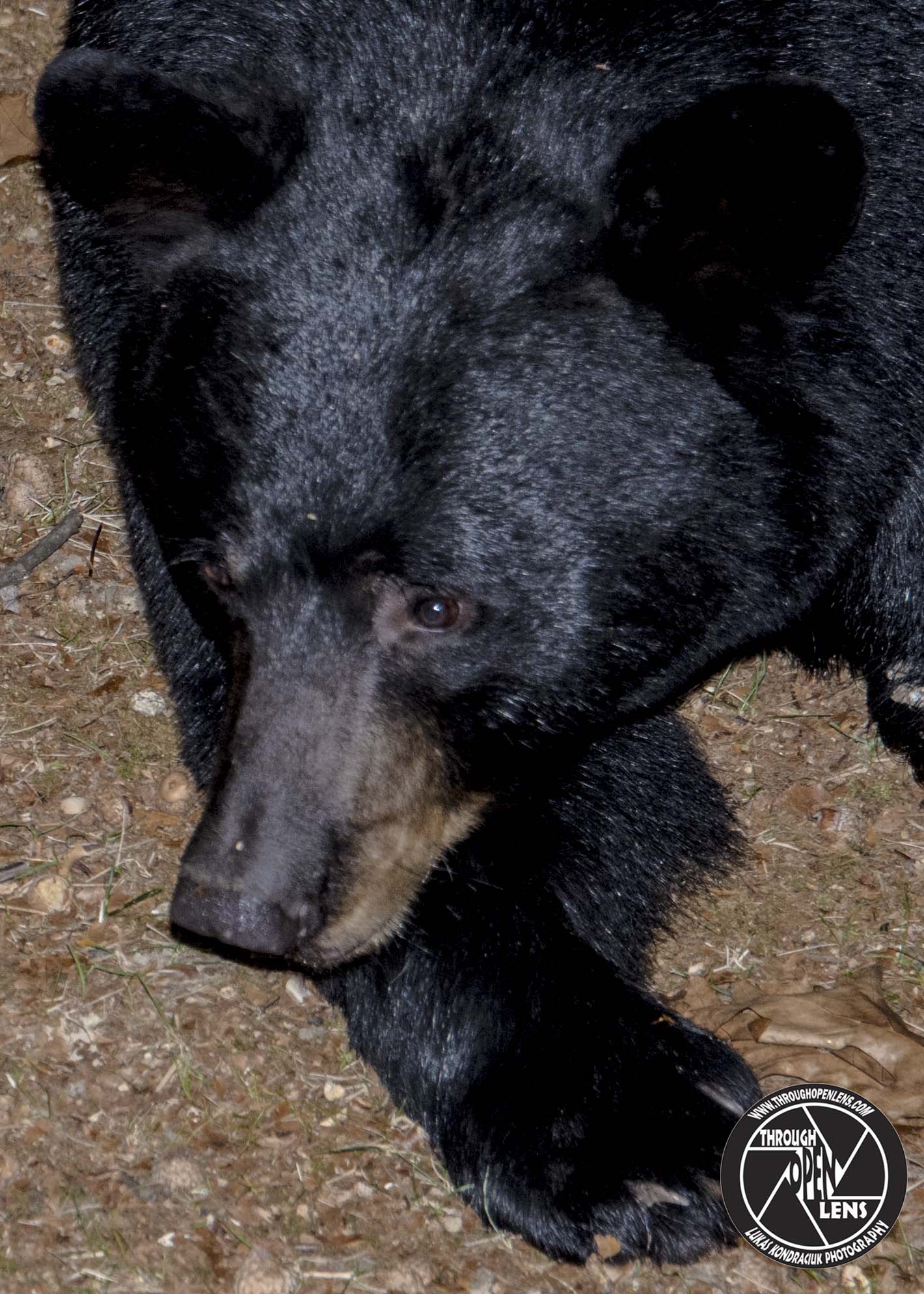
HEY BOO BOO!!!

F/6.3, 1/60. ISO 640.

American Black Bear

How does a tree get on the internet?

He logs in

Interesting Fact: American black bears have better eyesight and hearing than humans. Their keenest sense is their sense of smell, which is about seven times more sensitive than a domestic dog’s.[64] American black bears are excellent and strong swimmers, swimming for pleasure and to feed (largely on fish). ( https://en.wikipedia.org/wiki/American_black_bear )

I Just Love The Way I Feel, Hmmm.

F/11.0, 1/500, ISO 200.

Mute Swan

What do clouds do when they become rich?

They make it rain!

Interesting Fact: Mute Swans form long-lasting pair bonds. Their reputation for monogamy along with their elegant white plumage has helped establish them as a symbol of love in many cultures. ( https://www.allaboutbirds.org/guide/Mute_Swan/lifehistory )

Be Your Self Everyone Else Is Already Taken!

F/6.3, 1/400, ISO 1600.

Hooded Merganser ( Male )

Did you hear that all the toilets at the police station were stolen?

Yeah… the cops got nothing to go on.

Interesting Fact: Hooded Merganser ducklings leave their nest cavity within 24 hours of hatching. First, their mother checks the area around the nest and calls to the nestlings from ground level. From inside the nest, the little fluffballs scramble up to the entrance hole and then flutter to the ground, which may be 50 feet or more below them. In some cases they have to walk half a mile or more with their mother to the nearest body of water. ( https://www.allaboutbirds.org/guide/Hooded_Merganser )

I Am Coming For You!

F/11.0, 1/500, ISO 400.

Ruddy Duck ( Juvenile ) 

Why are elephants such poor dancers?

Because they have two left feet.

Interesting Fact: Ruddy Ducks get harassed by Horned Grebes, Pied-billed Grebes, and American Coots during the breeding season. The grebes sometimes attack Ruddy Ducks from below the water, a behavior known as “submarining.” ( https://www.allaboutbirds.org/guide/Ruddy_Duck )

Admit It. You’re Waiting For Something You Know Won’t Happen.

F/6.3, 1/500, ISO 800.

Merlin

What do you get if you cross LSD with birth control?

A trip without the kids!

Interesting Fact: The name “Merlin” comes from esmerillon, the old French name for the species. Merlins used to be called “pigeon hawks” because in flight they look somewhat pigeon-like. Their species name, columbarius, is also a reference to pigeons.  ( https://www.allaboutbirds.org/guide/Merlin )


Go Ahead… Make My Day!

F/6.3, 1/500, ISO 250.

Hooded Merganser ( Female )

What insect runs away from everything?

A flea!

Interesting Fact: Once a female begins incubating eggs her mate abandons her, and it’s not known if they reunite the following season. Incubating females may use a broken-wing display to protect eggs or nestlings from raccoons, mink, black rat snakes, black bears, pine martens, European Starlings, Northern Flickers, Red-headed Woodpeckers, and Red-bellied Woodpeckers. ( https://www.allaboutbirds.org/guide/Hooded_Merganser/lifehistory )


Dear Life, When I Said ” Can My Day Get Any Worst” It Was A Rhetorical Question Not A Challenge.

F/6.3, 1/250, ISO 800.

White-Tailed Deer ( Fawn )

Which branch of the military do babies join?

The infantry!

Interesting Fact: White tailed deer can run as fast as 36 mph, jump as high as 8 1/2 feet, and leap as far as 30 feet. They are also very good swimmers. ( https://www.brighthub.com/environment/science-environmental/articles/48142.aspx )


When I Was Born I Was So Surprised I Didn’t Talk For A Year And Half

F/5.6, 1/800, ISO 250.

White-throated Sparrow

What do you call a fake noodle?

An Impasta

Interesting Fact:  White-throated Sparrows eat mainly the seeds of grasses and weeds, including ragweed and buckwheat, as well as fruits of sumac, grape, cranberry, mountain ash, rose, blueberry, blackberry, and dogwood. In summer they eat large numbers of insects that they catch on the forest floor or, occasionally on quick flights out from low vegetation. These include dragonflies, wasps, stinkbugs, beetles, flies, and caterpillars, as well as spiders, millipedes, centipedes, and snails. Parents feed their nestlings almost exclusively animal matter. During winter, White-throated Sparrows readily visit bird feeders for millet and black oil sunflower seeds. In spring they eat the tender buds, blossoms, and young seeds of oak, apple, maple, beech, and elm. ( https://www.allaboutbirds.org/guide/White-throated_Sparrow/lifehistory )


Will You Be My Valentine?!

F/6.3, 1/1000, ISO 450.

Mute Swan

What do you call a funny chicken?

A comedi-hen

Interesting Fact: Mute Swans form long-lasting pair bonds. Their reputation for monogamy along with their elegant white plumage has helped establish them as a symbol of love in many cultures. ( https://www.allaboutbirds.org/guide/Mute_Swan/lifehistory )

Bonus Valentine Facts:  Feb. 14 was officially designated St. Valentine’s Day in 1537 by King Henry VII of England. ( http://www.ibtimes.com/valentines-day-facts-history-fun-ideas-free-burritos-singles-awareness-other-things-1813226 )