Splash Down!

F/8.0, 1/2000, ISO 800.

Common Merganser 

Why was the math book so sad?

It had a lot of problems.

Interesting Fact: Common Mergansers spend much of their time afloat, loafing, fishing, and often sleeping on open water. They may form flocks of up to 75 individuals. They often swim in small groups along the shoreline, dipping their heads underwater to search for prey and then diving with a slight leap. Often when one bird dives in a large group, the others follow the leader and disappear. ( Common Merganser Life History, All About Birds, Cornell Lab of Ornithology )
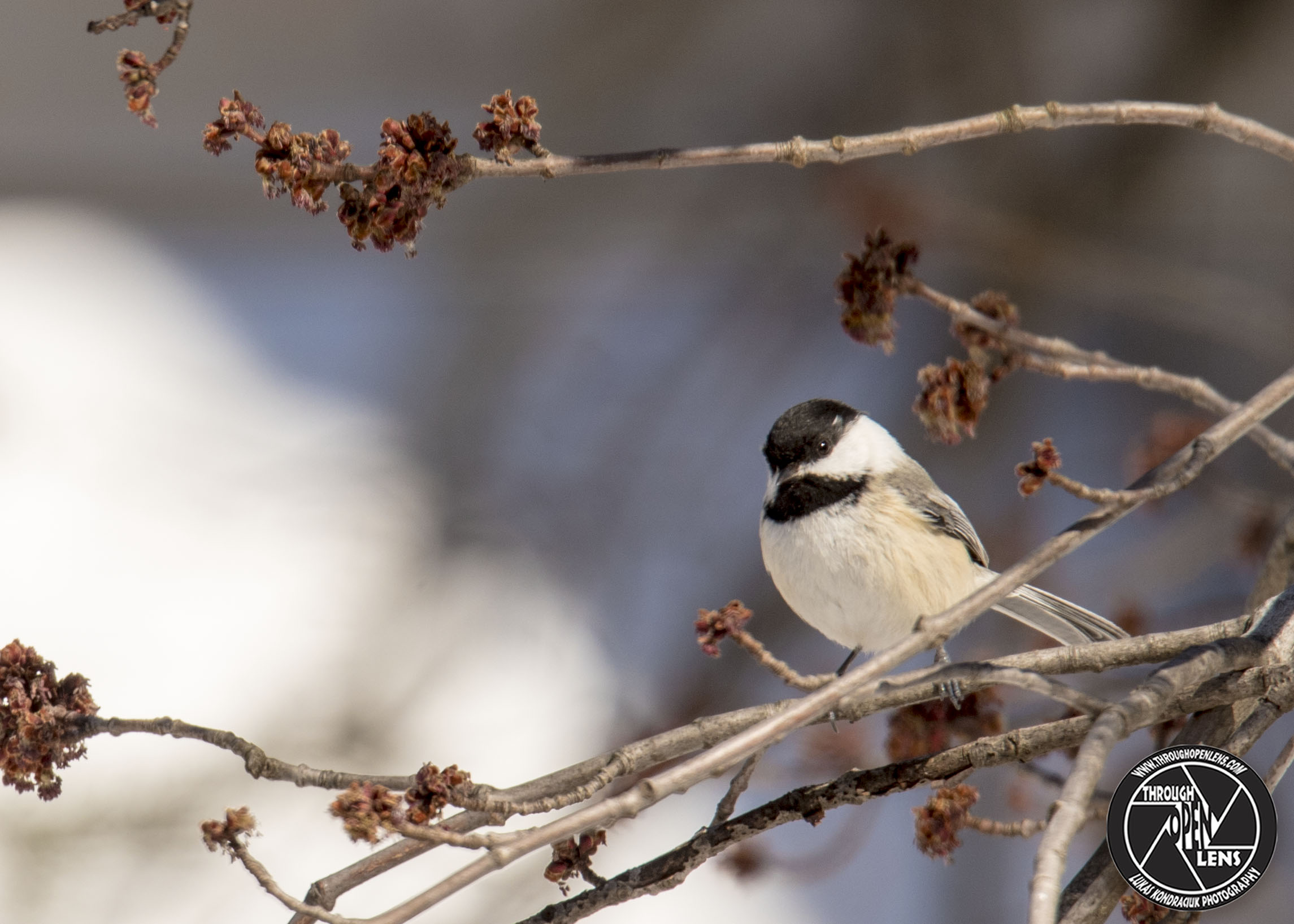


No Matter How Long The Winter, Spring Is Sure To Follow!

F/10.0, 1/400, ISO 160.

Black-capped Chickadee

What did the tree say to spring?

What a re-leaf.

Interesting Fact: Chickadee calls are complex and language-like, communicating information on identity and recognition of other flocks as well as predator alarms and contact calls. The more dee notes in a chickadee-dee-dee call, the higher the threat level. ( https://www.allaboutbirds.org/guide/Black-capped_Chickadee/lifehistory )

Believe You Can And You’re Halfway There.

F/10.0, 1/400, ISO 400.

Dark-eyed Junco

Why did the golfer wear two pairs of pants?

In case he got a hole in one.

Interesting Fact: The female chooses the nest site, typically in a depression or niche on sloping ground, rock face, or amid the tangled roots of an upturned tree. Around people, juncos may nest in or underneath buildings. Occasionally, juncos nest above the ground on horizontal branches (rarely as high as 45 feet), window ledges, and in hanging flower pots or light fixtures. ( https://www.allaboutbirds.org/guide/Dark-eyed_Junco/lifehistory )

Dive Dive Dive!!!

F/9.0, 1/320, ISO 340.

Common Loon ( Nonbreeding adult )

Have you read the book about anti-gravity?

It’s impossible to put down!

Interesting Fact: The Common Loon is flightless for a few weeks after molting all of its wing feathers at the same time in midwinter. ( Common Loon Overview, All About Birds, Cornell Lab of Ornithology )

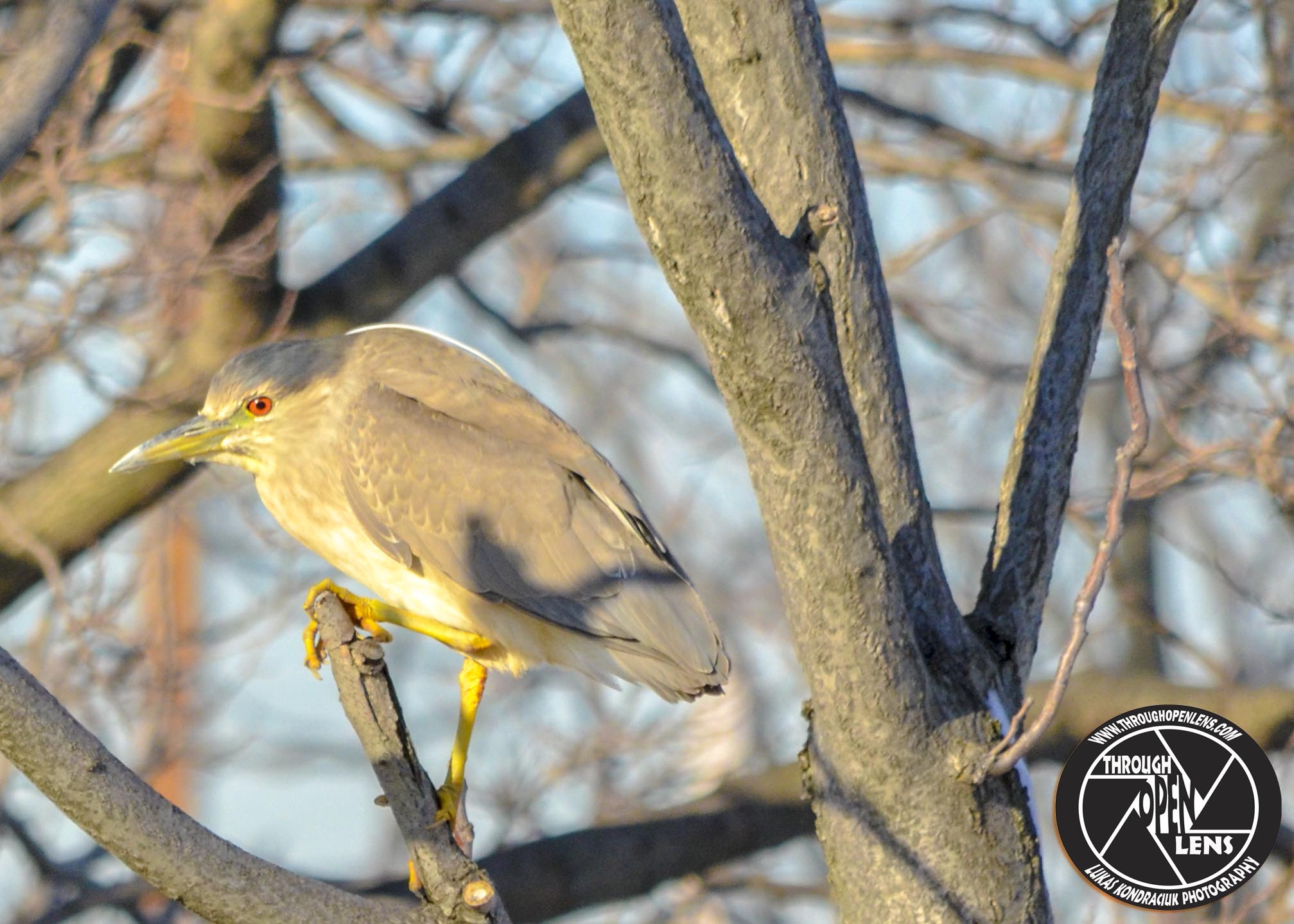
I Solemnly Swear I Am Up To No Good!

F/9.0, 1/125, ISO 320.

Black-crowned Night-Heron

Guest at a restaurant: “I refuse to eat this roast beef. Please call the manager! “

Waiter: “That’s no use. He won’t eat it either.”

Interesting Fact: Black-crowned Night Heron nest in groups that often include other species, including herons, egrets, and ibises. ( https://www.allaboutbirds.org/guide/Black-crowned_Night-Heron )

Hey You! Yeah You!

F/8.0, 1/250, ISO 320.

Carolina Wren

Three guys are stranded in a desert. They stubble upon a magic genie lamp.

The genie grants each of them one wish.

The first guy wishes to be back home. Wish granted.

The second guy wishes the same. Wish granted.

The third guy says, “It feels very lonely here now, I wish my friends were with me…” Wish granted.

Interesting Fact:Carolina Wrens usually go about their business alone or in pairs; after nestlings have fledged, you may see family groups feeding together. Feeding on or near the ground, the wrens run, hop, and flit around leaf litter and tangled vegetation; they dodge in and out of dark spaces created by downed trees, decaying logs, old stumps, and upturned roots. ( https://www.allaboutbirds.org/guide/Carolina_Wren/lifehistory

Go Green Or I’ll Scream!

F/6.3, 1/160, ISO 320.

American Wigeon

Why is it hard to play cards in the jungle?

There are too many cheetahs!

Interesting Fact: The American Wigeon was formerly known as “Baldpate” because the white stripe resembled a bald man’s head.  ( https://www.allaboutbirds.org/guide/American_Wigeon/lifehistory )

He Went Thataway!

F/8.0, 1/250, ISO 320.

White-breasted Nuthatch

A wife complains to her husband: “Just look at that couple down the road, how lovely they are. He keeps holding her hand, kissing her, holding the door for her, why can’t you do the same?”

The husband: “Are you mad? I barely know the woman!”

Interesting Fact: White-breasted Nuthatches live in pairs year round and chase other nuthatches from their territory. Agitated birds fan their tails, flick their wings, or raise the feathers of the back. A bird backing down from a confrontation typically raises its bill and tail, and droops its wings. In winter White-breasted Nuthatches join groups of chickadees, titmice, and woodpeckers to forage.  ( https://www.allaboutbirds.org/guide/White-breasted_Nuthatch/lifehistory#behavior

Don’t Stick Your Nose Where It Doesn’t Belong

F/9.0, 1/320, ISO 320.

Northern Pintail Duck

Father and son are talking over dinner in a nice restaurant.  A boy asks his father, “Dad, are bugs good to eat?”

“That’s disgusting. Don’t talk about things like that over dinner,” the dad replies.

After dinner the father asks, “Now, son, what did you want to ask me?”

“Oh, nothing,” the boy says. “There was a bug in your soup, but now it’s gone.”

Interesting Fact: Northern Pintails migrate at night at speeds around 48 miles per hour. The longest nonstop flight recorded for a Northern Pintail was 1,800 miles. ( https://www.allaboutbirds.org/guide/Northern_Pintail/

Don’t Confuse Me With Twitter!

F/9.0, 1/320, ISO 400.

Blue Jay

What do you get when you cross and smurf and a cow?

Blue cheese!

Interesting Fact: The black bridle across the face, nape, and throat varies extensively and may help Blue Jays recognize one another. ( https://www.allaboutbirds.org/guide/Blue_Jay/lifehistory