I Used My Last “Chill-Pill” Yesturday. This Is Your ONLY Warning!

F/10.0, 1/400, ISO 160.

Palmchat

What happened when you go inside with a snowsuit on?

It melts

Interesting Fact: The breeding season is mainly from March to June. The birds build large, messy, communal nests of twigs in the crowns of palms (mainly royal palms Roystonea sp.). Occasionally, in the absence of palms, other trees or even telephone poles, may be used. The whole nesting structure may be up to 2 m across, containing up to 30 adjoining nests with their own separate chambers and entrances. The females lay clutches of 2-4 thickly spotted, grey-purple eggs.  ( https://en.wikipedia.org/wiki/Palmchat )

My Life Is So Much More Interesting Inside My Head

F/10.0, 1/400, ISO 400.

Ruby-crowned Kinglet

Four high school boys afflicted with spring fever skipped morning classes. After lunch they reported to the teacher that they had a flat tire.

Much to their relief she smiled and said, “Well, you missed a test today so take seats apart from one another and take out a piece of paper.”

Still smiling, she waited for them to sit down. Then she said: “First Question: Which tire was flat?”

Interesting Fact: Ruby-crowned Kinglets breed across far northern North America as well as the western mountains. Most migrate to the southern and southwestern United States and Mexico for the winter—but some mountain populations in the West simply move to lower elevations during the cold months. ( https://www.allaboutbirds.org/guide/Ruby-crowned_Kinglet/maps-range )

You Never Realize How Boring Your Life Is Until Someone Asks What You Like To Do For Fun.

F/9.0, 1/320, ISO 160.

Palmchat

What happened to the wooden car with wooden wheels and wooden engine?

It wooden go!

Interesting Fact: The species is endemic to the island of Hispaniola (Haiti and the Dominican Republic), including the adjacent Saona and Gonâve Islands, where it is common and widespread. It inhabits areas from sea-level to 1500 m asl where palm savannas can be found, or other open areas with scattered trees. Where its food trees are present, it has adapted well to city parks and gardens. ( https://en.wikipedia.org/wiki/Palmchat )

They Were Born To Fly And Touch The Sky

F/13.0, 1/640, ISO 400.

Semipalmated Sandpipers

What is a bunny’s favorite music?

Hip-hop.

Interesting Fact: The Semipalmated Sandpiper gets its common name from the short webs between its toes (“palmated” means webbed). The Western Sandpiper is the only other small sandpiper with similarly webbed toes. ( https://www.allaboutbirds.org/guide/Semipalmated_Sandpiper/lifehistory )

Is Yellow Really The Color For Me?!

savannah-sparrow

F/10.0, 1/400, ISO 500.

Savannah Sparrow   

What can you catch but not in your hands?

A cold!

Interesting Fact: In many parts of the species’ range, especially in coastal areas and islands, Savannah Sparrows tend very strongly to return each year to the area where they hatched. This tendency, called natal philopatry, is the driving force for differentiation of numerous Savannah Sparrow subspecies. ( https://www.allaboutbirds.org/guide/Savannah_Sparrow/lifehistory )

Haven’t You Heard That The Bird Is The Word ?!

F/5.6, 1/125, ISO 125.

Anna’s Hummingbird

What did the summer say to the spring?

Help! I’m going to fall.

Interesting Fact: Hummingbirds are very smart and they can remember every flower they have been to, and how long it will take a flower to refill. ( http://www.worldofhummingbirds.com/facts.php )

Daydreaming Again!

F/8.0, 1/250, ISO 160.

Hispaniolan Woodpecker

Bacon and eggs walk into a bar and order a beer,

the bartender says sorry, we don’t serve breakfast.

Interesting Fact: This woodpecker is quite vocal, emitting a range of sounds including yapping, squeaking, rolling and nasal calls. Drumming is done only occasionally. ( https://en.wikipedia.org/wiki/Hispaniolan_woodpecker )

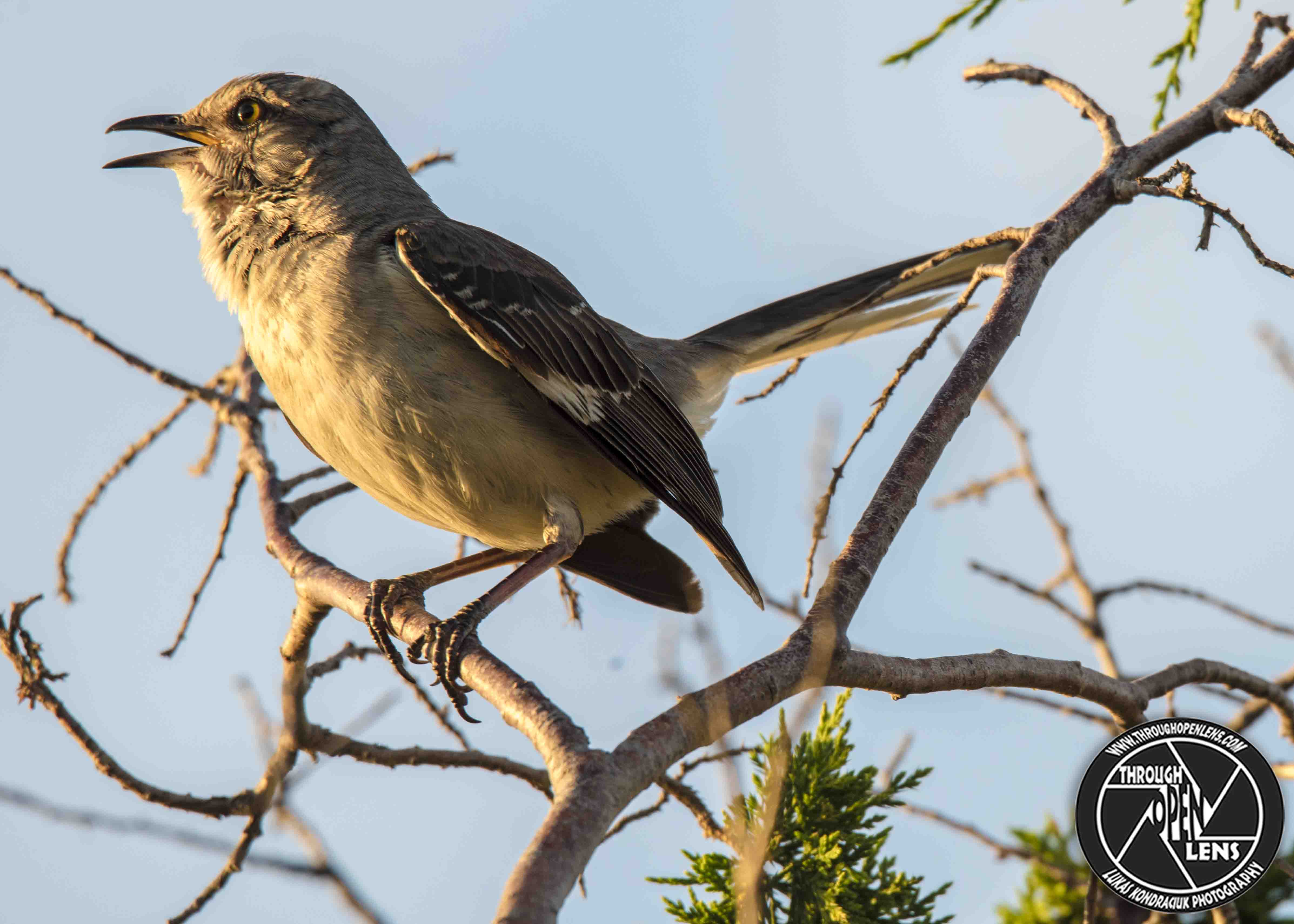
Are You Mocking Me?

F/9.0, 1/320, ISO 250.

Northern Mockingbird

What do you call a snowman in July?

A puddle.

Interesting Fact: It’s not just other mockingbirds that appreciate a good song. In the nineteenth century, people kept so many mockingbirds as cage birds that the birds nearly vanished from parts of the East Coast. People took nestlings out of nests or trapped adults and sold them in cities such as Philadelphia, St. Louis, and New York, where, in 1828, extraordinary singers could fetch as much as $50. ( https://www.allaboutbirds.org/guide/Northern_Mockingbird/lifehistory )

That Hawkward Moment!

F/7.1, 1/200, ISO 400.

A pirate walks into a bar with a steering wheel on his pants, a peg leg and a parrot on his shoulder. The bartender says, “Hey, you’ve got a steering wheel on your pants.”

The pirate says, “Arrrr, I know. It’s driving me nuts.”

Interesting Fact: ed-tailed Hawks typically put their nests in the crowns of tall trees where they have a commanding view of the landscape. They may also nest on a cliff ledge or on artificial structures such as window ledges and billboard platforms. ( https://www.allaboutbirds.org/guide/Red-tailed_Hawk/lifehistory )

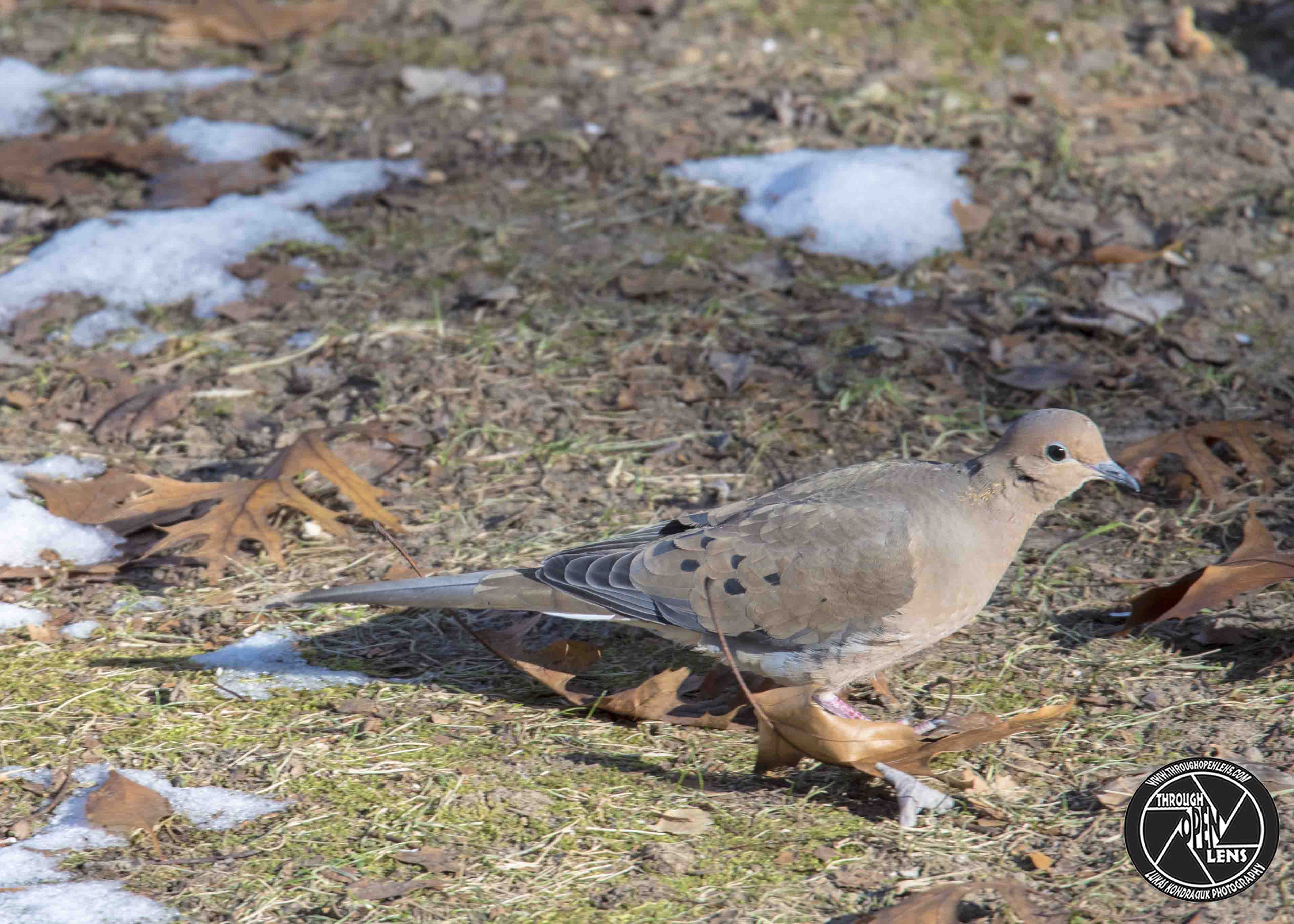
Out For A Run!

F/8.0, 1/250, ISO 250.

Mourning Dove

Why did the picture go to jail?

Because it was framed.

Interesting Fact:  Perhaps one reason why Mourning Doves survive in the desert: they can drink brackish spring water (up to almost half the salinity of sea water) without becoming dehydrated the way humans would. ( https://www.allaboutbirds.org/guide/Mourning_Dove )