Don’t Stick Your Beak Where It Doesn’t Belong!

F/6.3, 1/6, ISO 100.

Great Blue Heron

Why couldn’t the pirate play cards?

Because he was sitting on the deck!

Interesting Fact: Great Blue Herons generally move away from the northern edge of their breeding range in winter, with some flying as far south as the Caribbean. Populations in the Pacific Northwest and south Florida are present year-round.  ( https://www.allaboutbirds.org/guide/Great_Blue_Heron/maps-range )


Red Mean Stop And Admire!

F/6.3, 1/125, ISO 1000.

Northern Cardinal ( Male )

Did you hear the joke about the roof?

Never mind, it’s over your head!

Interesting Fact: Males sometimes bring nest material to the female, who does most of the building. She crushes twigs with her beak until they’re pliable, then turns in the nest to bend the twigs around her body and push them into a cup shape with her feet. The cup has four layers: coarse twigs (and sometimes bits of trash) covered in a leafy mat, then lined with grapevine bark and finally grasses, stems, rootlets, and pine needles. ( https://www.allaboutbirds.org/guide/Northern_Cardinal/lifehistory )

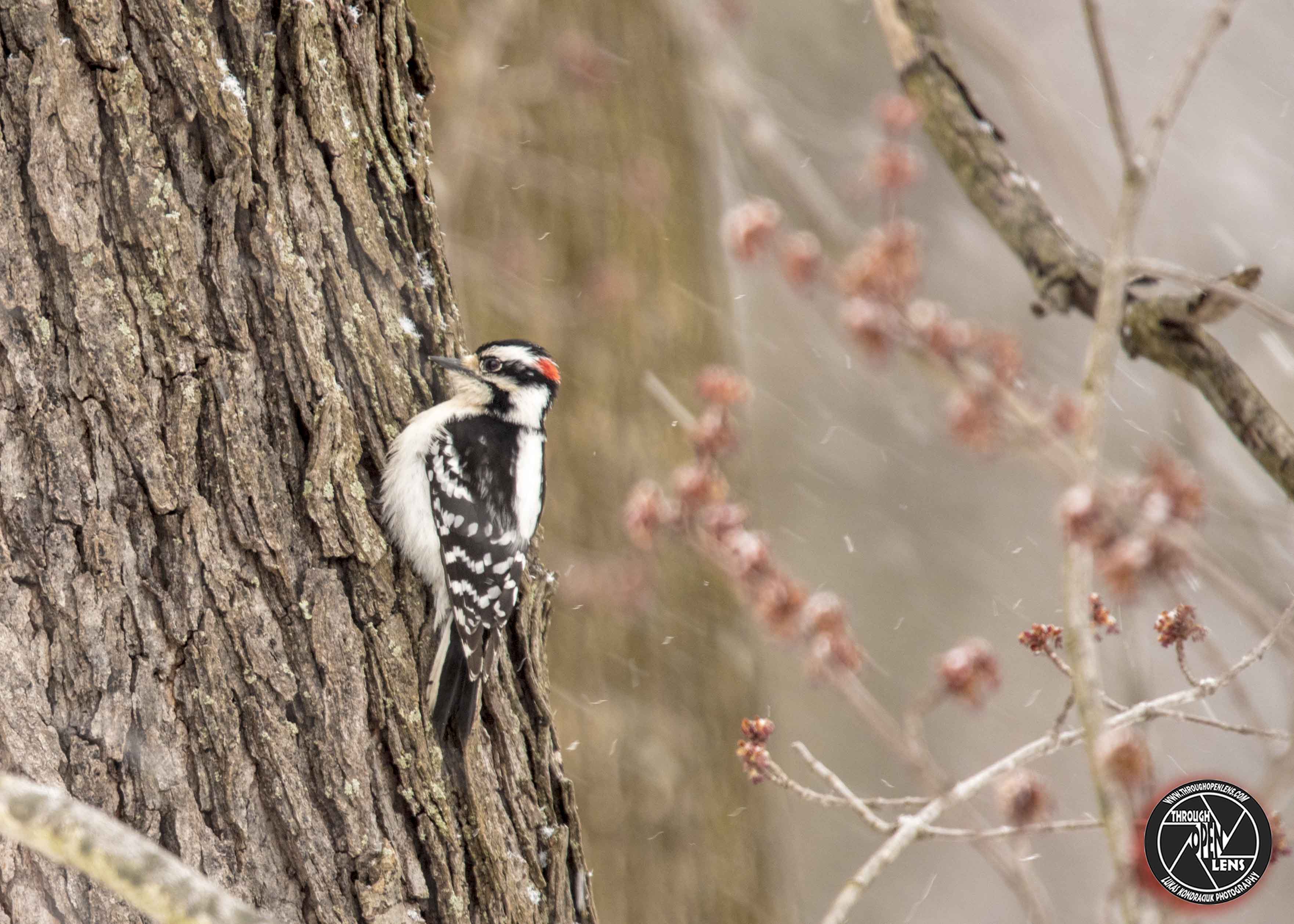
Stop Knocking And Come In Its Snowing Out There

F/6.3, 1/60, 500.

Downy Woodpecker

What do snowmen eat for breakfast?

Frosted Flakes.

Interesting Fact: An active woodpecker that moves quickly over tree trunks, branches, and stems of grasses and wildflowers, characteristically leaning against its stiffened tail feathers for support. Downy Woodpeckers move horizontally and downwards on trees much more readily than most other woodpeckers. You may also see them perched atop tall weeds such as goldenrod in late summer, hammering away at a plant gall to get at the larva inside. Occasionally hops on the ground for food.  ( https://www.allaboutbirds.org/guide/Downy_Woodpecker/lifehistory )


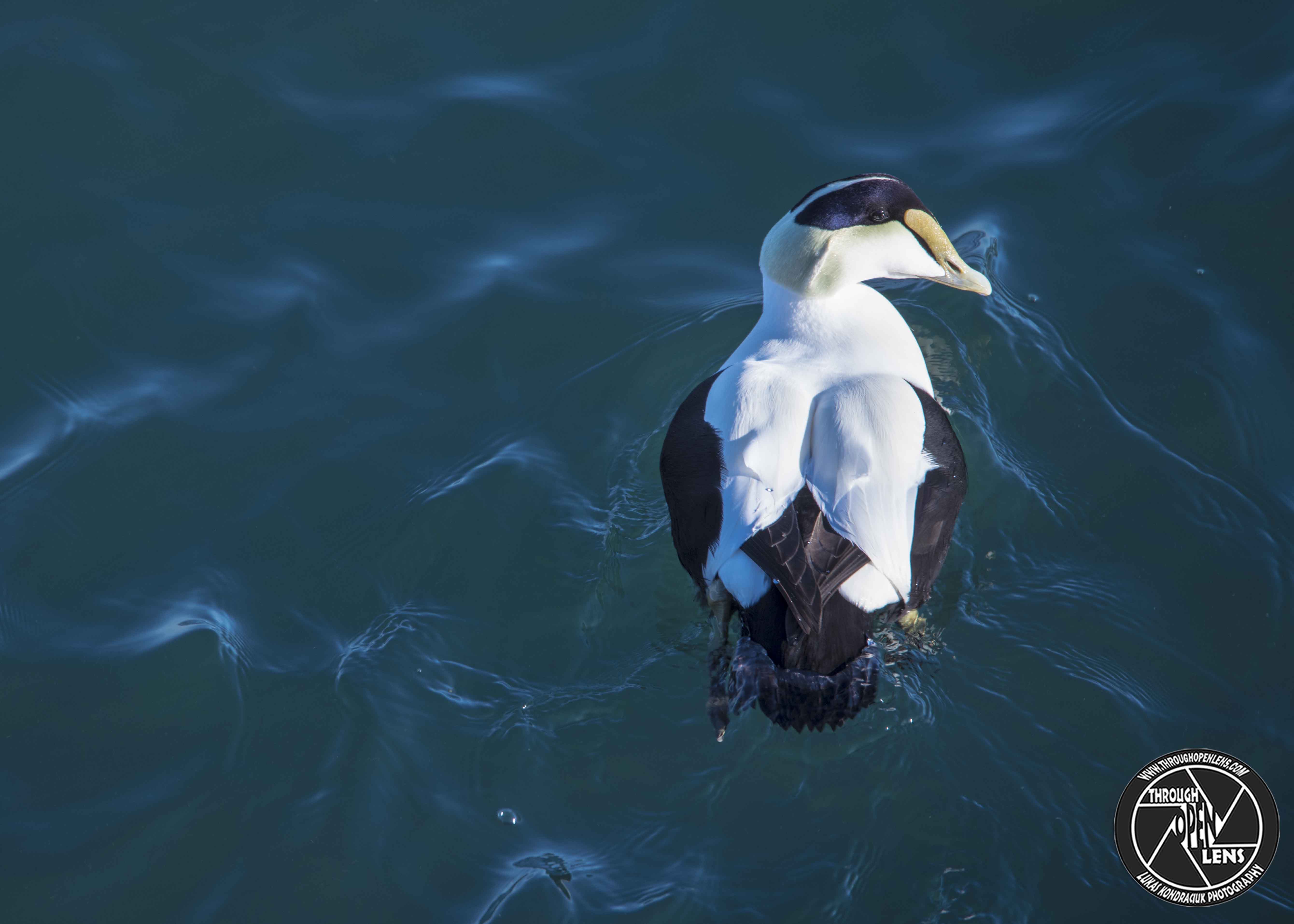
I Am Not Going To Making Duck Face For You!

F/9.0, 1/320, ISO 250.

Common Eider ( Males )

What did Detective Duck say to his partner?

“Let’s quack this case!”

Interesting Fact: A famous colony lives on the Farne Islands in Northumberland, Britain. These birds were the subject of one of the first ever bird protection laws, established by Saint Cuthbert in the year 676. About 1,000 pairs still nest there every year. ( https://identify.whatbird.com/obj/1095/overview/Common_Eider.aspx )

Something’s Stuck In My Butt Quack…

F/8.0, 1/250, ISO 160.

Common Eider ( Females ) 

What do you call a duck that steals?

A robber ducky.

Interesting Fact: Mother Common Eiders lead their young to water, and often are accompanied by nonbreeding hens that participate in chick protection. Broods often come together to form “crèches” of a few to over 150 ducklings. Attacks by predators may cause several broods to cluster together into a crèche. Once formed, a crèche tends to stay together throughout the brood rearing period, although some of the different females attending it may leave.  ( https://www.allaboutbirds.org/guide/Common_Eider/ )

You Quack Me Up!

F/9.0, 1/320, ISO 250.

Northern Shoveler

At what time does a duck wake up?

At the quack of dawn.

Interesting Fact: When flushed off the nest, a female Northern Shoveler often defecates on its eggs, apparently to deter predators. ( https://www.allaboutbirds.org/guide/Northern_Shoveler/overview )

I Meant To Be Good But There Were Too Many Other Options!

ruby-crowned-kinglet

F/8.0, 1/250, ISO 640.

Ruby-crowned Kinglet

teacher asked : Why are you late for school?

Bobby: Because of the Sign.

Teacher : What Sign?

Bobby : The sign that says “School ahead go slow”

Interesting Fact: The Ruby-crowned Kinglet is a tiny bird that lays a very large clutch of eggs—there can be up to 12 in a single nest. Although the eggs themselves weigh only about a fiftieth of an ounce, an entire clutch can weigh as much as the female herself. ( https://www.allaboutbirds.org/guide/Ruby-crowned_Kinglet/lifehistory )

I Would Cry But Mascara Is Designer

green-winged-teal

F/6.3, 1/500, ISO 360.

Green-Winged Teal

Men are like mascara, any sign of emotion and they’re running.

Interesting Fact: Green-winged Teals have closely spaced, comblike projections called lamellae around the inner edge of the bill. They use them to filter tiny invertebrates from the water, allowing the birds to capture smaller food items than other dabbling ducks. ( https://www.allaboutbirds.org/guide/Green-winged_Teal/lifehistory )

Of Course I Talk To Myself, Somtimes I Need Expert Advice.

F/8.0, 1/250, ISO200.

Common Eider

What did one elevator say to the other elevator?

I think I’m coming down with something!

Interesting Fact: The Pacific form of the Common Eider is distinct genetically and morphologically from the other forms, and may be a different species. The male has a thin black V on its chin and a bright yellow or orange bill. ( https://www.allaboutbirds.org/guide/Common_Eider/ )

Are You Tailing Me Because That Would Be Super!

northern-pintail-duck-1

F/6.3, 1/500, ISO 250.

Northern Pintail Duck

What do you call someone without a nose or a body?

Nobodynose.

Interesting Fact: The oldest recorded Northern Pintail was a male and at least 22 years, 3 months old when he was found in Saskatchewan, Canada. ( https://www.allaboutbirds.org/guide/Northern_Pintail/lifehistory )