Gone Fishing!

F/11.0, 1/500, ISO 125.

Osprey

What did the fish say when he posted bail?

“I’m off the hook!”

Interesting Fact:  The Osprey is the only hawk on the continent that eats almost exclusively live fish. In North America, more than 80 species of live fresh- and saltwater fish account for 99 percent of the Osprey’s diet. Captured fish usually measure about 6–13 inches in length and weigh one-third to two-thirds of a pound. The largest catch on record weighed about 2.5 pounds.  (  https://www.allaboutbirds.org/guide/Osprey/lifehistory )

Listen To Me Meow!

Gray Catbird

F/5.6, 1/125, ISO1400.

Son: Dad I am cold!

Dad: Go stand in the corner it’s 90 degrees.

Interesting Fact:  The male Gray Catbird uses his loud song to proclaim his territory. He uses a softer version of the song when near the nest or when a bird intrudes on his territory. The female may sing the quiet song back to the male. ( https://www.allaboutbirds.org/guide/Gray_Catbird )

Sunshine Is My Favorite Accessory!

F/8.0, 1/250, ISO 100.

California Sea Lion 

What did E.T.’s mother say to him when he got home?

Where on Earth have you been?

Interesting Fact: The sea lion’s ancient ancestors, like those of whales and dolphins, lived on land. The modern animal is well adapted to an aquatic environment, with its streamlined body and powerful flippers. (The rear flippers rotate forward to allow a California sea lion to move surprisingly well on land.) California sea lions also boast thick layers of blubber to insulate their bodies from the chill of marine waters. ( https://www.nationalgeographic.com/animals/mammals/c/california-sea-lion/ )


Hey Go Nuts Today!

F/6.3, 1/640, ISO 200.

Eastern Gray Squirrel

Why do squirrels swim on their backs?

To keep their nuts dry.


Interesting Fact: Squirrels are extremely intelligent creatures. They are known to put on elaborate bogus food burying displays to deceive onlookers. The fake burials are to trick potential thieves, such as other squirrels or birds, into thinking that they have stored their food stock there. Any observers planning on taking the stash will then focus on the bogus burial site, allowing the squirrel to bury the real stash elsewhere safely ( http://www.onekind.org/be_inspired/animals_a_z/squirrel/ )


Up In The Air

F/13.0, 1/640, ISO 320.

Blue-gray Gnatcatcher

Why is the barn so noisy?

Because the cows have horns.

Interesting Fact: Occasionally, significant numbers of Blue-gray Gnatcatchers “overshoot” on their spring migrations and end up much further north than usual. They may be carried past their target by strong southwest winds in warm regions, and by strong northerly winds on the west side of high pressure systems. Most probably make their way back south before nesting.  ( https://www.allaboutbirds.org/guide/Blue-gray_Gnatcatcher/lifehistory )

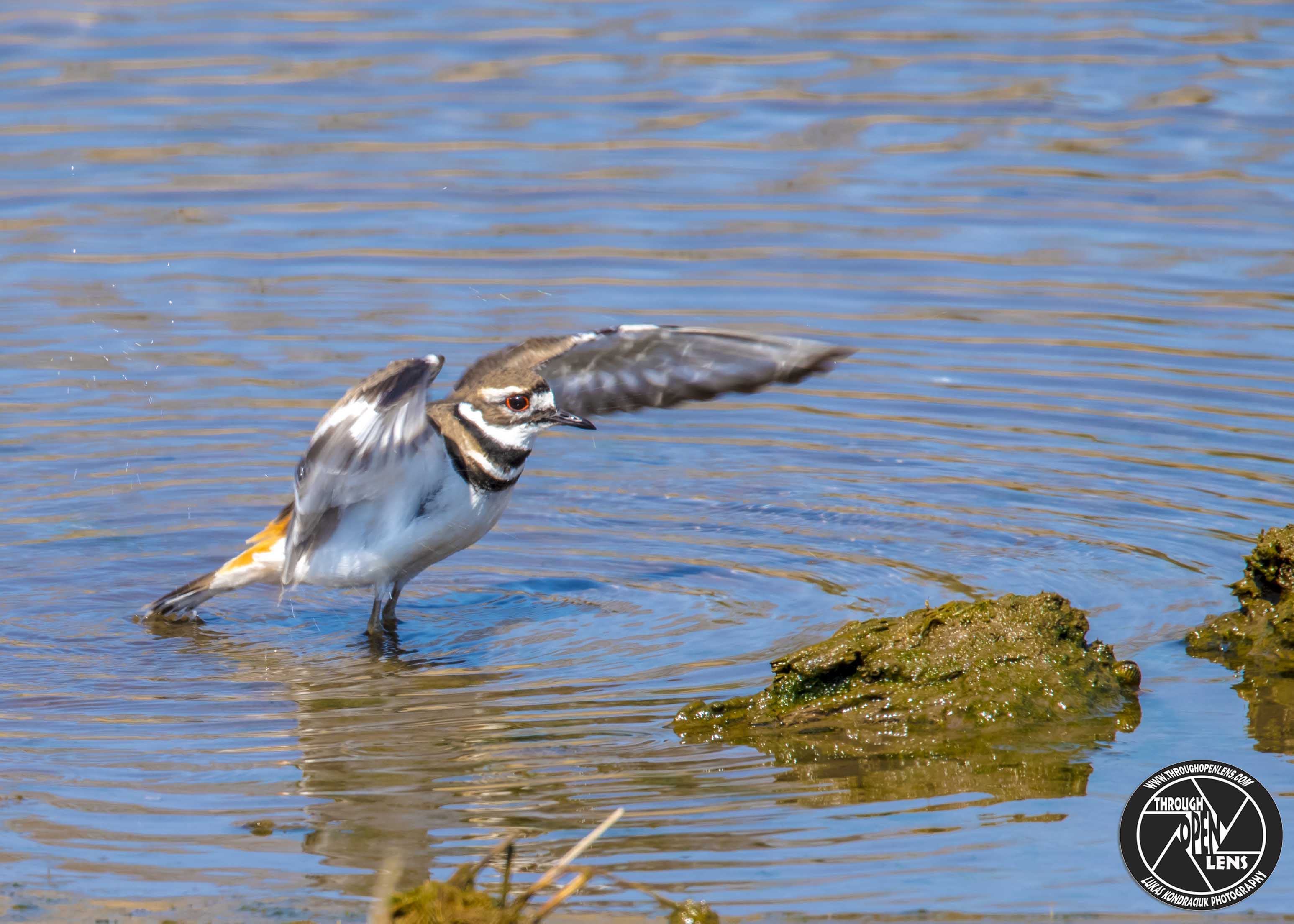
Do We Have A Problem, Come At Me Rock!

F/9.0, 1/320, ISO 200.

Killdeer

What kind of rock can fly?

A rock-et!

Interesting Fact: Killdeer get their name from the shrill, wailing kill-deer call they give so often. Eighteenth-century naturalists also noticed how noisy Killdeer are, giving them names such as the Chattering Plover and the Noisy Plover. ( https://www.allaboutbirds.org/guide/Killdeer/lifehistory )


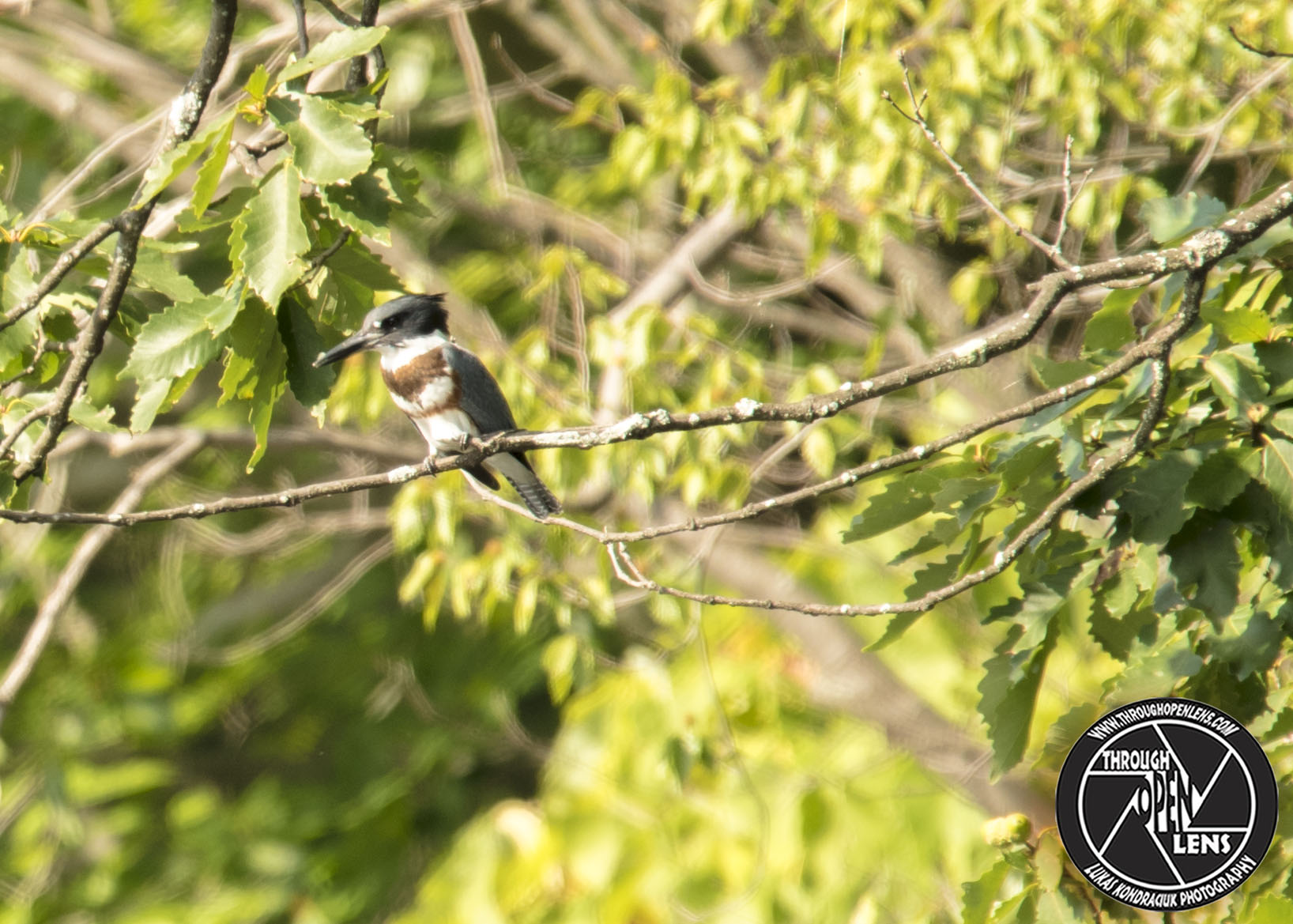
They Don’t Call Me King For Nothing

F/7.1, 1/200, ISO 200.

Belted Kingfisher

What is a baby’s motto?

If at first you don’t succeed cry cry again!

Interesting Fact: The breeding distribution of the Belted Kingfisher is limited in some areas by the availability of suitable nesting sites. Human activity, such as road building and digging gravel pits, has created banks where kingfishers can nest and allowed the expansion of the breeding range. ( https://www.allaboutbirds.org/guide/Belted_Kingfisher/lifehistory )

The Grass Is Greener Where You Water It!

F/6.3, 1/100, ISO 400.

White-throated Sparrow

What did the tie say to the hat?

You go on ahead and I’ll hang around!

Interesting Fact: White-throated Sparrows hop when they’re on the ground rather than walking or running. They forage in the leaf litter, often using both feet at once to scratch backwards, then pounce forward at anything they’ve uncovered. They also toss leaves aside with flicks of the head.  ( https://www.allaboutbirds.org/guide/White-throated_Sparrow/lifehistory )

Goose On The Loose!

F/7.1, 1/200, ISO 400.

Domestic Goose in Wild

What did the tooth brush want to become when he grew older?

A broom.

Interesting Fact: The domestication, as Charles Darwin remarks (The Variation of Animals and Plants under Domestication i. 287), is of very ancient date, with archaeological evidence for domesticated geese in Egypt more than 4,000 years ago.[2] They are much larger, and they have been selected for that larger size, with domesticated breeds weighing up to 10 kilograms (22 lb),[2] compared to the maximum of 3.5 kilograms (7.7 lb) for the wild swan goose and 4.1 kilograms (9.0 lb) for the wild greylag goose.[3] This affects their body structure; whereas wild geese have a horizontal posture and slim rear end, domesticated geese lay down large fat deposits toward the tail end, giving a fat rear and forcing the bird into a more upright posture. Although their heavy weight affects their ability to fly, most breeds of domestic geese are capable of flight. ( https://en.m.wikipedia.org/wiki/Domestic_goose )

It Is Hard To Fly When Something Is Weighing You Down


F/9.0, 1/320, ISO 200.

Great Egret 

What did the banana say to the doctor?

I’m not peeling well.

Interesting Fact: The Great Egret walks with its neck extended and its wings held close to its body. In flight, it is graceful and buoyant, with its neck tucked back against its shoulders and its legs trailing behind. ( https://www.allaboutbirds.org/guide/Great_Egret/lifehistory )