We Are Online Now.

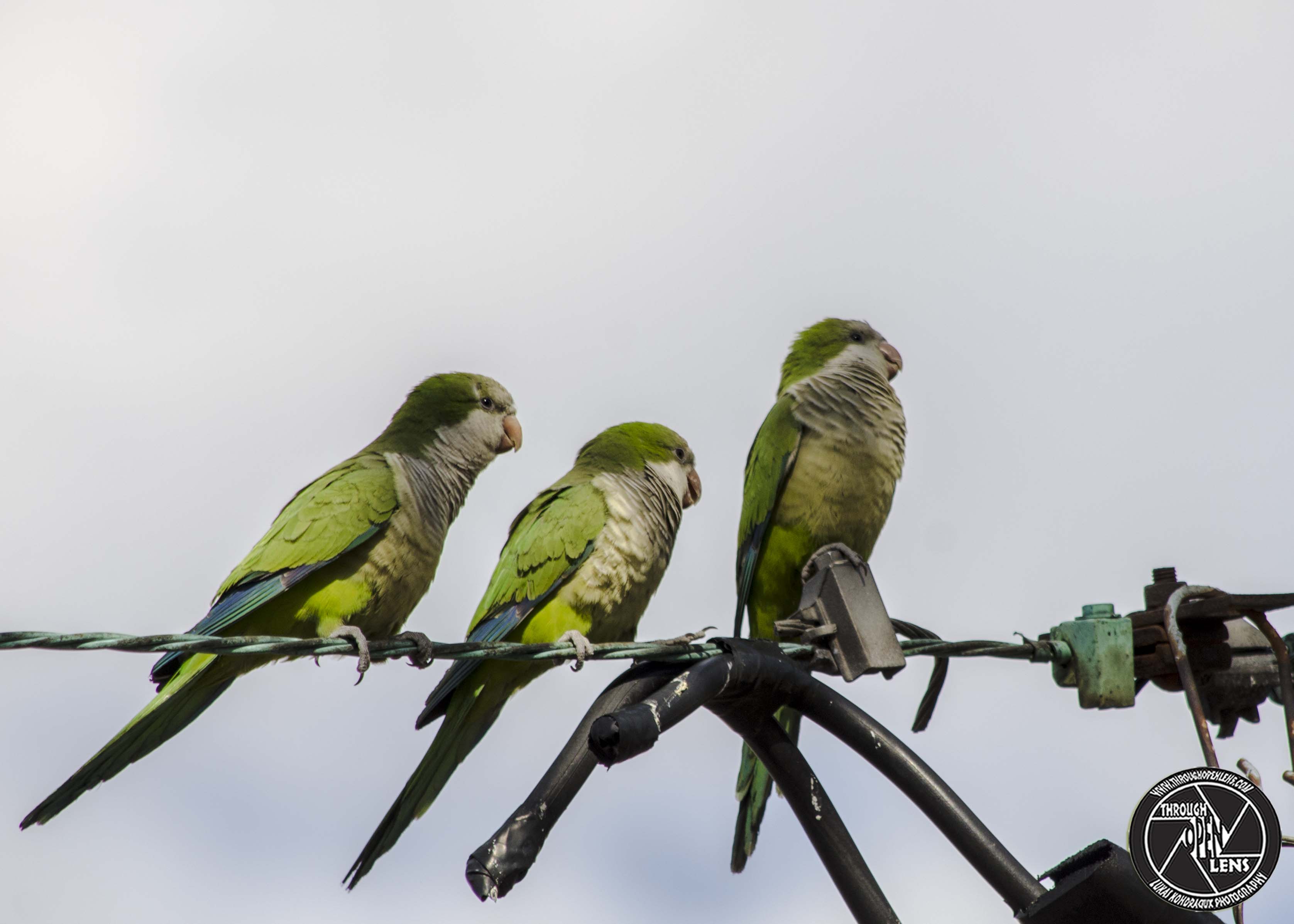
F/7.1, 1/800, ISO 200.

Monk Parakeets

Where does a bee keep his stinger?

In his honey!

Interesting Fact: Monk Parakeets spend a lot of time preening each other. These long-lived birds form socially monogamous pairs, and courtship involves a pair preening each other and grasping each other by the beak while shaking their heads.  ( https://www.allaboutbirds.org/guide/Monk_Parakeet/lifehistory )

Ehh, What’s Up Duck?

F/5.6, 1/500, ISO 200.

Mallard 

Why did the duck cross the road?

Because there was a quack in the sidewalk. 

Interesting Fact:  Ducks have webbed feet, which they use for paddling beneath the water. Their feet have no nerves or blood vessels, which mean that they won’t feel chill from swimming in icy water. ( https://americanexpedition.us/mallard-duck-information-facts-photos-and-artwork )

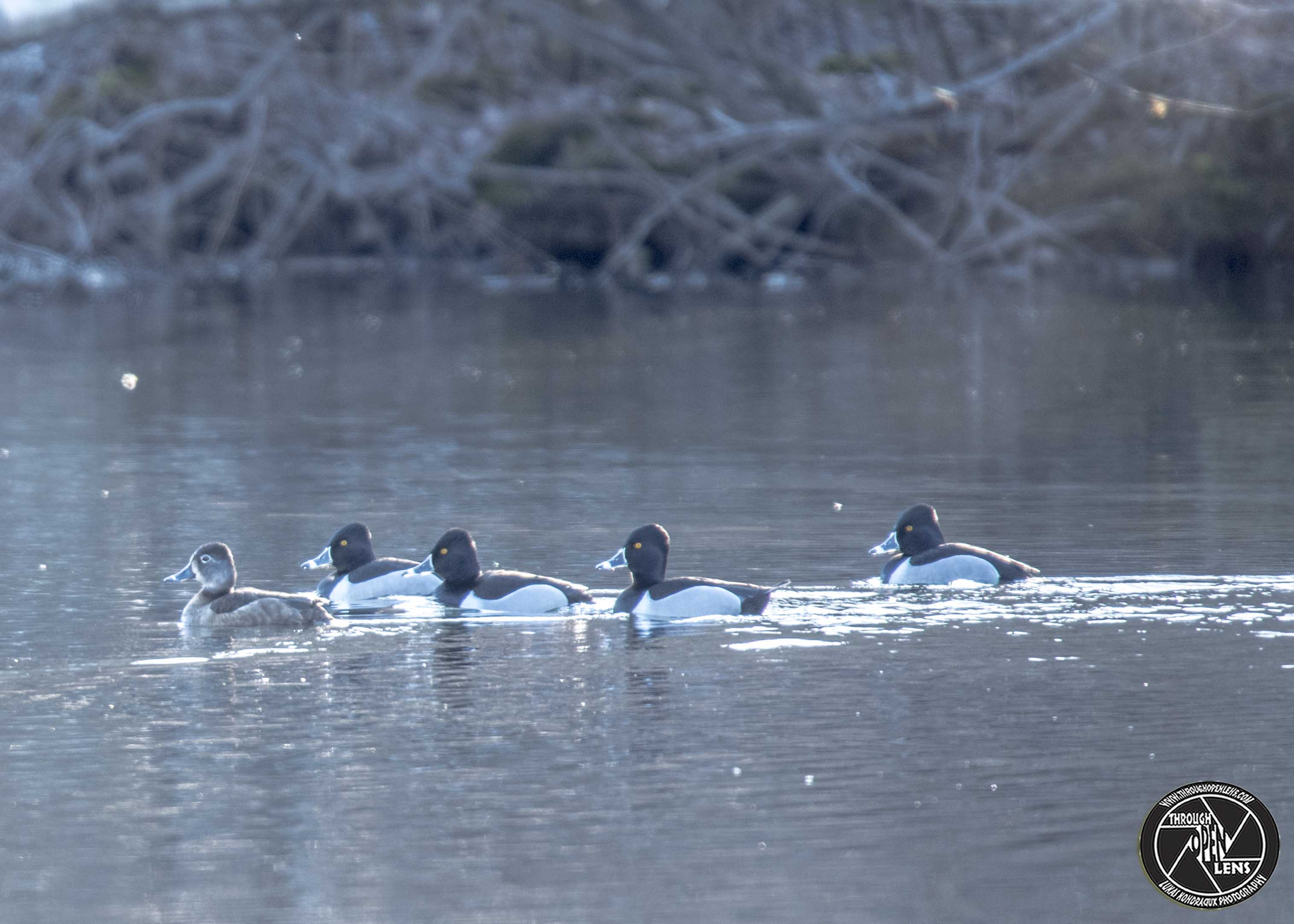
One Lucky Gal!

F/6.3, 1/250, ISO 500.

Ring-necked Duck

Why can’t you hear a pterodactyl in the bathroom?

Because it has a silent pee.

Interesting Fact: Ring-necked Ducks put their nests among dense sedges and other emergent plants in marshes. Pairs choose these sites by swimming at the vegetation edge or by making low circling flights over potential spots. They typically build their nests directly over the water or on floating vegetation; this helps protect the nests from land-based predators. ( https://www.allaboutbirds.org/guide/Ring-necked_Duck/lifehistory )

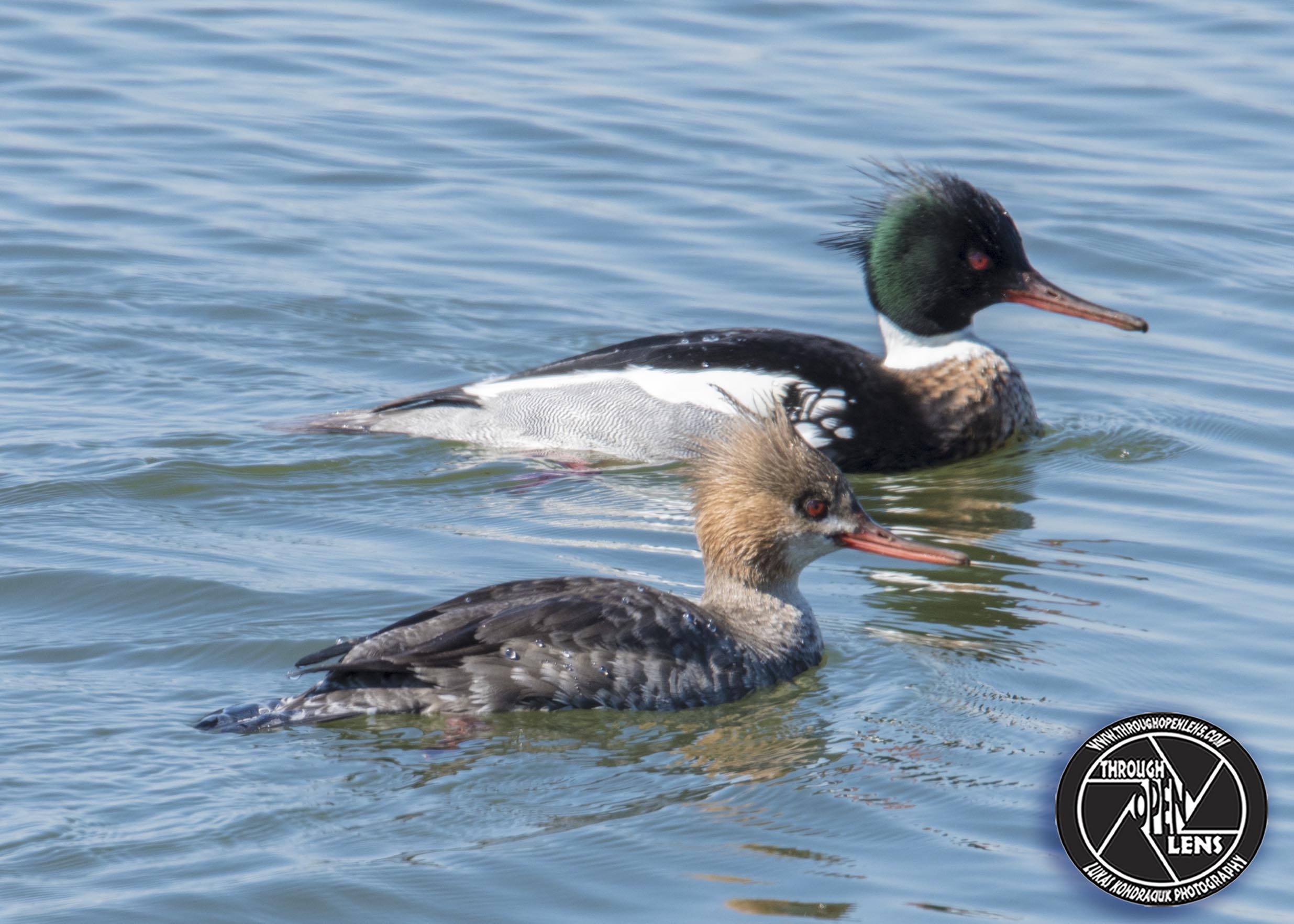
Grow Old With Me.

F/9.0, 1/320, ISO 200.

Red-breasted Mergansers

Why did the boy eat his homework?

Because his teacher said it was a piece of cake!

Interesting Fact: The oldest recorded Red-breasted Merganser was a female, and at least 9 years, 6 months old when she was shot in Alaska, the same state where she had been banded. ( https://www.allaboutbirds.org/guide/Red-breasted_Merganser/lifehistory )

You Really Quack Me Up!

F/10.0, 1/400, ISO 320.

Ruddy Duck

Did you hear about the duck who thought he was a squirrel?

It was one tough nut to quack.

Interesting Fact: Migrating Ruddy Ducks stop in a variety of habitats, most often on large, permanent wetlands, lakes, and reservoirs. They spend the winter throughout the southern half of the breeding range, also moving into wintering habitat that spans most of the United States and extends through Mexico to Central America. Their wintering habitat includes freshwater wetlands, lakes, and reservoirs as well as brackish bays, coastal marshes, and tidal estuaries. ( https://www.allaboutbirds.org/guide/Ruddy_Duck/lifehistory )

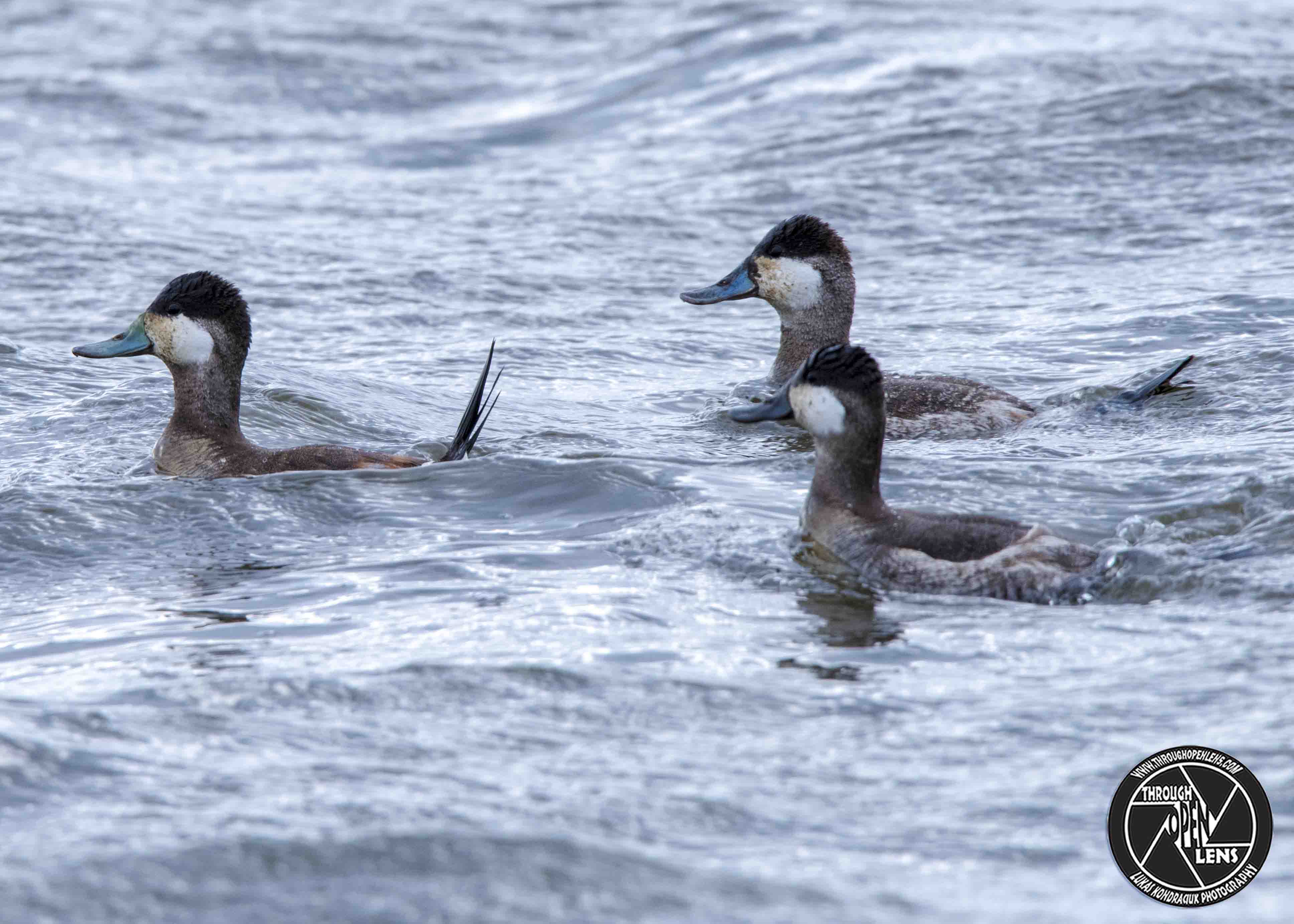
You Know What Guys I Am Getting Sick Of The V Formation!

F/10.0, 1/400, ISO 640.

Ruddy Duck

What do you get when you put four ducks in a box?

A box of quackers!

Interesting Fact: The Ruddy Duck has spiky tail feathers that are used in courtship displays. ( http://identify.whatbird.com/obj/116/overview/Ruddy_Duck.aspx )

Release The Quackin!

ring-necked-ducks

F/11.0, 1/500, ISO 500.

Ring-necked Ducks

Why shouldn’t you write with a broken pencil?

Because it’s pointless!

Interesting Fact: During fall migration, Ring-necked Ducks can form immense flocks. Several hundred thousand congregate each fall on certain lakes in Minnesota to feed on wild rice. ( https://www.allaboutbirds.org/guide/Ring-necked_Duck/lifehistory )

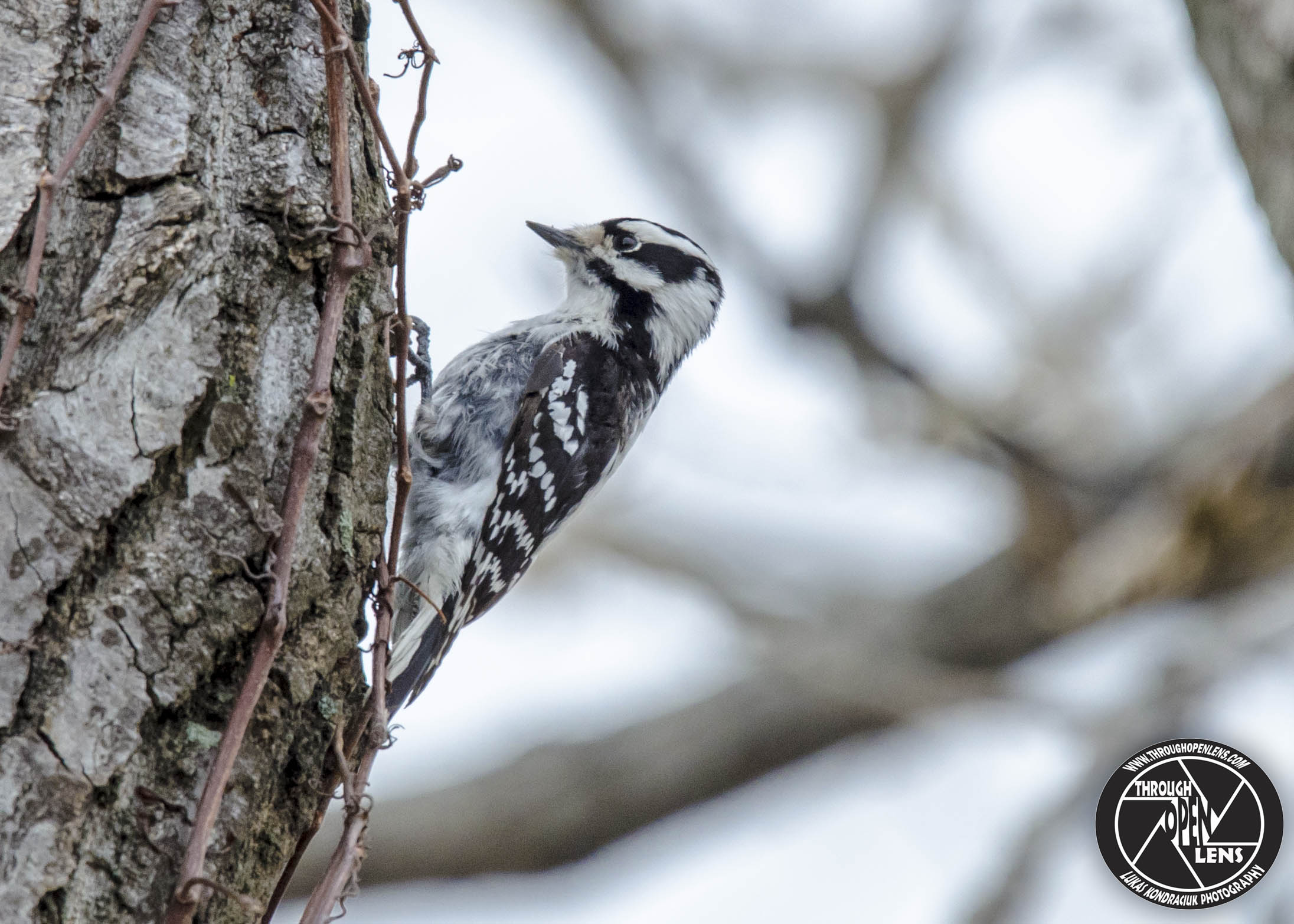
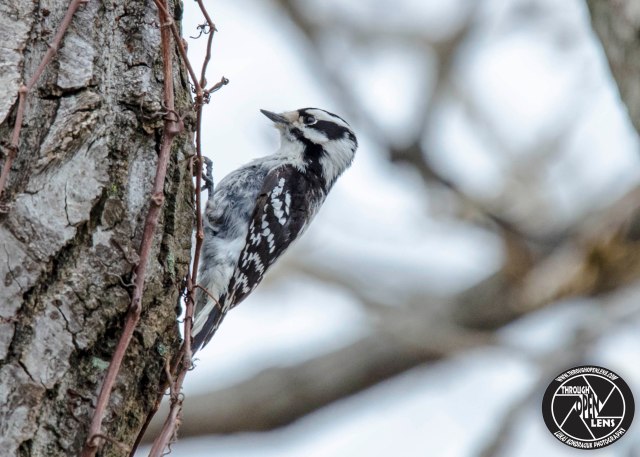
I Am In To Head Banging, What Music Do you Like?

downy-woodpecker-2

F/6.3, 1/1000, ISO 800.

Downy Woodpecker

There are three guys in a helicopter and they each get to choose what they want to throw out.

The first guys chooses an apple. So he takes an apple and throws it out.

The second guy chooses a brick. So he takes a brick and throws it out.

The third guy chooses a grenade. So he pulls the pin and throws it out.

They land a while later and are walking along when they find a man rubbing his head.

They ask, “What happened to you?”

He answers, “An apple hit me on the head.”

They’re walking along again and find a man lying unconscious on the ground.

They ask the cop, “What happened to him?”

He answers, “A brick hit him on the head.”

They’re walking again, when they find a man laughing hysterically.

They ask, “What happened to you?”

He answers, “I farted and the house blew up behind me!”

Interesting Fact: In winter Downy Woodpeckers are frequent members of mixed species flocks. Advantages of flocking include having to spend less time watching out for predators and better luck finding food from having other birds around. ( https://www.allaboutbirds.org/guide/Downy_Woodpecker/lifehistory )

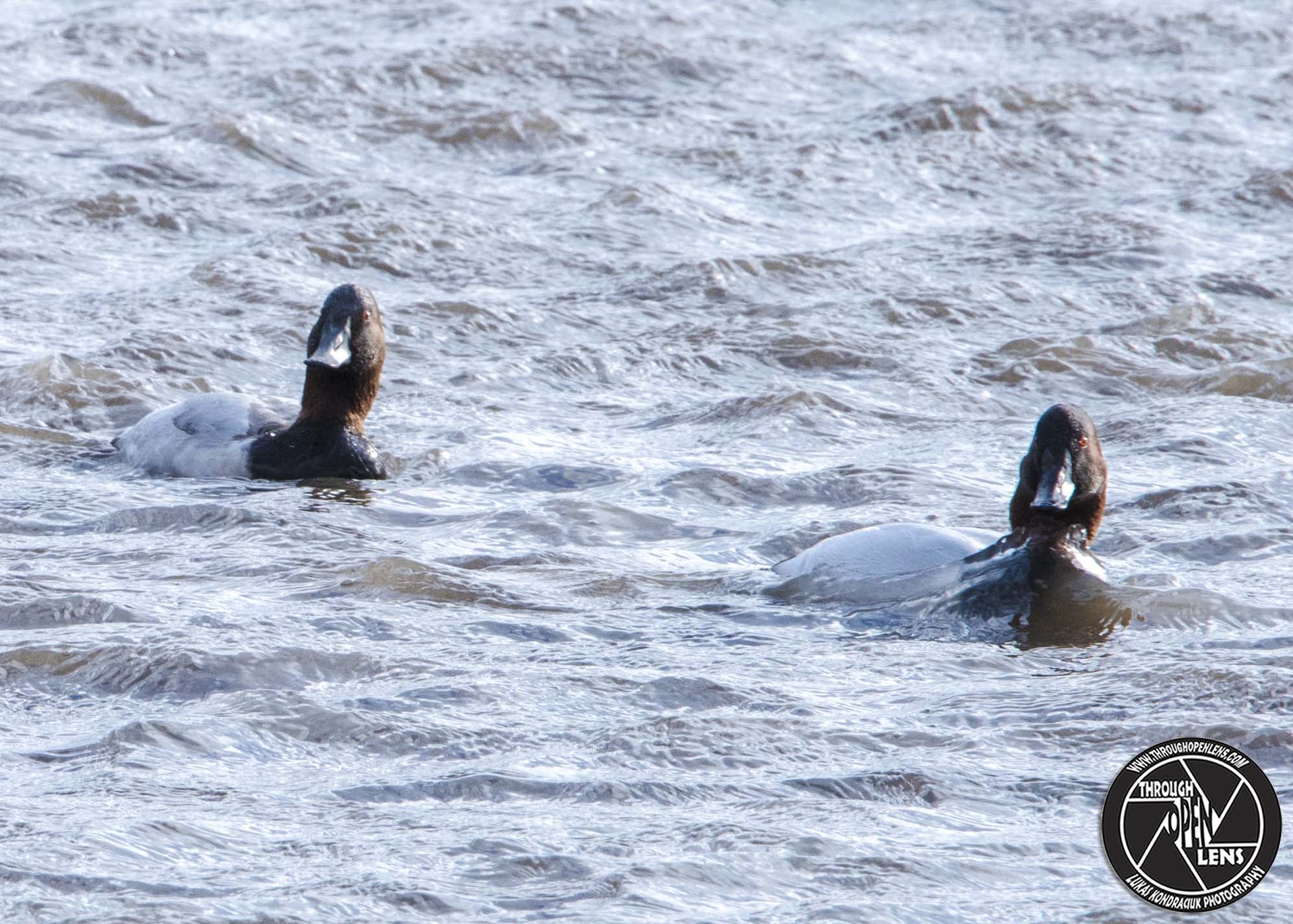
A song told me to Deck the Halls…so I did! Mr.and Mrs. Hall are not very happy!

F/11.0, 1/500, ISO 500.

Canvasback 

Did you hear the joke about the roof?

Never mind, it’s over your head!

Interesting Fact: Canvasbacks are diving ducks at home in the water, seldom going ashore to dry land. They sleep on the water with their bill tucked under the wing, and they nest on floating mats of vegetation. To get airborne Canvasbacks need a running start, but once in the air they are strong and fast fliers, clocking airspeeds of up to 56 miles per hour. ( https://www.allaboutbirds.org/guide/Canvasback/lifehistory )

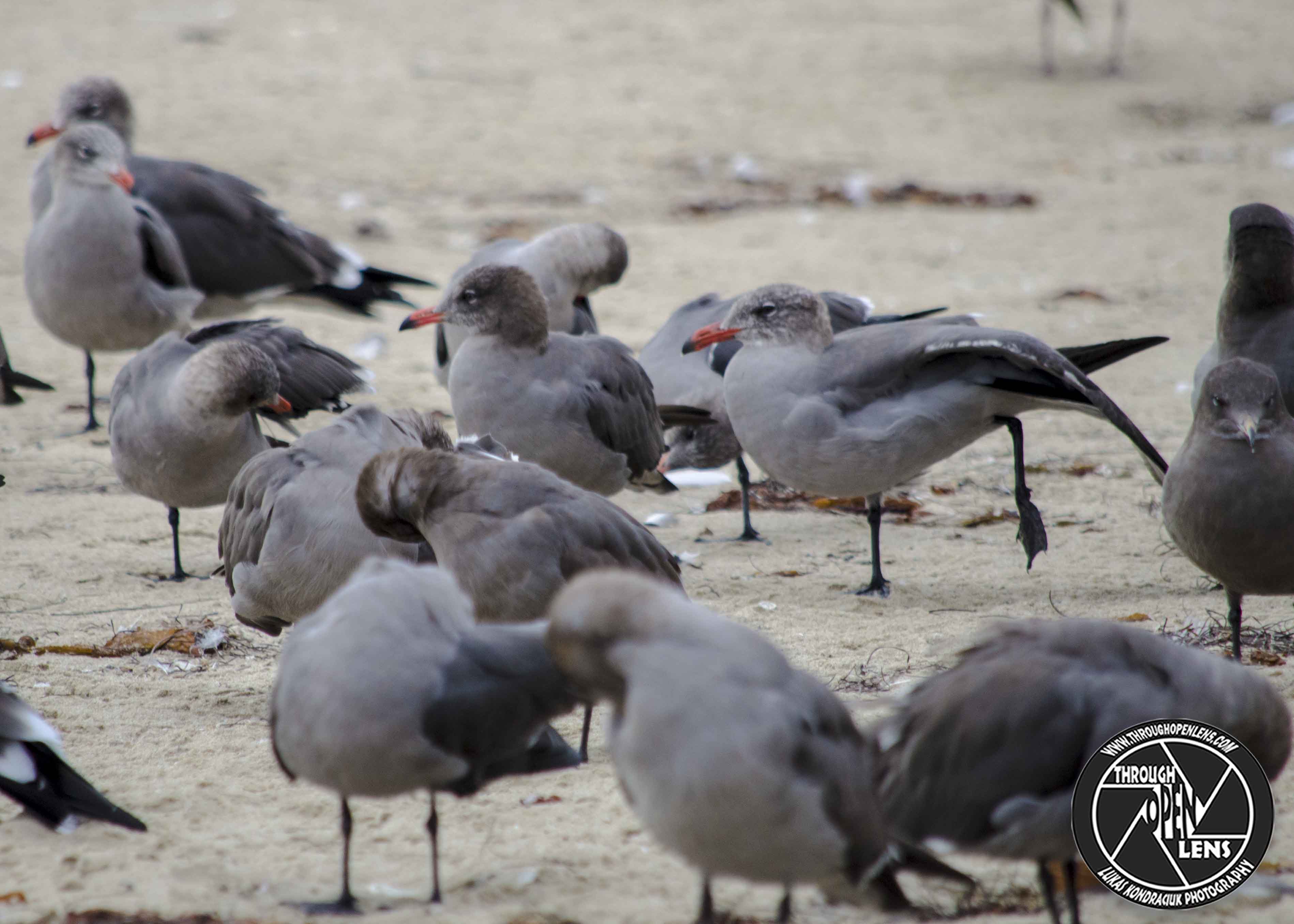
Simon Sez Stand On One Leg!

F/5.6, 1/500, ISO 400.

Heermann’s Gull

How do you communicate with a fish?

Drop him a line!

Interesting Fact: The Heermann’s Gull is the only North American gull that breeds south of the United States and comes north to spend the nonbreeding season. After breeding is over in July, the gull quickly comes north all the way to southern Canada. It heads back southward by December, and most breeders are at the breeding islands by March. ( https://www.allaboutbirds.org/guide/Heermanns_Gull/lifehistory )