Don’t Be Afraid To Rock The Boat

F/13.0, 1/640, ISO 200.

Jersey City Hudson River

What does a cheetah say when someone looks at it?

I’ve been spotted!

Interesting Fact: The land comprising what is now Jersey City was inhabited by the Lenape, a collection of tribes (later called Delaware Indian). In 1609, Henry Hudson, seeking an alternate route to East Asia, anchored his small vessel Halve Maen (English: Half Moon) at Sandy Hook, Harsimus Cove and Weehawken Cove, and elsewhere along what was later named the North River. After spending nine days surveying the area and meeting its inhabitants, he sailed as far north as Albany. By 1621, the Dutch West India Company was organized to manage this new territory and in June 1623, New Netherland became a Dutch province, with headquarters in New Amsterdam. Michael Reyniersz Pauw received a land grant as patroon on the condition that he would establish a settlement of not fewer than fifty persons within four years. He chose the west bank of the North River (Hudson River) and purchased the land from the Lenape. This grant is dated November 22, 1630 and is the earliest known conveyance for what are now Hoboken and Jersey City. Pauw, however, was an absentee landlord who neglected to populate the area and was obliged to sell his holdings back to the Company in 1633.[39] That year, a house was built at Communipaw for Jan Evertsen Bout, superintendent of the colony, which had been named Pavonia (the Latinized form of Pauw’s name, which means peacock).[40] Shortly after, another house was built at Harsimus Cove and became the home of Cornelius Van Vorst, who had succeeded Bout as superintendent, and whose family would become influential in the development of the city. Relations with the Lenape deteriorated, in part because of the colonialist’s mismanagement and misunderstanding of the indigenous people, and led to series of raids and reprisals and the virtual destruction of the settlement on the west bank. During Kieft’s War, approximately eighty Lenapes were killed by the Dutch in a massacre at Pavonia on the night of February 25, 1643. ( https://en.wikipedia.org/wiki/Jersey_City,_New_Jersey#History )

Next Time I Am Wearing Green!

F/6.3, 1/ 160, ISO 320.

Chipping Sparrow

How do farmers party?

They turnip the beets.

Interesting Fact: The early naturalists had a gift for description you just don’t see anymore. In 1929, Edward Forbush called the Chipping Sparrow “the little brown-capped pensioner of the dooryard and lawn, that comes about farmhouse doors to glean crumbs shaken from the tablecloth by thrifty housewives.” ( https://www.allaboutbirds.org/guide/Chipping_Sparrow/lifehistory )

You Really CHANGED!

F/9.0, 1/320, ISO 320.

Butterfly

What’s the secret to telling a good postman joke?

It’s all in the delivery

Interesting Fact: Butterflies feed primarily on nectar from flowers. Some also derive nourishment from pollen,[54] tree sap, rotting fruit, dung, decaying flesh, and dissolved minerals in wet sand or dirt. Butterflies are important as pollinators for some species of plants. In general, they do not carry as much pollen load as bees, but they are capable of moving pollen over greater distances.[55] Flower constancy has been observed for at least one species of butterfly. ( https://en.wikipedia.org/wiki/Butterfly )


I Enjoy Long Romantic Walks To The Fridge.

F/6.3, 1/100, ISO 250.

Wild Turkey

What did the lawyer name his daughter?

Sue.

Interesting Fact: The English name of the bird may be a holdover from early shipping routes that passed through the country of Turkey on their way to delivering the birds to European markets. ( https://www.allaboutbirds.org/guide/Wild_Turkey/lifehistory )

I Wonder If Chickens Do The “People Dance ” At Their Wedding

F/10.0, 1/400, ISO 400.

Chickens

What did the chicken say when it got to the library?

Book book book book book book book…

Interesting Fact: People have been raising chickens for more than 7,000 years. Chickens were first domesticated in Indian and China. You might think of chickens as farm animals, but even people in cities can raise a few chickens in the backyard. Chicken coops don’t take up much room. ( http://easyscienceforkids.com/all-about-chickens/ )

When Someone Yells STOP I Don’t Know Whether It’s In The Name Of Love, It’s Hammer Time, Or I Should Smell The Flowers.

F/5.3, 1/800, ISO 320.

Anna’s Hummingbird ( Female )

How do angels greet each other?

They say Halo

Interesting Fact: Anna’s Hummingbirds normally have a body temperature of around 107 degrees Fahrenheit—that’s a scorching temperature for a human. When outside temperatures fall, Anna’s and many other species of hummingbirds enter torpor. Their breathing and heart rate slow, and their body temperature can fall as low as 48 degrees Fahrenheit. When the temperature warms, the hummingbirds can become active again in a few minutes. ( https://www.allaboutbirds.org/guide/Annas_Hummingbird/ )


I’m Sick Of Following My Dreams, Man. I’m Just Going To Ask Where They’re Going And Hook Up With ’em Later.

F/7.1, 1/200, ISO 320.

Palm Warbler

Why couldn’t Dracula’s wife get to sleep?

Because of his coffin.

Interesting Fact: The Palm Warbler, unlike most warblers, spends a lot of time walking on the ground and bobbing its tail as it goes—an obvious trait whether the bird is on the ground or perched in a tree or shrub. Despite its affinity for the ground it also forages and sings from taller trees and shrubs. It sometimes sallies out to grab an insect from a low shrub or tree like a flycatcher. ( https://www.allaboutbirds.org/guide/Palm_Warbler/lifehistory )


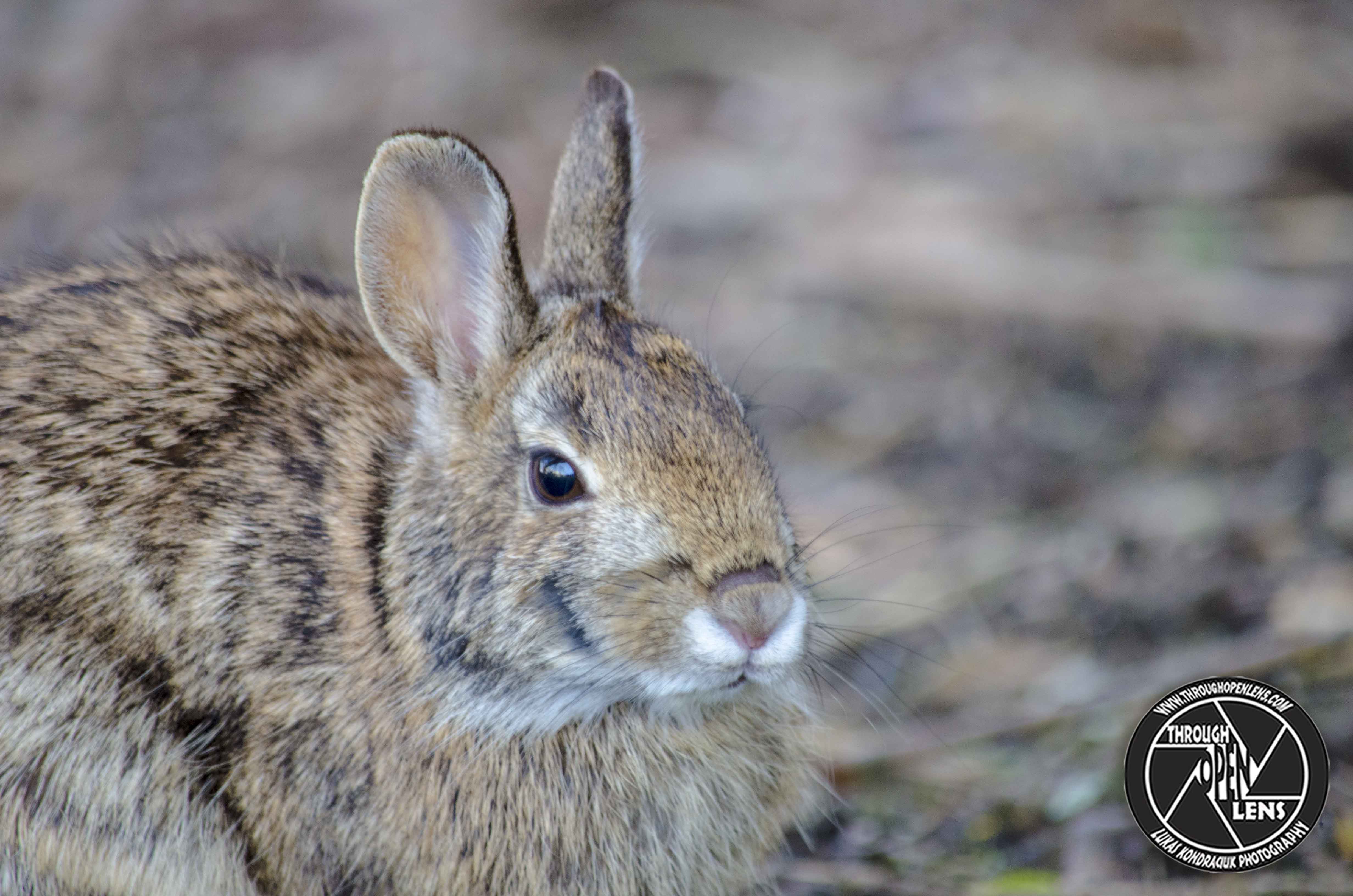
If You See Rabbit Laying Little Brown Eggs, Don’t Eat Them, IT’S NOT CHOCOLATE!

Happy Easter Everyone! 

F/5.6, 1/125, ISO 900.

Cottontail Rabbit

What happened to the Easter Bunny when he misbehaved at school?

He was eggspelled!

Interesting Fact: The Easter Bunny (also called the Easter Rabbit or Easter Hare) is a folkloric figure and symbol of Easter, depicted as a rabbit bringing Easter eggs. Originating among German Lutherans, the “Easter Hare” originally played the role of a judge, evaluating whether children were good or disobedient in behaviour at the start of the season of Eastertide.[1] The Easter Bunny is sometimes depicted with clothes. In legend, the creature carries colored eggs in his basket, candy, and sometimes also toys to the homes of children, and as such shows similarities to Santa Claus or the Christkind, as they both bring gifts to children on the night before their respective holidays. The custom was first[2][unreliable source?] mentioned in Georg Franck von Franckenau‘s De ovis paschalibus[3] (‘About Easter Eggs’) in 1682, referring to a German tradition of an Easter Hare bringing Easter eggs for the children. ( https://en.wikipedia.org/wiki/Easter_Bunny )

Everyday May Not Be Good, But There Is Something Good In Everyday.

F/9.0, 1/250, ISO 320.

Muskrat

Why did the dog sit in the shade?

Because he didn’t want to be a hot dog!

Interesting Fact: Native Americans have long considered the muskrat to be a very important animal. Some predict winter snowfall levels by observing the size and timing of muskrat lodge construction.[26]  In several Native American creation myths, the muskrat dives to the bottom of the primordial sea to bring up the mud from which the earth is created, after other animals have failed in the task. ( https://en.wikipedia.org/wiki/Muskrat#Behavior )


Waiting Here For You

F/13.0, 1/640, ISO 320.

Great Black-backed Gull

Four high school boys afflicted with spring fever skipped morning classes. After lunch they reported to the teacher that they had a flat tire.

Much to their relief she smiled and said, “Well, you missed a test today so take seats apart from one another and take out a piece of paper.”

Still smiling, she waited for them to sit down. Then she said: “First Question: Which tire was flat?”

Interesting Fact: The Great Black-backed Gull is one of many bird species whose feathers were used for fashionable clothing in the 1800s. After the demise of the feather trade in the early 1900s, Great Black-backed Gull populations increased and spread farther south. Garbage dumps and other sources of human refuse have contributed to their range expansion. ( https://www.allaboutbirds.org/guide/Great_Black-backed_Gull/lifehistory )