I Lost My Temper, But It Came Back!

F/9.0, 1/250, ISO 160.

Ring-necked Duck

Why did the cookie go to the hospital?

He felt crummy!

Interesting Fact: Ring-necked Ducks feed by diving underwater, rather than by tipping up as “dabbling” ducks do. When diving, they leap forward in an arc to plunge underwater, and they swim using only their feet for propulsion. ( https://www.allaboutbirds.org/guide/Ring-necked_Duck/lifehistory )


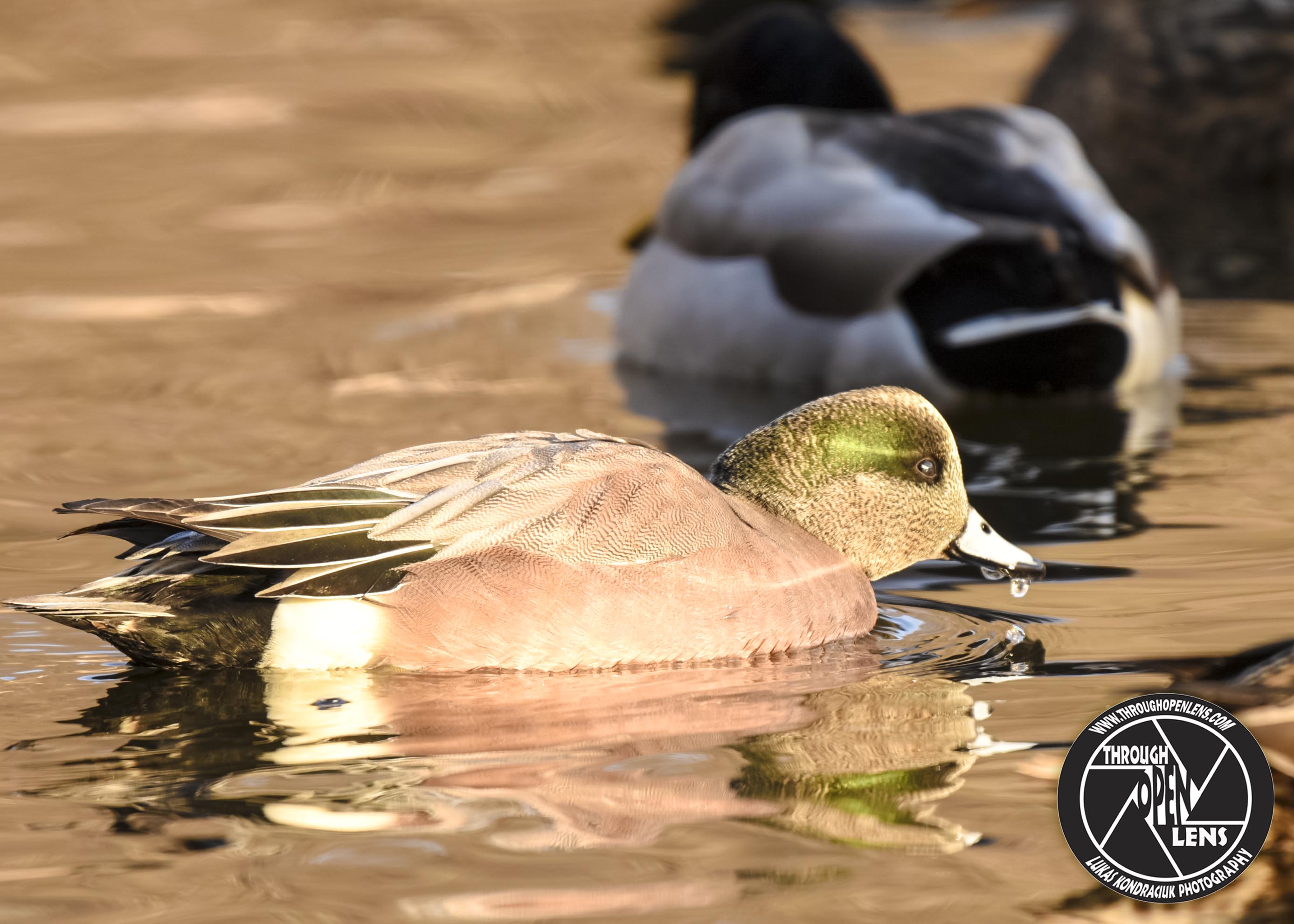
My Nose Has Done More Running This Winter Than I Have.

american-wigeon

F/7.1, 1/200, ISO 320.

American Wigeon

I went to a really emotional wedding over the weekend.

Even the cake was in tiers.

Interesting Fact: The American Wigeon’s short bill enables it to exert more force at the bill tip than other dabbling ducks, thus permitting efficient dislodging and plucking of vegetation.  ( https://www.allaboutbirds.org/guide/American_Wigeon/lifehistory )

If The Mud Ain’t Flying You Ain’t Trying!

F/9.0, 1/320, ISO 320.

Northern Pintail Duck

How do crazy people go through the forest?

They take the psycho path.

Interesting Fact: When it comes to breeding, Northern Pintails don’t waste any time. They start nesting as soon as the ice starts to thaw, arriving by late April in places as far north as the Northwest Territories, Canada. ( https://www.allaboutbirds.org/guide/Northern_Pintail/ )

Be The Light!

F/11.0, 1/500, ISO 200. 

Rose Island Lighthouse Foundation

What do you get when you cross a snowman and a vampire?

Frostbite.

Interesting Fact: The Rose Island Light, built in 1870, is on Rose Island in Narragansett Bay in Newport, Rhode Island in the United States. It is preserved, maintained and operated by The Rose Island Lighthouse Foundation.

One of a group of New England lighthouses built to an award-winning design by Vermont architect Albert Dow,[3] Rose Island Light has sisters at Sabin Point, Pomham Rocks, and Colchester Reef. The lighthouse stands atop a bastion of Fort Hamilton, which was built in 1798-1800. ( https://en.wikipedia.org/wiki/Rose_Island_Light )

Don’t Be A Creep!

F/8.0, 1/250, ISO 320.

Brown Creeper

Past, present and future walk into a bar.

It was tense!

Interesting Fact: The Brown Creeper spends most of its time spiraling up tree trunks in search of insects. It holds its short legs on either side of its body, with the long, curved claws hooking into the bark, and braces itself with its long, stiff tail. Both feet hop at the same time, making the bird’s head duck after each hop. Because of its specialized anatomy, the Brown Creeper rarely climbs downward: once high in a tree, it flies down to begin a new ascent at the base of a nearby tree. ( https://www.allaboutbirds.org/guide/Brown_Creeper/lifehistory )

He Is On My Tail!

F/6.3, 1/160, ISO 160.

Wood Duck

What do you call an old snowman?

Water!

Interesting Fact: Breeding pairs search for nest cavities during early morning. The male stands outside as the female enters and examines the site. They typically choose a tree more than 1 foot and often 2 feet in diameter, with a cavity anywhere from 2–60 feet high (higher sites seem to be preferred). ( https://www.allaboutbirds.org/guide/Wood_Duck/lifehistory


Yeah, Thats Right I Can Dunk!

F/9.0, 1/320, ISO 250.

Tufted Titmouse 

A husband and a wife purchased an old home in Northern New York State from two elderly sisters. Winter was fast approaching and the years first snow came early and they were concerned about the house’s lack of insulation.

“If they could live here all those years, so can we!” a husband confidently declared.

One November night the temperature plunged to below zero, and they woke up to find interior walls covered with frost.

A husband called the sisters to ask how they had kept the house warm.

After a rather brief conversation, he hung up.

“For the past 30 years,” he muttered,

“they’ve gone to Florida for the winter.”

Interesting Fact: Titmice build cup-shaped nests inside the nest cavity using damp leaves, moss and grasses, and bark strips. They line this cup with soft materials such as hair, fur, wool, and cotton, sometimes plucking hairs directly from living mammals. Naturalists examining old nests have identified raccoon, opossum, dog, fox squirrel, red squirrel, rabbit, horse, cow, cat, mouse, woodchuck, and even human hair in titmouse nests. Nest construction takes 6 to 11 days. (  https://www.allaboutbirds.org/guide/Tufted_Titmouse/lifehistory )

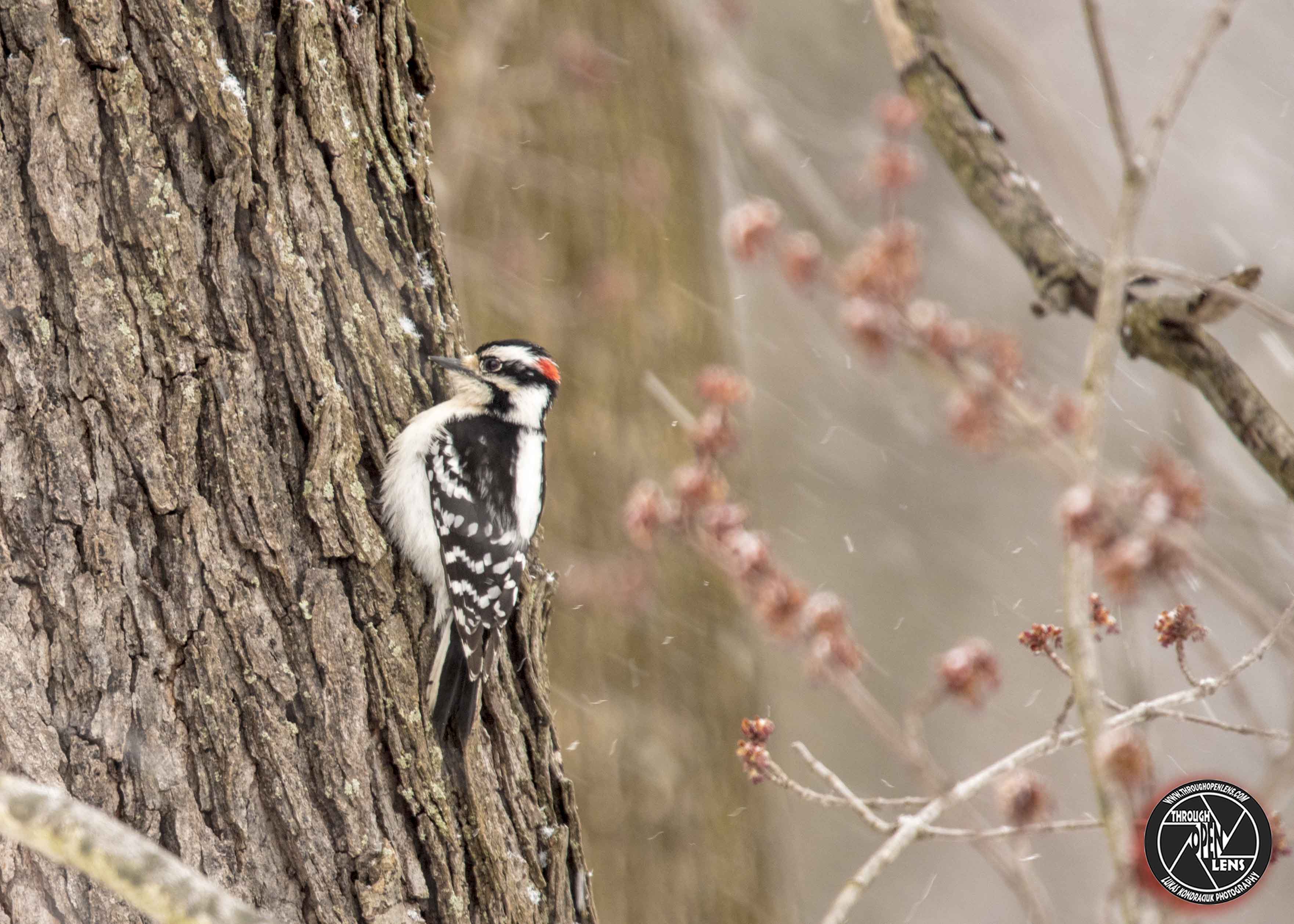
Stop Knocking And Come In Its Snowing Out There

F/6.3, 1/60, 500.

Downy Woodpecker

What do snowmen eat for breakfast?

Frosted Flakes.

Interesting Fact: An active woodpecker that moves quickly over tree trunks, branches, and stems of grasses and wildflowers, characteristically leaning against its stiffened tail feathers for support. Downy Woodpeckers move horizontally and downwards on trees much more readily than most other woodpeckers. You may also see them perched atop tall weeds such as goldenrod in late summer, hammering away at a plant gall to get at the larva inside. Occasionally hops on the ground for food.  ( https://www.allaboutbirds.org/guide/Downy_Woodpecker/lifehistory )


I Am Not Going To Making Duck Face For You!

F/9.0, 1/320, ISO 250.

Common Eider ( Males )

What did Detective Duck say to his partner?

“Let’s quack this case!”

Interesting Fact: A famous colony lives on the Farne Islands in Northumberland, Britain. These birds were the subject of one of the first ever bird protection laws, established by Saint Cuthbert in the year 676. About 1,000 pairs still nest there every year. ( https://identify.whatbird.com/obj/1095/overview/Common_Eider.aspx )

Wait, What Did You Said?

F/7.1, 1/200, ISO 250.

Blue Jay

Why is your foot more special than your other body parts?

Because they have their own soul.

Interesting Fact: Blue Jays are found in all kinds of forests but especially near oak trees; they’re more abundant near forest edges than in deep forest. They’re common in urban and suburban areas, especially where oaks or bird feeders are found. ( https://www.allaboutbirds.org/guide/Blue_Jay/lifehistory )