Don’t Be Afraid To Stick Your Neck Out!

F/9.0, 1/320, ISO 100.

Mute Swan

What did one potato chip say to the other?

Shall we go for a dip?

Interesting Fact: Short legs placed well back on the body give Mute Swans an awkward walking gait, but the birds can run quickly if pursued and can take off from land and water, flying with head and neck extended. On the water they sometimes hold their wings slightly raised and “sail” with the wind. Mute Swans are predominantly monogamous and form long-lasting breeding pairs. They are extremely aggressive in defending their breeding territory. ( https://www.allaboutbirds.org/guide/Mute_Swan/lifehistory )

I’m Watching You!

F/11.0, 1/500, ISO 400.

Red-tailed Hawk

What’s the difference between the dinosaur and a dragon?

Dinosaurs are too young to SMOKE!

Interesting Fact: Red-tailed Hawks have been seen hunting as a pair, guarding opposite sides of the same tree to catch tree squirrels. ( https://www.allaboutbirds.org/guide/Red-tailed_Hawk/overview )

I Feel Proud To Be A Bird!

F/10.0, 1/400, ISO 400.

Yellow-Rumped Warbler

What’s a vampire’s favorite fruit?

Neck-tarine

Interesting Fact: In winter, Yellow-rumped Warblers join flocks and switch to eating berries from fruiting shrubs. Sometimes the flocks are enormous groups consisting entirely of Yellow-rumped Warblers. If another bird gets too close, Yellow-rumped Warblers indicate the infraction by holding the body horizontally, fanning the tail, and raising it to form a right angle with its body. ( https://www.allaboutbirds.org/guide/Yellow-rumped_Warbler/lifehistory )

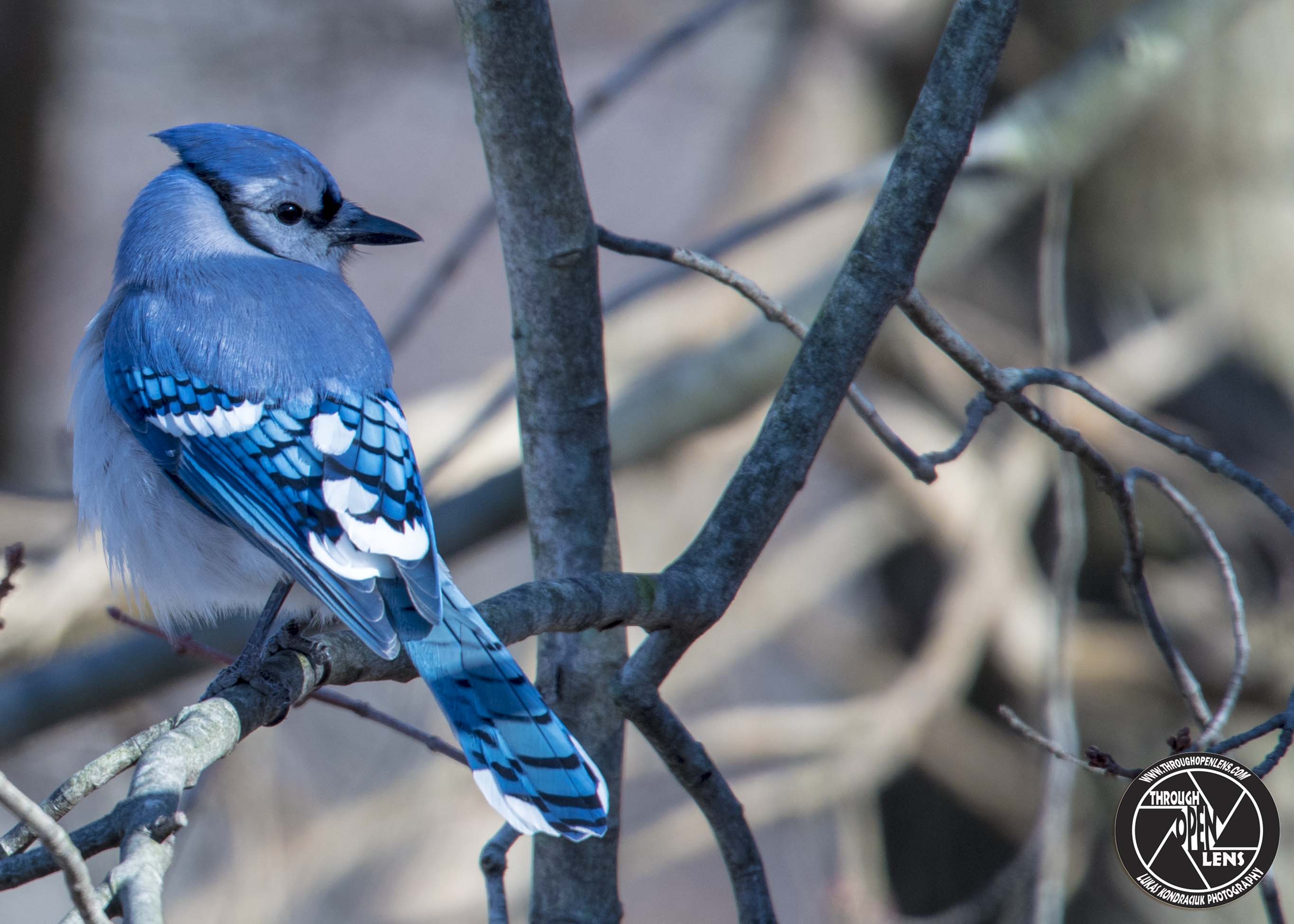
Blue You Away!

F/7.1, 1/200, ISO 250.

Blue Jay 

Why do ghosts have so much trouble dating?

Women can see right through them.

Interesting Fact: This common, large songbird is familiar to many people, with its perky crest; blue, white, gray, and black plumage; and noisy calls. Blue Jays are known for their intelligence and complex social systems, and have tight family bonds. They often mate for life, remaining with their social mate throughout the year. ( https://www.allaboutbirds.org/guide/Blue_Jay/lifehistory )


We Are Online Now.

F/7.1, 1/800, ISO 200.

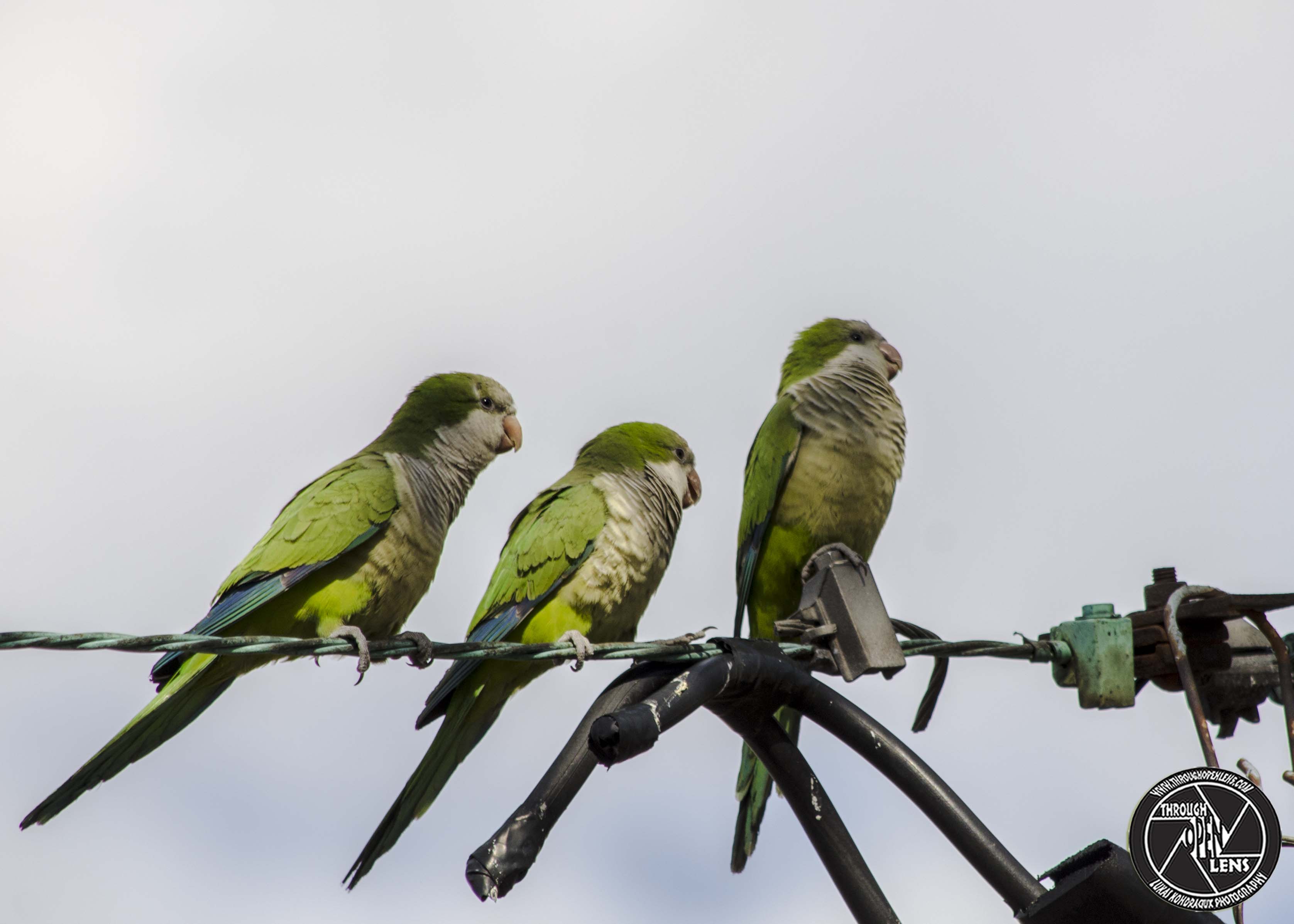
Monk Parakeets

Where does a bee keep his stinger?

In his honey!

Interesting Fact: Monk Parakeets spend a lot of time preening each other. These long-lived birds form socially monogamous pairs, and courtship involves a pair preening each other and grasping each other by the beak while shaking their heads.  ( https://www.allaboutbirds.org/guide/Monk_Parakeet/lifehistory )

Get Your Green On!

Happy St Patrick’s Day!

F/8.0, 1/125, ISO 110.

Monk Parakeets

Why don’t you iron 4-Leaf clovers?

Because you don’t want to press your luck.

Interesting Fact: Monk Parakeets kept in captivity can learn to mimic human speech. ( https://www.t.org/guide/Monk_Parakeet/lifehistory )

Interesting Fact: Saint Patrick’s Day, or the Feast of Saint Patrick(Irish: Lá Fhéile Pádraig, “the Day of the Festival of Patrick”), is a cultural and religious celebration held on 17 March, the traditional death date of Saint Patrick (c. AD 385–461), the foremost patron saint of Ireland. ( https://en.wikipedia.org/wiki/Saint_Patrick%27s_Day )

We Are Rolling Deep Today!

F/8.0, 1/250, ISO 320.

Ring-necked Duck

Why don`t ducks tell jokes when they fly?

Because they would quack up!

Interesting Fact: Ring-necked Ducks breed in northern North America and spend winters in southern and western North America, northern Central America, and the Caribbean, often on freshwater. Much of the population migrates from central Canada to the southeastern United States, staging along the way in Minnesota and other parts of the upper Midwest.  ( https://www.allaboutbirds.org/guide/Ring-necked_Duck/maps-range

It’s Your Hair Do Whatever You Want!

F/6.3, 1/500, ISO 200.

Hooded Merganser ( Female )

How do ducks talk?

They don’t You Quack.

Interesting Fact: The female chooses the nest site, and may start scouting for next year’s tree cavity at the end of each breeding season. Nest cavities can be in live or dead trees and are usually close to water. Cavities are typically 10–50 feet off the ground, up to about 90 feet. Hooded Mergansers nest readily in boxes, preferring those with wood shavings or nest material from previous uses. They prefer cavities with 3–5 inch openings. ( https://www.allaboutbirds.org/guide/Hooded_Merganser/lifehistory

I Lost My Temper, But It Came Back!

F/9.0, 1/250, ISO 160.

Ring-necked Duck

Why did the cookie go to the hospital?

He felt crummy!

Interesting Fact: Ring-necked Ducks feed by diving underwater, rather than by tipping up as “dabbling” ducks do. When diving, they leap forward in an arc to plunge underwater, and they swim using only their feet for propulsion. ( https://www.allaboutbirds.org/guide/Ring-necked_Duck/lifehistory )


My Nose Has Done More Running This Winter Than I Have.

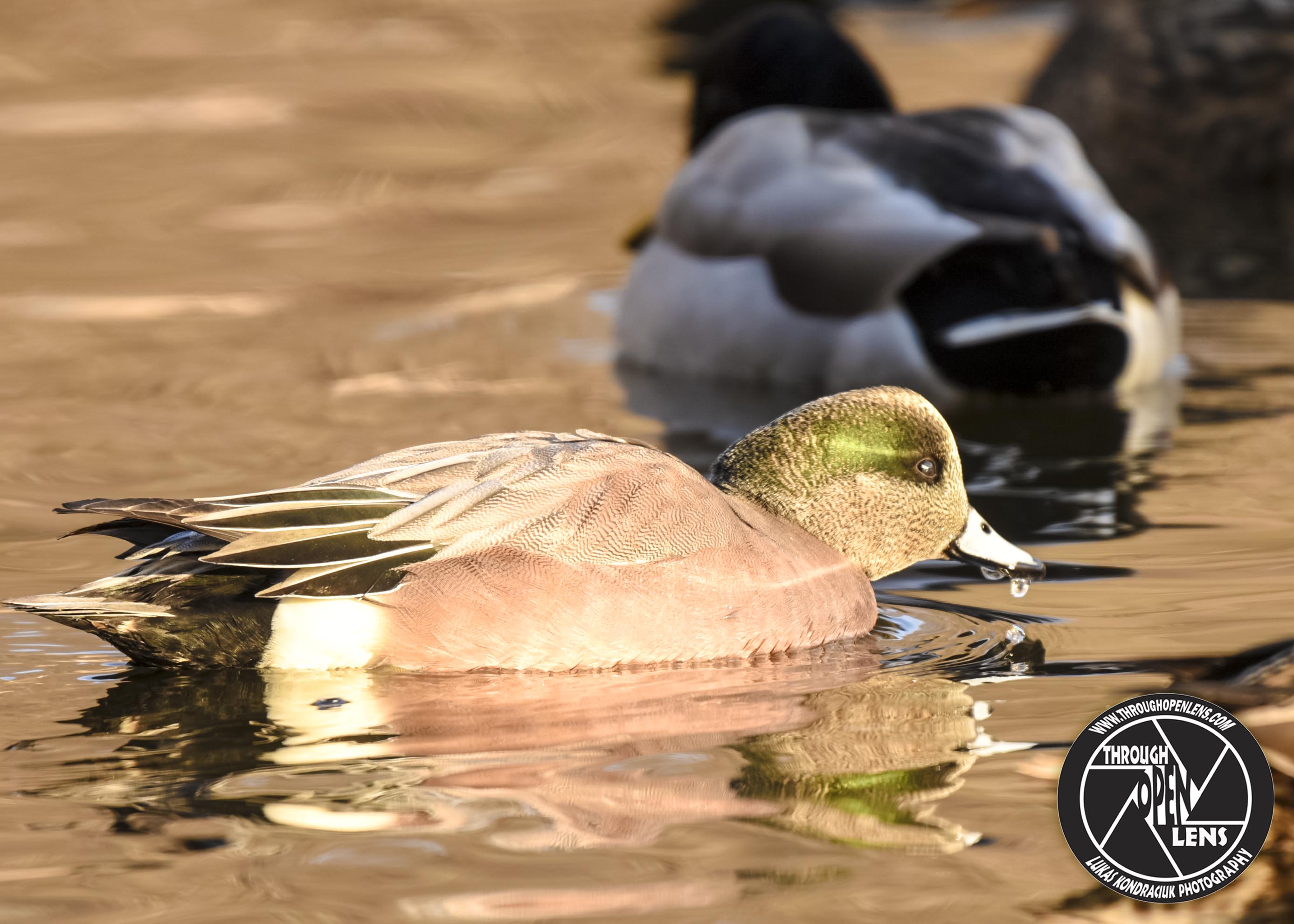
american-wigeon

F/7.1, 1/200, ISO 320.

American Wigeon

I went to a really emotional wedding over the weekend.

Even the cake was in tiers.

Interesting Fact: The American Wigeon’s short bill enables it to exert more force at the bill tip than other dabbling ducks, thus permitting efficient dislodging and plucking of vegetation.  ( https://www.allaboutbirds.org/guide/American_Wigeon/lifehistory )