Yes I Walked Away Mid-Conversation. You Were Boring Me To Death And My Survival Instincts Kicked In.

F/11.0, 1/500, ISO 400.

Great Blue Heron 

What happened when the lion ate the comedian?

He felt funny!

Interesting Fact: Great Blue Herons can hunt day and night thanks to a high percentage of rod-type photoreceptors in their eyes that improve their night vision. ( https://www.allaboutbirds.org/guide/Great_Blue_Heron )


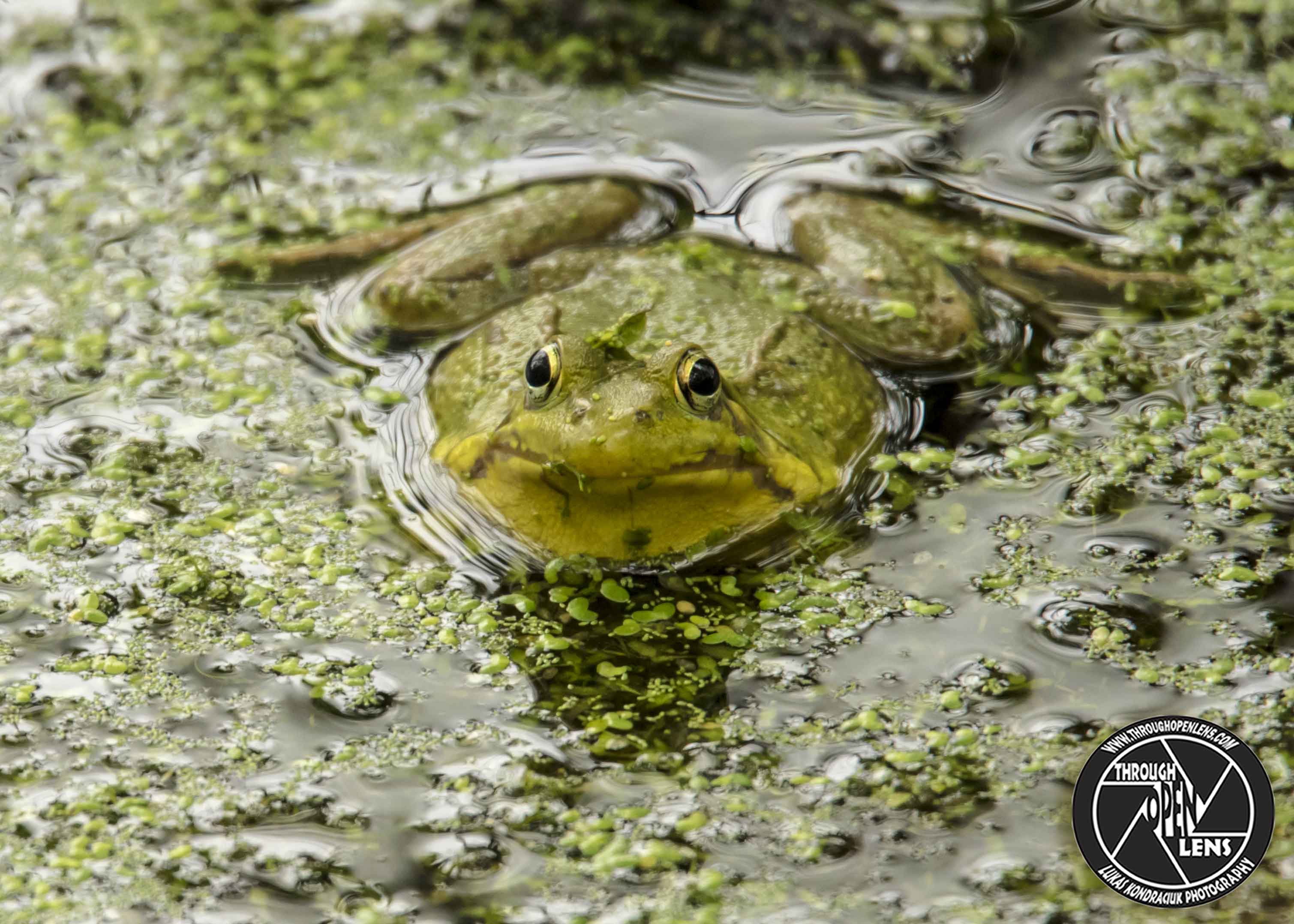
What? You Are Expecting A Prince Or Something?

F/6.3, 1/80, ISO 640.

Northern Green Frog

Why are frogs so happy?

They eat whatever bugs them!

Interesting Fact: The northern green frog dwells in marshes, swamps, ponds, lakes, springs, and other aquatic environment. It is active both day and night. ( https://en.wikipedia.org/wiki/Northern_green_frog )

What The Fox!

F/6.3, 1/30, ISO 500.

Red Fox 

What do you call a drunk shark?

Hammered Head

Interesting Fact: Red foxes are usually together in pairs or small groups consisting of families, such as a mated pair and their young, or a male with several females having kinship ties. The young of the mated pair remain with their parents to assist in caring for new kits.[8] The species primarily feeds on small rodents, though it may also target rabbitsgame birdsreptilesinvertebrates[6] and young ungulates.[6] Fruit and vegetable matter is also eaten sometimes.[9] Although the red fox tends to kill smaller predators, including other fox species, it is vulnerable to attack from larger predators, such as wolvescoyotesgolden jackals and medium- and large-sized felines. ( https://en.wikipedia.org/wiki/Red_fox )


Everyday May Not Be Good, But There Is Something Good In Everyday.

F/9.0, 1/250, ISO 320.

Muskrat

Why did the dog sit in the shade?

Because he didn’t want to be a hot dog!

Interesting Fact: Native Americans have long considered the muskrat to be a very important animal. Some predict winter snowfall levels by observing the size and timing of muskrat lodge construction.[26]  In several Native American creation myths, the muskrat dives to the bottom of the primordial sea to bring up the mud from which the earth is created, after other animals have failed in the task. ( https://en.wikipedia.org/wiki/Muskrat#Behavior )


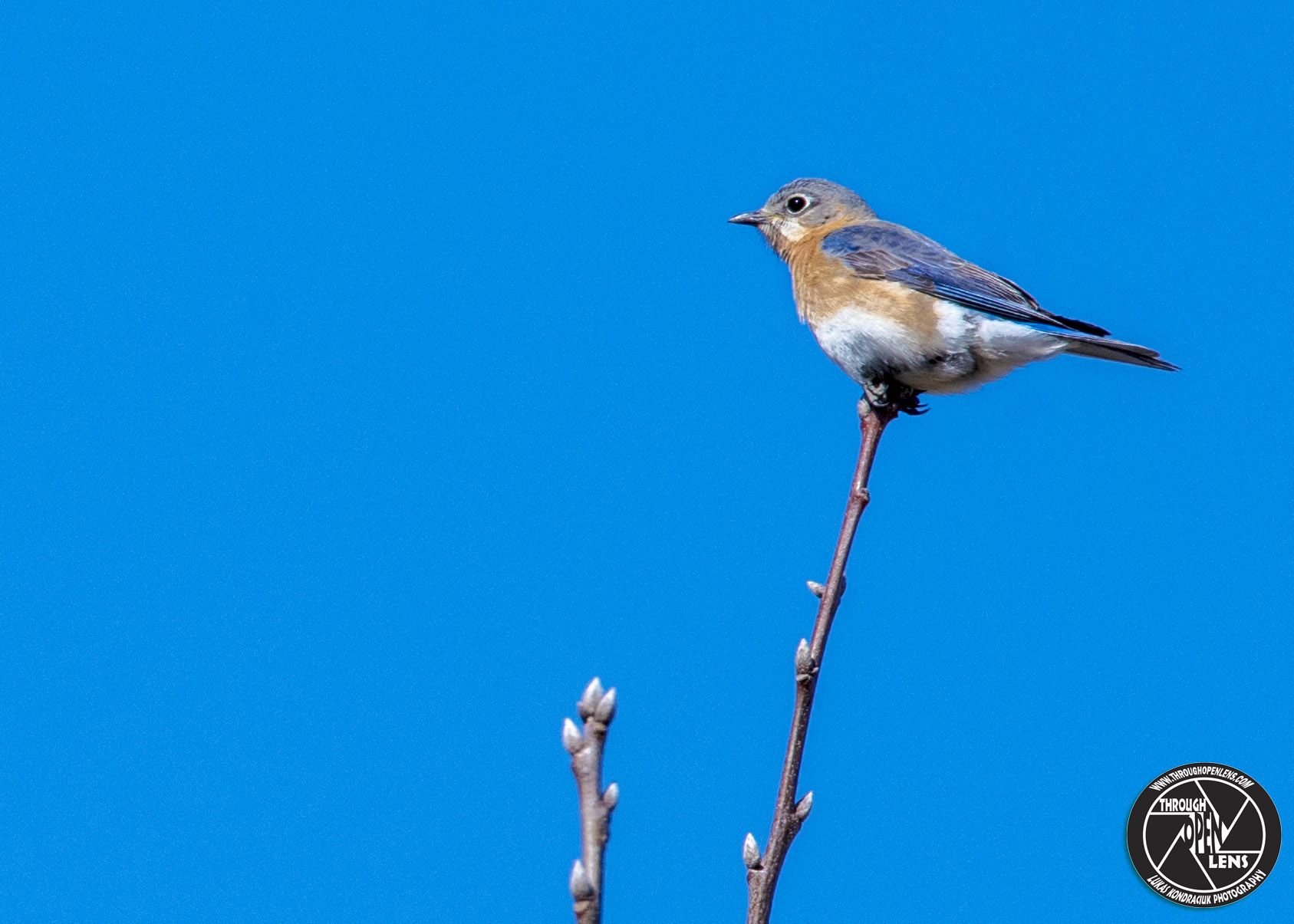
I See Sky Of Blue!

F/11.0, 1/500, ISO 320.

Eastern Bluebird 

Imagine you are in a water tank with a roof. There are no objects in the tank to help you escape. How do you get out?

Stop imagining.

Interesting Fact: Males vying over territories chase each other at high speed, sometimes grappling with their feet, pulling at feathers with their beaks, and hitting with their wings. The boxes and tree cavities where bluebirds nest are a hot commodity among birds that require holes for nesting, and male bluebirds will attack other species they deem a threat, including House Sparrows, European Starlings, Tree Swallows, Great Crested Flycatchers, Carolina Chickadees, and Brown-headed Nuthatches, as well as non-cavity nesters such as robins, Blue Jays, mockingbirds, and cowbirds. ( https://www.allaboutbirds.org/guide/Eastern_Bluebird/lifehistory )

It Seems To Me The Vultures Have Stopped Circling.

F/6.3, 1/60, ISO 400.

Turkey Vultures

What do you call security guards working outside Samsung shops?

Guardians of the Galaxy.

The Turkey Vulture’s distinctive slow, teetering flight style probably helps the bird soar at low altitudes, where it is best able to use its nose to find carrion. At other times they may soar high on thermals and form mixed flocks or kettles. On the ground they move with ungainly hops and are less agile than Black Vultures. Often, especially in the morning, they can be seen standing erect, wings spread in the sun, presumably to warm up, cool off, or dry off. ( https://www.allaboutbirds.org/guide/Turkey_Vulture/lifehistory )

Don’t Play Dead With A Vulture. That’s Exactly What They Want.

turkey-vulture

F/6.3, 1/160, ISO 100.

Turkey Vulture

As migration approached, two elderly vultures doubted they could make the trip south, so they decided to go by airplane.

When they checked their baggage, the attendant noticed that they were carrying two dead raccoons. “Do you wish to check the raccoons through as luggage?” she asked.

“No, thanks,” replied the vultures. “They’re carrion.”

Interesting Fact: Turkey Vultures, like other carrion birds, are protected from disease associated with decaying animals by a very sophisticated immune system. ( http://identify.whatbird.com/mwg/_/0/identify.whatbird.com/obj/117/overview/Turkey_Vulture.aspx )

I Can See My House From Here!

F/13.0, 1/640, ISO 160.

Boeing-Stearman Model 75

Greenwood Lake Air Show

Why was Peter Pan banned from using any Airline?

Because if he got on a plane, it would Never-Never-land.

Interesting Fact: The Stearman (Boeing) Model 75 is a biplane used as a military trainer aircraft, of which at least 10,626 were built in the United States during the 1930s and 1940s.[1] Stearman Aircraft became a subsidiary of Boeing in 1934. Widely known as the Stearman, Boeing Stearman or Kaydet, it served as a primary trainer for the United States Army Air Forces, the United States Navy (as the NS & N2S), and with the Royal Canadian Air Force as the Kaydet throughout World War II. After the conflict was over, thousands of surplus aircraft were sold on the civilian market. In the immediate postwar years they became popular as crop dusters, sports planes, and for aerobatic and wing walking use in air shows. ( https://en.wikipedia.org/wiki/Boeing-Stearman_Model_75    )

If A Turtle Loses It’s Shell Is It Naked Or Homeless?

F/7.1, 1/200, ISO 200.

Common Snapping Turtle

What kind of photos does a turtle take?

Shellfies.

Interesting Fact: In their environment, they are at the top of the food chain, causing them to feel less fear or aggression in some cases. When they encounter a species unfamiliar to them such as humans, in rare instances, they will become curious and survey the situation and even more rarely may bump their nose on a leg of the person standing in the water. Although snapping turtles have fierce dispositions,[16] when they are encountered in the water or a swimmer approaches, they will slip quietly away from any disturbance or may seek shelter under mud or grass nearby.[17] Common snapping turtles are very aggressive if caught, and have a strong enough bite to easily amputate human fingers. ( https://en.wikipedia.org/wiki/Common_snapping_turtle#Behavior )