I’m Watching You!

F/11.0, 1/500, ISO 400.

Red-tailed Hawk

What’s the difference between the dinosaur and a dragon?

Dinosaurs are too young to SMOKE!

Interesting Fact: Red-tailed Hawks have been seen hunting as a pair, guarding opposite sides of the same tree to catch tree squirrels. ( https://www.allaboutbirds.org/guide/Red-tailed_Hawk/overview )

How Is My Posture?

F/6.3, 1/125, ISO 320.

Ruby-crowned Kinglet 

Why did the skeleton go to the BBQ?

To get some spare ribs!

Interesting Fact:  Breeding pairs of Ruby-Crowned Kinglets stay together for two months, until their chicks fledge. Ruby-Crowned Kinglets use their long, bubbly, and amazingly loud songs to establish territories; this is more energy efficient than chasing and less dangerous than fighting. They can be recognized by a constant flicking of their wings. ( https://www.allaboutbirds.org/guide/Ruby-crowned_Kinglet/lifehistory )


The Juice Is Worth The Squeeze!

F/11.0, 1/500, ISO 320.

House Finch

What do you call a fake noodle?

An impasta.

Interesting Fact: A highly social bird, the House Finch is rarely seen alone outside of the breeding season, and may form flocks as large as several hundred birds. House Finches feed mainly on the ground or at feeders or fruiting trees. At rest, they commonly perch on the highest point available in a tree, and flocks often perch on power lines. ( https://www.allaboutbirds.org/guide/House_Finch/lifehistory )

I Feel Proud To Be A Bird!

F/10.0, 1/400, ISO 400.

Yellow-Rumped Warbler

What’s a vampire’s favorite fruit?

Neck-tarine

Interesting Fact: In winter, Yellow-rumped Warblers join flocks and switch to eating berries from fruiting shrubs. Sometimes the flocks are enormous groups consisting entirely of Yellow-rumped Warblers. If another bird gets too close, Yellow-rumped Warblers indicate the infraction by holding the body horizontally, fanning the tail, and raising it to form a right angle with its body. ( https://www.allaboutbirds.org/guide/Yellow-rumped_Warbler/lifehistory )

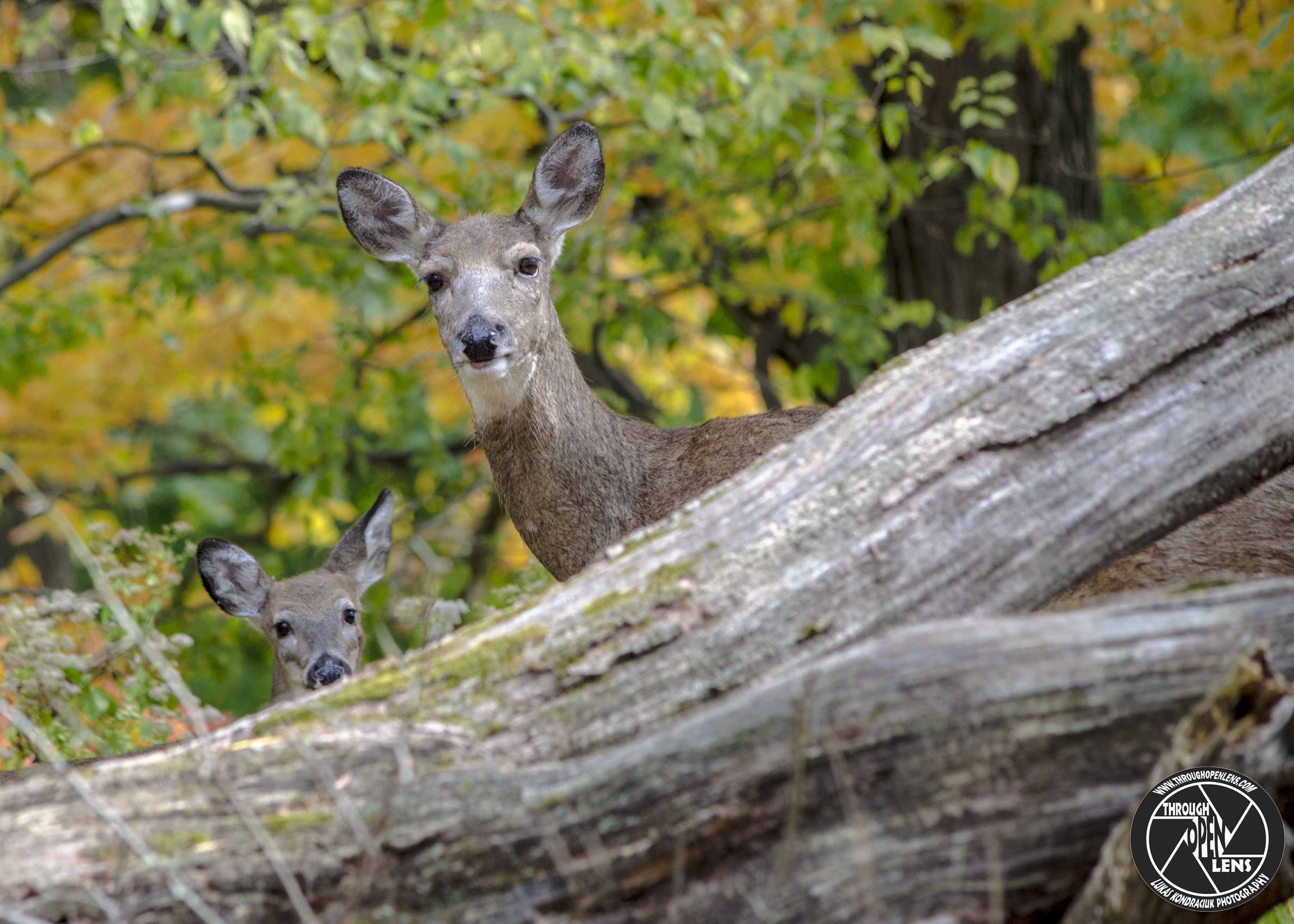
Sometimes They Come Back Again!

F/5.0, 1/250, ISO 400.

White-Tailed Deer

Where do old bowling balls end up?

In the gutter!

Interesting Fact: The fawn is also weaned by the time it loses its spots. By November the average whitetail male fawn will weigh close to 80 to 85 pounds, and the female fawn will weigh 75 to 80 pounds. As the spots disappear, the fawn’s coat also changes from its reddish color to a grayish winter coat. The buck fawn’s face grows a bit darker in color but the belly remains white. ( http://www.the-whitetail-deer.com/whitetail-deer-fawns.html )


I Know A Morse Code!

F/6.3, 1/640, ISO 2200.

Yellow-Bellied Sapsucker

Why are gold fish orange?

The water makes them rusty!

Interesting Fact: The Yellow-bellied Sapsucker is the only woodpecker in eastern North America that is completely migratory. Although a few individuals remain throughout much of the winter in the southern part of the breeding range, most head farther south, going as far south as Panama. Females tend to migrate farther south than do males. ( https://www.allaboutbirds.org/guide/Yellow-bellied_Sapsucker/overview )

Don’t Juge Me I Have An Itch!

F/7.1, 1/200, ISO 320.

Yellow-Rumped Warbler

Did you hear about the tree that had to take time off of work in autumn?

It was on paid leaf.

Interesting Fact: In winter, Yellow-rumped Warblers join flocks and switch to eating berries from fruiting shrubs. Sometimes the flocks are enormous groups consisting entirely of Yellow-rumped Warblers. If another bird gets too close, Yellow-rumped Warblers indicate the infraction by holding the body horizontally, fanning the tail, and raising it to form a right angle with its body. ( https://www.allaboutbirds.org/guide/Yellow-rumped_Warbler/lifehistory )


Have You Seen My Nuts?

F/6.3, 1/50, ISO 320.

Eastern Chipmunk

What is the difference between a poorly dressed man on a bicycle and a handsomely dressed man on a unicycle?

Attire

Interesting Fact: It is mainly active during the day, spending most of its day foraging. It prefers bulbs, seeds, fruits, nuts, green plants, mushrooms, insects, worms, and bird eggs. Like other chipmunks, it transports food in pouches in its cheeks. ( https://en.wikipedia.org/wiki/Eastern_chipmunk )


Come Swim With Me!

F/5.6, 1/500, ISO 250.

Horned Grebe

What is a witch’s favorite subject in school?

Spelling.

Interesting Fact:  Like most grebes, the small chicks of the Horned Grebe frequently ride on the backs of their swimming parents. The young ride between the wings on the parent’s back, and may even go underwater with them during dives. ( https://www.allaboutbirds.org/guide/Horned_Grebe/lifehistory )

By Invitation Only!

F/5.6, 1/500, ISO 200.

Mallard Female

Why do barbers make good drivers?

They know all the shortcuts.

Interesting Fact: During egg-laying phase, she lines the nest with grasses, leaves, and twigs from nearby. She also pulls tall vegetation over to conceal herself and her nest. After incubation begins, she plucks down feathers from her breast to line the nest and cover her eggs. The finished nest is about a foot across, with a bowl for the eggs that is 1–6 inches deep and 6–9 inches across. ( https://www.allaboutbirds.org/guide/Mallard/lifehistory )