When In Doubt Wear Red!

F/6.3, 1/125, ISO 250.

Northern Cardinal 

What do you call two birds in love?

Tweethearts !

Interesting Fact: Only a few female North American songbirds sing, but the female Northern Cardinal does, and often while sitting on the nest. This may give the male information about when to bring food to the nest. A mated pair shares song phrases, but the female may sing a longer and slightly more complex song than the male. ( http://www.allaboutbirds.org/guide/Northern_Cardinal/lifehistory )

Ordinarily, Staring is Creepy. But If You Spread Your Attention Across Many Individuals, Then It’s Just People Watching.

F/7.1, 1/200, ISO 320.

Common Grackle

Tom is sitting on the ice all day fishing with no luck, not even a nibble. Cold and tired he is about to leave, when a guy walks up cuts a hole in the ice beside him, and starts pulling out fish as fast a he can drop his hook in the water. Tom cant believe it, he yells over ” whats your secret?” “woogatkakeptewrwm” he answers back. “what did you say?” replies Tom. The man spits a large ball of worms on the ice and says to Tom, ” you have to keep your worms warm”.

Interesting Fact: Those raggedy figures out in cornfields may be called scare-crows, but grackles are the #1 threat to corn. They eat ripening corn as well as corn sprouts, and their habit of foraging in big flocks means they have a multimillion dollar impact. Some people have tried to reduce their effects by spraying a foul-tasting chemical on corn sprouts or by culling grackles at their roosts. ( https://www.allaboutbirds.org/guide/Common_Grackle/lifehistory )


I’m Not Lazy, I’m Just On My Energy Saving Mode!

F/6.3, 1/125, ISO 250.

Red-tailed Hawk 

How did the tree feel in the spring?

Releaved.

Interesting Fact: Red-tailed Hawks typically put their nests in the crowns of tall trees where they have a commanding view of the landscape. They may also nest on a cliff ledge or on artificial structures such as window ledges and billboard platforms. ( https://www.allaboutbirds.org/guide/Red-tailed_Hawk/lifehistory )


Happiness Is Enjoying The Little Things In Life

F/7.1, 1/200, ISO 250.

American Goldfinch 

How do cows do mathematics?

They use a cow-culator.

Interesting Fact: American Goldfinches are active, acrobatic finches that balance on the seedheads of thistles, dandelions, and other plants to pluck seeds. They have a bouncy flight during which they frequently make their po-ta-to-chip calls. Although males sing exuberantly during spring, pairs do not nest until mid-summer, when thistles and other weeds have gone to seed. Goldfinches do not join other songbirds mobbing predators. ( https://www.allaboutbirds.org/guide/American_Goldfinch/lifehistory )


Danger Mouth Operates Faster Than Brain!

F/10.0, 1/640, ISO 250.

Belted Kingfisher

What did the salad say to the fridge?

Shut the door, I’m dressing!

Interesting Fact: Pleistocene fossils of Belted Kingfishers (to 600,000 years old) have been unearthed in Florida, Virginia, Tennessee, and Texas. The oldest known fossil in the kingfisher genus is 2 million years old, found in Alachua County, Florida. ( https://www.allaboutbirds.org/guide/Belted_Kingfisher )


And It Was All Yellow!

F/7.1, 1/200, ISO 250.

Ruby-crowned Kinglet 

Why did the boy take a ladder to school?

It was a high school.

Interesting Fact: Ruby-Crowned Kinglets make their nests in trees, occasionally as high up as 100 feet. Females choose a nest site near the tree trunk or suspended from small twigs and branchlets. Because of the nest site’s height and often remote location, not much is known about kinglet nesting habits. Their nest sites, chosen by the females, are protected and often hidden by overhanging foliage. ( https://www.allaboutbirds.org/guide/Ruby-crowned_Kinglet/lifehistory )


OH SH*T!

F/9.0, 1/320, ISO 250.

Tree Swallow

Why do ghosts ride in elevators?

It keeps their spirits up.

Interesting Fact: They bathe by flying low over the water and skimming their bodies against the surface, then rising quickly while shaking off droplets. ( https://www.allaboutbirds.org/guide/Tree_Swallow/lifehistory )

Down The Rabbit Hole!

F/8.0, 1/250, ISO 250.

Desert Cottontail Rabbit 

What is a tree’s favorite drink?

Root beer!

Interesting Fact: The lifespan of a cottontail that reaches adulthood averages less than two years, depending on the location.[6] Unfortunately for the cottontail, almost every local carnivore larger or faster than the lagomorph is its predator. Some predators, like snakes for example, are familiar with the area inhabited by the cottontails, and can catch and eat the young at will; the mother is unable to defend the litter. Although cottontails are highly active sexually, and mated pairs have multiple litters throughout the year, few young survive to adulthood. Those that survive grow quickly and are full grown at three months. ( https://en.wikipedia.org/wiki/Desert_cottontail )


If You See Rabbit Laying Little Brown Eggs, Don’t Eat Them, IT’S NOT CHOCOLATE!

Happy Easter Everyone! 

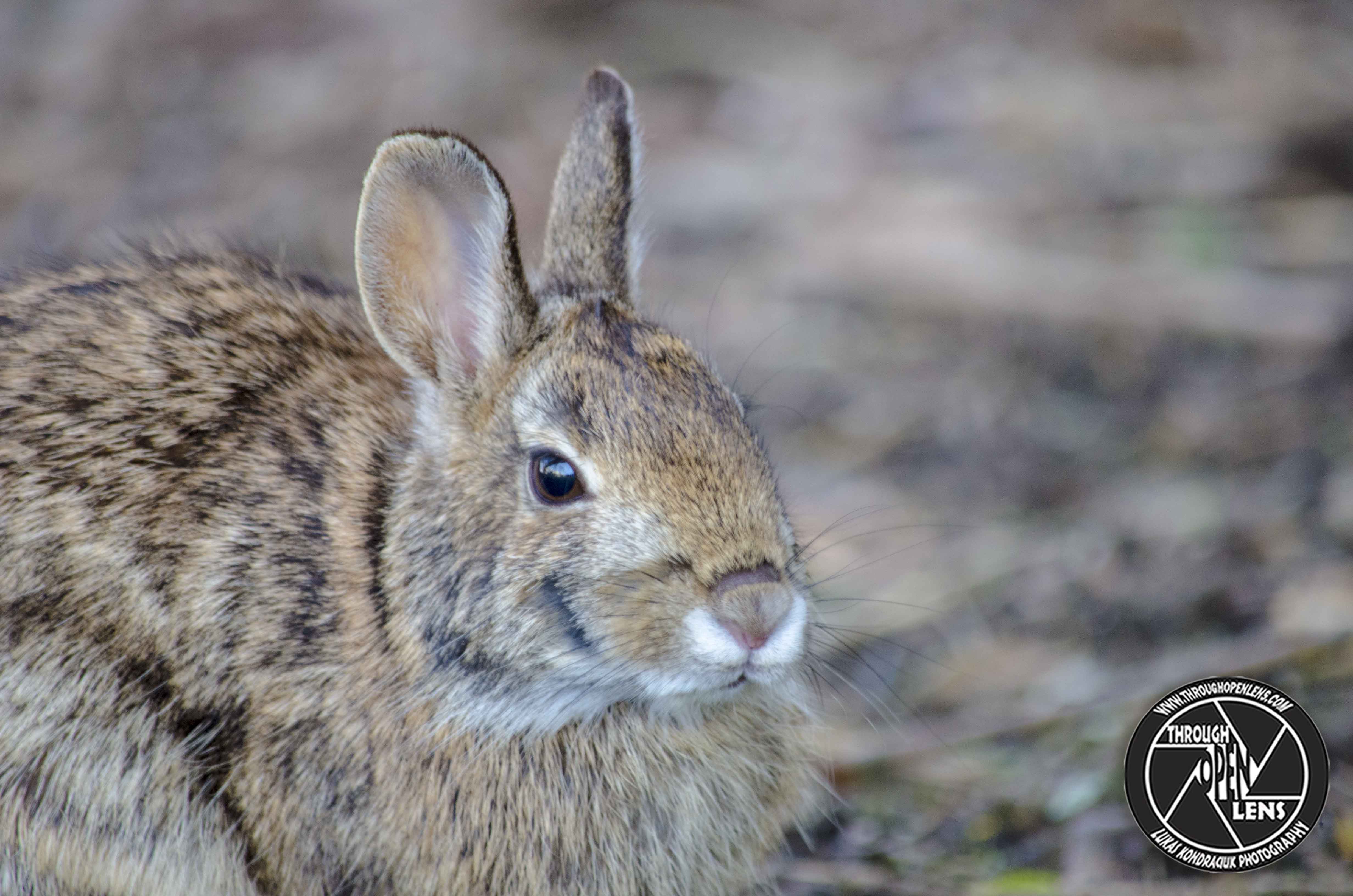
F/5.6, 1/125, ISO 900.

Cottontail Rabbit

What happened to the Easter Bunny when he misbehaved at school?

He was eggspelled!

Interesting Fact: The Easter Bunny (also called the Easter Rabbit or Easter Hare) is a folkloric figure and symbol of Easter, depicted as a rabbit bringing Easter eggs. Originating among German Lutherans, the “Easter Hare” originally played the role of a judge, evaluating whether children were good or disobedient in behaviour at the start of the season of Eastertide.[1] The Easter Bunny is sometimes depicted with clothes. In legend, the creature carries colored eggs in his basket, candy, and sometimes also toys to the homes of children, and as such shows similarities to Santa Claus or the Christkind, as they both bring gifts to children on the night before their respective holidays. The custom was first[2][unreliable source?] mentioned in Georg Franck von Franckenau‘s De ovis paschalibus[3] (‘About Easter Eggs’) in 1682, referring to a German tradition of an Easter Hare bringing Easter eggs for the children. ( https://en.wikipedia.org/wiki/Easter_Bunny )

Roses Are Red And I Am Blue

F/6.3, 1/60, ISO 250.

Blue Jay

Why did the girl bring lipstick and eye shadow to school?

She had a make-up exam!

Interesting Fact: The pigment in Blue Jay feathers is melanin, which is brown. The blue color is caused by scattering light through modified cells on the surface of the feather barbs. ( https://www.allaboutbirds.org/guide/Blue_Jay/lifehistory )