Say What?!

F/8.0, 1/250, ISO 320.

Tufted Titmouse

Why are hairdressers never late for work?

Because they know all the short cuts!

Interesting Fact: Tufted Titmice live in deciduous woods or mixed evergreen-deciduous woods, typically in areas with a dense canopy and many tree species. They are also common in orchards, parks, and suburban areas. Generally found at low elevations, Tufted Titmice are rarely reported at elevations above 2,000 feet. ( https://www.allaboutbirds.org/guide/Tufted_Titmouse/lifehistory )


He Can Be A Real Pecker !

red-bellied-woodpecker-1

F/ 6.3, 1/125, ISO 1100.

Red-Bellied Woodpecker

An New York woodpecker and a Florida woodpecker were in New York arguing about which state had the toughest trees to peck. The New Yorker

woodpecker said that they had a tree there that no woodpecker can peck.

The Florida woodpecker challenged him and was able to peck a hole in the tree with no problem. The New Yorker woodpecker was in awe!

The Florida woodpeck then challenged the New Yorker woodpecker to come to Florida and try to peck this certain tree there that no woodpecker had

ever been able to peck successfully.

The NewYorker woodpecker said he was sure he would be able to do it. So, after flying down to Florida, he successfully pecked the tree!

The two woodpeckers then had a discussion about why they were each unable to peck those trees in their own states. After thinking about this problem

for some time, they both came to the same conclusion: “Your pecker is always harder when you’re away from home…”


Interesting Fact: You may sometimes see Red-bellied Woodpeckers wedge large nuts into bark crevices, then whack them into manageable pieces using their beaks. They also use cracks in trees and fence posts to store food for later in the year, a habit it shares with other woodpeckers in its genus. ( https://www.allaboutbirds.org/guide/Red-bellied_Woodpecker/lifehistory )


You Quack Me Up!

F/9.0, 1/320, ISO 250.

Northern Shoveler

At what time does a duck wake up?

At the quack of dawn.

Interesting Fact: When flushed off the nest, a female Northern Shoveler often defecates on its eggs, apparently to deter predators. ( https://www.allaboutbirds.org/guide/Northern_Shoveler/overview )

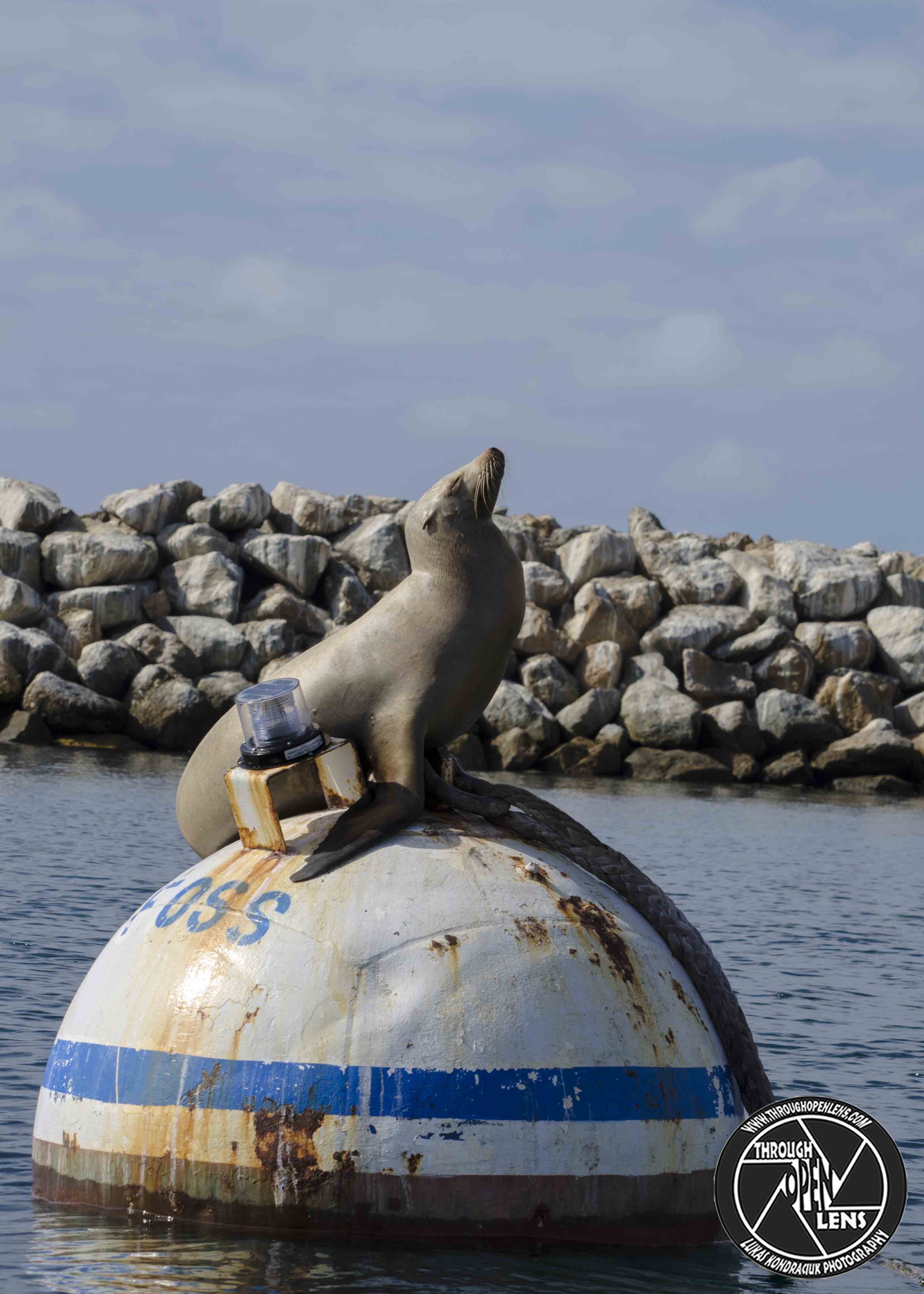
Catching Some Rays And Then Making Some Waves!

F/9.0, 1/320, ISO 100.

California Sea Lion

What do you call a seal in the desert?

Lost.

Interesting Fact:  The California sea lion is a sleek animal, faster than any other sea lion or seal. These eared seals top out at speeds of some 25 miles (40 kilometers) an hour. ( http://animals.nationalgeographic.com/animals/mammals/california-sea-lion/ )

Gonzo Would Be Jealous!

F/7.1, 1/800, ISO 200.

Whimbrel

What Do You Call a Beach that Keeps Losing Sand?

A Shore Loser.

Interesting Fact: In many regions, the primary winter food of the Whimbrel is crab. The curve of the Whimbrel’s bill nicely matches the shape of fiddler crab burrows. The bird reaches into the crab’s burrow, extracts the crab, washes it if it is muddy, and sometimes breaks off the claws and legs before swallowing it. Indigestible parts are excreted in fecal pellets.  ( https://www.allaboutbirds.org/guide/Whimbrel/lifehistory )


Kris Kross Will Make You Jump Jump!

F/11.0, 1/500, ISO 200.

Snowy Egret

Why did the barber win the race?

Because he took a short cut.

Interesting Fact:  Male and female Snowy Egrets take turns incubating their eggs. As one mate takes over for the other, it sometimes presents a stick, almost as if passing a baton. Both parents continue caring for the young when they hatch. ( https://www.allaboutbirds.org/guide/Snowy_Egret/lifehistory )

I Meant To Be Good But There Were Too Many Other Options!

ruby-crowned-kinglet

F/8.0, 1/250, ISO 640.

Ruby-crowned Kinglet

teacher asked : Why are you late for school?

Bobby: Because of the Sign.

Teacher : What Sign?

Bobby : The sign that says “School ahead go slow”

Interesting Fact: The Ruby-crowned Kinglet is a tiny bird that lays a very large clutch of eggs—there can be up to 12 in a single nest. Although the eggs themselves weigh only about a fiftieth of an ounce, an entire clutch can weigh as much as the female herself. ( https://www.allaboutbirds.org/guide/Ruby-crowned_Kinglet/lifehistory )

I Would Cry But Mascara Is Designer

green-winged-teal

F/6.3, 1/500, ISO 360.

Green-Winged Teal

Men are like mascara, any sign of emotion and they’re running.

Interesting Fact: Green-winged Teals have closely spaced, comblike projections called lamellae around the inner edge of the bill. They use them to filter tiny invertebrates from the water, allowing the birds to capture smaller food items than other dabbling ducks. ( https://www.allaboutbirds.org/guide/Green-winged_Teal/lifehistory )

Use Your Head!

yellow-bellied-sapsucker-2

F/10.0, 1/400, ISO 400.

Yellow-Bellied Sapsucker

What did the trees wear to Mother Nature’s pool party?

Swimming trunks!

Interesting Fact: The Yellow-bellied Sapsucker frequently uses human-produced materials to help in its territorial drumming. Street signs and metal chimney flashing amplify the irregular tapping of a territorial sapsucker. The sapsucker seems to suffer no ill effects of whacking its bill on metal, and a bird will return to a favorite sign day after day to pound out its Morse code-like message. ( https://www.allaboutbirds.org/guide/Yellow-bellied_Sapsucker/lifehistory  )