Shhhh…. I’m Hiding!

F/ 5.6, 1/250, ISO 720.

Mallard

What does a duck do first when making an omelet?

He quacks some eggs.

Interesting Fact: The widespread Mallard has given rise to a number of populations around the world that have changed enough that they could be considered separate species. The “Mexican Duck” of central Mexico and the extreme southwestern United States and the Hawaiian Duck both are closely related to the Mallard, and in both forms the male is dull like the female. The Mexican Duck currently is considered a subspecies of the Mallard, while the Hawaiian Duck is still given full species status. ( https://www.allaboutbirds.org/guide/Mallard/lifehistory )
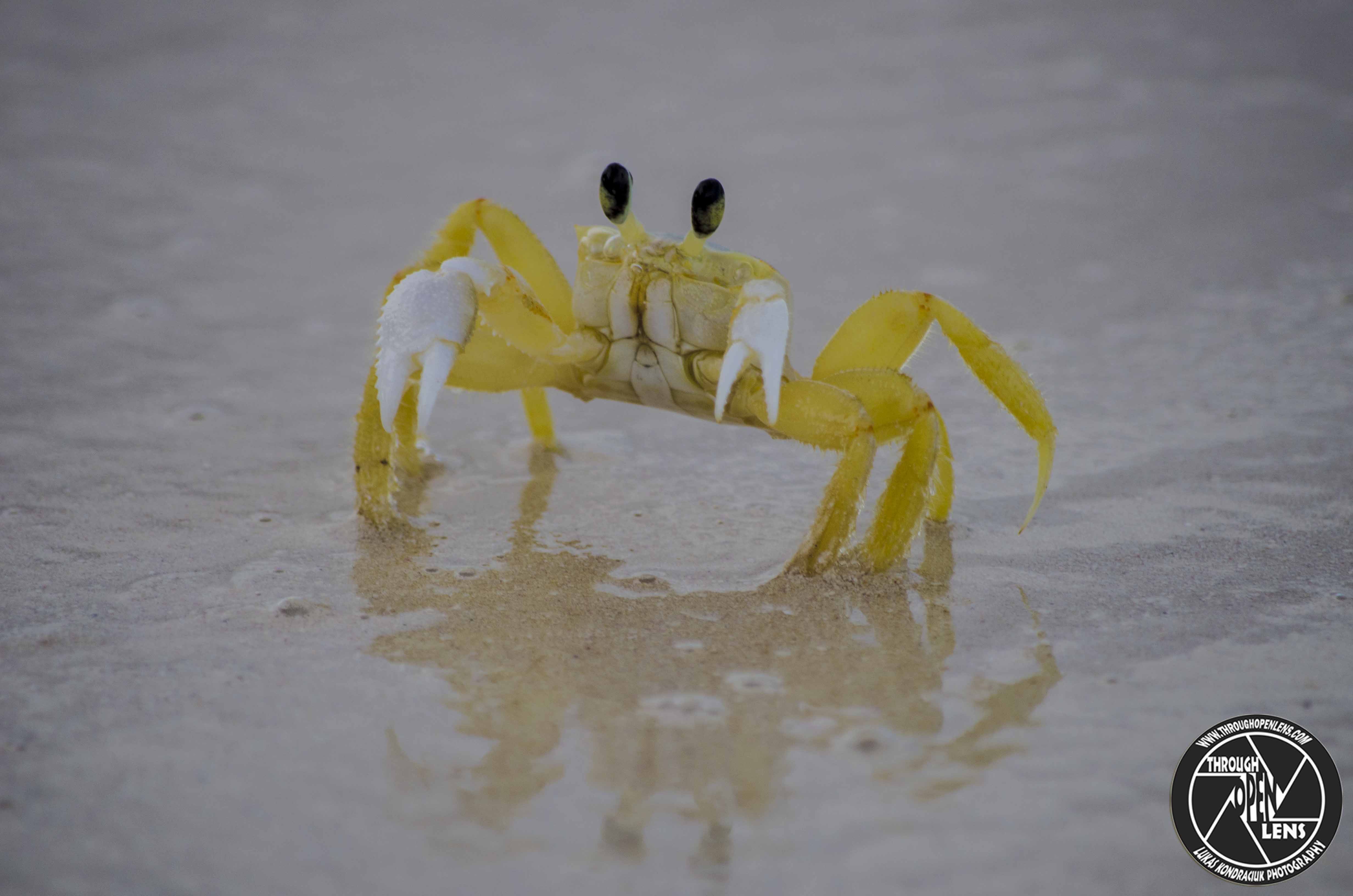
Don’t Be Crabby…

F/5.6, 1/500, ISO 250.

Atlantic Ghost Crabs

A lonely female crab was walking down the beach one evening when she noticed a male crab coming toward her.

But he was walking straight and not sideways! Impressed by his talent, she decided to marry him immediately.

The next morning she noticed him walking sideways like any ordinary crab!

She asked, “What happened? Yesterday you were able to walk straight!”

He answered “What?! I can’t get that drunk every day!”.

Interesting Fact: Atlantic Ghost Crabs can hold oxygen in their air sacs for about six weeks. The crab has club-shaped eyestalks and it boasts of a 360° vision. This helps it see and catch insects that are even in mid-air.  ( http://www.animalspot.net/ghost-crab-sand-crab.html )

Aren’t You A Social Butterfly

F/8.0, 1/250, ISO 100.

Butterfly

How do you make a butterfly?

Flick it out of the butter dish with a knife!

Interesting Fact: Actually, butterflies do not eat at all. Well, at least not in the traditional sense. What do butterflies eat? Instead of eating, butterflies get their nurishment from drinking. They have a long narrow tube in their mouth called a proboscis that acts as a straw. They usually set on top of a flower and drink the nectar. To see a congregation of many kinds of butterflies together they feed on small puddles on the grouind or wet areas on leaves and plants. See the section below if you are interested in what Caterpillars eat. ( http://www.whatdobutterflieseat.info/ )


Surround Yourself With People Who Get You.

F/ 5.6, 1/500, ISO 250.

Elegant Tern

What did one eyeball say to the other eyeball?

Between you and me something smells.

Interesting Fact: The Elegant Tern was first found nesting in the United States in 1959 in San Diego Bay, California. Since the 1980s, several more colonies have been established in California. ( https://www.allaboutbirds.org/guide/Elegant_Tern/lifehistory )


We Are Not Short, We Are Just More Down To Earth Than Other Birds.

F/5.6, 1/500, ISO 320.

Least Sandpiper

A termite walks into a bar and says, “Where is the bar tender?”

Interesting Fact: The Least Sandpiper is the smallest shorebird in the world, weighing in at about 1 ounce and measuring 5-6 inches long. Males are slightly smaller than females. ( https://www.allaboutbirds.org/guide/Least_Sandpiper/lifehistory )

Don’t Make Me Walk When I Want To Fly!

F/13.0, 1/640, ISO 250.

Red-tailed Hawk

How do trees access the internet?

They log in.

Interesting Fact: Red-tailed Hawks occupy just about every type of open habitat on the continent. This includes desert, scrublands, grasslands, roadsides, fields and pastures, parks, broken woodland, and (in Mexico) tropical rainforest. ( https://www.allaboutbirds.org/guide/Red-tailed_Hawk/lifehistory )

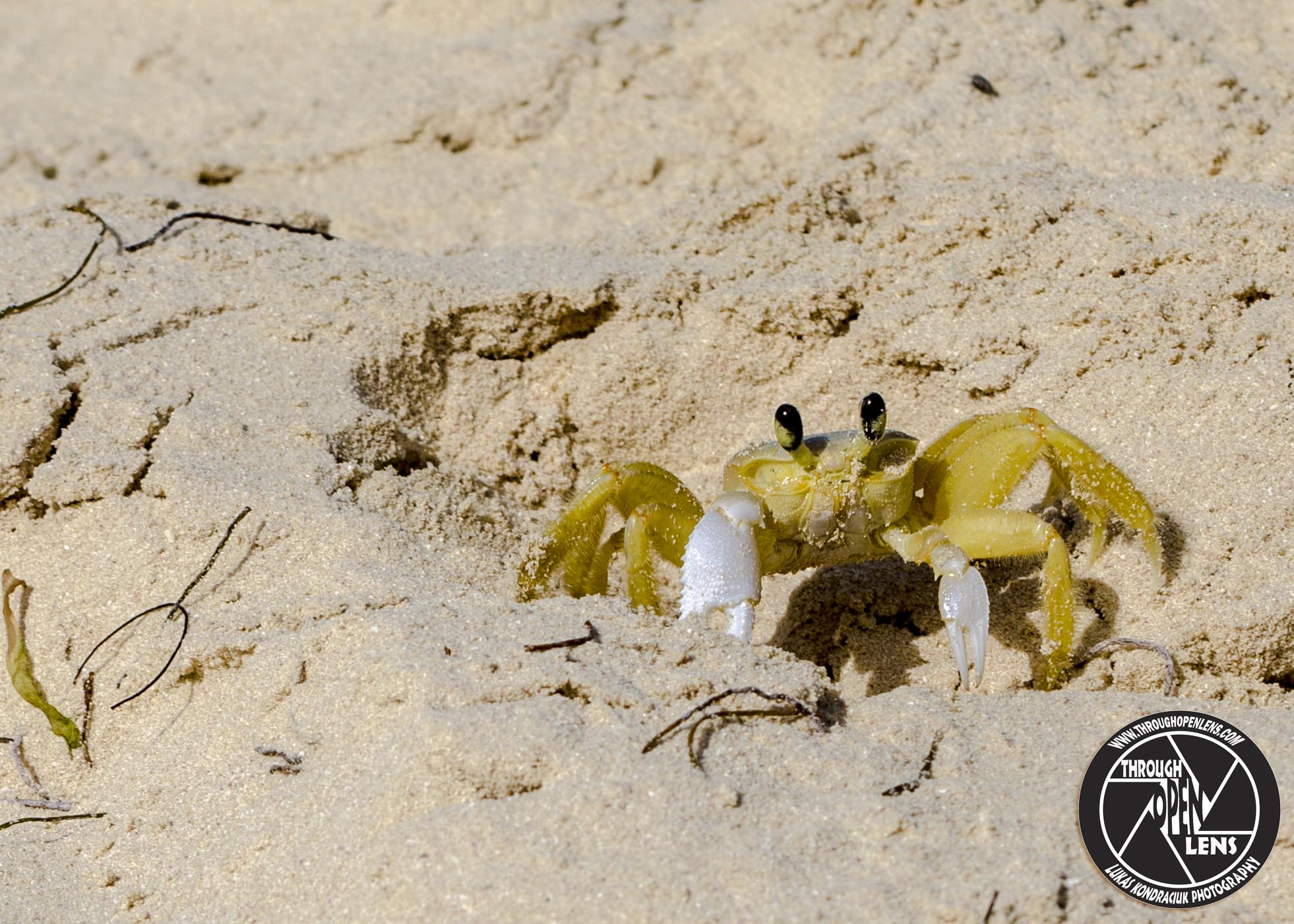
Be Clawsome!

F/8.0, 1/640, ISO 100.

Atlantic Ghost Crab

What’s red and moves up and down?

A tomato in an elevator!

Interesting Fact: The Atlantic ghost crab lives in burrows in sand above the strandline.[2] Older individuals dig their burrows farther from the sea, some starting as much as 400 m (1,300 ft) inland.[4] Burrows can be up to 1.3 m (4 ft 3 in) deep, and can be closed off with sand during hot periods. ( https://en.wikipedia.org/wiki/Atlantic_ghost_crab )

Sometimes What You Looking For Comes When You’re Not Looking At All.

F/5.6, 1/2000, ISO 500.

Semipalmated Plover 

How do trees get online?

They just log on!

Interesting Fact: They are migratory and winter in coastal areas of the southern United States, the Caribbean and much of South America. They are extremely rare vagrants to western Europe, and have been found in Tierra del Fuego and the Isles of Scilly.[4] Their true status may be obscured by the difficulty in identifying them from the very similar ringed plover of Eurasia, of which it was formerly considered a subspecies. ( https://en.wikipedia.org/wiki/Semipalmated_plover )


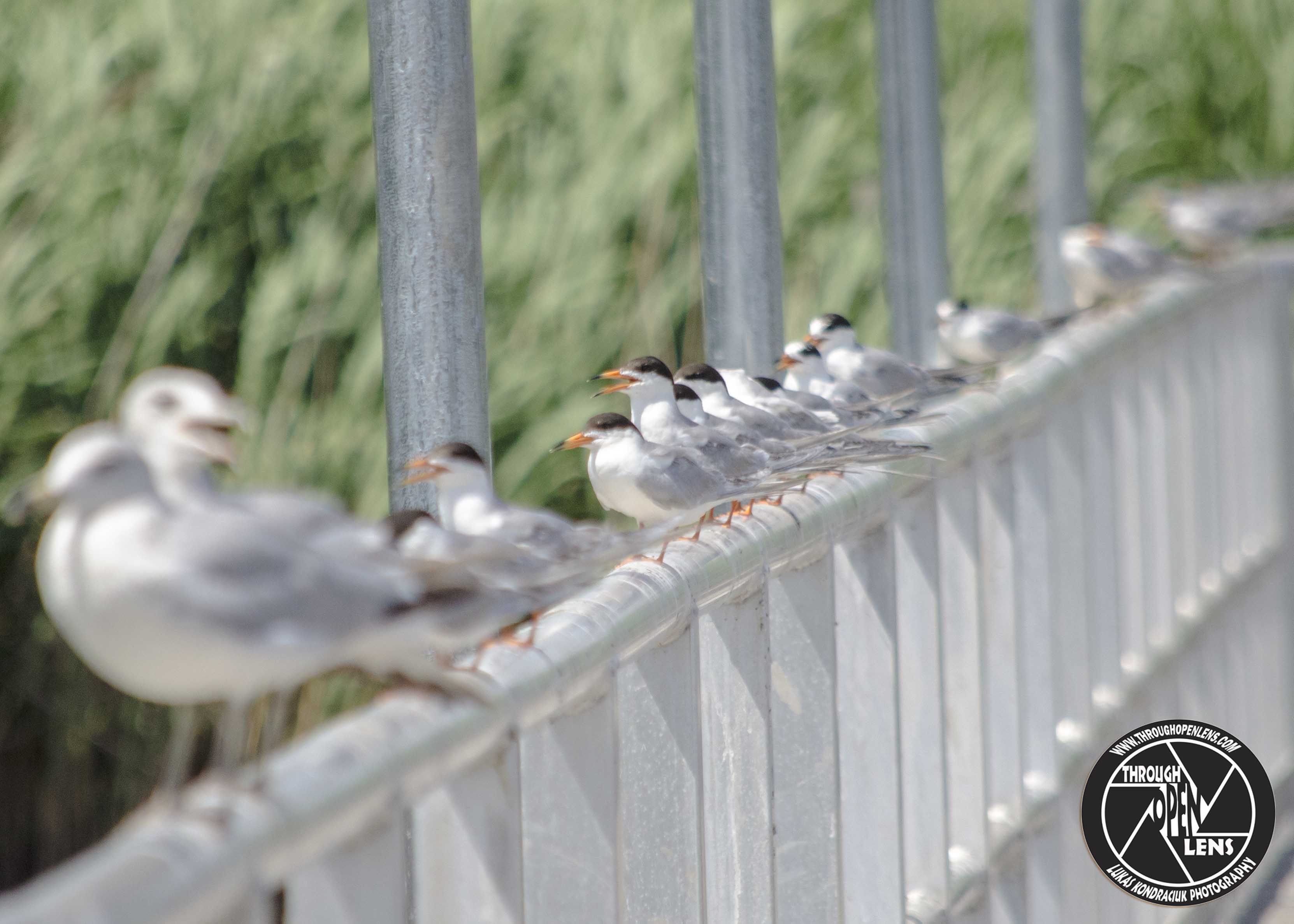
Good Times And Crazy Friends Make The Best Memories.

F/5.6, 1/3200, ISO 1000. d700

Common Terns 

Did you hear the rumor about butter?

Everyone’s spreading it.

Interesting Fact: Common Terns nest in colonies on the ground in areas with loose sand, gravel, shell, or cobble pebbles typically less than 350 feet from the water. They tend to choose areas with scattered, low-growing vegetation to provide cover for chicks. ( https://www.allaboutbirds.org/guide/Common_Tern/lifehistory )


HEY GIRL! NO, I Meant ” HAY GIRL”. That Is Your Job, Right?

F/5.6, 1/200, ISO 100.

HORSE

Which state has the smallest drinks?

Mini-soda.

Interesting Fact: Horses are prey animals with a strong fight-or-flight response. Their first reaction to a threat is to startle and usually flee, although they will stand their ground and defend themselves when flight is impossible or if their young are threatened.[88] They also tend to be curious; when startled, they will often hesitate an instant to ascertain the cause of their fright, and may not always flee from something that they perceive as non-threatening. Most light horse riding breeds were developed for speed, agility, alertness and endurance; natural qualities that extend from their wild ancestors. However, through selective breeding, some breeds of horses are quite docile, particularly certain draft horses. ( https://en.wikipedia.org/wiki/Horse )