Bad Hair Day: Ain’t Nobody Got Time For That!

F/9.0, 1/320, ISO 200.

Red-breasted Mergansers 

Can February March?

No, but April May.

Interesting Fact:Red-breasted Mergansers nest along forested riverbanks, marsh edges, lakeshores, coastal islands, and sandy shores with vegetation. They are never far from water. Female Red-breasted Mergansers select a spot on the ground under dense cover from low tree branches, fallen logs, or boulders. They nest alone or in colonies often with gulls and terns. ( https://www.allaboutbirds.org/guide/Red-breasted_Merganser/lifehistory )
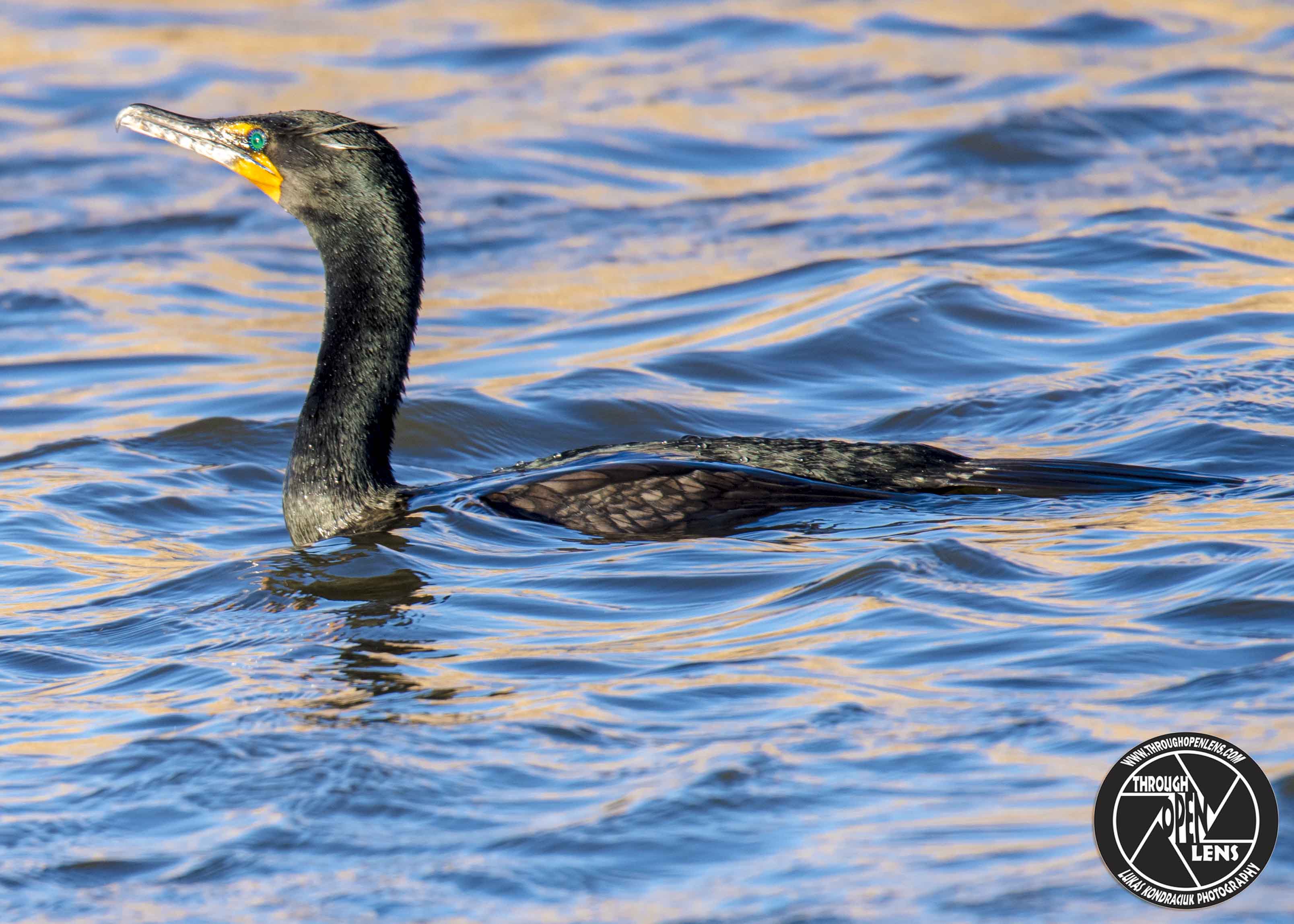


Gone Crazy! Be Back Soon!

F/9.0, 1/320, ISO 320.

Double-crested Cormorant 

What did one toilet say to the other toilet?

You look a bit flushed.

Interesting Fact: Double-crested Cormorant nests often are exposed to direct sun. Adults shade the chicks and also bring them water, pouring it from their mouths into those of the chicks. ( https://www.allaboutbirds.org/guide/Double-crested_Cormorant )

Don’t Look Back You’re Not Going That Way

F/5.6, 1/500, ISO 220.

Least Sandpiper

Browsing in a pet shop, a man sees a beautiful parrot with a red
string tied to its left leg and a green string tied to its right
leg, and asks the store owner about the different colored strings.
“This is a highly-trained parrot,” the owner explains. “If you
pull the red string, he’ll speak French.  If you pull the green
string, he’ll speak Spanish.”
The customer asks, “What happens if I pull both strings?”
“I’ll fall off my perch, dummy!” screeches the parrot.

Interesting Fact: Eastern populations probably fly nonstop over the ocean from the Gulf of St. Lawrence and New England to wintering grounds in northeastern South America, a distance of about 1,800 to 2,500 miles. ( https://www.allaboutbirds.org/guide/Least_Sandpiper/lifehistory )


You Make Me Happy When Skies Are Grey

F/ 6.3, 1/125, ISO 500.

Yellow Warblers

How do birds fly?

They just wing it!

Interesting Fact: The nests of the Yellow Warbler are frequently parasitized by the Brown-headed Cowbird. The warbler often builds a new nest directly on top of the parasitized one, sometimes resulting in nests with up to six tiers. ( https://www.allaboutbirds.org/guide/Yellow_Warbler/lifehistory )

Sing… The World Needs Your Music In It.

F/9.0, 1/320, ISO 320.

Eastern Wood-Pewee

Why can’t you write with a broken pencil?

Because it’s pointless.

Interesting Fact: The Eastern Wood-Pewee’s lichen-covered nest is so inconspicuous that it often looks like a knot on a branch. ( https://www.allaboutbirds.org/guide/Eastern_Wood-Pewee )


Sleeping Beauty.

F/6.3, 1/160, ISO 200.

Common Snapping Turtle

What do you get when you mix an elephant with a rhino?

Elephino!!!

Joke complementary of: robinwrites

F/5.6, 1/125, ISO 200.

F/5.6, 1/500, ISO 400.

Interesting Fact: Snapping turtles ambush their prey from the bottom of the water. Fish mistake their tongue for warms and viola dinner is served. yum

Sorry… We Are Busy Sunbathing.

F/8.0, 1/250, ISO 320.

Red-Eared Slider Turtle

What did the Sewage Worker say to his apprentice?

Urine for a surprise.

Interesting Fact: Red-eared sliders do not hibernate, but actually brumate; while they become less active, they do occasionally rise to the surface for food or air. Brumation can occur to varying degrees. In the wild, red-eared sliders brumate over the winter at the bottoms of ponds or shallow lakes. They generally become inactive in October, when temperatures fall below 10 °C (50 °F).[9] During this time, the turtles enter a state of sopor, during which they do not eat or defecate, they remain nearly motionless, and the frequency of their breathing falls. Individuals usually brumate underwater, but they have also been found under banks and rocks, and in hollow stumps. In warmer winter climates, they can become active and come to the surface for basking. When the temperature begins to drop again, however, they quickly return to a brumation state. Sliders generally come up for food in early March to as late as the end of April. ( https://en.wikipedia.org/wiki/Red-eared_slider )

Everyday May Not Be Good, But There Is Something Good In Everyday.

F/9.0, 1/250, ISO 320.

Muskrat

Why did the dog sit in the shade?

Because he didn’t want to be a hot dog!

Interesting Fact: Native Americans have long considered the muskrat to be a very important animal. Some predict winter snowfall levels by observing the size and timing of muskrat lodge construction.[26]  In several Native American creation myths, the muskrat dives to the bottom of the primordial sea to bring up the mud from which the earth is created, after other animals have failed in the task. ( https://en.wikipedia.org/wiki/Muskrat#Behavior )


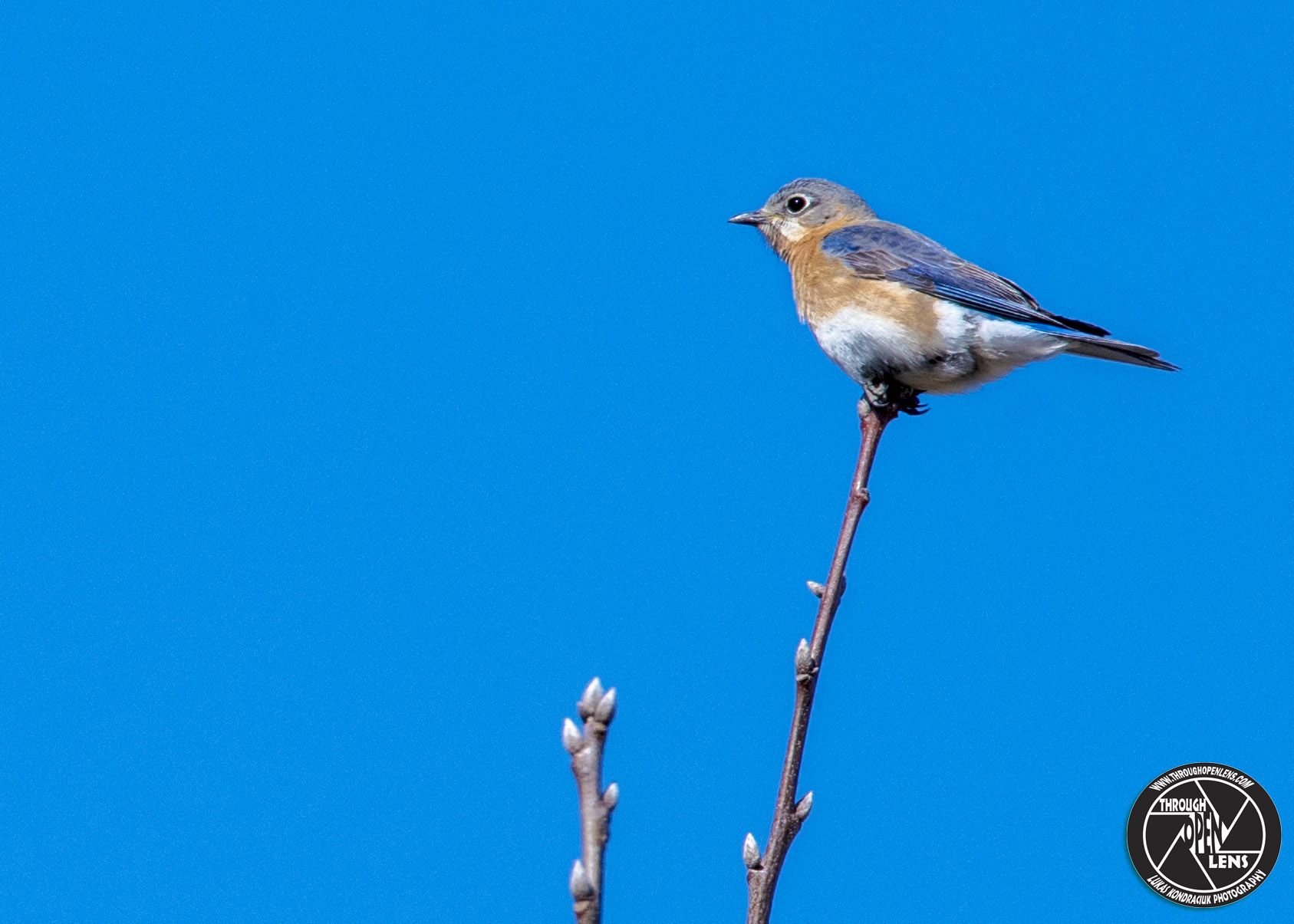
I See Sky Of Blue!

F/11.0, 1/500, ISO 320.

Eastern Bluebird 

Imagine you are in a water tank with a roof. There are no objects in the tank to help you escape. How do you get out?

Stop imagining.

Interesting Fact: Males vying over territories chase each other at high speed, sometimes grappling with their feet, pulling at feathers with their beaks, and hitting with their wings. The boxes and tree cavities where bluebirds nest are a hot commodity among birds that require holes for nesting, and male bluebirds will attack other species they deem a threat, including House Sparrows, European Starlings, Tree Swallows, Great Crested Flycatchers, Carolina Chickadees, and Brown-headed Nuthatches, as well as non-cavity nesters such as robins, Blue Jays, mockingbirds, and cowbirds. ( https://www.allaboutbirds.org/guide/Eastern_Bluebird/lifehistory )

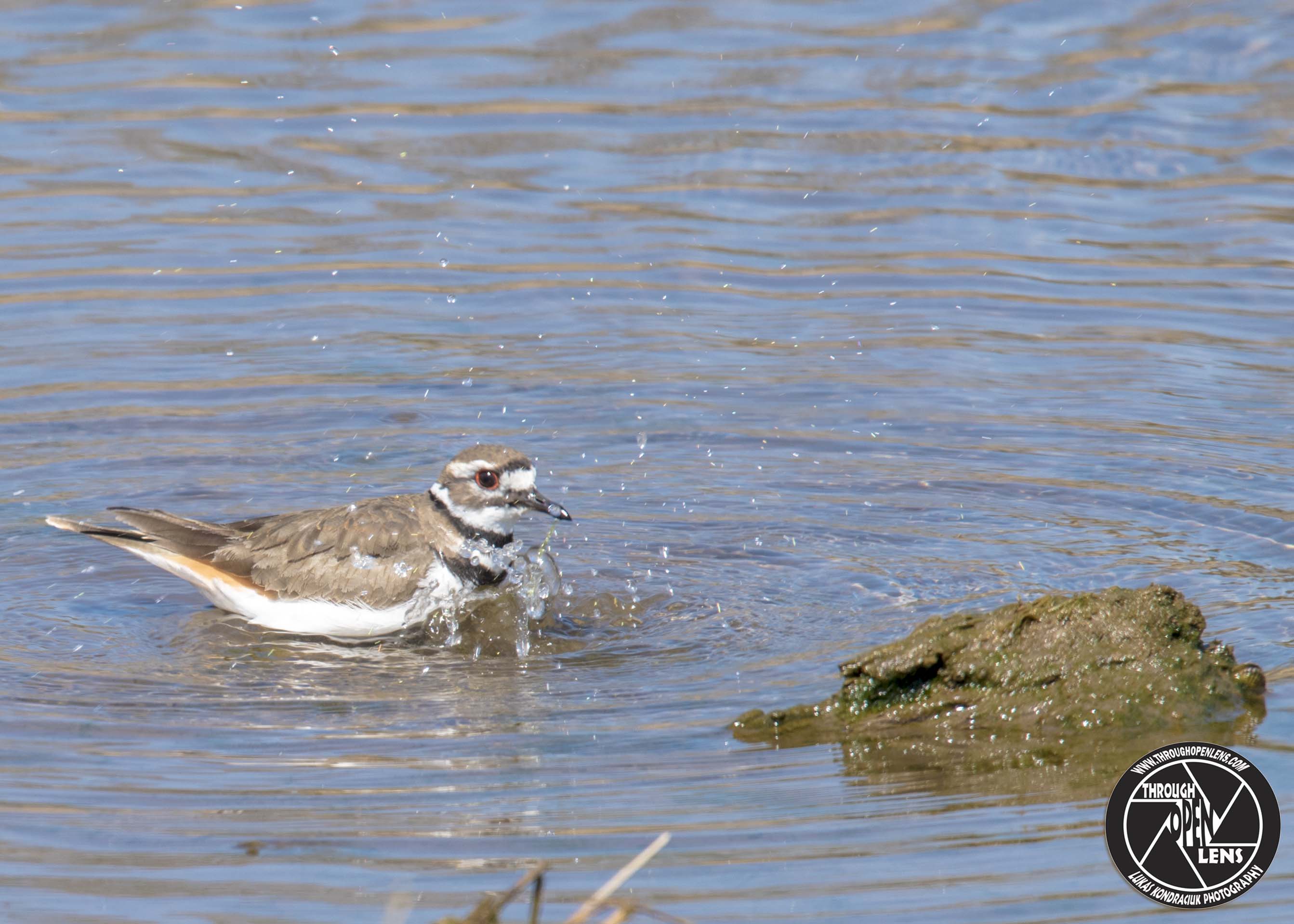
Make A Splash!

F/9.0, 1/320, ISO 200.

Killdeer

How does a man take a bubble bath?

He eats beans for dinner.

Interesting Fact: Often seen in dry, flat landscapes, running and halting on the ground in search of insects and earthworms. Although the Killdeer is common around human habitation it is often shy, at first running away rather than flying. ( https://www.allaboutbirds.org/guide/Killdeer/lifehistory )